How to report a tweet on Twitter in four taps
How to report a tweet on Twitter has barely changed since the platform became X, even though most of the labels have. Open the post itself rather than the profile. Tap the three-dot menu at the top of the post and choose Report post. X then asks who the report is for: yourself, someone else or a specific group of people, or everyone on X. Next it asks what is happening, in ordinary language rather than policy names, and it may offer to add further posts from the same account so the reviewer sees the context around the one you picked. The final screen repeats back what you are reporting and which rule it may break, and you submit. X's help centre describes that same sequence for the iOS app, the Android app and x.com in a browser (X Help Center). Nothing in it removes the post. It puts one post in front of a reviewer.
In short:
- Open the post you want reviewed. The report attaches to that post, so start there even when the account is the real problem.
- Tap the ••• icon at the top of the post, then Report post.
- Say who is affected: Myself, Someone else or a specific group of people, or Everyone on X.
- Describe what is happening, add any extra posts X offers to include, check the summary and submit.
Two small controls on those screens matter more than they look. The first is a checkbox labelled "Updates about this report can show these posts". Leave it ticked and X quotes the reported text back to you in its follow-up emails and notifications, which gives you a dated record. It also puts the words into your inbox, and if the post is about you and someone else reads your email, untick it. The second control appears only for violent threats. On the screen that says X has received your report there is an Email report button, and it sends you your own copy of the report to give to the police. If a post threatens you, press it before you close the app.
Step three deserves more thought than it usually gets. The person a post targets carries more weight in several categories than a bystander does, so if the post is about you, say so, and if it is about a friend, ask them to file it themselves or say plainly that you are filing on their behalf. X's help centre confirms that reports on behalf of someone else are accepted. The same logic runs through every platform we file with. On TikTok, for instance, standing decides which report works before the content is even read.
People search for this a dozen ways. "How do you report a tweet", "how to report a tweet" and "twitter report tweet" all describe the same menu, and every Twitter report tweet submission made from it goes to X's review systems, not to the account you are reporting.
How do you report a tweet on Twitter from a browser, a DM, or after a block?
In a desktop browser the menu sits in the same top corner of the post, and the steps are identical. Direct Messages are handled differently. You open the conversation, select the information icon, choose Report @username, and X may ask you to select other messages from the same person. One consequence catches people out every week: X says reported messages and conversations disappear from your inbox and cannot be recovered (X Help Center). Screenshot the whole thread first. Blocking is less of an obstacle than most people assume. You can report posts from an account you have blocked, and you can report posts from an account that has blocked you, although only the ones that mention you. If you want to know how to report someone on Twitter rather than one post, the same Report option sits on the profile's ••• menu, and X's guidance is to report the account as spam when the problem is behaviour without posts, such as following thousands of accounts in a burst.
What does a report actually attach to?
A report attaches to a post ID, the long number at the end of every status link, and to nothing else. When you report a tweet, the reviewer loads that single object: its text, its media, its author and whatever context you added. Every copy of that post has a different number. A quote post is a new post with its own ID that happens to display the original inside it. Someone else's screenshot of the tweet, uploaded again, is a new post carrying an image that X has no reason to connect to the first one. A reply that repeats the same words is a new post as well. So a report that succeeds against the original can leave every one of those standing, and a report against a quote post says nothing at all about the post it quotes. Reposts are the exception, because they point at the original instead of copying it, and they disappear when it does.
That is why the report tweet option on a single post is the right tool for a single breach and a poor one for a pattern. A reviewer judges the object in front of them. Harassment reports built on one post routinely fail for exactly this reason, which is why we assemble them as a pattern, not a single post, with every item's link and time listed in order. X helps a little here: its flow lets you attach several posts from the same account to one report. Use that. Pick the posts that show the pattern, not the ones that hurt most.
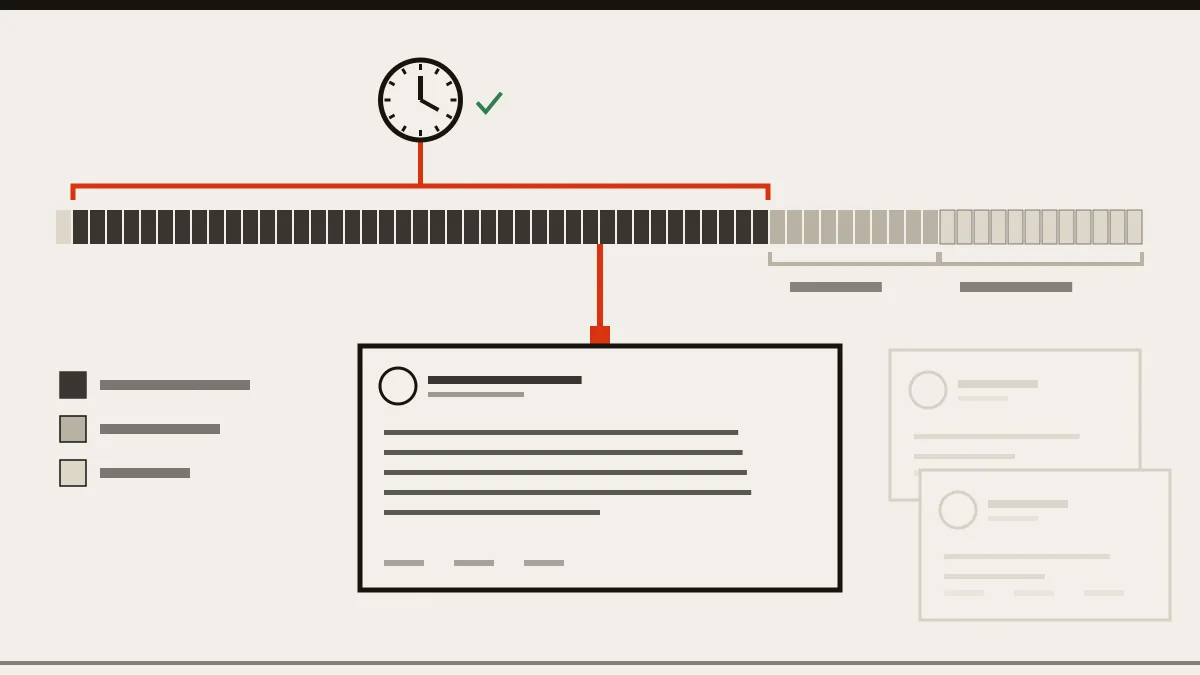
The number itself is more useful than it looks. X generates its IDs with a system called Snowflake, and its developer documentation says each ID encodes the time the object was created, together with a worker number and a sequence number (X developer documentation). The time sits in the top bits, counted in milliseconds from a starting point Twitter picked in 2010: 1,288,834,974,657 milliseconds after 1 January 1970, which is 01:42:54 UTC on 4 November 2010. Divide a post ID by 2²², which is 4,194,304, drop the remainder, add that starting point, and you have the moment the post was published, to the millisecond. You do not need X's servers to be online, the post to be live or the account to exist.
Take the example X uses in its own documentation, a Department of the Interior sunset photo at x.com/Interior/status/463440424141459456. Shift the ID and you get 110,492,807,422. Add the epoch and you get 1,399,327,782,079 milliseconds, which is 22:09:42 UTC on 5 May 2014. The embed code X generates for that post prints "May 5, 2014". The two agree. X's documentation also notes that users, lists and messages carry IDs of their own, and that older accounts have shorter user IDs, which becomes useful when you are working out whether an account is new.
Why should anyone reporting a tweet care about arithmetic? Because a status link is the one piece of evidence that dates itself. Screenshots can be cropped and argued about. A post ID cannot be backdated. When a post is later deleted, or an account claims it only started posting after a particular event, the link you saved answers the question on its own.
Can you report a tweet that has already been deleted?
Not through X. The report button lives on the post, so once the author deletes it there is nothing left to press, and the report flow has no way to point at a post that no longer loads. People searching for a twitter deleted content report are usually in one of two positions. Either the post came down before they reported it and they want it on record anyway, or it came down on X but is still visible somewhere else. The first position has no X route. A deletion is not an admission, X keeps no public record of it, and a reviewer will not open a case on an object they cannot see. The record you keep is your own, and the next few paragraphs are about building it properly. The second position is far more common and far more fixable, because every copy of a deleted post has its own route, and some of those copies last for years.
Capture before you report, because the report is often what prompts the author to delete. This is what we ask clients to keep, in this order:
- The full status link, copied as text as well as visible in a screenshot. The ID in it is your timestamp.
- A screenshot showing the post, the display name, the @handle and the visible date, with nothing cropped.
- The account's numeric user ID. Handles change and the number does not. Typing x.com/i/user/ followed by the number opens whatever handle the account uses today; we checked that on 23 September 2026 with X's own developer account, ID 2244994945, which opened @XDevelopers.
- The replies and quote posts around it, with their links, when the context is part of the harm.
- For a threat, the Email report copy from the confirmation screen.
The list overlaps with the five captures to take first on Instagram, and the logic is the same on every platform: the evidence goes first because the evidence is what disappears. X does not tell anyone that you took a screenshot, so you can capture in the app you are already using. Snapchat is the awkward one, which is why the advice there is to capture on a second device.
When a case reaches us after the post has gone, the saved link is usually the one item nobody argues with. A screenshot shows what the post said. The ID proves when. Put the two together with a copy found elsewhere, in an embed, a search snippet or an archive, and you have a record that holds up in a complaint to a publisher, in a letter before action or in a statement to the police. Without the link, the same screenshot is a picture of some text.
Nor is deletion always what it looks like. An author can delete a post and repost the same words minutes later with a new ID, which leaves the words up and strands any report you filed against the old number. If you see the same text come back, report the new post and say in the report that it replaces one you reported earlier, giving the old link. Both IDs decode to times, so the gap between deletion and reposting is itself evidence that the author knew the post was being looked at.
The copies one report never reaches
Every post that attracts attention leaves copies, and none of them is covered by a report against the original. Some copies stay on X, where each has its own ID and needs its own report. Others leave X entirely. A news site or blog that embedded the post holds a copy in its own page. Google holds a copy in its index until it recrawls. Archive services hold copies deliberately, because keeping them is their purpose. For the person the post is about, those outside copies usually do more damage than the original, since they are what a name search returns and what a journalist, employer or landlord finds a year later. The table below sets out where each copy lives and which route reaches it. It is not a ranking of difficulty. Several of these routes take ten minutes; the embed row is the one most people have never considered, so it is explained underneath.
| Copy | Where it lives | Route that reaches it | Outlives the original? |
|---|---|---|---|
| Repost | On X, pointing at the original | None needed | No, it goes with the original |
| Quote post | On X, with its own post ID | Report that post | Yes |
| Screenshot re-upload | On X, a new post and a new image | Report that post | Yes |
| Embed on a website | In the publisher's own HTML | Ask the publisher | Yes, as plain text |
| Search result | Google's index | Refresh Outdated Content | Until Google recrawls |
| Archive capture | Wayback Machine and similar | The archive's own request | Yes |
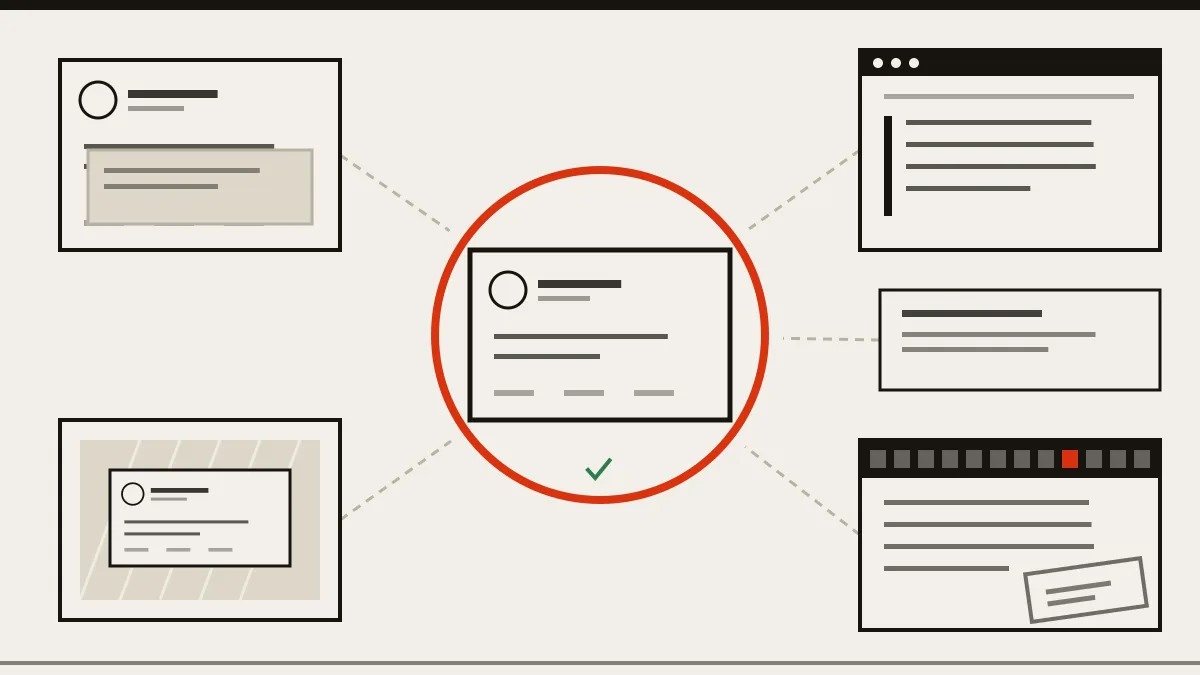
The two copies that stay on X are the quickest to deal with, provided each report explains itself. A quote post is judged on its own words plus the post it displays, so report it under the same rule as the original and say in the free-text step that it reproduces a post you have already reported, giving that post's link. A screenshot re-upload is harder for a reviewer, because nothing in X's systems ties the image to the text it shows. Spell the connection out. Name the original post, give its link and its decoded time, and say whether X has already removed it. A reviewer who can see that the image repeats something X has already actioned has an easy decision; one who sees only a picture of some text does not.
An embedded post has two parts, according to X's developer documentation: an HTML snippet that sits in the publisher's page, and X's script, which scans the page for that snippet and turns it into the familiar card (X developer documentation). The snippet is not a pointer to X. When we requested the embed code for the Interior post above from X's own oEmbed endpoint on 23 September 2026, it came back as a blockquote containing the full text of the post, the account's name, its handle and the date, with a suggested cache age of 3,153,600,000 seconds, which is one hundred years. Delete the post and the script has nothing to draw, so the words stay on the publisher's page as plain quoted text. Twitter tried hiding that text in April 2022 and reversed the change within days after complaints from developers and archivists, with a spokesperson describing it as "rolling back this change for now" (TechCrunch, 11 April 2022). A site that embedded a false post about you can go on quoting it after X has removed it. Only the publisher can take it out.
In practice that means a short, polite request to the site's editor or owner, with the status link, a note that X has removed the post, and a request to delete the embed or the paragraph around it. A publisher has little reason to keep quoting a post that its author deleted and X removed, and a request that says so plainly gives them an easy decision. Where they refuse and the words are defamatory, the complaint moves to the publisher as a publisher, which is a legal question rather than a platform one.
Search results work on a different clock. When a status page stops existing, Google keeps showing its stored title and snippet until it next crawls the address. The Refresh Outdated Content tool asks Google to look again: anyone signed in to a Google account can use it, no site ownership is needed, and it only works once the page has actually changed or gone (Google Search Central Help). File it after the deletion, never before. If the post exposed your phone number, home address or email, Google's Results about you tool is a separate route: it removes those results from search whether or not the post itself survives. Archive captures are the slowest. Services such as the Wayback Machine keep copies on purpose and run their own request processes, and this is where the thinking behind when de-indexing beats deletion earns its place: the page may never go, but the route to it can.
None of this is special to X. On TikTok the equivalent problem is duets, stitches and reposts, the copies that outlive a removal. On YouTube it is re-uploads and embeds that keep ranking afterwards, long after the video itself has gone. When we trace a tweet for a client, the original is rarely where the work is. We list every copy with its link and date, decide which ones matter for the name search, and file for those in the order that stops the most people seeing it soonest.
If a tweet about you has come down but its copies have not, or it has not come down at all, send us the links for a confidential review. Before any fee is mentioned we map which copy sits where and which route fits each one. We never file a report we do not believe is true, and if a free form you can file yourself is the right answer, we say so.
Does Twitter notify when you report someone?
Two people are told two different things. You, the reporter, receive a confirmation that X received the report, which its help centre says can take up to 24 hours to appear, followed by a message if X needs more from you or when it takes action. You may also get an in-product notification that an account you recently reported was actioned, and X adds that this action "may or may not be related to your report". On your own screen, the reported post is replaced with a notice saying you reported it. The account you reported hears nothing when you file. It hears from X only if X acts, and then the notice is about its post and the rule, not about who flagged it. X's help centre is candid that, depending on the issue, you may or may not hear back with an outcome at all (X Help Center). On timing, X says it acknowledges properly submitted reports within 24 hours, that most are resolved within a few days, and that some take up to thirty (X Help Center).
| Moment | What you see | What the reported account sees |
|---|---|---|
| You submit | A confirmation within 24 hours | Nothing |
| No breach found | Possibly a message saying so | Nothing |
| X acts on the post | A follow-up, sometimes a notification | A notice about the post and the rule |
| X acts on the account | A notification that may be unrelated | A lock, read-only period or suspension |
Reporters in the EU are owed more than that. Under the Digital Services Act, a notice that includes your contact details has to be acknowledged, and you have to be told the decision on it without undue delay, along with the ways to challenge it. Elsewhere the notice X sends is the whole of the answer, and a report you filed about someone else cannot be appealed by you. If a decision looks wrong, the useful move is a fresh report with better evidence under the rule it actually breaks, not the same report again.
Can someone see if you reported them on Twitter?
Not from an in-app report. Nothing in X's help centre describes the reported account being shown a name, and the enforcement notice it receives concerns its own post and the rule. There are three exceptions, and they are where people get caught. Copyright notices are the first: X's copyright policy forwards the full notice, including the complainant's name and contact details, to the person who posted. The second is the Help Center forms, as opposed to the in-app button. X warns that when you report through them "you may be asked to allow us to share parts of your report with third parties, such as the affected account" (X Help Center). Read the consent line before you tick it. The third applies in the EU, where the Digital Services Act requires a statement of reasons to the affected user and allows it to include, "where strictly necessary, the identity of the notifier" (Regulation (EU) 2022/2065, Article 17(3)(b)). Legal process is separate again: X's help centre says it releases account information only in response to valid legal process, which cuts both ways, since the same protection covers you.
How to report someone on Twitter without them knowing
The report will not tell them. You tell them, usually by accident, in one of three ways. The first is blocking. X's own help page says a blocked account receives no notification, but if it visits your profile it will see that it has been blocked, unlike muting, which is invisible to the muted account. The second is timing: if you were the only other person in a conversation, or the only person the post was aimed at, a warning that arrives an hour after your argument needs no name on it. The third is talk. Mutual followers repeat things. So if discretion matters, capture first, report second, mute rather than block while the report is open, and decide about blocking later. Instagram handles the same question in much the same way, and our note on what the reported account never sees there sets out where its exceptions differ. Anything you tell us about a case is handled under our privacy notice.
How do you report someone going around a Twitter ban?
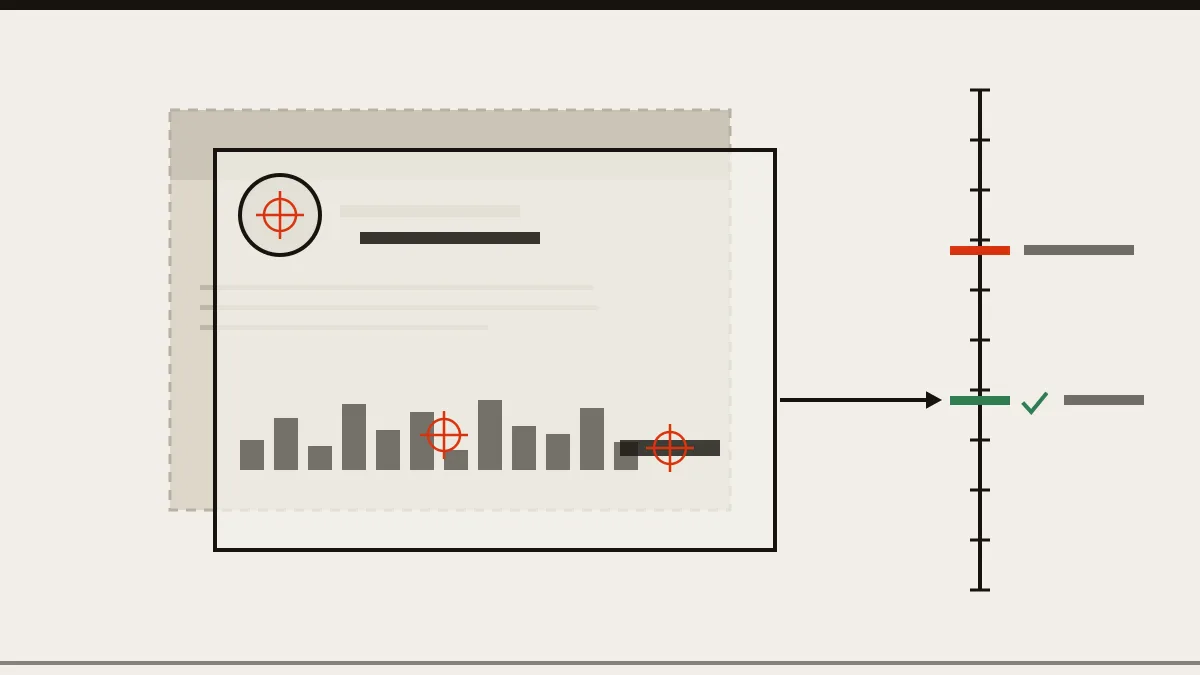
X lists ban evasion inside its Authenticity policy, dated April 2025, in a single line: you may not circumvent X enforcement actions (X Help Center). The same page says inauthentic accounts are reported through the in-app reporting flow, so the practical answer to how to report someone going around a Twitter ban is short. Open the new profile, choose Report from its menu, describe it as a replacement for an account that X suspended, and name the old handle. The difficult part is not the menu. It is the connection. The reviewer has to be persuaded that two accounts belong to one person, and X decides that with signals it never shows you. Your job is to hand over everything visible that links them, briefly, and to leave out anything you are guessing. Searches phrased as "how to report someone on Twitter for circumventing ban" end up at the same answer, because there is no separate evasion button to find.
The evidence that links two accounts is usually sitting in plain view:
- Dates. The old account's last post ID and the new account's first post ID, both decoded. A new account whose first post lands two days after the suspension is a fact, not an inference.
- The old account's numeric ID, if you saved it, and the handle it last used.
- Self-announcements. "New account, the old one got suspended" in a bio or a first post is the strongest evidence there is, and it is common.
- Repeated material. The same avatar, banner, bio phrasing, pinned post or link in bio.
- About this account. X added a panel in November 2025 showing an account's join date, the country or region it is based in, how many times its username has changed and which app store it connected through (TechCrunch, 21 November 2025). A join date after the suspension and a string of name changes both belong in the report.
- The same targets. An account that picks up exactly where the old one stopped, replying to the same people about the same thing.
What you cannot show is the thing people most often ask about. Devices, network addresses and payment details are X's to see, not yours. Say what you know, attach the links, and leave X to match the rest. Two things to avoid while the report is open: making an account to watch the new one, which looks like the very behaviour you are reporting, and replying to it, which hands the person a thread in which to claim they are the one being targeted.
Platforms disagree about whether a banned user may ever come back, which is worth knowing before you promise anyone permanence. X treats circumvention as its own breach. YouTube now offers some terminated creators a formal way back, a one-year return route that excludes copyright terminations. And when the returning account is not merely back but pretending to be you, the case is impersonation rather than evasion, where the person impersonated has the stronger standing, as it does in Instagram's two impersonation queues.
Why X will not IP-ban anyone for you
No. X answers this in its own help centre, under the question of why it cannot block an account from making new accounts: "IP blocking is generally ineffective at stopping unwanted behavior." Its reasons are the practical ones. Many unrelated people share an IP address, so a block catches bystanders, and an address is easy to change with a different network or a free app. So anyone searching how to get someone IP banned on X is chasing a control that X does not offer to users and does not rely on itself. The honest version of the goal is the one above: report the new account, link it to the old one, and let X apply the signals it does use. Anyone who offers to arrange an IP ban for a fee is selling a word, not a mechanism.
Bots, spam and the report automation pitch
To report a Twitter bot, start with what the account does rather than what it is. Automation is allowed on X; spam is not. X's help page on automated account labels says its automation rules require automated accounts to display a label and to stay connected to a human-run account, and that the label names who manages the bot (X Help Center). So an account posting on a timer with no label and no stated owner is making a checkable claim about itself, and that belongs in the report. Report the posts as spam when they carry the problem, such as identical replies pushing the same link under hundreds of conversations. Report the account as spam when it posts little but behaves like a machine, following and unfollowing in bursts. One report showing the pattern does more than twenty reports of single replies. Pick three or four posts that are word-for-word identical, attach them to one report, and say in a sentence what repeats.
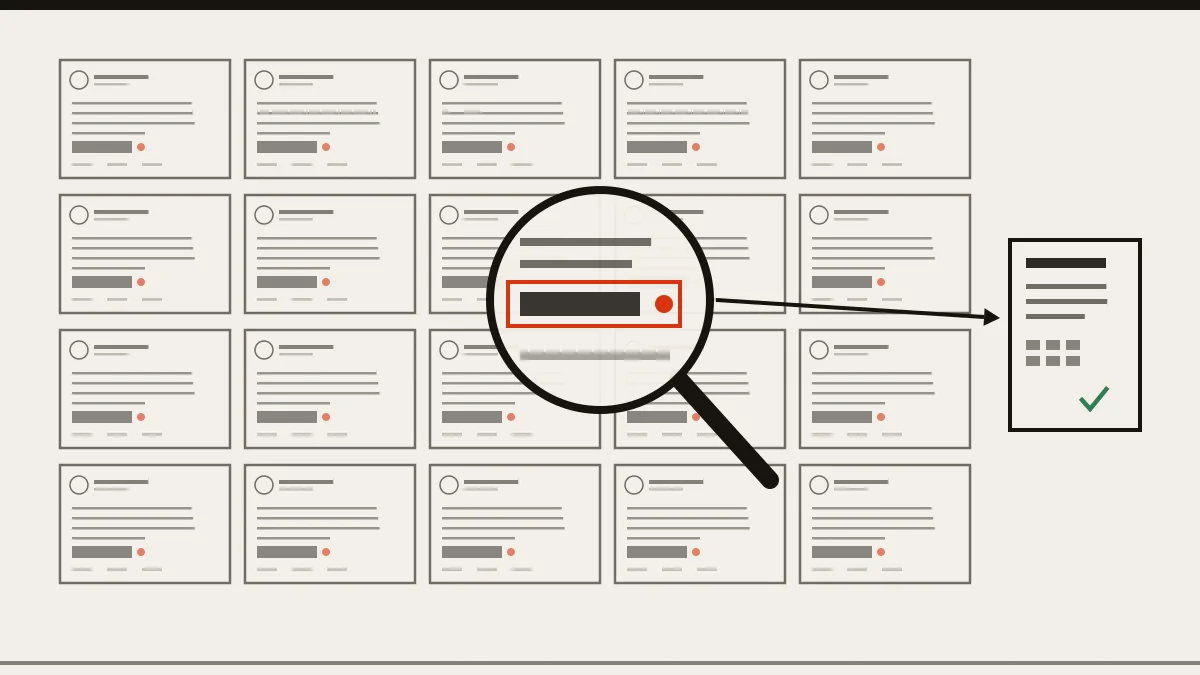
Post IDs help here too. Decode the IDs of a suspect account's replies and you get its posting rhythm to the millisecond: replies forty seconds apart through the night, or ten identical replies stamped inside the same second, are a timetable no person keeps. A short line in the report saying "twelve identical replies between 03:10 and 03:14 UTC, IDs attached" gives the reviewer something to check in a minute, which is what you want. It also stops the report reading as a complaint about opinions, which is how a lot of bot reports are closed.
Report volume is the wrong lever on bots in any case, because platforms catch most of them without anyone reporting. LinkedIn is the clearest published example: nearly all the fake accounts it stopped in its latest reporting period were caught before any member reported them. WhatsApp works the same way for a different reason, since encrypted chats leave reviewers with behaviour signals, not chat content, and account behaviour is what gets acted on at scale.
What "twitter report automation" actually sells
Search for twitter report automation, or for a Twitter report spam bot, and you will find products promising to file reports for you, in bulk, on a schedule. There are two kinds. One is a dashboard that submits nothing and shows a counter going up. The other really does submit, from accounts the seller controls or from yours, and that breaks X's rules twice over: its automation rules, updated in April 2026, apply to any scripted activity on the platform, and its reporting rules treat coordinated or duplicate reports as misuse that can get the reporting accounts actioned. In the UK there is a third problem. A knowingly false report can fall within the false communications offence, and paying someone else to file it adds the legal risk of false reports to the person who paid. We do not sell report automation, and we do not file reports in bulk. We file one accurate report per breach, or none.
A Twitter counterfeit report runs on its own form
A twitter counterfeit report does not start from the post's menu. It runs through X's intellectual property forms, where counterfeit sits beside trademark, copyright, counter-notice and retraction as its own route. X's counterfeit policy defines counterfeit goods as goods, digital ones included, sold or promoted using a mark identical to, or substantially indistinguishable from, someone else's registered mark without permission (X Help Center). The line it draws matters when you choose the form. Counterfeit is about selling or promoting fakes. Using a brand in a way that misleads people about affiliation, without selling anything, falls under the trademark policy instead. And some things are not violations at all: news, information or commentary about goods, and the resale of genuine branded goods, which the policy says may not breach it. When X does find a breach, it may suspend the account or disable access to the material, and in some cases an account is permanently suspended on first review.
The form itself is more open than the copyright one. When we loaded X's counterfeit form on 23 September 2026, its first question offered two answers: that you are the trademark holder, or that you are reporting misuse of someone else's trademark. Copyright is narrower, accepting only the owner or an authorised representative. Fill in every field the form asks for, because X's policy says an incomplete report triggers a follow-up request and a delay. Where the fakes are listed through X's own shopping features rather than in ordinary posts, there is a separate path: the product tile has a Report product option, and choosing an intellectual property violation there asks you for the product ID (X Help Center).
What makes a counterfeit report succeed is paperwork rather than outrage. Have the registration details of the mark to hand, with its number, the office that issued it and the goods it covers; X's separate trademark form, which we loaded on 21 September 2026, asks for a registration number and says pending applications are not sufficient. Then show the listing itself: the post or product link, the price, the photographs and any wording that invites buyers to message privately or pay off-platform. A price far below the genuine article helps, and so does a side-by-side of the genuine packaging. If you are a customer rather than the brand, tell the brand as well. Its report carries evidence yours cannot.
Copyright is where speed and exposure trade places. A notice for your own photo or video is often the quickest removal X offers, but the poster receives your notice, and a counter-notice can bring the post back. Meta's version of that trade-off is set out in the DMCA put-back clock, and X's policy runs on the same US statute.
How do you get someone's tweet deleted, or their account banned?
Only two parties can delete a tweet: the person who posted it and X. Everything else, including every service that promises it, works by persuading one of those two. So the honest answer to how to get someone's tweet deleted is a short ladder. The first rung is the author, and it is underrated: a calm, specific request can work when the post was careless rather than malicious, and it costs nothing. Next comes X, through a report under the rule the post actually breaks, which is what everything above is about. The third is a legal instrument aimed at the author or the platform, such as a court order in a defamation claim, or a copyright notice when the post uses your photograph. When none of those applies, what remains is our own work: suppression, which leaves the post where it is and works on who finds it. Each rung is slower and more expensive than the one before. Try them in order.
People asking how to get someones twitter banned, apostrophe or not, are asking a different question, and the answer is harder. Nobody can order X to suspend an account. X's enforcement runs from a warning through post removal and a read-only period to permanent suspension, and its policies say the outcome depends on how serious the breach is and on the account's history. Reports feed that decision; they do not make it. An account that breaks a serious rule, repeatedly and provably, will usually be dealt with. An account that is merely unpleasant usually will not be, however many people report it.
Defamation is where most disappointment sits, because X has no report category for "this is false". Platforms that do offer a route tend to restrict a post in one country rather than delete it everywhere, as Meta's form does, often producing a country block, not deletion. On X the realistic sequence is a report if the post also breaks a platform rule, a letter to the author, and then legal advice on whether the statement is serious enough to pursue.
Some things cannot come down at all, by any of these routes, and we would rather say so here than after you have paid. Truthful reporting stays up. Public records stay up. Opinion, however unkind, stays up. What can change is how prominently those things appear against your name, which is suppression and not removal, and we tell clients which of the two they are buying before any work starts. We never forge a notice, never bluff a lawsuit, never ask for a password and never promise that a report will succeed. The full list of limits is in our disclaimer.
Intimate images are the exception to every "try this first" above, because speed matters more than sequence. Report the post on X under private or intimate media. In the US, X also runs a TAKE IT DOWN Act form, which asks whether the image shows you or someone you are the authorised representative for (X Help Center). And create a hash with StopNCII.org, so that participating platforms can block matching uploads without the image ever leaving your device.
Intimate images of you shared, or someone threatening to share them? Get free, confidential triage from us. Nobody here will ask to see the images. We point you to whichever free route above fits first, and what you tell us stays with us unless you agree otherwise.
How to check when someone was banned from Twitter
X publishes no suspension dates, and a suspended profile shows an "Account suspended" notice with no date on it. So how to check when someone was banned from Twitter comes down to bracketing. The upper bound is the first moment anyone recorded the profile as suspended: an archive capture showing the notice, a dated screenshot, or a news report. The lower bound is the account's last surviving post, and this is where post IDs earn their keep again. Find the latest post ID you can, in an archive, in an embed on another site or in a search snippet, decode it, and you have the last time the account was known to be posting, to the millisecond. The ban falls between the two. If the account changed its handle before it was suspended, x.com/i/user/ followed by its numeric ID will still open it. A read-only lock is invisible from outside, so a bracket like this only ever describes a suspension that the public can see.
That is the tweet, its number, its copies and the people each route reaches. The rest of our briefings, on every platform we file with, are on the Obscura blog, and our team page explains who does this work and how. If you are unsure which of these routes fits your case, the Obscura home page sets out what we take on and what we turn down.