What does reporting someone on Instagram do, in plain terms?
Reporting someone on Instagram asks Meta to check an account, or one thing it posted, against the Community Standards that now govern Facebook and Instagram alike, and to act only if a rule has been broken. That is the entire mechanism. Nobody votes, nobody keeps a tally, and the person you report is not told your name unless your report was a copyright or trade mark claim. So what does reporting someone on Instagram do when the account really is in breach? It hands a reviewer, human or automated, a specific target and a specific rule to test it against, and the result can be anything from one post coming down to the whole account being disabled. When no rule is broken, the account carries on exactly as it was. Instagram's help centre says in terms that the number of times something is reported does not decide whether it is removed (Instagram Help Centre), so one accurate report weighs what fifty do.
That answer disappoints people who arrive angry, and it is meant to. A report is a request for a ruling. It is not a punishment you can order.
Does reporting someone on Instagram do anything when you never hear back? It does, just less visibly than people expect. The report is logged against your own account, and the decision is filed in your reports record under Help, where you can read it later and, for some decisions, ask for another look. If the second review goes against you as well, Instagram's appeals page says you may be able to take a decision about content you reported to the Oversight Board within 15 days. In the European Union a reporter can also go to a certified out-of-court dispute body, and Meta's own figures show why asking again is worth the effort: in the first half of 2026 Instagram received 5,179 complaints from EU users whose notice about Instagram content had produced no action, and 1,542 of those decisions were reversed (Meta DSA transparency report for Instagram, January to June 2026, published 28 August 2026). Silence usually means the report is still waiting in a queue, or that it was decided and nobody checked the record.
This briefing is about the person rather than the post. If your problem is one comment, photo or story, the item-level route in how to report a comment or post on Instagram is the better fit, and if you want the sequence after you press Submit, on both sides of the screen, we have mapped the review timeline once your report is filed. What follows stays with the account: what a report against a whole person can end in, how to file one that a reviewer can act on, and the routes, legal ones included, that end an account when reporting cannot. It is written by the same desk at Obscura that files these cases for clients.
Six things a report against a person can end in
Meta describes its enforcement with three verbs it published on 10 April 2019 under the heading "Remove, Reduce, Inform": remove content that breaks the rules, reduce the spread of material that is problematic but allowed, and inform people with added context (Meta, 2019). The same announcement said Instagram had begun limiting posts that are inappropriate but within its guidelines from being recommended on Explore and hashtag pages. That middle verb is the one reporting guides leave out. An account you reported can stay up, keep every post, and still lose most of its reach, because Instagram judged the content allowed but not fit to recommend. If it is a professional account, its holder can see this in Account Status, which since December 2022 has shown whether the account's content is eligible to be recommended to people who don't follow it (Instagram Help Centre). From outside, nothing appears to have happened.
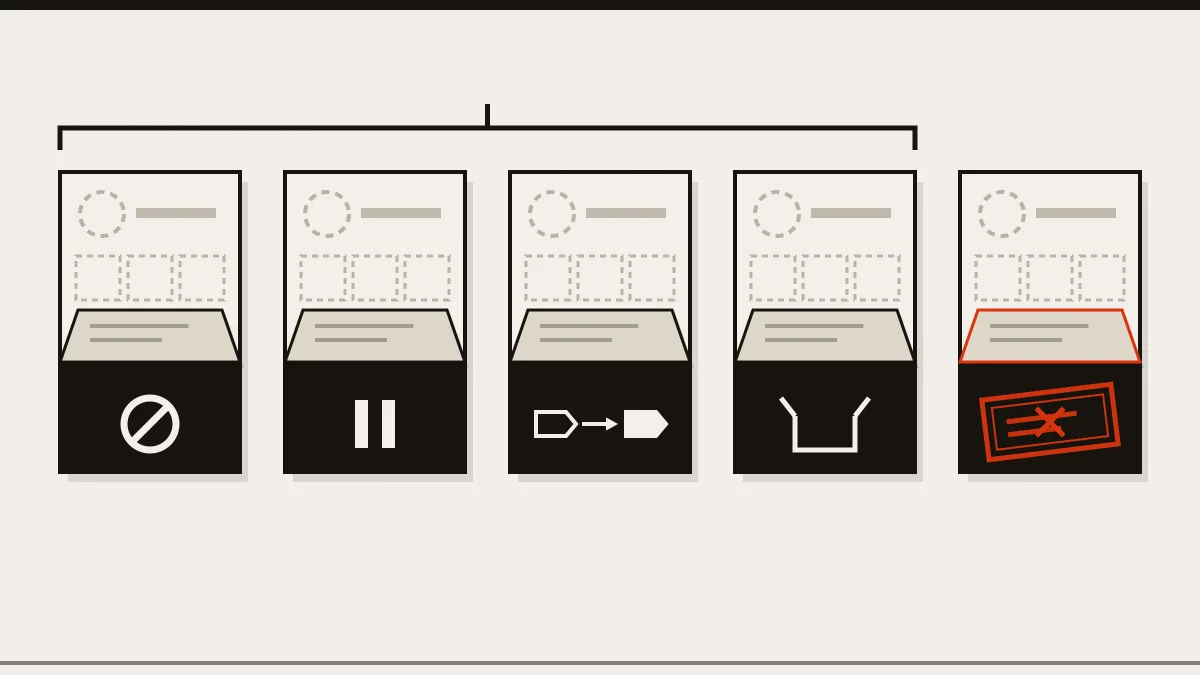
Put the verbs together with Meta's strike system and a report against a person has six possible endings.
| Outcome | What triggers it | Who is told | What undoes it |
|---|---|---|---|
| Nothing changes | No rule broken | You, in your reports record | A second review, if offered |
| One item removed | That item breaks a rule | The holder, in Account Status | The holder's review request |
| Reach reduced | Allowed, but not to be recommended | Creator and business holders, in Account Status | Editing or removing the content |
| Features limited | Strikes building up | The holder | Strikes lapse after a year |
| Account disabled | One severe breach, or many | The holder | An appeal, sometimes |
| Account deleted | No proof of age, or a family request after a death | Nobody outside Meta | Nothing |
In our experience the first row is the commonest by a distance, and much of it is not a verdict that the person behaved well. It is a verdict that the reason you picked does not describe what you reported. A harassment campaign filed as spam gets tested against the spam rules, fails them, and stays up. Refusals on other platforms follow the same pattern, which is why we have written separately about the wrong-rule problem on X, where most account refusals turn out to be procedural rather than a judgement on the facts.
The middle rows are where most real enforcement lives, and the reach row is the least understood of them. Instagram's page on recommendations says three categories of content are allowed on Meta's apps but may not be eligible for recommendation, and calls its Recommendations Guidelines a higher standard than the Community Standards (Instagram Help Centre). Meta counts strikes against an account for each violation, restricts features as they build up, and lets them expire after a year, so an account that breaks a rule once in a while can collect removals for years without ever being disabled (Meta Transparency Center). Disabling is reserved for repeated breaches or for a single violation severe enough to justify it, and Meta names child sexual exploitation as the example of the second kind.
What the person you reported sees depends on the row they land in. Account Status, inside their own settings, lists content Instagram removed and features they can't currently use, offers a review request, and for professional accounts shows recommendation eligibility; Instagram says it usually warns an account before it loses access altogether. None of it names you. That still matters in the named-individual cases we handle, because someone who notices a removal often guesses who filed it. Plan for the reaction before you report, and keep a dated note of anything that follows, since retaliation for a report is itself evidence of a course of conduct.
The last row is the narrowest, and people confuse it with the one above it constantly. A disabled account is suspended from use and can come back on appeal. A deleted account is gone. Instagram deletes someone else's account in only two situations it publishes: an under-age user who cannot prove their age, and a verified request from immediate family after a death. Other platforms draw the line in a similar place, and YouTube is unusually explicit about it, publishing the three reasons it gives for ending a channel. No platform lets a stranger's report delete an adult's account outright.
How do I report someone on Instagram as an account rather than a post?
How do I report someone on Instagram so the whole account is reviewed, not one upload? Start from the person's profile. Tap their username anywhere it appears, open the options menu at the top right of the profile (three dots), tap Report, and choose the option that describes the account itself rather than a single post. Instagram then offers a short set of account-level reasons: the account is posting things that shouldn't be on Instagram, it is pretending to be someone else, or it may belong to a child under 13. Pick the one that matches, answer the follow-up screens, and submit. On a computer the route is the same at instagram.com: the options icon sits next to the username on the profile, and Report there asks what kind of account you are flagging. The hard part is choosing the reason, because the reason decides which rulebook the reviewer opens, and a strong case filed under the wrong heading fails.
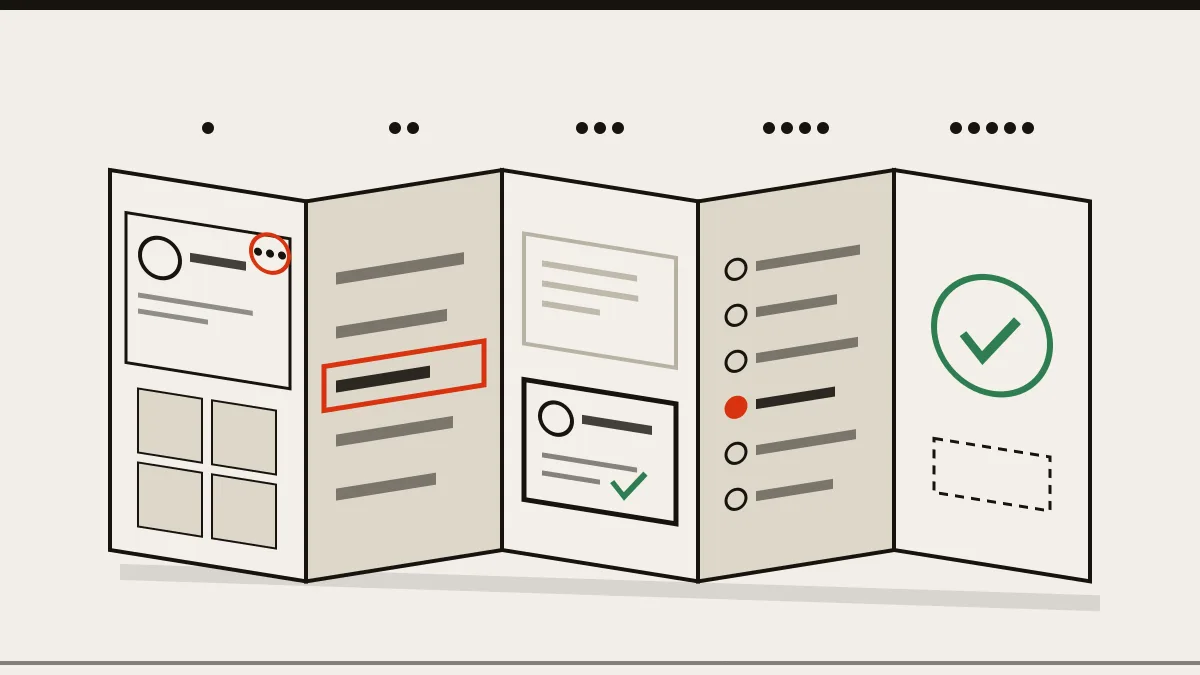
Written out for the app:
- Open the profile. A username on a post, a story, a comment or your message thread all lead there.
- Tap the three dots at the top right of the profile, then tap Report.
- Choose to report the account, not a post, when the menu asks which.
- Pick the reason that describes the account's behaviour, then work through the follow-up questions to the end.
- Submit, then decide separately whether to block or restrict. Blocking does not withdraw the report.
Whichever way the question gets typed (how do you report someone on Instagram, how to report someone on Instagram, how can you report someone on Instagram), the answer begins at the profile, because that is the only surface where the report is about the person. A report from a post is a report about that post. Help Centre wording for both routes is on Instagram's report a post or profile page.
Choosing the reason when one account does several things
Account-level reasons are broad on purpose, and the screens after them ask you to narrow the complaint to a specific rule. When a single account harasses you, copies a friend's photos and posts spam, file under the behaviour that is most serious and easiest to see, not the one that upsets you most. The impersonation option sends a reviewer to identity rules, which bite only when the account is copying a real person or brand. The option for content that shouldn't be on Instagram opens the wider rulebook: bullying, threats, hate, scams, nudity and the rest. The under-13 option is for accounts you genuinely believe a child runs. Choosing a heavier reason than the evidence supports does not speed anything up. The reviewer tests the reason you picked, finds it unproven and closes the report, and the record now shows a refusal against that account for that rule.
Build the pattern before you report
A profile report works best when the problem is visible on the profile. Many of the accounts our clients bring us are not like that. The breach is spread across dozens of stories, replies and messages, none of which looks serious alone, and the profile grid itself is clean. When we prepare one of these for a client, the file is built before anything is filed: each item's link, the date it appeared, a screenshot showing the handle and the time, and a note of which rule it breaks. We also open the account's About this account page, which shows the date the account joined and how many times its username has changed. A two-week-old account with four former usernames tells a reviewer something that no single post can.
Then we file in layers. The single worst item goes in from its own surface, under its own reason, because that is the report most likely to be tested and upheld. The account goes in from the profile. A removal on the first report adds a strike, and the account-level report puts the pattern in front of someone. Neither guarantees anything.
How can you report someone on Instagram who blocked you, or without an account?
Once you are blocked, the profile and every button on it disappear from your side, so the in-app route needs a friend who can still see the account. The web forms don't. Instagram's impersonation form accepts reports from the person being impersonated or someone authorised to act for them, with photo ID, and the full procedure is in our briefing for anyone who can say someone is impersonating me on Instagram. The under-age form is open to anyone and asks only for the username. Rights holders use the copyright and trade mark forms. False statements of fact go through Meta's defamation form, which covers Instagram as well as Facebook and is examined in our note on Instagram and Facebook defamation reports. That form is jurisdiction-gated and tends to end in a country-level restriction rather than a deletion.
Instagram bot report: the bots you report, and the bots that report
"Instagram bot report" covers two opposite searches, and it helps to separate them before doing anything.
The first is the lawful one. Swarms of automated accounts leave the same comment under every post, send link-laden message requests or follow and unfollow in bursts, and you want them gone. Report each one from its profile as spam, but do not rely on reporting alone. Instagram's Limits setting, launched worldwide on 10 August 2021, automatically hides comments and message requests from accounts that don't follow you or only followed you recently (Instagram), and Hidden Words filters phrases before you see them. For a public figure or a business being hit in waves, those two settings do more in an afternoon than a week of individual reports. Filters have one catch. A message you never saw is a message you cannot report, so keep the filter for the spam and report the threats.
Before reporting a crowd, check that it is a crowd of bots. Real people who dislike you are not spam, however many of them turn up after a post goes viral, and a spam report against a genuine critic fails and can look retaliatory. Bots give themselves away in ways a reviewer can see: accounts created within days of each other, no posts or the same handful of stock images, identical comments word for word, and follower lists that point at one another. Report those. Answer, restrict or ignore the rest.
The second meaning is the one we get asked to sell. Report bots are scripts or paid panels that sign into batches of accounts and press Report on a target again and again. Meta's rules prohibit exactly this. The Inauthentic Behavior policy bars using fake or inauthentic accounts to "misuse Meta reporting systems to harass, intimidate or silence others" (Meta Community Standards), and since report volume is not what decides removal, the flood buys nothing even before anyone notices it. We have taken apart why report bots backfire on Instagram, including the credential theft that often rides along with the downloads.
The same arithmetic holds on every platform we work on. TikTok publishes proactive-removal figures showing most content it takes down is caught before any user report arrives, which is the backdrop to the same report-count myth on TikTok. Snapchat publishes no reporting interface for a program to call at all, which is why our look at what a Snapchat mass report bot actually sells finds the buyer's own session doing the work.
Paid versions are worse than useless for the buyer. We have documented what paid ban sellers charge, and who carries the risk when the "service" is a Telegram handle with a payment link, and on WhatsApp the usual price is the buyer's own account, because a WhatsApp mass report bot runs on a session the buyer hands over. If you suspect a report wave has been aimed at your own account, don't answer it with one of your own. Check Account Status, request a review of each removal, and keep every notice, because a pattern of groundless removals is evidence too.
How to report someone on Instagram for buying followers
Report the account from its profile and choose the spam route. There is no menu item called "bought followers", but Meta's spam rules forbid selling, buying or trading engagement, and follows count as engagement, so spam is the heading a reviewer will test it under. Say what you can actually show. A jump from 2,000 to 60,000 followers in a week, a follower list full of empty, recently created accounts, or engagement that sits nowhere near the follower count are all things a reviewer can check for themselves. The most useful single exhibit is two screenshots of the follower count taken days apart, dates visible, because they show the jump instead of asserting it. Leave out anything you only heard, including screenshots of a seller's advert that nobody can connect to the account, since an unprovable allegation weakens the provable ones beside it.
Keep expectations modest. When Instagram announced its crackdown on inauthentic activity in November 2018, the stated action was stripping out the likes, follows and comments that third-party growth apps had faked, and that is still the usual outcome: the numbers shrink and the account stays. Knowing how to report someone on Instagram for buying followers matters most when those numbers are being used to sell something to you.
That is where the complaint leaves Instagram. If a competitor, influencer or shop is using inflated figures to win customers, the conduct can amount to a misleading commercial practice under UK consumer law, and the routes are consumer ones rather than platform ones: the Citizens Advice consumer service, which refers cases to Trading Standards, and the Advertising Standards Authority where the numbers appear in marketing.
Be precise about which rule you invoke. The fake-review ban that took effect on 6 April 2025 under the Digital Markets, Competition and Consumers Act 2024 is written around reviews of a product or trader, and neither the Act nor the CMA's fake-reviews guidance mentions bought followers or likes, so the argument is misleading marketing, not fake reviews. Fake reviews sit in the same family, and the moderation logic is the one we describe for the review-site version of the same problem. One boundary from our side: we don't buy, sell or manufacture engagement for anyone, a line written into the lawful-use terms we hold every client to.
How to know if someone got banned on Instagram, and what it changes
Instagram does not publish who it has banned, and the account holder is the only person it tells. The one official signal a reporter receives is the decision on their own report, filed in their reports record. Everything else is inference from a profile that no longer loads, and a profile that won't load can mean five different things: the person blocked you, deactivated temporarily, changed their username, deleted the account, or had it disabled by Instagram. From your screen those look identical. Only the last is a ban. That is why searches for how to know if someone got banned on Instagram produce confident guesswork. The honest method is to rule causes out, starting with the cheap ones, and to treat anything you cannot rule out as unconfirmed. For anyone with a grievance against the account, the more important question is not whether it was banned but what the disappearance does to the case, and in our experience the answer is usually less than people hope.
| What it really is | Still live? | What it means for your file |
|---|---|---|
| They blocked you | Yes | Report through a friend or a web form |
| Deactivated | Paused | Keep everything. It can return at any time |
| New username | Yes | Record the new handle and carry on |
| Deleted by the owner | No | Copies elsewhere may survive. Legal time limits still run |
| Disabled by Instagram | No, for now | An appeal can restore it. Watch for a replacement |
Of the five, "disabled" is the one people celebrate too early. The holder can ask for a review, Instagram publishes no deadline for deciding it, and decisions do get reversed. Meta's own integrity reporting put Instagram's enforcement precision at about 92% at the end of the first half of 2026, which means roughly one action in twelve was wrong, and some of those wrong actions are disabled accounts that come back (Meta Transparency Center). That is why we keep a client's file open well after a profile disappears.
How to know if someone is banned on Instagram, or was banned last month
Four checks, in the order we run them. First, your reports record, because a decision there saying action was taken is the only confirmation Instagram gives an outsider. Second, a search for the person's display name and profile photo from an account they have not blocked, which catches blocks and renames. Third, a look for a replacement: a near-identical handle, the same profile photo, the same followers being followed again within days. Fourth, time, because a deactivated account comes back the moment its owner logs in and a deleted one can be restored during a cancellation window that Instagram says varies by region. Instagram also allows a profile to be deactivated only once a week, so an account that vanishes and reappears more often than that is not simply being paused.
People ask how to know if someone is banned on Instagram as if there were a lookup. There isn't. How to know if someone was banned on Instagram, weeks after the fact, runs through the same four checks, and working out how to know if someone's Instagram got banned for a specific reason is impossible from outside: Instagram explains a disabled account to its holder, not to the public.
When a client tells us an account "got banned", the first thing we look at is what survived it. Screenshots, reposts, quote posts and search results do not vanish with the profile. Copies are the recurring theme of our work on other platforms, from TikTok content removal and the copies it misses to X, where a report attaches to one post ID and none of its copies. The second thing is the clock. In England and Wales a defamation claim must be brought within one year of publication (Limitation Act 1980, s.4A), and under the single publication rule in section 8 of the Defamation Act 2013 a later republication by the same publisher in substantially the same form does not restart it. An account going dark stops neither.
Can you get someone's Instagram banned, or only reported?
Only reported. No user can ban another user, and Instagram has no setting that lets you do it, so the search "how to ban Instagram user" has one real answer: show Instagram a breach serious or repeated enough that it disables the account itself. Spelling makes no difference. "How to banned someone from Instagram" and "how to banned someone on Instagram" return the same answer as the grammatical version, as do "how to get someone Instagram banned" and "how to get someones Instagram banned". What changes outcomes is the evidence.
How to get someone's Instagram banned when the account really breaks the rules
If you want to know how to get someone's Instagram banned lawfully, the method is the pattern file above, filed under the correct reasons, from the correct surfaces, and followed up through your reports record when a decision comes back wrong. In our files, the reports that end accounts tend to share three features. The breach is visible to a reviewer without anyone explaining it, it is dated, and it falls squarely under one rule rather than across several. Harassment campaigns often fail as single reports and succeed as a documented pattern, because no one message crosses the line while forty of them plainly do. For some categories it is worth adding a second track that does not depend on Instagram at all. Credible threats go to the police. Scams go to the bank and Report Fraud. Intimate images go to StopNCII, which creates a hash on your own device so partner platforms can block copies without anyone seeing the image.
Then there is the part of a ban that people forget. Disabling an account is not the end if its owner simply opens another. Meta's Account Integrity policy treats accounts "created or repurposed to evade a previous account or entity removal" as violations in their own right (Meta Community Standards). Once one account has been disabled, a replacement run by the same person is reportable for that reason alone, which is often the fastest removal in a long case. Encrypted messaging is the harder environment for all of this, because the reviewer sees only what the reporter forwards; we cover the encrypted-chat version of reporting someone separately.
What gets someone instantly banned on Instagram?
Almost nothing a stranger can arrange. Meta will disable an account after a single occurrence where the violation is severe enough, and child sexual exploitation is its own example. Searches for how to get someone instantly banned on Instagram mostly end at mass-report sellers, and those cannot make an ordinary violation severe or a clean account guilty.
The instant bans people describe in forums usually have a duller explanation. The account had already collected strikes, it committed a separate serious breach nobody outside Meta saw, or its owner deactivated it to avoid attention. From outside, all three look like a ban that followed the last report within hours. None of them was caused by it.
What "how to get someone's Instagram banned Reddit" threads recommend
The Reddit version of how to get someone's Instagram banned is usually a group of friends reporting from several accounts at once, sometimes with invented reasons. That is the conduct the Inauthentic Behavior policy prohibits, and the invented-reason version adds a false report to the problem. Some threads go further and suggest filing an impersonation or under-age report against an adult who is neither. Those routes ask for identity documents or an age check the account holder can pass, so the report fails and leaves a false claim on record. In the threads that ask how to get someone's Instagram banned on Reddit, the replies that hold up are the dull ones: report once, accurately, and keep evidence.
Can you get someone else's Instagram deleted, and can it be fast?
Deletion is narrower than disabling, and almost always slower than people want. An Instagram account is deleted in three situations: its owner deletes it, Instagram deletes it because the user is under the minimum age and cannot verify otherwise, or it is removed after the holder's death at the verified request of immediate family. Everything a stranger's report can achieve stops at disabled. Meta publishes no statement that disabled accounts are later deleted, so we do not claim it. Searches for how to get someone else's Instagram deleted, how to get someone elses Instagram deleted, how to get someone Instagram deleted or how to get someone on Instagram deleted therefore split into two questions. Can you show Instagram a breach serious enough to disable the account? And does one of the three deletion routes apply? For most adults' accounts the second answer is no, which leaves the owner's own deletion, the subject of the next section.
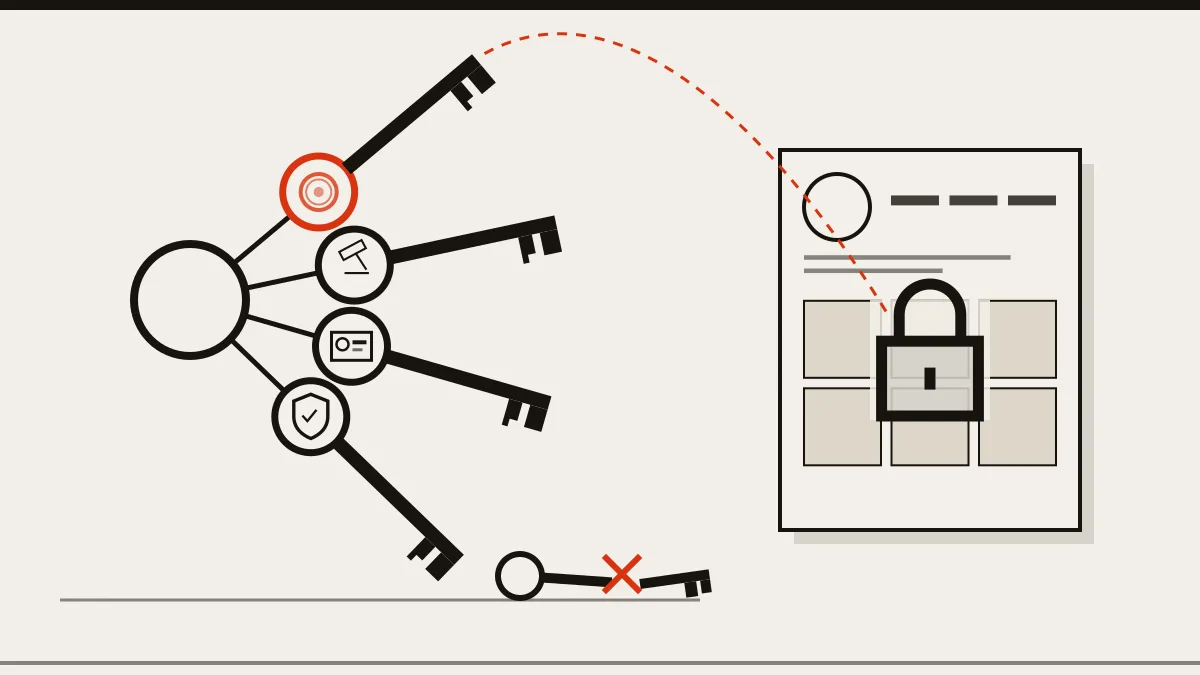
The under-age route is the one outsiders underuse. Instagram's form for reporting a user under the minimum age is open to anyone, logged in or not, and asks for the username. If Instagram cannot confirm the user is old enough, it says it will delete the account. The minimum is 13 in most countries and higher in some. The route is for accounts actually run by children, not a trick for adults who look young.
People who search how to get someone's Instagram deleted fast, or how to get someones Instagram deleted fast, deserve a straight answer. Speed exists in two places. Intimate images, real or AI-generated, now carry legal deadlines: the US TAKE IT DOWN Act requires covered platforms to remove reported non-consensual intimate images within 48 hours, with FTC enforcement from 19 May 2026, and in the UK the Online Safety Act gained a specific intimate-image reporting duty on 29 June 2026. StopNCII hashes the image on your own device, so you never send it to anyone. Credible threats to someone's safety go to the police, who move faster than any report queue. Everything else runs at Instagram's pace, and Instagram publishes no deadline for a first review.
When an account does go, its Google result can outlive it for weeks. The profile page returns an error, but the search listing and its snippet stay until Google recrawls. Anyone can ask Google to update a result for a page that has gone or changed through its Refresh Outdated Content tool, which needs only a Google account and the old URL. It is the least glamorous step in most of our Instagram cases and one of the most useful, because the search result is what a stranger sees first.
Anyone selling "how to get someone's Instagram deleted" as a fixed-price service is selling that missing deadline, and removal, where it comes, is usually of content rather than of the whole profile. Our Instagram account removal service briefing breaks that into its four separate jobs. On every platform the lesson is the same: a removal is only worth the monitoring that follows it.
Getting someone to delete their own Instagram: the letter, the undertaking, the order
The most reliable way to get an account deleted is to have its owner delete it, and there are lawful ways to bring that about. Searches for how to get someone to delete their Instagram mostly end at "you can't", which is true of the button and false of the person. In England and Wales, where an account is publishing material that is defamatory, private, or part of a course of harassment, a claim against the person running it is possible, and the step before any claim is a formal letter. For defamation and privacy the letter follows the Pre-Action Protocol for Media and Communications Claims, which asks the claimant to identify the publication, the words complained of, why they are wrong or unlawful, the harm caused, and the remedy sought, and expects a reply within 14 days unless the letter sets a shorter time (Ministry of Justice).
The remedies a letter can ask for include deletion of the posts, an undertaking not to repeat them, an apology, and, where the account exists only to target one person, closure of the account. Many people who receive a properly founded letter delete the material rather than defend it. The platform route is slower for defamation than most people assume: in the first half of 2026 Instagram received 118,589 defamation notices from EU users under the Digital Services Act and took 171 actions on the basis of the law, plus 15,794 under its own terms, according to the same Meta transparency report.
What the letter cannot do is bluff. A demand has to rest on a claim you could actually bring. Threatening proceedings you have no basis for can be treated as harassment itself, and in the worst case, where a demand is backed by a threat to expose something, it can edge towards blackmail. A letter that overreaches also tends to be screenshotted and posted, which is how a small dispute becomes a large one. We don't send letters for claims that would not survive a lawyer's reading, and we tell clients when the honest answer is that the content is lawful.
Cost belongs in the same conversation. A letter is a modest expense, while a defamation or privacy claim that runs to trial is one of the most expensive kinds of litigation in England and Wales, and the losing side usually pays much of the winner's costs. For most of our clients the proportionate plan is the report, the letter and a deadline, with court held back for cases where the harm is serious and the evidence is strong. A letter from a firm that plainly could follow through does most of the work.
Where the account holder refuses, the next step is the court, and here the legal category matters a great deal.
- Defamation. Courts in England and Wales very rarely grant an interim injunction to stop an alleged libel if the other side says it will prove the words true, a rule going back to Bonnard v Perryman (1891). The usual order comes at the end of the case. After judgment, section 13 of the Defamation Act 2013 lets the court order the operator of a website to remove the statement, and section 12 lets it order the defendant to publish a summary of the judgment.
- Privacy. Misuse of private information is easier to restrain before trial. Section 12(3) of the Human Rights Act 1998 requires the claimant to show they are likely to succeed at trial, which the House of Lords in Cream Holdings v Banerjee (2004) read as more likely than not in most cases.
- Harassment. The Protection from Harassment Act 1997, section 3 gives a civil claim and an injunction for a course of conduct, and breaching that injunction without reasonable excuse is a criminal offence carrying up to five years' imprisonment.
An injunction binds the person, not Instagram. In practice that is enough: an order requiring someone to take down posts, or to stop contacting a named person, is obeyed or enforced far more reliably than any report. What a court will not do is order an adult to delete an account merely because it is unpleasant. The order follows the unlawful material. When the account holder is anonymous, the High Court can order a platform to disclose who is behind it (a Norwich Pharmacal order), which is effective but slow and expensive. The broader map of when a false post becomes a claim is in the legal routes past the report button, and the same letter-before-claim logic applies to a clone or libel campaign on a professional network, as in our note on LinkedIn's clone-and-libel cases.
When the owner does delete, the account does not vanish at once. Instagram's help centre says a profile and its information are permanently deleted 30 days after the deletion request, that the process can take up to 90 days to complete, and that copies may remain in backup storage after that (Instagram Help Centre). A settlement should therefore ask for the deletion to be requested by a date, not merely promised, and should keep your right to return to court if the account reappears under a new name.
So can you get someone to delete their own Instagram? Sometimes, through a letter they take seriously or an order they must obey, and never through pressure you could not defend in front of a judge. This is the work our founder trained in defamation law to do, and it is the route with the best record of making material disappear and stay gone.
If an account is aimed at you and reporting has run out, send us the profile link for an honest read. We review it confidentially before any charge, tell you which route fits (report, letter, order or none), and never ask for your password. Leaked intimate images get free, urgent triage, and we never ask you to send them.
How to report a deceased person on Instagram, and the fake obituary problem
When the account holder has died, Instagram offers two requests, and they run on different evidence. Memorialisation keeps the profile visible with "Remembering" beside the name, freezes it so that nobody can log in, and removes it from some public surfaces. Anyone can ask for it, a friend or follower included, and the proof is a link to an obituary or a news article about the death (Instagram memorialisation request). Removal deletes the account, and only verified immediate family or a lawful representative may request it, with documents such as the person's birth and death certificates or proof of authority under local law. So how to report a deceased person on Instagram depends on what the family wants. Memorialisation preserves the photographs and comments in place, while removal is final and cannot be undone once complete. Meta publishes no processing time for either, so the figures of a week or six weeks in estate-planning blogs are guesses.
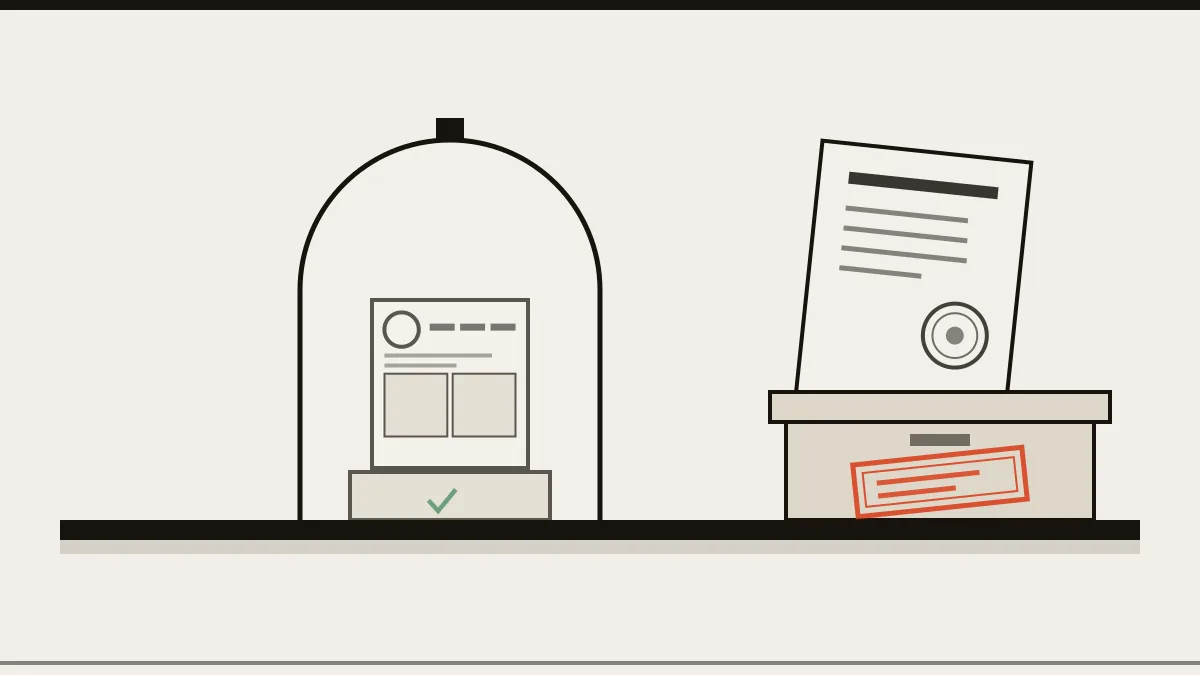
The difference in proof between those two routes makes memorialisation a takedown tool in the wrong hands. Because an obituary link is the whole bar, a fabricated obituary can lock a living person out of their own account, and it has been done to someone as senior as Adam Mosseri, the head of Instagram, whose account was locked in September 2021 after a scammer created a fake obituary (Vice, 9 November 2021). Reversal runs through the account owner: Instagram's page for profiles memorialised by mistake asks the person to log in and verify that the account is theirs, which nobody else can do on their behalf. If it happens to you, act quickly, keep the notice, and treat whoever supplied the fake obituary as a problem in its own right.
One newer feature changes the family's options. Instagram now lets a user name a legacy contact, an adult who can update the profile picture, manage tags and, if allowed, download what was shared, but who cannot post as the person or read their messages. Availability is being rolled out region by region, so check Accounts Centre, under memorialisation settings, before assuming nobody can look after the page. We don't charge families for any of this. The forms are free, and we point people to them.
Facebook runs a parallel system with its own trade-offs, set out in our guide to how Meta memorialises or removes a dead person's account on the larger platform. If a family sends us certificates to support a removal, they are handled under how we store the documents you send, used for that request and nothing else.
What reporting someone never does, and where we stop
A report reaches only what breaks a rule. It will not remove truthful reporting about you, a genuine public record, or an opinion someone is entitled to hold, however unwelcome, and no letter or form can lawfully remove those either. When the harm comes from lawful content, the honest remedy is suppression rather than removal: making sure accurate, better material outranks it, and asking search engines to de-index what qualifies. We say which of the two applies before anyone pays.
Suppression is slower and less satisfying, and sometimes it is the only lawful move. For an Instagram profile that ranks on your name, it means publishing accurate material that deserves to outrank it, from a professional profile to a statement on your own site. It also means using the search-engine tools that genuinely apply: Google's request form for results exposing contact details such as a home address or phone number, its process for refreshing results about pages that no longer exist, and, in the UK and EU, a data-protection request to de-list results that are inaccurate, out of date or excessive. None of those touches the account. They change what a stranger finds when they search for you, which for most people who come to us is the harm they actually feel. The profile can stay up and still stop being the first thing an employer, a client or a new partner sees.
A few lines we hold without exception. We do not report accounts that follow the rules, whatever the fee. We do not run or buy report bots, or send forged copyright notices or bluffed legal letters. We never ask for anyone's password, and we do not ask for payment up front in cryptocurrency. Leaked intimate images get free and urgent help, and we never ask to see them. No ban, removal or deletion is guaranteed by us or by anyone, and the reasons are set out in why nobody can guarantee a ban.
What reporting someone on Instagram does, at its best, is put one clear breach in front of a reviewer who can act on it. The rest is knowing, early, when the answer is a different route. The rest of Obscura's platform briefings cover the same questions for Facebook, TikTok, X, YouTube, Snapchat, WhatsApp and Telegram.