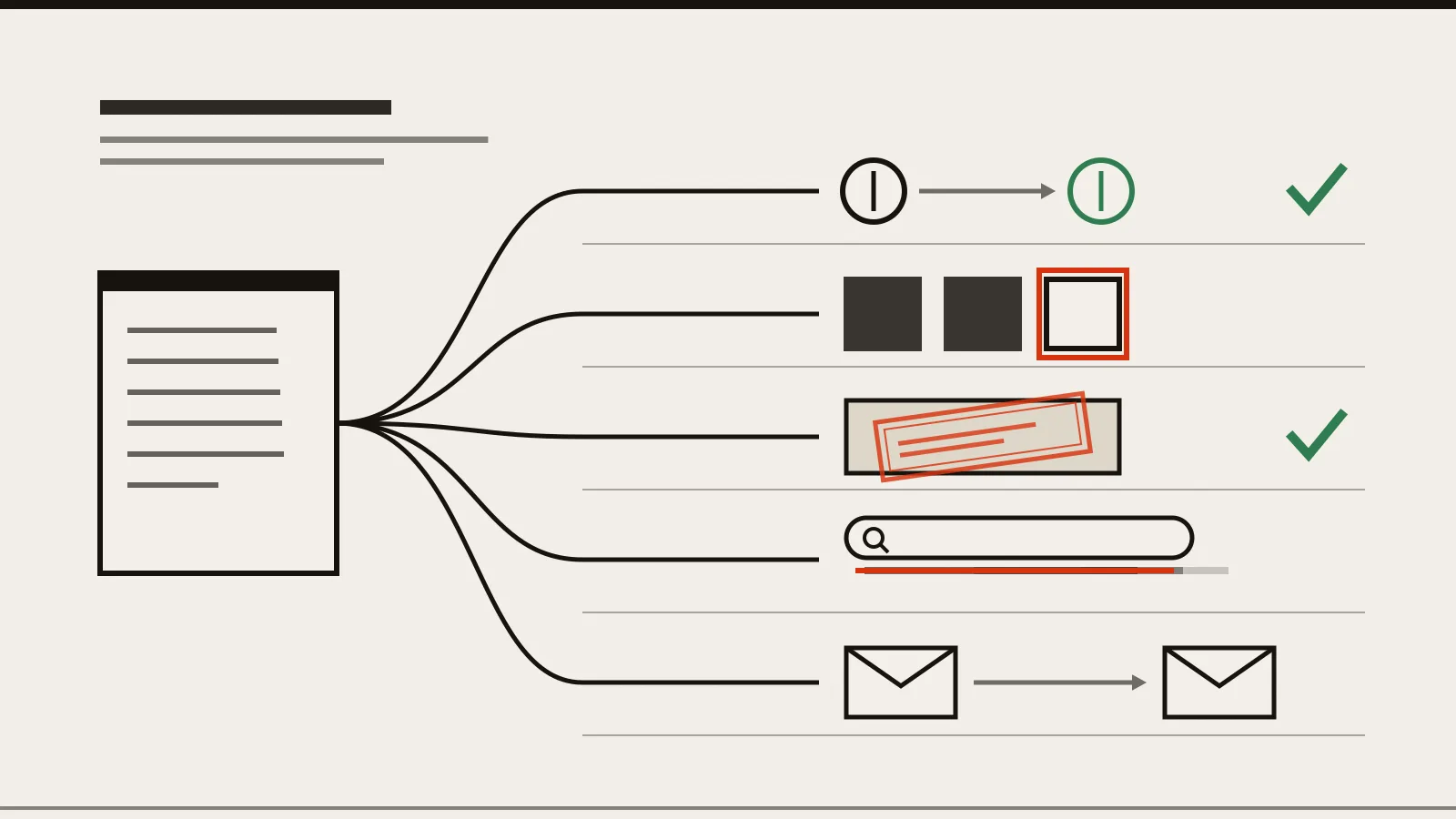
What does a copyright complaint turn into once it lands?
A copyright complaint is a request from the owner of a copyrighted work, or someone authorised to act for them, asking a service to stop hosting or showing a copy. In the United States the request takes the shape set by the Digital Millennium Copyright Act, specifically section 512 of the copyright statute, which gives a host a safe harbour from damages if it acts "expeditiously" once it has a valid notice (17 U.S.C. § 512). That is the legal half. The operational half is that every platform plugs the notice into its own machinery, and the machinery decides what the person on the other end feels. Sometimes the copy disappears and nothing else happens. Sometimes a penalty is logged against the account. Sometimes the item stays up and the money moves. Sometimes only a search engine changes. And sometimes the notice is simply passed to somebody else who may or may not act.
We sort those effects into five outcomes, because the outcome is what you are really choosing when you pick a door.
| Outcome | What changes | Account at risk? |
|---|---|---|
| Claim | Money or visibility moves | No |
| Strike | Item removed, penalty logged | Yes, at a threshold |
| Removal | Item removed | Only for repeat cases |
| Delist | Search result dropped | No |
| Forward | Notice passed on | No |
Most confusion we see comes from expecting one row and getting another. A business owner files a DMCA notice against a complaint site expecting a removal, and gets a forward. A creator gets a claim and treats it like a strike. Read the row first.
Content ID claim vs copyright strike: which one landed on your channel?
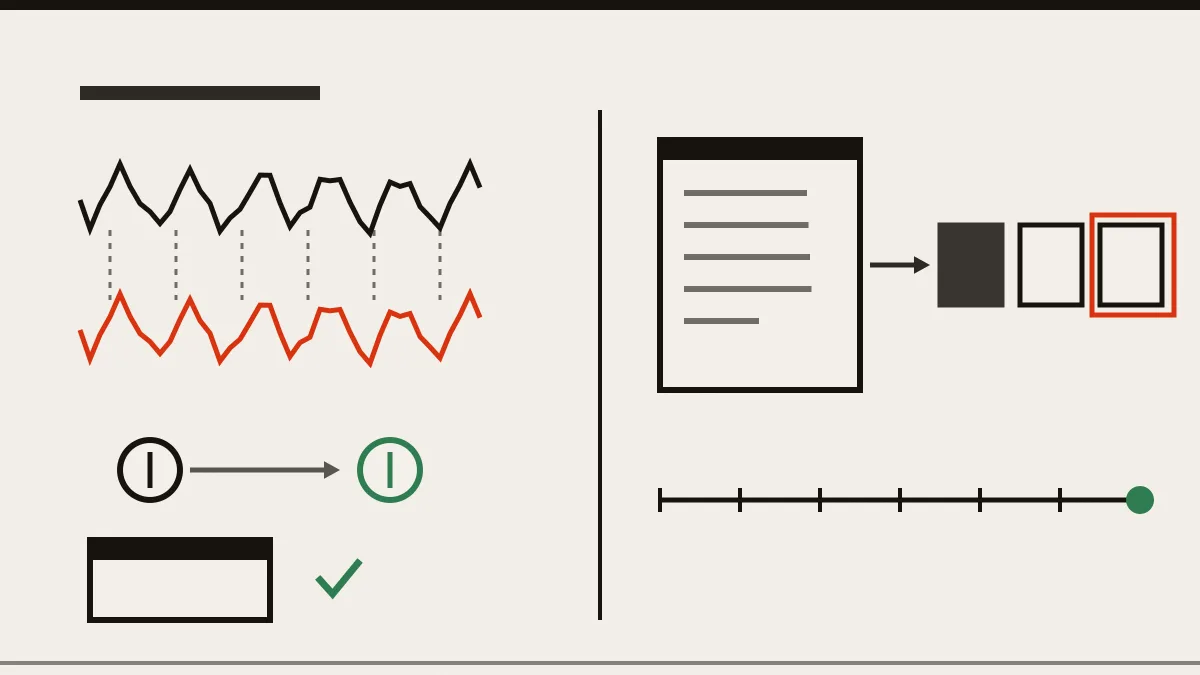
A Content ID claim is an automated match. Rights owners who qualify for Content ID upload reference files, YouTube scans new uploads against them, and when a match turns up the owner's chosen policy runs: block the video, monetise it by running ads, or track its viewing figures, with the choice allowed to differ by country. YouTube's help page says claims "usually don't impact your channel or account" (YouTube Help, Content ID claims). A copyright strike is a different object. It follows a legal removal request, the video comes down, and the strike counts against the channel for 90 days, provided the uploader completes Copyright School, a four-question course. Three strikes inside 90 days put the account up for termination. So the content id claim vs copyright strike question reduces to this: a claim argues about who earns from a video, while a strike argues about whether the video, and in time the channel, may stay up at all.
People who search "copyright infringement YouTube" are usually holding one of these two objects without knowing which.
The volume gap explains why most creators meet claims long before they meet strikes. YouTube's copyright transparency data for January to December 2025 attributes 2,502,941,368 copyright actions to Content ID, 99.48% of the total, against 2,969,817 actions from the public webform that produces strikes (YouTube Copyright Transparency Report, 2025). Counter notifications ran at over 9% of webform requests, against 3% or less for the automated tools. That last figure is the one we watch, because a counter notification is where a sloppy notice comes back to its sender.
Claims can turn into strikes, and the path is worth knowing before you click anything. Dispute a claim and the claimant has 30 days to respond: release it, reinstate it, let it expire, or submit a removal request. If they reinstate it and you appeal, YouTube's dispute page now gives the claimant seven days. A rejected appeal hands the claimant the option of a copyright removal request, and that request is the step that takes the video down and places the strike (YouTube Help, dispute a Content ID claim). Our advice to creators is plain. Dispute when you hold a licence or a real fair-use argument, and keep the licence to hand, because a dispute cannot be withdrawn once sent. Never dispute just to see what happens.
The copyright claim vs copyright strike difference also decides who you complain to about copyright infringement on YouTube. A claim is argued with the claimant inside Studio. A strike is a legal notice, and the only routes out of it are the ones the law and YouTube's policy give you. If you are the rights owner and want an infringing upload gone rather than monetised, the request that does it is a YouTube take down request through the webform, not a flag. Flags feed a policy queue that never issues copyright strikes, which is why the honest answer to does mass reporting work on YouTube for a copyright problem is no. Three strikes active at once is a different matter: that is one of the few things that reliably produces a YouTube channel takedown, and YouTube's strike page says the account and any associated channels can go with it (YouTube Help, copyright strike basics).
Copyright strike support: who can actually lift a strike?
Fewer people than the sellers suggest. A strike leaves the record in three ways: it expires after 90 days once Copyright School is done, the claimant retracts it, or a valid counter notification restores the video after the legal waiting period. That is the whole list. "Copyright strike support" offered by third parties can help draft a counter notification or approach the claimant for a retraction, and both are legitimate pieces of work. What nobody outside YouTube can do is delete a strike from the dashboard. Anyone who asks for your channel login to "clear" one is describing an account takeover, not support.
Can a ComplaintsBoard DMCA takedown remove a complaint about you?
Only the copied part, and only through one inbox. ComplaintsBoard publishes a DMCA page naming its operator as ComplaintsBoard.com in Riga, Latvia, and it takes copyright notices by email at support@complaintsboard.com, with the usual section 512 elements: a signature, the work, the location of the copy, contact details and the two sworn statements (ComplaintsBoard DMCA policy, read by our team on 8 October 2026). The same page warns complainants that a counter-notice can follow, and that the material may come back in 10 to 14 business days unless a court action is filed. That makes the channel copyright-only by design. It is not a removal desk for complaints a business dislikes, and the page itself asks people not to use that address for complaints. The site's FAQ, which our team read on 4 October 2026, says it does not remove complaints without an officially signed court order, and nothing on the DMCA page changes that position.
Copyright protects expression, not facts or opinions. The statute says protection never extends to "any idea, procedure, process, system" and the like (17 U.S.C. § 102), and a complaint that your delivery was late or your refund slow is pure fact and opinion. Nobody owns that. What a business can own inside a complaint is narrower: product photographs it took, a logo artwork, marketing copy pasted word for word, sometimes the text of its own emails. That narrow slice is the only part a complaintsboard dmca takedown can reach.
So the test we apply before any ComplaintsBoard filing has three questions, and all three need a yes.
- Did the post copy something you made, rather than describe something you did?
- Do you, or your company, own that thing, and can you show it?
- Would removing just the copied part fix the problem you actually have?
The third question is where most cases end. If the copied photo comes down and the angry text stays, you have spent a notice and gained very little. When the real complaint is about the words, the routes are policy, defamation or suppression, which our briefing on ComplaintsBoard and PissedConsumer removal walks through, and which our comparison of domain and website takedown services prices honestly. Where the post makes false statements of fact about a named person, a defamation route is open in the UK, and the same evidence discipline we describe for LinkedIn defamation removal applies: quote the sentence, show why it is false, keep the record.
Filing a copyright notice against words you do not own is the expensive mistake. Section 512(f) makes a person who "knowingly materially misrepresents" infringement liable for the damage, and many notices are copied to the Lumen database, where the thing you wanted hidden gets a public index entry with your name beside it.
DMCA takedown cheater website posts: your own photos are the lever
Cheater-shaming websites run on photos, and photos are where copyright actually bites. A selfie you took is your copyrighted work. A photo your former partner took of you usually belongs to them, because copyright starts with the person who pressed the shutter, and that is the line that decides whether a DMCA takedown cheater website notice is honest. Most of these sites sit offshore behind a CDN, so the notice goes to the host found through the IP history, with a Google copyright request for each URL in parallel; Google confirms that search removal works URL by URL, never for a whole domain. If the image is intimate, do not use copyright at all. StopNCII.org hashes the image on your own device without uploading it, and since 19 May 2026 the US TAKE IT DOWN Act has required covered platforms to remove reported non-consensual intimate images within 48 hours. The phrase also has a second meaning in gaming, where publishers file notices against cheat-software sites; those lean on the anti-circumvention rules in section 1201 and, in the end, on lawsuits rather than on a copied picture.
DMCA takedown notice for artists: DeviantArt, ArtStation and the apps your art lands on
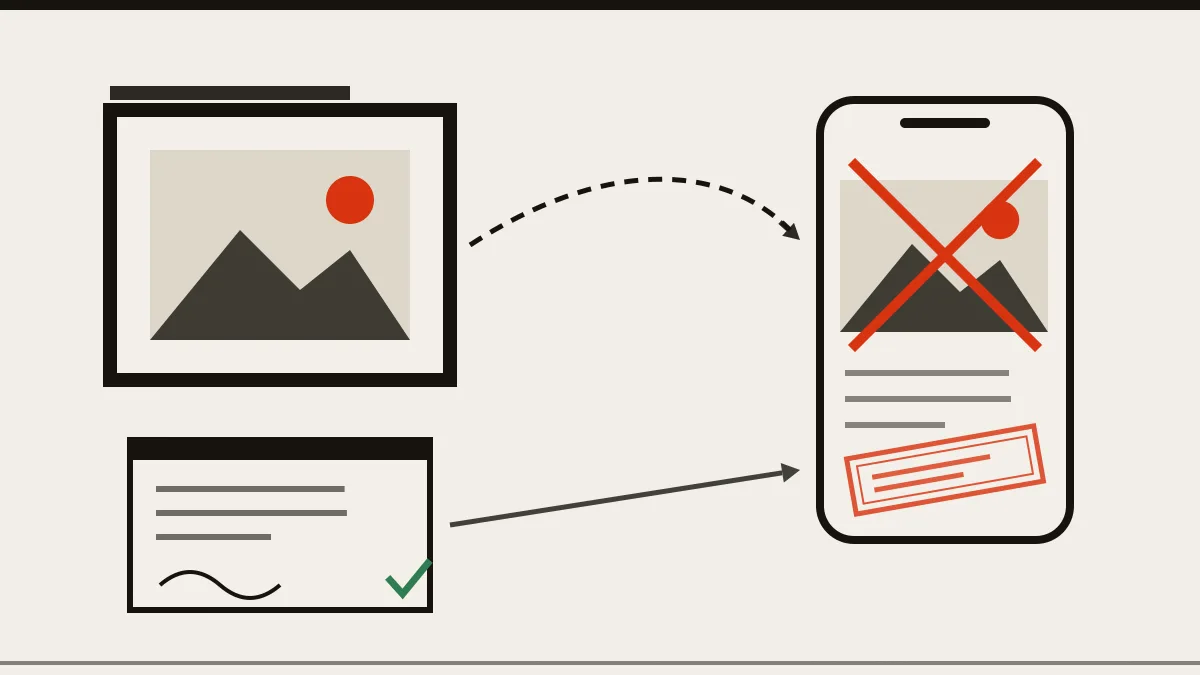
DeviantArt takes a formal notice through a DMCA form on its contact page, which needs a free account, or as a written notice posted or emailed as a PDF to violations@deviantart.com, addressed to its DMCA agent in West Hollywood (DeviantArt copyright policy, read by our team on 8 October 2026). The owner or "an authorized agent" may file. A proper notice leads to removal without a warning to the uploader first, and the policy treats three strikes as a sign of a repeat infringer, while passing off someone else's work as your own is grounds for an immediate ban. That makes DeviantArt one of the few art sites with a stated strike number. For a deviantart copyright complaint about a single traced piece, the in-site report reviewed by staff, in effect a deviantart copyright infringement report, is often the quicker door. For a deviantart dmca takedown notice covering a whole gallery of copies, the formal notice is the document that counts toward that three-strike line.
ArtStation changed hands this summer, and the address changed with it. Epic's infringement page states that from 10 August 2026 it no longer processes IP reports for ArtStation, so notices now go to dmca@artstation.com, run by the new operator KitBash (our team read both pages on 24 September 2026).
A DMCA takedown notice for stolen art needs the same six things wherever you send it, so build it once:
- Your name and a physical or electronic signature (a typed full name is accepted by most forms).
- The original work: a link to your post, your file with its metadata, or the dated sketch.
- The exact URL of every copy, one per line, never just the profile.
- A statement that you believe in good faith the use is not authorised.
- A statement, under penalty of perjury, that you own the work or act for the owner.
- Contact details the platform can use, knowing that many will pass them to the uploader.
Art rarely stays on one site. When a stolen piece turns up on social apps, each app has its own copyright door and none of them is the report button. On Instagram the copyright form sits outside the report menu, and the lawful version of an Instagram account takedown for a repeat art thief runs through those forms, not through anything sold as an Instagram mass report tool. On X the equivalent is a copyright form tied to each post, which is what Twitter copyright removal means in practice and why how to get a tweet taken down starts with the item rather than the account. TikTok works the same way: the steps for how to take down someone's TikTok video begin with the IP form, and the answer to does mass reporting work on TikTok for copied art is that reports do not prove ownership. On Facebook, how to take down a photo on Facebook that copies your work is again a rights-owner form, and on Snapchat a Snapchat takedown request for a copied image uses the IP route in the Support site. Telegram is the outlier, because its rules barely mention copyright, which is why a Telegram DMCA takedown depends so heavily on where the copy is stored.
Course Hero copyright infringement: notes, exams and slides
Course Hero copyright infringement is handled by its parent company, Learneo, Inc., under one copyright policy covering every Learneo service. The notice goes through a web form on the Course Hero copyright page or by email to dmca@learneo.com, and it asks for a description of the work, the URL of each document, your name, address, phone number and email, the two sworn statements and a signature (Course Hero copyright policy, read by our team on 8 October 2026). Learneo says it removes or disables the content, may notify the uploader, and terminates repeat offenders; the same form also accepts reports about infringing algorithmic links. Two details shape a course hero dmca takedown in practice. Your complaint, contact details included, is forwarded to the uploader if a valid counter-notice comes in. And an uploader outside the United States who counter-notifies must accept the jurisdiction of the federal court in Northern California, after which the material may return in 10 to 14 business days.
Ownership is the question that decides course hero copyright removal, and it is less obvious than it looks. Lecture slides, an exam paper or a handout may belong to the lecturer or to the university. In the UK the Copyright, Designs and Patents Act 1988 makes the employer the first owner of work made in the course of employment (section 11(2)), and many universities then hand teaching materials back to staff by policy. Check before you file, because the sworn statement must come from the right person. A student whose own notes were uploaded by a classmate owns them outright and can file alone.
Dailymotion copyright takedown notice, strikes and the "demande DMCA"
Dailymotion, run from Paris, publishes a single copyright page for notices and counter-notices (Dailymotion copyright notification, read by our team on 8 October 2026). A dailymotion copyright takedown notice uses the familiar parts: a signature, a description of the works, the URL of each copy, an address, phone number and email, a good-faith statement and a sworn accuracy statement, sent through the notification form linked from that page. Dailymotion says it will remove content when properly notified and reserves the right to terminate repeat infringers' accounts. It publishes no strike count and no expiry period. The counter-notification side is where it departs from the American pattern. An uploader's appeal is forwarded, personal information included, to whoever filed the takedown, and restoration is described as being at Dailymotion's "sole discretion", with no 10-to-14-day clock promised. For a dailymotion dmca complaint that cuts both ways: the filer cannot lean on a statutory timetable, and neither can the uploader.
That is why dailymotion copyright strike removal is mostly a misnomer. There is no published ladder to climb down; there is a removed video and an appeal form. A dailymotion copyright strike service that promises to "remove strikes" can only file that appeal for you, and the appeal has to be truthful and made by the person who uploaded, so nobody can do it honestly without your facts. Going the other way, a dailymotion copyright takedown needs nothing a paid service adds except time.
Demande DMCA: what a French request actually rests on
A "demande DMCA" is what French-speaking creators and site owners usually call any takedown notice, but the Digital Millennium Copyright Act is United States law, and a French or other EU host is not bound by it as such. Many hosts honour a DMCA-shaped notice anyway, because it already contains what European law asks for. The European rule is the Digital Services Act, whose Article 16 makes hosts run a notice-and-action mechanism and treats a sufficiently precise notice as giving them actual knowledge. In France the 2004 LCEN regime was rewritten by the SREN law of 21 May 2024 to fit the DSA. The UK has no statutory notice at all. Its hosting defence, in regulation 19 of the Electronic Commerce Regulations 2002, simply ends once a host has actual knowledge and fails to act "expeditiously" (legislation.gov.uk, reg. 19). Write the notice once, in the six-part American shape, and it will satisfy all three systems.
eBay listings, itch.io games and Chrome extensions
The DMCA takedown process on eBay is not called DMCA at all. eBay runs it through the Verified Rights Owner programme, VeRO, which accepts reports "only for rights owners or their authorized representatives" and asks for a Notice of Claimed Infringement listing each item (eBay VeRO). Counterfeits, fakes and replicas sit on the same form as copied photos and descriptions, and each listing needs its own line. What comes down is the listing, not the seller; eBay keeps account restrictions for repeat problems. One detail matters for small sellers whose photos have been lifted: eBay's seller guidance points accused sellers to the rights owner's VeRO profile to contact them directly, so publish a profile that says what you will and will not accept, or expect the emails. Keep it short and factual, because sellers will quote it back to you.
itch.io takes copyright notices by email to support@itch.io; there is no form and no named agent, and its terms (updated 15 April 2023) accept notices from copyright owners or authorised agents (itch.io terms, section 6). The unusual part is publication. itch.io posts takedown notices on public pages under itch.io/takedowns, showing the complainant's name and company with the email and phone redacted. So if you send a dmca notice itch.io support will act on, expect your name to sit on a public page beside the game you targeted, and write accordingly: precise, polite, no adjectives. A counter-notice consents to federal court jurisdiction in San Francisco, and restoration follows the 10-to-14-business-day rule.
"DMCA takedown chrome extension" covers two different problems. The first is a copycat extension in the Chrome Web Store that copies your code, name or icons; Google handles that through its legal troubleshooter, reached from the Chrome Web Store help page on reporting copyright or trademark infringement (Chrome Web Store Help), and the store's policy says Google "will respond to clear notices". The second is a scam. In June 2026 PCrisk documented phishing emails from a fake "Copyright Agent" claiming to act for Google, giving extension developers a 48-hour countdown and sending them to a counterfeit Google sign-in page. A genuine complaint never needs you to sign in through a link in an email. Open the developer dashboard yourself and check there.
Domains and the Wayback Machine: where a notice stops being a takedown
A DMCA domain takedown is mostly a misunderstanding of who holds the switch. Section 512 protects hosts, caches, search tools and network carriers; a domain registrar holds the name, not the files, and most registrars treat a copyright complaint as something for the hosting company. ICANN has said publicly that it "is not a global regulator of Internet content" (ICANN blog, June 2015), and registrars such as Namecheap act on DMCA notices only for content they host themselves. A domain changes hands over copyright only by court order, as when Activision won a default judgment of about $14.5 million against the Call of Duty cheat seller EngineOwning in May 2024, with the cheat site's domain transferred as part of the order (Bloomberg Law, May 2024). Cloudflare, which sits in front of a large share of the sites we see, says plainly that it "does not host content" for most customers and forwards the complaint to the site operator and the host instead. The practical order is: find the host from the IP history, send the notice there, and use Google's copyright removal form to delist the URL in parallel. Delisting works per URL, which is why a copied page can vanish from search while the domain stays live.
A dmca takedown wayback machine request is the most predictable case on this page, because the Internet Archive publishes its route. Removal requests go by email to info@archive.org and should list the exact URLs, the time period to exclude and the period during which you controlled the site or account; copyright complaints fall under its copyright policy, and intimate images have a separate process (Internet Archive help, removal requests). Requests are reviewed by people, not processed automatically. Robots.txt is no longer a dependable switch either: the Archive explained in April 2017 that robots.txt files written for search engines "don't work well" for web archives and that it was moving away from honouring them, so a block added today does not promise that old captures disappear. A Wayback capture of a deleted defamatory post is usually better raised as a removal request about the content than as a copyright notice, unless the capture copies something you own.
What happens after you file: the DMCA counter-notification clock
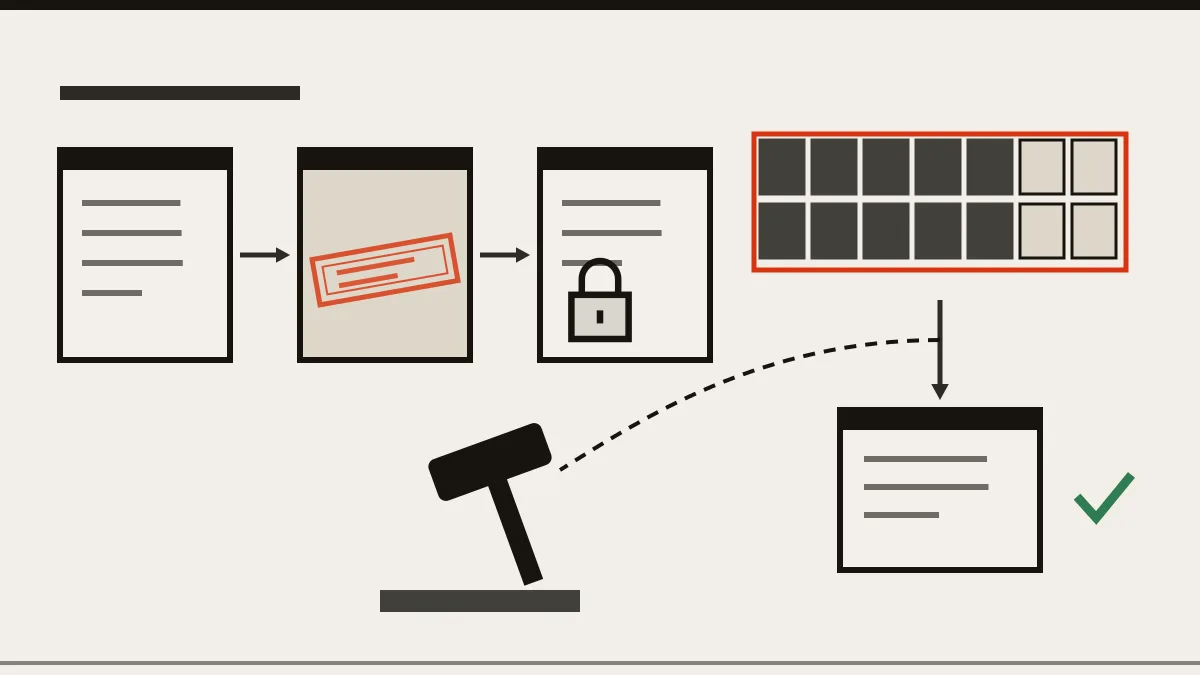
A DMCA counter-notification is the uploader's answer to your notice, and once it arrives the timetable belongs to the statute. Section 512(g) says the host restores the material "not less than 10, nor more than 14, business days" after receiving it, unless the complainant tells the host it has filed a court action seeking an order against the uploader. YouTube phrases the same window as 10 US working days for the claimant to show evidence of legal action (YouTube Help, counter notification). The counter-notice carries the uploader's full name, address and phone number, a statement under penalty of perjury and consent to a US federal court's jurisdiction, and the host passes it to you. Your own notice travels the other way. Course Hero forwards it once a counter-notice comes in, itch.io publishes it, Dailymotion hands the uploader's appeal to you, and Google sends many notices to Lumen. Plan for the reply before you send.
Two consequences follow, and both surprise people. If you are not prepared to sue, a counter-notice usually wins by default once the window closes, so decide in advance whether the copy is worth a claim in a US federal court, a UK court or the US Copyright Claims Board, which hears small claims up to $30,000. And if you are the uploader with a genuine licence, the counter-notice is the right tool, but it puts your home address in front of the person who complained.
Copyright takedown service or DIY: is a DMCA takedown free?
Filing is free. Every door in this briefing, from YouTube's webform to eBay VeRO, costs nothing to use, and a DMCA takedown free of charge is exactly what most single cases need. A copyright takedown service earns its fee in three situations: volume (hundreds of copies across mirror sites), persistence (re-uploads that need monitoring), and friction (hosts abroad, counter-notices, or an uploader who answers with a lawyer). A copyright claim service that promises claims on platforms where you hold no reference files, or strikes on demand, is selling something the platform does not offer.
That is also the line between a copyright service and the ban trade. Sellers of a Twitter ban service, an Instagram ban service or a Facebook takedown service increasingly relabel their mass reports as "copyright strikes". They are not. A report is a flag; a notice is a sworn statement that names you, and only the owner or an authorised agent may make it. The same goes for the TikTok takedown service listings, the WhatsApp takedown service offers and the panels behind a Telegram mass reporting service. We have pulled apart the tooling: an X mass report bot, a Facebook mass report tool, a WhatsApp mass report bot, a Snapchat mass report bot and the Instagram spam report bot. None of them files a copyright notice, because none of them can swear to owning your work.
If what you want is a person off a platform rather than your work off a page, the honest versions of how to get someone banned on Instagram, how to get someone banned on TikTok, how to get someone banned on Twitter, how to get someone banned on Facebook, how does someone get banned from Snapchat and how to ban someone from WhatsApp are separate briefings, and copyright is not a shortcut to any of them.
Copied work across several sites? Send us the URLs and one proof of ownership through our confidential review. We tell you which outcome each door gives (claim, strike, removal, delist or forward) before you pay anything, and whether copyright is the right tool at all.
When we file these for clients, the pattern repeats. Notices that name one work and list exact URLs come back actioned. Notices that describe a profile, attach a screenshot instead of a link, or argue about tone come back with a request for more information, and the clock restarts. We send fewer notices than clients expect, and we decline more cases than they would like.
What copyright cannot take down
Copyright cannot remove a truthful article, a public record, a review written in the reviewer's own words, or an opinion about your business, however unfair it feels. Those can sometimes be answered, corrected or pushed down in search, which is suppression and not removal, and we say which one applies before any work starts. We do not draft notices for work you do not own, we never send a "DMCA" that is really a bluff about defamation, and we never ask for passwords to any account. The limits are set out in full on our disclaimer page, and the people who review your case are listed on our team page.