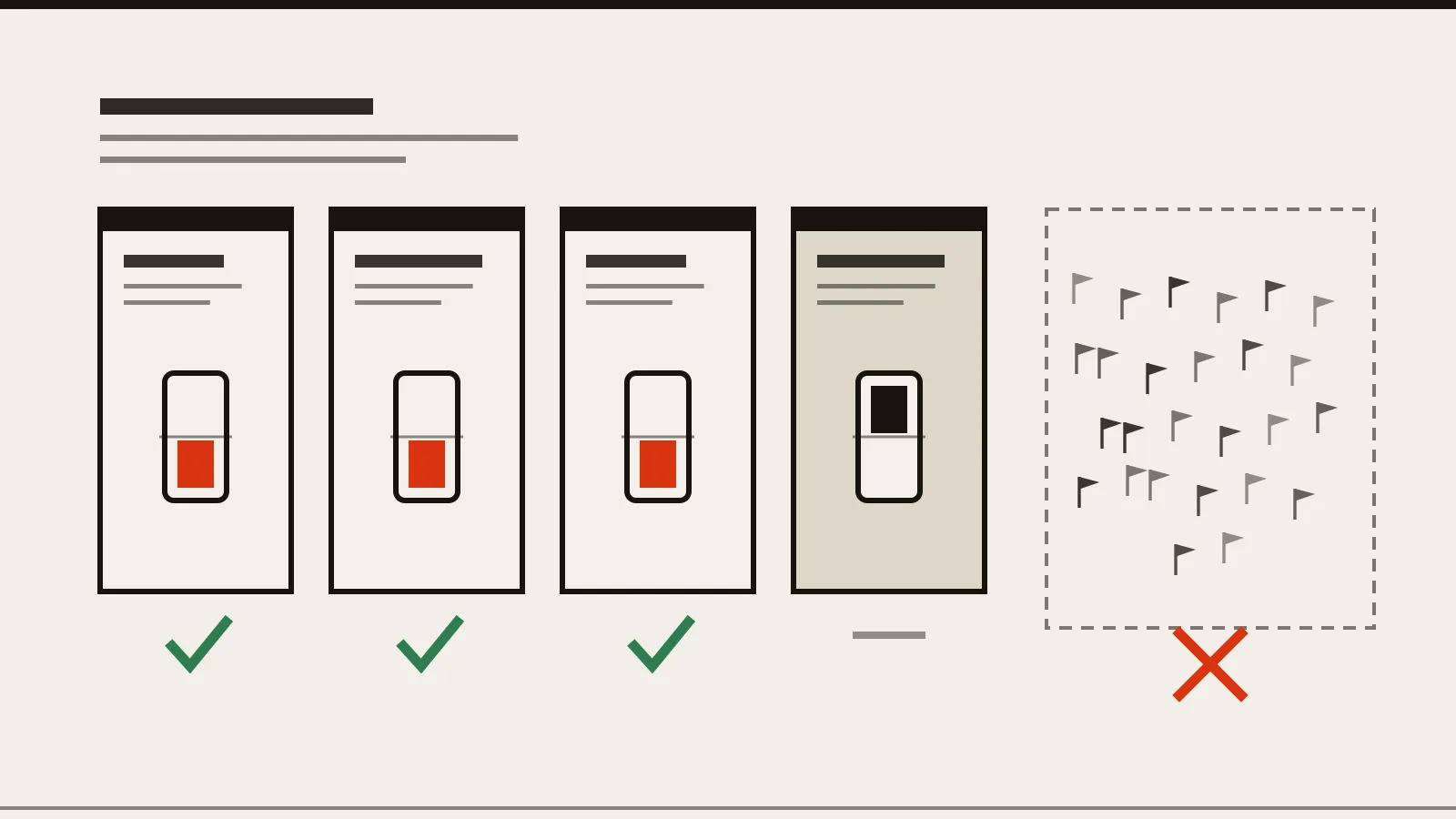
What does a domain takedown service actually switch off?
A domain takedown service asks whoever controls a domain name to stop it resolving. In practice that means the registrar the name was bought through, occasionally the registry that runs the extension, and, in a trademark dispute, an arbitration provider whose decision the registrar must carry out. A website takedown service works one layer down. It goes to the company storing the files, the network delivering them, or the search engine listing them, and asks for pages to be removed or delisted while the domain itself stays live. Both are paperwork. Someone identifies the party holding the off-switch, picks the instrument that party is obliged to act on, and files it with evidence attached. Volume plays no part. As of October 2026, no registrar, host, marketplace or social platform we deal with treats a pile of identical complaints as grounds to act, and the ones that publish their rules say so in writing.
Search for takedown services and you land in two trades that share a vocabulary.
The first is brand protection. Firms in it find phishing clones, counterfeit shops and copied listings, then file abuse reports with the registrar, host or marketplace. The trade calls this a cyber takedown service or a cybersecurity takedown service, and enterprises buy cyber takedown services on subscription. The second trade sells report volume: a Discord mass report service, a Bluesky ban service, a package for people who want to buy mass report twitch traffic, a channel takedown service aimed at YouTube. Both trades promise that something will vanish. Only one of them files with the party that can make it vanish.
So we sort everything below by one question. Who holds the switch?
Four switches, and who holds each one
| Target | Who holds the switch | Instrument that switch-holder acts on | What the mass-report version sells |
|---|---|---|---|
| Domain name | Registrar, sometimes the registry | DNS-abuse report, UDRP or URS decision, court order | Nothing real: registrars run no report button to flood |
| Website pages | Publisher, host, CDN | Acceptable-use complaint, DMCA notice, legal notice | "Reporting the site" to a CDN that only forwards it |
| Search listing | Google, Bing | Legal removal, exploitative-site form, right to be forgotten | Fabricated copyright notices against the URL |
| Marketplace listing | Amazon, Airbnb, Craigslist | Report Infringement, listing report, flag | Competitor flag-bombing |
| Account, server or channel | Platform trust and safety team | Policy report reviewed against the rules | Report waves from bots and rented accounts |
The same split shows up on every network we have worked. An Instagram account takedown runs on removal and suppression routes, not on counts. Five separate instruments reach an X account, and none of them is a tally. On LinkedIn, a cloned profile falls to the LinkedIn account takedown route for impersonation and defamation.
The registrar's switch: DNS abuse, UDRP and URS
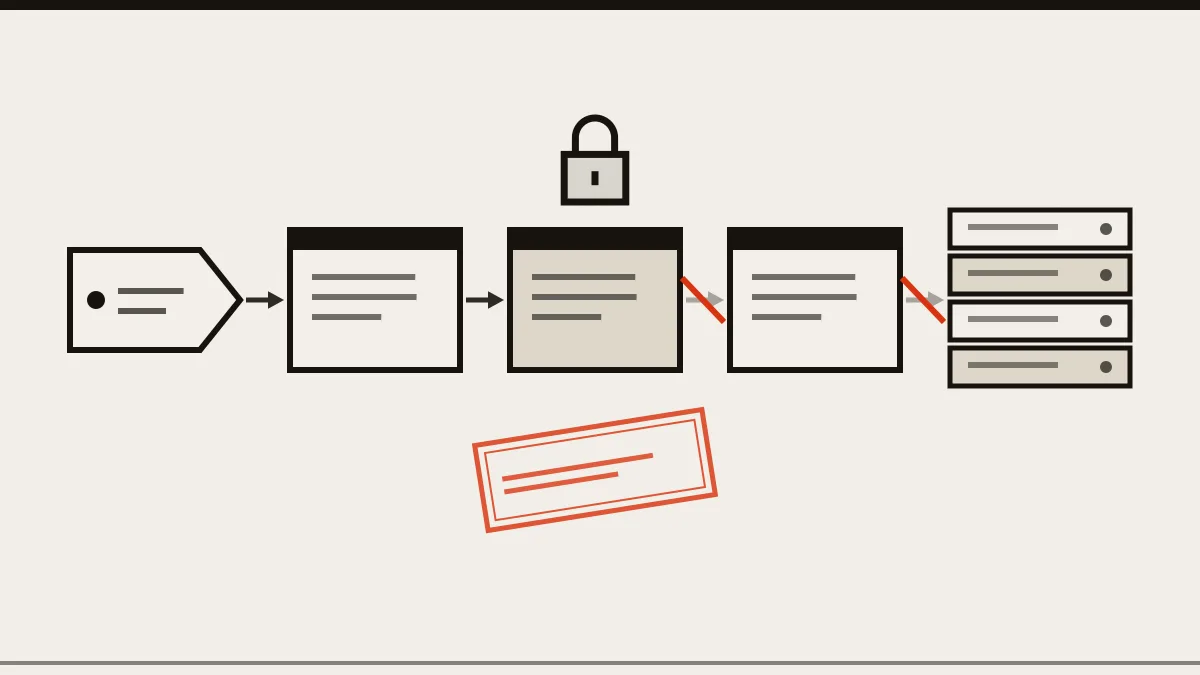
On 5 April 2024 a set of amendments to ICANN's Registrar Accreditation Agreement and Registry Agreement took effect, and they changed what a domain takedown service can actually demand. Registrars must publish an abuse contact on their homepage and confirm receipt of each report. Where a registrar holds actionable evidence of DNS abuse, it must now promptly take the mitigation action reasonably necessary to stop or disrupt it (ICANN Compliance advisory on the DNS-abuse obligations, 2024). The definition is closed: malware, botnets, phishing, pharming, and spam used to deliver one of those four. A phishing clone of your login page, a fake shop serving malware, a domain mailing spam that links to either: all squarely in scope, and a well-evidenced report usually ends in a suspension, a client hold or a redirect to a warning page. Whatever domain it sits on, a blog post calling you a fraud is not in scope.
ICANN wrote that limit down twice. The design guideposts for the 2024 amendments state that they do not reach website content abuse, and ICANN's own Bylaws keep the content carried by internet services outside its remit. So when a registrar answers a defamation complaint with "please contact the host", it is not stonewalling you. It is following its contract.
Why does the registrar layer matter so much when it applies? A suspension at the name drops everything the name points to: the site, its subdomains, its mail and any mirror still using it. Phishing teams start there; defamation lawyers almost never do.
When a trademark makes the domain itself the injury
Sometimes the name is the problem. A typo of your brand, a lookalike used for a fake support line, a domain bought the week your product launched. The instrument then is the Uniform Domain-Name Dispute-Resolution Policy. You need to show three things: the name is identical or confusingly similar to a mark you hold, the registrant has no rights or legitimate interest in it, and it was registered and is being used in bad faith. At WIPO, a single-panelist case covering one to five names costs USD 1,500, and a three-member panel costs USD 4,000 (WIPO UDRP fee schedule). The remedies are cancellation or transfer. Nothing else. No damages, no apology, no removal of copies hosted under other names.
For newer generic extensions there is a faster, narrower procedure, the Uniform Rapid Suspension System, whose only remedy is suspending the name for the rest of its registration period. For .uk names, Nominet runs its own Dispute Resolution Service, which begins with mediation before any expert decision.
One practitioner note, since most of the craft sits here. When we file registrar abuse reports for phishing clones, the first reply is nearly always automated: a ticket number and a promise to review. What happens next depends on the evidence bundle, never the tone. Reports carrying the live URL, a timestamped capture, the page source showing the credential form posting to an outside server, and the genuine login URL for comparison tend to be actioned. Reports saying only "this site is a scam" tend to come back with a request for evidence or a referral to the host. Nobody gets a domain suspended by sending the same complaint fifty times.
When a domain takedown service is the wrong purchase
If the problem is what a page says rather than what a domain does, the registrar is the wrong door. Defamation, a hostile review, a leaked document, a post on a cheater board: all content, all outside DNS abuse. Sellers who promise to get that kind of site "taken down at the registrar" will do one of two things. Either they describe it as phishing, which is a false report carrying risk for whoever signs it, or they take the fee and send a complaint that earns a polite referral. Ask which of the five DNS-abuse categories they will cite. If the honest answer is none, you need the next section.
How does a website takedown service reach pages the registrar won't touch?
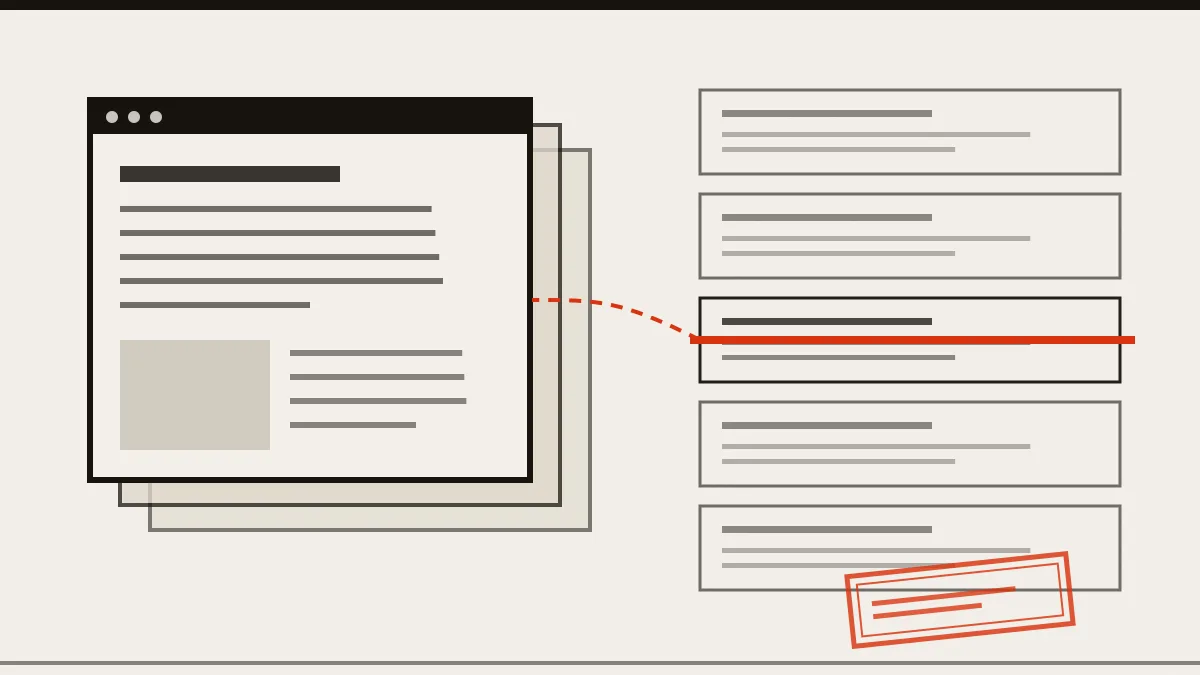
A website takedown service works on the layers that store, deliver and index the pages. The publisher comes first, because an owner who deletes the page fixes every layer at once. The host comes next. Every commercial host has an acceptable-use policy, and for copyright it has a statutory reason to act: the US safe harbour in 17 U.S.C. §512 and the UK hosting defence in regulation 19 of the Electronic Commerce Regulations 2002 both depend on the host acting expeditiously once it knows. Then the CDN. Cloudflare sits in front of a large share of the web, and it says plainly that it cannot remove content it does not host; what it does instead is forward the complaint to the site operator and the hosting provider and give the host the origin IP address (Cloudflare Trust Hub, abuse approach). So "reporting a site to Cloudflare" is a routing step. Useful, because it reaches the real host, but not a takedown. Last comes the search index, which can delist a URL even while the page survives.
For copied photos, text or video, the DMCA notice to the host is the strongest single instrument available. We laid out where a DMCA notice goes, platform by platform and host by host, and the same addresses apply when the copy sits on a standalone site.
Cheater websites and complaint boards
A cheater website removal service and a cheater report removal service sell the same promise: get a post accusing you of infidelity off a "report your cheater" board. The legal background, including why American boards shelter behind Section 230, is in our review and complaint-site removal briefing, so this section adds only what has changed since.
Cheaterland, the site behind most searches for a cheater land removal service, no longer serves pages. When we checked on 4 October 2026, cheaterland.com redirected to a domain-for-sale listing. Anyone still selling removal from it is selling something that has already happened. The copies that matter now live in search caches, archive snapshots and scraper mirrors, and each of those has its own switch-holder.
For the boards still online, the strongest lever usually is not the site at all. Google runs a form for content about you on exploitative sites that charge for removal. If you are the person named, the site is not a business-review site, and it asks for payment to take posts down, Google will stop showing the reported URL in its results, although the page itself stays on the web (Google Search Help, exploitative removal practices). For a site whose business model is pay-to-remove, that switches its leverage off.
ComplaintsBoard is stricter than many sellers admit. Its FAQ, read on 4 October 2026, says it does not remove complaints without an officially signed court order and that its service is free; a poster can mark a complaint resolved, which keeps it public but stops it counting against the business rating (ComplaintsBoard FAQ). Any complaintsboard removal service quoting a fee with no court strategy is quoting for an email the site has already said it will decline. What a complaintsboard takedown service worth paying does instead is build the evidence for an order against an identifiable author, or work the search layer and the resolution route.
If a site, a listing or an account is defaming you, impersonating you or exposing your private life, that is a filing problem, not a numbers problem. Ask us for a confidential review. We name the switch-holder and the instrument before we quote a fee, we never ask for a password or a login token, and intimate-image cases are triaged urgently and free, without anyone needing to see the material.
Cyber takedown services: what a brand-protection contract really buys
A cybersecurity takedown service is the enterprise version of the same work. The vendor watches for lookalike domains, cloned login pages, counterfeit storefronts, fake social accounts and copied app listings, then files with whichever switch-holder controls each one. The monitoring is the part that scales with software. The filing does not. Every notice still has to name a right, attach evidence and be signed by someone entitled to sign it, which is the rights holder or an agent authorised to act for them. For copyright, the person signing a DMCA notice states under penalty of perjury that they are authorised, and 17 U.S.C. §512(f) makes a knowingly false notice actionable. That one rule separates the trade cleanly. A firm running a cyber takedown service files in your name, for rights you hold. A report shop files in nobody's name, for nothing in particular.
Some vendors market themselves as a content and account removal service and cover both sides: domains and pages, plus impersonating profiles on social networks. That is a reasonable bundle, provided the contract names the instrument used on each target. We have seen the same lesson on X, where account removal cases are won on evidence before anything is filed, and in the Facebook market, where the price bands of a Facebook ban service sit beside the legal risk the buyer carries.
What should a contract like this specify? Four things, at minimum:
- Which switch-holders the vendor files with, by name: registrars, hosts, marketplaces, app stores, platforms.
- Who signs, and in what capacity.
- How "success" is counted. A suspended domain, a delisted URL and a removed page are different outcomes, and a vendor reporting one number for all three is hiding the mix.
- What happens when a host offshore simply ignores notices. The honest answer is usually de-indexing plus monitoring, not a promise.
Marketplace listings: Amazon, Airbnb and Craigslist
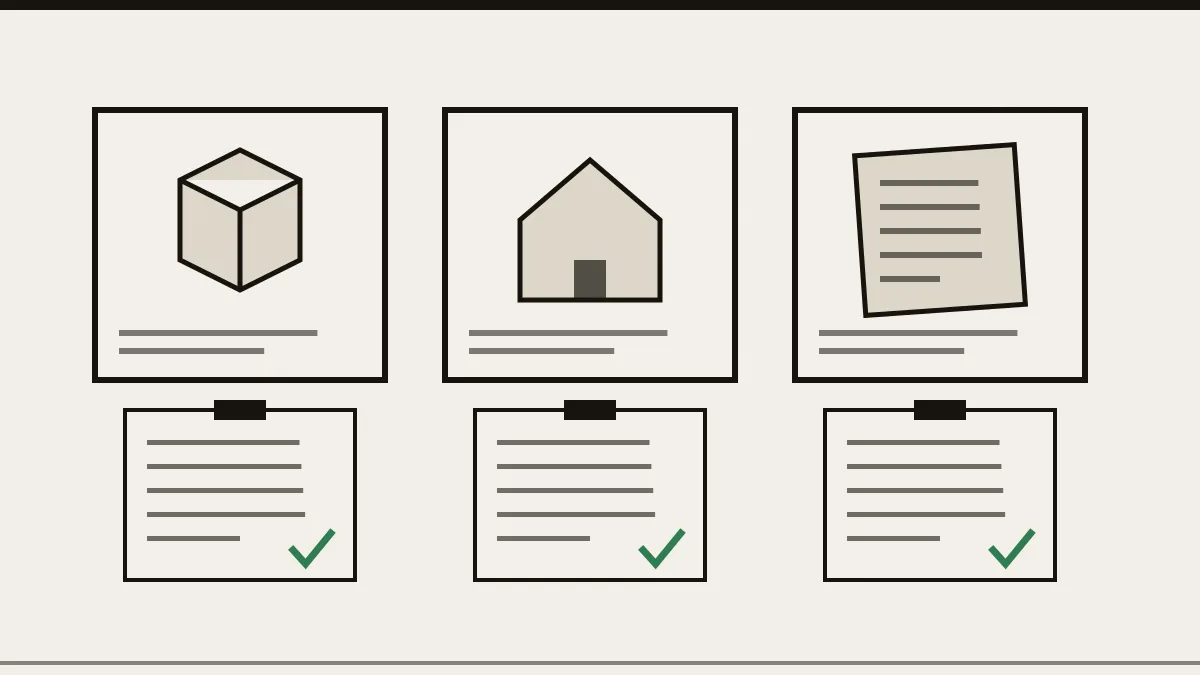
Listings are the clearest case of a switch-holder with its own rulebook. Each marketplace decides on its own form, under its own policy, and the three most searched behave very differently.
| Listing | Instrument | Who may file | Does volume count? |
|---|---|---|---|
| Amazon product or detail page | Report Infringement form (sign-in required); Brand Registry tools for enrolled brands | The rights owner or an authorised agent | No. Each notice is assessed, and false notices have been litigated |
| Airbnb listing | Report from the listing page, with evidence | Guests, hosts, neighbours, property owners | No. Fraud signals and evidence count |
| Craigslist ad | The flag link on each posting | Any user | Partly. Sufficiently flagged free ads can be removed automatically |
An amazon counterfeit removal service is filing one of Amazon's own instruments, and nothing else. Amazon's Report Infringement form requires sign-in, its Brand Registry needs a pending or registered trademark, and its "We Do Not Enforce" guidance is blunt: nobody owns a product detail page, and an exclusive distribution deal is not intellectual property. So an amazon listing takedown service offering to remove a rival reseller of genuine goods is offering to file a notice Amazon has already said it will not enforce. The scale on the other side is large. Amazon says that in 2025 it identified, seized and disposed of more than 15 million counterfeit products, and that its Counterfeit Crimes Unit has pursued more than 32,000 bad actors in 14 countries since 2020 (Amazon Trustworthy Shopping Experience Report, 2025). In March 2023 Amazon also sued sellers it accused of registering fake "original" designs to file takedown notices against genuine listings.
An airbnb listing takedown service has less to work with, because Airbnb publishes no infringement-style form for listings. The route is the report on the listing itself, backed by evidence: the property does not exist, the photographs were lifted from your own advert, or it is your home listed without your consent. Stolen photos are a copyright matter for whoever took them; an unauthorised listing of your home is a matter for you as owner, with documents. Airbnb said in September 2023 that it had removed 59,000 fake listings and stopped 157,000 more from joining that year (figures reported by NBC, 2023), which tells you the platform does act on fraud. It acts on fraud evidence, though, not on how many strangers clicked.
Craigslist is the exception that proves the rule. Its flagging help page says free ads that are sufficiently flagged are subject to automated removal, and staff remove posts as well. So a craigslist ad takedown service can sometimes knock a free ad down through flags alone. Three cautions apply. Flagging exists for prohibited, miscategorised or spam posts, and flag-bombing a lawful advert misuses it. Removed ads can simply be reposted. And if the post names you, shows your photo or publishes your contact details, a craigslist post removal service is the wrong tool; keep copies, flag it, and treat it as the harassment or privacy matter it is.
Art theft and video copies: DeviantArt, Dailymotion and the host behind them
An art theft takedown service files copyright notices for work you made. It needs the original, proof of when you made it, the URL of each copy, and a signature from you or an agent you have authorised. Its real value is repetition, because stolen art rarely appears only once.
A deviantart art removal service uses DeviantArt's own channels: a copyright web form, which needs an account, the email address violations@deviantart.com, or a posted notice to its DMCA agent (DeviantArt copyright policy). DeviantArt also runs Protect, introduced in 2021, which uses image recognition to spot near-identical copies on DeviantArt and on minted NFTs and lets the artist file straight from the alert. Core members get cover on every upload, while standard members get three months per upload. If you post there, turn it on before you pay anybody to watch for copies.
A dailymotion content removal service files through Dailymotion's "Send a copyright notification" form, linked from its legal pages. Dailymotion's help centre says uploads are also matched against Audible Magic audio fingerprints and INA video fingerprints, which means rights holders who register fingerprints with those providers can stop re-uploads before anyone reports them.
Video copies behave the same way elsewhere. Our guide to keeping a YouTube video down after the first takedown covers re-upload tracking, and getting a TikTok taken down lawfully and fast explains who may file there. One hard limit applies on every service. Only the owner, or an agent the owner has appointed, may sign. Any service that files for art its client does not own is making a misrepresentation, whatever it calls itself.
Discord mass report bots, ban bots and ban services
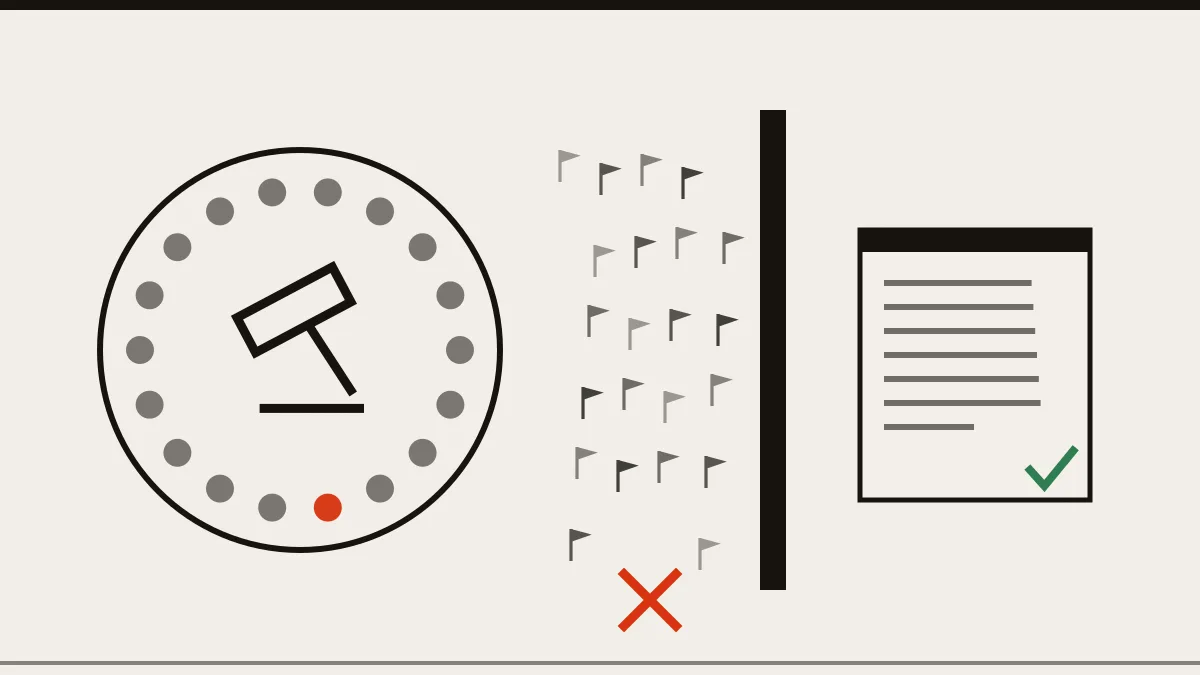
Three different things sell under Discord's name, and only one of them is legitimate.
A discord ban bot is, in its honest form, a moderation bot. Tools of the MEE6 or Dyno type ban members through Discord's API, and the call they use, PUT /guilds/{guild.id}/bans/{user.id}, requires the Ban Members permission in that server (Discord developer documentation, guild resource). Its reach is one server. Useful for your own community, and all any bot can do. Sellers offering a ban bot that removes someone from Discord itself are describing an endpoint that does not exist.
A discord mass report bot is something else: software that drives ordinary user accounts to file reports. Discord's Platform Manipulation Policy, updated March 2024, prohibits user accounts modified to perform automated actions, the "self-bots" this software depends on (Discord platform manipulation policy). Its Support Abuse Policy, updated August 2025, treats reports as false when they carry demonstrably untrue information submitted to manipulate staff. And Discord's Safety Center asks users not to send multiple reports or organise group reporting. So the first accounts at risk from a discord mass report run are the accounts doing the reporting. The pattern matches the WhatsApp tools that run on a hijacked session rather than any reporting interface, and the buyer often hands over a login token to make it work.
A discord mass report service, a discord ban service or a discord account ban service is the human version: people, or rented accounts, pressing Report by hand. Every one of those reports lands in a queue reviewed against the Community Guidelines. Since October 2023 Discord's Standing system has recorded enforcement per violation, violations expire after 90 days, and suspensions run up to a year. No report wave can create a violation that is not there. It can only bring a real one to a reviewer's attention, which a single report with message links would have done.
The volume figures make the point. In January to June 2024 Discord received 29,495,313 reports, disabled 357,056 accounts for non-spam violations and 35,456,553 spam accounts, and removed 41,002 servers (Discord transparency report, H1 2024). That is roughly 83 reports for every non-spam account disabled. Reports also cover messages and servers, so treat that as a ratio, not a conversion rate. It is still what a queue that tests evidence rather than counting heads looks like.
We also took a narrow snapshot of the supply side. On 3 October 2026 a search of public GitHub repositories returned 62 results for "discord mass report". Of those, 36 had no stars at all, 19 were created in 2025 or 2026, and the most-starred had 88. The same search for "discord report bot" returned 770, mostly ticketing and moderation tools that do lawful, server-level work. The mass-report shelf is small, young and largely unvetted, which matches what we found when we read the GitHub scripts, APKs and panels sold for Instagram and what runs behind a Facebook mass report tool.
What works on Discord is dull and effective. Report the specific message or profile, include message links and user IDs from Developer Mode, and pick the category that matches the rule broken. Our walkthrough of reporting a Discord server or user by ID covers the screens, and the briefing on banning someone on Roblox or only from your own server explains the same house-ban versus platform-ban split for gaming communities.
Can a Bluesky ban service or a Bluesky mass report remove an account?
Bluesky is built differently from older networks, and that changes what a Bluesky ban service could even attempt. Bluesky runs its own moderation service, and on top of it sit independent labelers, services anyone can run with the open-source Ozone tool, which attach labels that each user chooses to hide, warn on or ignore. Bluesky describes this as stackable moderation, and it treats takedown as its final enforcement step, reserved for violations a label cannot handle. Labelers can label an account. Only Bluesky can take it down from Bluesky's own infrastructure.
Bluesky's 2025 transparency report, published on 29 January 2026, puts numbers on the queue. It received 9.97 million user reports, up 54% from 6.48 million in 2024, filed by 1.24 million distinct reporters, around 3% of users. It removed 2,446,334 items across accounts and content, applied 16.49 million labels, 95.34% of them automatically, and removed 3,619 accounts for influence operations (Bluesky transparency report 2025). The same report says coordinated campaigns targeting users for their viewpoints are an attempt to "weaponize our moderation systems". A bluesky mass report, in other words, is a pattern Bluesky has named and is looking for.
The supply side is barely there yet. Our 3 October GitHub search for "bluesky mass report" returned a single repository, created on 28 September 2026, with one star. The product is newer than the policy written to catch it.
A bluesky account takedown service that is worth anything files what Bluesky actually acts on. That means in-app reports on specific posts or accounts under the right category, impersonation reports with proof of identity, and legal requests for copyright or defamation, which Bluesky now handles at volume, with 1,470 legal requests in 2025 against 238 the year before. The comparison with X is instructive. There, the mass report bot runs into an API with no report call at all, a Twitter ban service sold for hire mostly resells free reports, and what you control when you ban someone on Twitter is mostly your own block and mute list. Bluesky simply makes the label layer visible.
Twitch and YouTube: buying reports versus what removes a channel
Can a YouTube channel get banned for mass reporting?
No, not for the reporting itself. YouTube's help page on reporting says that reported content is not automatically taken down, and that if reviewers find no violation, no amount of reporting will change that (YouTube Help, report inappropriate content). Channels end through strikes. Three Community Guidelines strikes in the same 90-day period may result in permanent removal, each strike lasts 90 days, and a first violation is typically only a warning (YouTube Help, Community Guidelines strike basics). So the honest answer to "can a youtube channel get banned for mass reporting" is that a channel gets banned for violations, and reports only bring violations to a reviewer. The variant people type, "can a youtube channel get banned from mass reporting", has the same answer. Reports start a review, and the review decides.
We measured the mechanics in two earlier briefings: the YouTube mass report bot and the 200-a-day quota that caps it, and why strikes, not reports, terminate a channel. Legitimate channel takedown services file copyright strikes for a rights holder, privacy complaints for the person exposed, or legal notices. The same is true off YouTube. Telegram channels come down through the routes Telegram actually answers for channels, not through the panels sold inside the app.
What do people who buy mass report Twitch packages actually get?
Twitch is unusually direct about this. Its Safety Center article on filing a report says that misusing the reporting tool breaches its Terms of Service and Community Guidelines and can lead to suspension, and that mass or repeated reporting of the same content does not speed up an investigation (Twitch Safety Center, filing a report). Anyone who chooses to buy mass report twitch packages is paying for a slower outcome at best, with the reporting accounts at risk. One report with a timestamped clip of the moment the rules were broken does more.
Eight platforms, one mechanism
We have now taken the same product apart on most major networks, and the findings rhyme closely enough to state as a rule. Report volume is an input to a review queue, never a verdict, and the sellers who say otherwise are selling either the queue or a risk to your own accounts.
On Instagram, getting someone banned without bots comes down to matching evidence to a rule Meta enforces. An Instagram ban service sold to order turns out to be a report scam or the ban-then-restore con, and the Instagram spam report bot is a myth with a real account risk attached. TikTok behaves the same. The honest answer on getting someone banned on TikTok is a violation plus evidence, we followed what TikTok mass reporting does to the target, and a TikTok ban service at $250 buys a report, not an outcome. Our product-by-product scam test of TikTok report bots reached the same verdict from the supply side.
Telegram sells its version from inside its own app, and the mass report panels sold there run on rented, hijacked or burner accounts. Snapchat has no public reporting API at all, so a Snapchat mass report bot has no endpoint to call. What gets an account removed there is the rulebook, as how someone actually gets banned from Snapchat and taking down a Snapchat account both show. On Facebook, Meta acts on the violation, not the volume, and taking down a Facebook account, yours or theirs is a matter of choosing the right form. WhatsApp is the hard ceiling: you can ban a WhatsApp number from your own phone through block, report and appeal, but no WhatsApp ban service fee can unseal an encrypted chat.
The invoice test: telling a takedown service from a report shop
The fastest way to sort a real provider from a mass-report seller is to read what they would put on the invoice. A legitimate quote for a domain takedown service, a website takedown service or any listing or account takedown names seven things:
- The switch-holder. A registrar by name, a host, a marketplace, a platform, a search engine.
- The instrument. A DNS-abuse report, a UDRP complaint, a DMCA notice, a Report Infringement filing, a policy report, a de-indexing request.
- The signatory. You, or an agent you have authorised in writing, never "our network".
- The evidence they need from you. URLs, captures, proof of ownership or identity.
- The fallback on refusal. An appeal, a counter-notice response, an escalation, or de-indexing and suppression.
- A time range per switch, not a single promise for everything.
- What it cannot do. A provider that will not tell you this is not being straight about the rest either.
A report shop's quote names different things: a number of reports, a number of accounts, a speed, a guarantee, a crypto-only payment, often a "no refill" clause, and sometimes a request for your login or Discord token. If the invoice could be fulfilled without anybody signing anything, nothing lawful is being filed.
What no takedown service can switch off
Some things stay up whatever anyone files, and a provider that says otherwise is either misinformed or planning to file something false. Truthful reporting, genuine public records and honestly held opinion are not removable through a registrar, a host, a platform form or, in most cases, a court. Where that material ranks on your name, the lawful answer is suppression: building and promoting accurate results so the hostile one drops off the first page. Removal and suppression are different services, and we tell clients which one applies before any work begins.
Forged notices make things worse. A fabricated DMCA notice invites a counter-notice and, in the United States, a claim under §512(f). Report a domain falsely as phishing and the registrar's scrutiny turns to the reporter. Google publishes many removal requests to the Lumen database, so a bluffed legal threat can end up as a permanent public record of the attempt, which is the Streisand effect with a citation attached. We never forge or bluff a notice, never mislabel content to fit a category it does not belong to, and never ask for passwords or login tokens. Intimate images get a separate, urgent and free route through hash-matching services such as StopNCII and Take It Down, and nobody needs to see the material.
The full set of limits is on our disclaimer page, and the wider picture, route by route, is in our briefing on content removal service routes, costs and real limits.
How long each switch takes, and what drives the cost
| Switch | Typical timing | What drives cost |
|---|---|---|
| Registrar DNS-abuse report | Hours to days for clear phishing or malware; "promptly" is the contractual standard, not a fixed deadline | Quality of the evidence bundle |
| UDRP complaint (WIPO) | The respondent has 20 days to answer, the panel 14 days to decide once appointed, and the registrar waits 10 business days before implementing | USD 1,500 to 4,000 in fees, plus drafting |
| Host DMCA notice | Often days; a counter-notice can restore content after 10 to 14 business days | Number of hosts and copies |
| Google exploitative-site or legal removal | No published time; varies by request type | One filing per URL set |
| Amazon Report Infringement | No published time; rights checked per notice | Brand Registry status, number of listings |
| Discord report | Around 24 to 48 hours for high-harm cases, about a week otherwise | Evidence quality, not report count |
Two rules hold across the table. Cost follows the number of switch-holders and copies, never the number of reports. And timing follows the instrument, which is why a provider who gives one turnaround for every target has not looked at yours yet.