What is a DMCA takedown notice, and what does it actually ask for?
A DMCA takedown notice is a written claim, signed by the owner of a copyright or someone acting for them, telling an online service that it is storing or linking to a copy of their work without permission. It asks that service to remove the copy or disable access to it. The legal machinery sits in section 512 of the US Copyright Act, which Congress added in 1998 as part of the Digital Millennium Copyright Act. The notice is a statutory instrument, and statutory instruments have a fixed shape. Section 512(c)(3) lists six things the notice must contain, and a service that receives a notice with all six gets a clear choice: act quickly on it, or give up the "safe harbour" that normally protects it from being sued for what its users upload (17 U.S.C. § 512, Cornell LII). Almost every platform chooses to act.
That is the whole trick, and it explains why a dmca takedown works so often without a court anywhere near it. The service is not deciding who owns the photograph, the song or the source code. It is deciding whether to keep its own immunity. Remove the item promptly and it stays protected; keep it up and it takes on the risk alongside the uploader.
So the notice is not a lawsuit and it is not a court order. It costs nothing to send. You do not need to have registered the work anywhere first, and you do not need a lawyer to sign it, although you do sign it under penalty of perjury, which we come back to below. Registration matters later, and only in one scenario. If the uploader fights back and you want the item to stay down, you will eventually have to sue, and the US Copyright Act bars an infringement suit over a "United States work" until the copyright has been registered or preregistered (17 U.S.C. § 411, Cornell LII). A photograph first published in Leeds or Lyon is not a United States work, which is one of the quieter advantages a British or European creator holds when the dispute is heard in an American court.
Readers in the UK often ask why an American statute is the one doing the work. The answer is geography of servers rather than of people. The services that hold most stolen content are American companies, or they have chosen to follow the American procedure because it gives them a predictable way to handle complaints. A rights holder in Manchester can send a DMCA notice to a company in California exactly as a rights holder in Ohio can, and the company will process it the same way.
British law does have its own version of the pressure, with less paperwork attached. Under regulation 19 of the Electronic Commerce (EC Directive) Regulations 2002, a host keeps its immunity only while it lacks "actual knowledge" of unlawful material, or, once it gains that knowledge, "acts expeditiously to remove or to disable access" (legislation.gov.uk). A precise notice is how a host acquires knowledge. There is no prescribed UK form, which is why a notice drafted to the DMCA's six elements tends to work on both sides of the Atlantic.
One British route that does not help here is Ofcom. The Online Safety Act 2023 imposes duties on platforms around illegal content, but section 59(6) excludes any offence that "concerns the infringement of intellectual property rights" from the offences that count (legislation.gov.uk). Piracy of your photograph is outside that regime. Nobody at Ofcom is going to take it down for you.
It helps to be exact about what the notice achieves once it works. "Taken down" can mean deleted, withheld in one country, hidden from search, or simply made unavailable to you, and on large platforms those are different states with different ways back; our briefing on whether a Facebook takedown actually happened walks through that distinction for one platform, and most of it transfers. A notice is also a different object from a report. Pressing a report button starts a policy review of the content against the platform's own rules, which is a Community Standards review, not a legal claim, and the reviewer can weigh it however the rules allow. A notice triggers a legal procedure with deadlines and consequences on both sides. When the content is a copy of something you made, the notice is usually the stronger instrument, and the rest of this briefing is about aiming it.
That is also the order in which our team works. Before anyone drafts a line, Eleanor Whitfield's media-law background shapes the first question we ask a client: is this really a copyright problem, or a defamation, privacy or harassment problem wearing a copyright costume? The answer changes the route entirely.
Who is entitled to sign a DMCA takedown notice?
The statute lets two kinds of people sign: the owner of an exclusive right, and a person authorised to act for that owner. Both groups are narrower than most people assume, and a notice signed by the wrong person is a false statement from its first line.
Check ownership first, because it often sits with someone other than the person who made the work. Under section 11(2) of the Copyright, Designs and Patents Act 1988, when an employee creates a work in the course of employment, the employer is the first owner unless an agreement says otherwise (legislation.gov.uk). A staff photographer's pictures belong to the newspaper. A freelance photographer's pictures usually belong to the photographer, even when a client paid for the shoot, unless the contract assigned the copyright. That surprises clients in both directions: a company that commissioned a product shoot may find it holds only a licence, and a freelancer who agreed to "all rights" in an email chain may find there is nothing left to enforce.
An exclusive licensee can usually file, because it holds an exclusive right in its own name. A non-exclusive licensee, such as a business that bought a stock image, cannot; that complaint belongs to the agency or the photographer. The same goes for the person who appears in a photograph. Being the subject of an image gives you privacy and data-protection rights, sometimes very strong ones, but it does not make you the copyright owner.
Joint works need a moment's thought. Where two people made something together and their contributions cannot be separated, each is usually a co-owner and can generally act against an outright copier, but check first that the other co-owner has not licensed the very use you are complaining about. Bands, collaborative illustration and co-written code are where these disputes start.
Agents need written authority. A lawyer, a manager, a label or a takedown service can sign for the owner, but each should hold a signed authorisation that names the works or the catalogue, and should be able to produce it if a platform asks.
The six elements every DMCA takedown needs
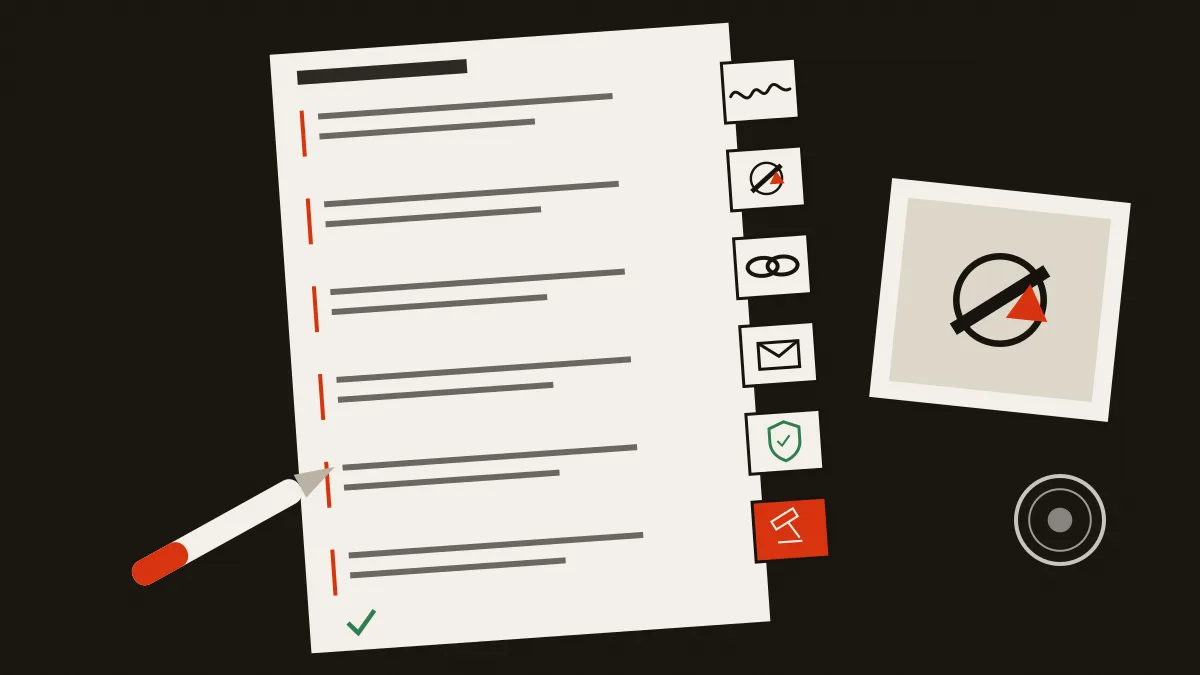
Section 512(c)(3)(A) is short, and every valid notice on every platform in this briefing traces back to it. Platforms dress the six elements up in their own forms, add fields of their own, and occasionally ask for more than the statute does, but the core never changes. Here they are in the statute's order, with what each one means in practice.
- A physical or electronic signature of the owner or of a person authorised to act for them. An electronic signature can be as simple as your typed full name; Cloudflare's own documentation says so in terms (Cloudflare Docs). What matters is that a real, identifiable person stands behind the claim.
- Identification of the work that was copied. A link to your original, a title and a date, or a clear description will do. If one site holds many of your works, the statute lets you give "a representative list" rather than cataloguing every single item.
- Identification of the copy, with information "reasonably sufficient" for the service to find it. In practice that means one exact URL per item: not the homepage, not the search results page, not a profile.
- Your contact details: address, telephone number and, if you have one, an email address.
- A good-faith statement that the use complained of is not authorised by the owner, the owner's agent, or the law.
- An accuracy statement, made under penalty of perjury, that you are the owner or are authorised to act for the owner.
Most rejected notices fail on element three, and they fail quietly. A notice that says "my photos are all over this account" gives the service nothing to act on, because a moderator cannot remove an account for containing a copy; they can remove the copy. Every URL goes on its own line. If the same picture sits in a post, a reply, a repost and an embedded preview, those are four items, and a notice naming one of them will remove one of them. The same logic governs ordinary reporting, which is why our note on reporting a tweet and each of its copies insists on one line per post ID, and it applies with more force to a legal notice, because the service is only obliged to act on what you identified.
Image-heavy sites add a twist. The page that displays your picture and the file that holds it usually have different addresses: a gallery page may load the image from a separate image server or CDN, and a thumbnail may live somewhere else again. Give the page URL, which shows where the copy is displayed, and the direct file address if you can find it, which tells a host exactly which file to delete. Embeds work the other way round. When a blog embeds a video or a post, the file stays on the platform that holds the original upload, so the notice belongs with that platform. Removing the embedding page alone leaves the upload live everywhere else it is shown.
Element five hides the question that catches people out. "Not authorised by the law" includes uses the law permits without your consent: fair use in the United States, fair dealing in the UK, quotation, parody and criticism. In Lenz v. Universal Music, decided in 2015, a US federal appeals court ruled that the sender has to weigh fair use before a notice goes out, and a sender who skips that step cannot claim to have formed a good-faith belief. The case concerned a 29-second home video of a toddler dancing to a Prince song; the notice went out in 2007 and the case did not settle until 2018, which tells you how small the use can be and how long a fight over skipping the question can run. If the copy is a review that quotes a paragraph of your article, or a critic's video that shows ten seconds of yours in order to take it apart, pause before filing.
Element six is where the weight of the whole document sits. You are not swearing that the copy is infringing, which a court might one day decide against you. You are swearing that the information in the notice is accurate and that you are who you say you are, or that you are authorised by them. False statements there are what turn an honest mistake into a liability.
There is a small safety net for imperfect notices. Under section 512(c)(3)(B), a notice that fails some requirements but substantially complies with elements two, three and four obliges the service to make reasonable efforts to contact you and get the rest. Do not rely on it. A notice with a missing signature and a vague URL usually sits in a queue until someone sends a better one.
Gather the evidence before you file, not after. Services notify the uploader when they act, and a person who learns a notice is coming can delete, rename or re-upload before you have a record of what was there. Take full-page captures that show the URL, the date, the account name and the copy itself, and preserve the evidence before the post vanishes, because a later counter-notice or court claim will turn on what you can show was online and when.
A plain-text skeleton, which fits any platform that accepts email and covers every element above, runs in this order. Fill each bracket, keep one URL per line, and keep a copy of exactly what you sent.
- Subject line: DMCA takedown notice, followed by a short description of the work.
- Original work: [title, date of first publication, link to the original].
- Infringing material: [one URL per line, every copy listed separately].
- Contact details: [full name, postal address, telephone number, email address].
- Good-faith statement: "I have a good-faith belief that use of the material in the manner complained of is not authorised by the copyright owner, its agent, or the law."
- Accuracy statement: "The information in this notice is accurate, and under penalty of perjury, I am the owner, or am authorised to act on behalf of the owner, of an exclusive right that is allegedly infringed."
- Signature and date: [typed full name], [date].
The skeleton is not the whole job. Where a platform offers its own webform, use the webform, because forms route straight into the right queue while emails can wait days for triage. Where the platform wants extra fields, such as a registration number, a product identifier or a statement about who else holds rights, give them. And where the copy sits on more than one service, send one notice per service, because a notice to one company creates no obligation for any other.
The extra fields are worth knowing in advance, because hunting for them mid-form is how notices get abandoned. ArtStation asks for a registration office and number. Amazon identifies listings by their product page, so copy the page address rather than a search result. A Chrome extension is best identified by the long ID string in its store address, which survives a change of name. BitChute wants a screenshot alongside each URL. Apple's dispute form wants the app's store page. YouTube asks whether you want a scheduled removal and whether to block future copies. None of these replaces the six statutory elements; each simply helps a particular moderator find a particular item on the first attempt.
Who receives the notice: platform, host, CDN or search engine?
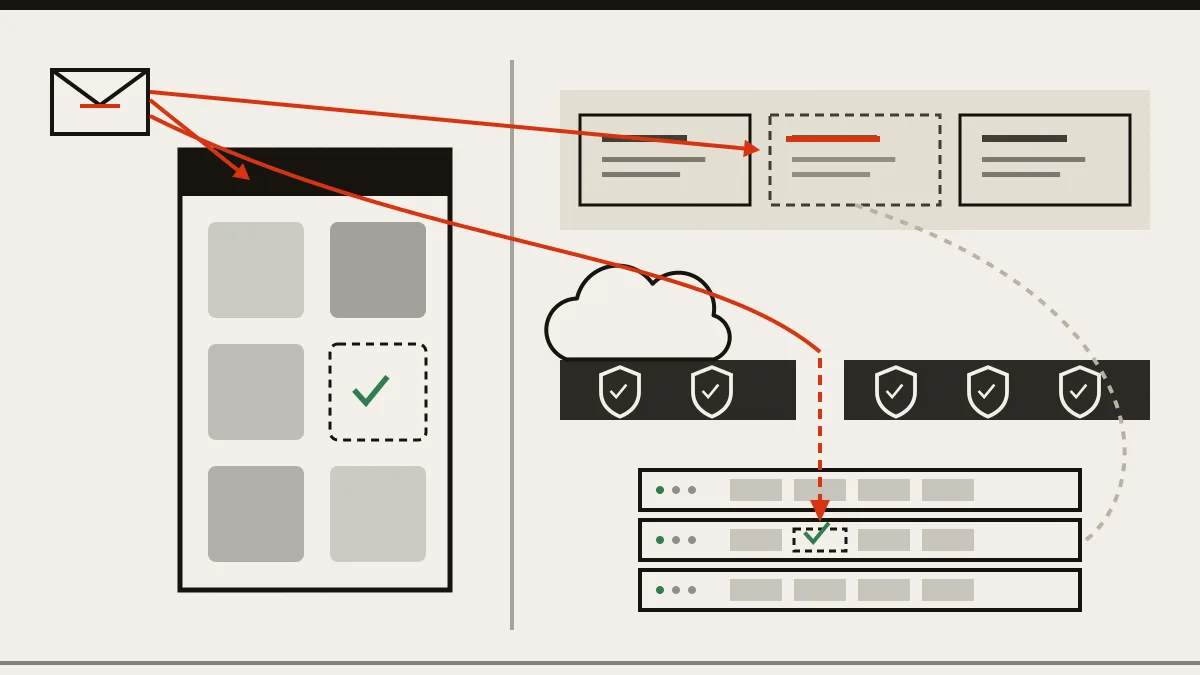
A perfect notice sent to the wrong company achieves nothing, and the wrong company is the default for most people. The reason is that the internet stacks several businesses on top of each other, and only some of them hold the file. The right recipient is the one with the power to remove the copy.
A platform is the easy case. YouTube, Bandcamp, Amazon, ArtStation and the other services below both run the service and store what users upload, so a notice to the platform goes to the party that can delete the item. Each one runs its own intake, and most keep intellectual-property complaints entirely separate from safety reports, which is why a copyright complaint about an account usually goes through a different form from a harassment report about the very same account.
A standalone website is harder. The site's owner can delete the page, but an owner who stole your work is rarely cooperative, and many sites hide who runs them. Behind the site sits the hosting provider, whose servers store the files and whose terms nearly always forbid infringement. Hosts respond to notices, and in the United States they do so because the same section 512 safe harbour depends on it. Every US service that wants that protection must register a designated agent with the US Copyright Office, which keeps a searchable public directory. Registration costs $6 and lapses after three years unless renewed, and the Office warns that a provider whose designation expires risks losing its safe harbour (US Copyright Office). An expired entry is worth noticing: a host without a current agent has a stronger reason to take your email seriously.
The complication most people meet here is a content delivery network, or CDN. When you look up who hosts a site and the answer is Cloudflare, you have usually found the security and caching layer in front of the site, not the host. Cloudflare says so plainly about its pass-through services: "Cloudflare does not host content through those services, and we cannot remove content from the Internet that we do not host" (Cloudflare Trust Hub). That is why a CDN notice is a forwarding exercise, covered in detail in the platform section below.
Search engines are the fourth recipient, and they do something different again. Google does not remove a copy from the website that holds it. It removes the address from its results, so the page stops being found by people searching your name or the title of your work. That is sometimes exactly what a client needs, especially where the site owner is unreachable and the host sits in a jurisdiction that ignores notices. It is still delisting rather than deletion: the file remains on the server, and anyone with the link can still reach it.
Google also asks for a separate legal report for each of its own products where the content appears, and it is explicit that a policy report "does not substitute for reporting it through a legal path and does not serve as legal notice" (Google Legal Help). One notice for Search, another for YouTube, another for Blogger or Drive.
There is a cost to the search route that few guides mention, and it lands on the person filing. Google shares copies of the legal notices it receives with Lumen, a research database run by the Berkman Klein Center at Harvard Law School. Google says it never passes on what you type into the contact fields, such as your email address, but the requester's name, the rights holder's name and the reported URLs can be published, and a search results page affected by a removal may carry a notice at the bottom linking to the published request (Google Legal Help). If your own name appearing in a public database is a problem, for instance because the stolen material is personal, raise it before filing, not after.
| Recipient | What it can do | What it cannot do | Who sees your notice |
|---|---|---|---|
| Platform | Delete the upload | Touch copies on other sites | Usually the uploader |
| Host | Remove files from its servers | Remove search results | Often the site owner |
| CDN | Forward it to the host | Delete what it only caches | The host and site owner |
| Search engine | Delist the address | Delete the file itself | The public, via Lumen |
Finding the host behind a website
Three free look-ups usually identify it. A WHOIS or RDAP search on the domain shows the registrar and the name servers; if the name servers belong to Cloudflare or another CDN, the IP address the site resolves to belongs to that network rather than to the host. For a site without a CDN, an IP WHOIS on the address the site resolves to names the network that owns it, which is normally the host or the host's upstream provider. And the site itself often gives the host away, in its image addresses, its email headers or a default error page.
The registrar is rarely the right recipient for copyright. It controls the domain name, not the files, and most registrars refer copyright complaints to the host rather than suspend a whole domain over one infringing page. A registrar becomes relevant when an entire site exists to infringe, and even then the host usually comes first.
Once you know the host, find its abuse or copyright page and, for an American host, its entry in the Copyright Office directory, then send the notice to the named agent in the format it asks for. Hosts outside the United States have no DMCA obligation, but many follow the same procedure voluntarily, and hosts in the EU carry their own notice-and-action duties under the Digital Services Act. Where a host ignores notices altogether, the realistic levers left are search engines and, in serious cases, a court.
In practice our desk maps the stack before anyone drafts. Obscura's removal desk starts every copyright case by identifying, for each copy, who stores it, who runs the site, which CDN sits in front and whether search is the only lever left. That map decides the order of the notices, and it is the step that makes the rest of the work fast.
Platform by platform: where each DMCA takedown request goes
Every service below accepts copyright complaints, and no two of them accept them the same way. Some run a signed-in webform, some want an email with a particular subject line, one forwards your notice to someone else entirely, and one changed owners six weeks ago. The facts in this section were read on each company's own pages in September 2026. Instagram and the rest of Meta run their own copyright and trademark forms, and scammers imitate them in messages sent over WhatsApp, so a separate briefing covers how to tell an Instagram copyright violation message from a real report and they are left out here.
YouTube copyright takedown request: the webform, the seven-day option and your name
YouTube is the service most people meet first, and its youtube copyright takedown process is also the best documented. The webform lives inside YouTube Studio, under Content detection, then New removal request, and you must be signed in to use it; the alternatives are email (copyright@youtube.com), fax and post (YouTube Help). Only the owner or an authorised representative, such as a lawyer, may file. The form asks you to choose between removal now and a scheduled removal that takes effect after seven days, which gives the uploader a week to delete the video themselves and avoid a copyright strike. It also offers a checkbox to prevent future copies of the same content being uploaded again.
Read the disclosure section before you submit a youtube copyright takedown request. The uploader receives the name of the copyright owner, your primary email address and your full legal name. Your physical address and telephone number stay confidential unless they are requested in a lawsuit. If you are a private individual whose own image was copied, the fact that your legal name will reach the person who copied it is the most important sentence on the page.
The numbers show the webform works when it is used properly. In Google's copyright transparency data for January to December 2025, the public webform produced 2,969,817 removal actions, about 0.12% of all copyright actions on YouTube; the rest came overwhelmingly from Content ID, the automated matching system that large rights holders use. Removal followed for 85.81% of webform requests; YouTube classed 6.44% as abusive and 6.65% as invalid (Google Transparency Report). Uploaders sent counter-notifications against more than 9% of webform requests, against no more than 3% of requests from the Copyright Match Tool or the enterprise webform, and that gap is the practical reason to get the good-faith question right before filing.
Two limits trip people up. The Copyright Match Tool, which YouTube offers to eligible channels, scans only uploads made after yours, and YouTube says it can tell who uploaded first but not who owns the work. No single request can target a whole channel; each video is its own item. And material that is not a video, such as a channel banner built from your artwork, cannot go through the webform at all: YouTube takes those complaints by email, fax or post only. Our briefing on getting a YouTube video taken down and keeping it down covers standing, re-uploads and what survives a removal in more depth.
Amazon DMCA takedown and the trademark route beside it
Amazon runs one intake for both copyright and trademark complaints, the Report Infringement form, and it will not show you the form until you sign in to an Amazon account (Amazon). The form is for rights owners and their agents only. A buyer who spots a fake or a seller who thinks a competitor is breaking the rules is sent to the ordinary contact forms instead, and Amazon says it will not process their complaints through this route. Beside the form sits a Notice Retraction Form, which is how you withdraw a complaint that turns out to be wrong. We use it more often than clients expect.
An amazon dmca takedown fits one kind of harm: your copyrighted material, usually product photographs, packaging artwork, book text or a manual, used in someone else's listing. An amazon trademark infringement takedown fits another: your brand name or logo on goods you did not make, or on a listing designed to look like yours. The difference matters because the evidence differs. For copyright you show that you created the photo or the text first; for trademark you show a registration and the confusing use. A name, a slogan or a product title cannot be protected by copyright at all, which is why copyright never covers a brand name and why brand disputes run through the trademark route on every platform.
Amazon's page also lists what it does not enforce, and two items surprise sellers. First, nobody owns a product detail page. Once created, the page is a permanent part of Amazon's catalogue, and other sellers may list identical items against it. Second, adding your copyrighted image to a detail page grants Amazon and its affiliates a "non-exclusive, worldwide, royalty-free, perpetual, irrevocable" licence over it. If you uploaded the photo yourself, the fact that a rival now sells beside it is not infringement. If your image was added to the catalogue without your consent, Amazon says to start a report. Exclusive distribution deals are outside the form too: breaching one is a contract dispute between a manufacturer and its retailers.
Brand Registry is the heavier tool, and it requires a pending or registered trademark. Enrolled brands get a Report a Violation tool with search features that the public form lacks. Amazon has also shown it will pursue people who abuse that system. In March 2023 it sued the operators behind three schemes that, it alleged, built dummy websites carrying copied product photos, presented those copies as the originals, and then filed takedown notices against the real sellers' listings (Proskauer). The lesson runs both ways: the form is powerful, and Amazon watches who uses it.
App Store copyright infringement: Apple's dispute form and Google Play's legal route
Apple does not run a takedown process in the DMCA sense for the App Store. It runs a dispute process. Complaints about app store copyright infringement go through Apple Legal's App Store Content Dispute form, and Apple says that, because most App Store content comes from third-party providers, "upon receiving your submission, we will contact the provider of the disputed content regarding your claim and ask that they work with you directly to resolve the issue" (Apple Legal). You still give a representation under penalty of perjury that you hold the rights, but the first outcome is usually an introduction to the developer, not a removal.
Two neighbouring routes are worth knowing. Apple does not investigate complaints about branded terms bought as Search Ads keywords, so a rival bidding on your name is outside the form. And a separate App Name Dispute form exists for a trademark owner whose name is blocked because another app already uses it.
People searching for an app store copyright takedown or an app store dmca takedown often expect a clock, a counter-notice and a restore date. Apple's contract with developers works differently. When the music streaming app Musi was pulled in September 2024 after complaints from Sony, the IFPI and the National Music Publishers' Association, it sued Apple. In March 2026 a federal judge dismissed the case, ruling that the developer agreement lets Apple remove an app "with or without cause", and partly granted sanctions against Musi's lawyers (9to5Mac). For a rights holder, that means Apple can act quickly on a strong complaint. For a developer on the receiving end, it means the protections of section 512 are not the ones that govern the outcome.
Google Play takes a real legal notice through Google's legal help centre, where you choose Google Play as the product and then the copyright option. The same centre handles the Chrome Web Store, which is next.
Chrome Web Store DMCA takedown, and the fake notice sent to developers
The Chrome Web Store's policy is short: developers must not infringe "patent, trademark, trade secret, copyright, and other proprietary rights", Google "will respond to clear notices of alleged copyright infringement", and the visibility of an extension "may be impacted" if Google believes it potentially infringes (Chrome for Developers). A chrome web store dmca takedown starts in Google's legal troubleshooter. Choose "See more products", then Chrome Web Store, then the copyright option that reads "Report unlawful use of copyright-protected work" (Google Legal Help). The same menu offers a counter-notice for developers whose extension was removed, and a separate option for tools that bypass copy protection. That legal route, not the "Report abuse" link on the listing, is how you chrome web store report copyright infringement so that it counts as a notice.
The typical cases are cloned extensions that copy your code, icons and screenshots under a new name, and extensions that bundle someone else's paid content. Identify the extension by its Web Store URL and include the ID string in it, because names are easy to change and IDs are not.
There is a second meaning of chrome web store copyright removal request, and it is a trap. In June 2026 the security site PCrisk documented a phishing campaign aimed at extension developers (PCrisk):
- The email claimed to come from a "Copyright Agent, via Google Legal Investigations Support" and said a rights owner had identified infringing material in the developer's extension.
- The page behind the link pulled the real extension's public details so the complaint looked personal, showed a "48 hours remaining" countdown, and asked the developer to sign in through a fake Google window drawn inside the page.
- The prize was the developer account. Whoever controls it can push a malicious update to every user of the extension.
If you publish extensions, open your developer dashboard directly rather than following an emailed link, and treat any countdown attached to a legal notice as a warning sign. Genuine legal procedures run on business days, not on timers.
ArtStation copyright infringement report after the KitBash sale
ArtStation changed hands this summer, and the reporting route changed with it. Epic Games' own infringement page now carries a banner: "As of August 10, 2026 Epic no longer processes IP reports for ArtStation or Sketchfab", with ArtStation reports redirected to dmca@artstation.com and Sketchfab reports to dmca@sketchfab.com (Epic Games). The sale of both platforms to KitBash was announced on 11 August 2026 (Game World Observer). Guides written before then, which send artists to Epic's form, are now out of date.
ArtStation's reporting page names the operator as KitBash AS Operations LLC and describes the online form as the most effective way to file an artstation copyright infringement report, with the email address as the alternative (ArtStation). The form asks for something most platforms do not: identification of the work "including the name of the intellectual property, the type of intellectual property, the office where the work is registered, the country of registration, and the registration number". For a British illustrator that field is a puzzle, because UK copyright arises automatically under the Copyright, Designs and Patents Act 1988 and there is no official register to quote. Say exactly that in the field: unregistered, protected automatically in the UK, first published on a stated date at a stated URL. An honest "unregistered" is better than a registration number you do not have.
Two other details matter. If you are not the owner, ArtStation points you to a separate community form rather than the artstation dmca takedown route, which is reserved for owners and their agents. And the page warns in terms that under section 512(f) a person who knowingly misrepresents that material is infringing may be liable for damages, costs and attorneys' fees. AI-generated work that imitates your style is a harder case than a straight copy of your image. Style alone is not protected by copyright, so a notice needs a specific work that was copied.
Bandcamp DMCA notice: email, a forwarded copy and a two-notice limit
Bandcamp keeps its copyright policy on a single page with no update date, and the process is email. Notices go to copyright@bandcamp.com, or by post to a DMCA complaints address in West Hollywood made out to Bandcamp Ventures (Bandcamp). The page asks for the same six elements as the statute, closing with a sworn statement that you are the copyright owner.
Anyone sending a bandcamp dmca notice should know three things. First, "a copy of your legal notice will be forwarded to the party responsible for providing the alleged infringing content", which on Bandcamp means an artist or a label with a public page. Second, Bandcamp treats as a repeat infringer any user about whom it has received "more than two notices" or whose content it has had to remove more than twice. Third, after a counter-notice Bandcamp "may replace the removed material or cease disabling it in 10 business days", the bottom of the statutory window.
The bandcamp copyright infringement cases we see fall into three groups: a whole release uploaded under someone else's artist name, a label selling a record it no longer licenses, and cover art or samples lifted without clearance. A bandcamp dmca complaint about the first is usually straightforward. The second is often a contract dispute dressed as a copyright one, so read the old licence before filing. The third needs care, because a sample may be licensed through a route you do not see. When you file a bandcamp dmca takedown, name the album URL and each track URL separately. And if the same track has already travelled to short-video apps as an extracted sound, a Bandcamp notice will not follow it there; why one filing rarely clears the copies is the problem to plan for next. For most artists the bandcamp dmca route is the quick part of the job.
BitChute copyright complaint: a subject line, a repeat-infringer rule and a UK blackout
BitChute's copyright policy names the operator as Deep State Protocol, LLC and asks for notices by email to copyright@bitchute.com, "with a subject line beginning with 'Copyright Notice'" (BitChute). A bitchute copyright notice has to identify the work by type, title and publication date, explain how it has been infringed, locate the copy with a URL and a screenshot, and include your contact details, your signature and a statement that the information is true. Counter-notices go to the same address.
People search for a bitchute copyright strike because they know YouTube's system, but BitChute publishes no strike count. Its rule is that it may "suspend and/or terminate BitChute accounts that repeatedly infringe or are believed to be repeatedly infringing". A bitchute copyright takedown therefore removes the item and adds to a record whose threshold is not public.
For British rights holders there is a practical obstacle. Since April 2025 BitChute has withheld its video-sharing service from users in the United Kingdom, citing the Online Safety Act: UK visitors cannot watch content posted by other users, and from 7 May 2025 UK creators also lost comment access (BitChute). A bitchute copyright infringement can therefore be live worldwide while being invisible from a UK connection. You still need an exact video URL and a screenshot for a valid bitchute dmca takedown. The URL usually comes from a search result or a share link, and the screenshot from a colleague outside the UK or from a web archive capture. As noted earlier, the UK Online Safety Act does not cover intellectual-property offences anyway, so the email to BitChute, not a complaint to Ofcom, is the lever for a bitchute copyright complaint.
4chan DMCA takedown: one inbox, two domains and the archives it cannot touch
4chan's legal page names its operator as 4chan community support LLC and gives a designated agent at dmca@4chan.org, with a postal address in Michigan, and "strongly recommend[s]" email (4chan). The site first published a DMCA policy in September 2014, in the week after stolen celebrity photographs spread across its boards (TorrentFreak). Today a valid notice leads to removal, a notice to the poster, and termination for repeat offenders. After a counter-notice, material may return "in 10 to 14 business days or more", at 4chan's discretion.
A 4chan dmca takedown has two hard edges. The notice must concern material on a domain 4chan operates, "such as 4chan.org or 4cdn.org", and 4chan says it cannot remove copies held by third parties "who archive and re-host content" posted there. Those archive sites are separate services with their own hosts and, often, their own CDNs, so each needs its own notice. And 4chan warns that it "may forward a complete copy of your notice (including your name, contact information, et cetera)" to the user who posted the material. On an anonymous imageboard, you do not know who that is.
That second point is why, for intimate images, copyright is usually the wrong lever. The same page now carries a TAKE IT DOWN Act policy, with a separate inbox at tida@4chan.org, a promise to remove qualifying images within 48 hours and to make reasonable efforts to remove identical copies. The Act's notice-and-removal duties took effect for covered platforms on 19 May 2026, and the Federal Trade Commission enforces them (FTC). A TAKE IT DOWN notice does not require you to own the copyright, which matters when someone else took the picture, and it does not route your name to the poster through a copyright file. Pair it with StopNCII.org, which creates a hash of the image on your own device so participating platforms can block it without you sending the image to anyone. For images of anyone under 18, NCMEC's Take It Down service does the same job.
Cloudflare DMCA complaint: forwarded, not removed
A cloudflare dmca complaint is the most misunderstood filing in this briefing, because the company in the WHOIS or DNS record is often not the company holding the file. Cloudflare explains that its IP address appears in those records for millions of sites because they use its pass-through security and CDN services, and that for those services it "does not host content" and "cannot remove content from the Internet that we do not host" (Cloudflare Trust Hub).
What Cloudflare does with a report about one of those sites is route it. It forwards the complaint to the website operator and to the hosting provider, gives the hosting provider the origin IP address so it can find the material, and, depending on the complaint, replies to you with details so you can follow up. For some categories you can ask Cloudflare not to forward your complaint to the website operator; think carefully about that choice when the operator is the person who copied you. The DMCA category of the abuse form asks for the same six elements as the statute, and a typed full name counts as a signature (Cloudflare Docs).
A cloudflare dmca takedown request does lead to removal by Cloudflare in one situation: when the content is stored on Cloudflare's own hosting products. Cloudflare lists Stream, Pages, Workers, Workers KV and Images as services where it "might qualify as the origin hosting provider", and for copyright and trademark complaints about that content it follows the DMCA notice-and-takedown process, restoring the content if the user sends a valid counter-notice and the complainant does not sue.
In practice the Cloudflare filing is the first of two. It tells the host, and often tells you who the host is. The second notice goes directly to that host's designated agent, which is the pattern we follow for sites that refuse on principle to delete anything: send the notice to the host and CDN, then keep the reply that shows each one received it.
Google Search: when the site itself never answers
Search delisting is the fallback when a site has no reachable host, or a host that ignores every notice. Google takes copyright notices for Search through the same legal help centre as the Chrome Web Store: choose Google Search, then the copyright option, and file one report per Google product. A successful request removes the page from Google's results. It does not touch the file on the server, and it does not bind other search engines, which take their own notices.
For a creator whose work is being sold on a pirate site, the trade is usually worth making, because most buyers reach a pirate copy through search; cutting the route to it protects sales even when the copy survives. For a private person whose own photographs were taken, the publicity attached to the notice deserves a conversation first. Google shares copyright notices with the Lumen database, where the requester's name and the reported URLs can be read, and a short notice may appear at the foot of the affected results page. Where the stolen material is personal rather than commercial, Google's own removal routes for personal information and explicit imagery can sometimes achieve the same result without a copyright file.
| Service | How to file | Watch out for |
|---|---|---|
| YouTube | Studio webform or email | Your legal name reaches the uploader |
| Amazon | Signed-in form | Nobody owns a detail page |
| App Store | Apple dispute form | Apple introduces you to the developer first |
| Google Play, Chrome Web Store | Google legal help centre | Phishing emails posing as notices |
| ArtStation | Its own form or email | Epic no longer handles reports |
| Bandcamp | A copy goes to the uploader | |
| BitChute | Email with a set subject line | Videos hidden from UK viewers |
| 4chan | Archive sites need their own notices | |
| Cloudflare | Abuse form | It forwards and rarely removes |
| Google Search | Legal help centre | Your name may appear on Lumen |
Copies on three or four of these services at once? Send the URLs, without the material itself, to our desk for a confidential case review. We map who stores each copy, tell you which notices you can safely send yourself, and give you a straight answer on the rest before any fee.
Does a DMCA takedown give the uploader a copyright strike?
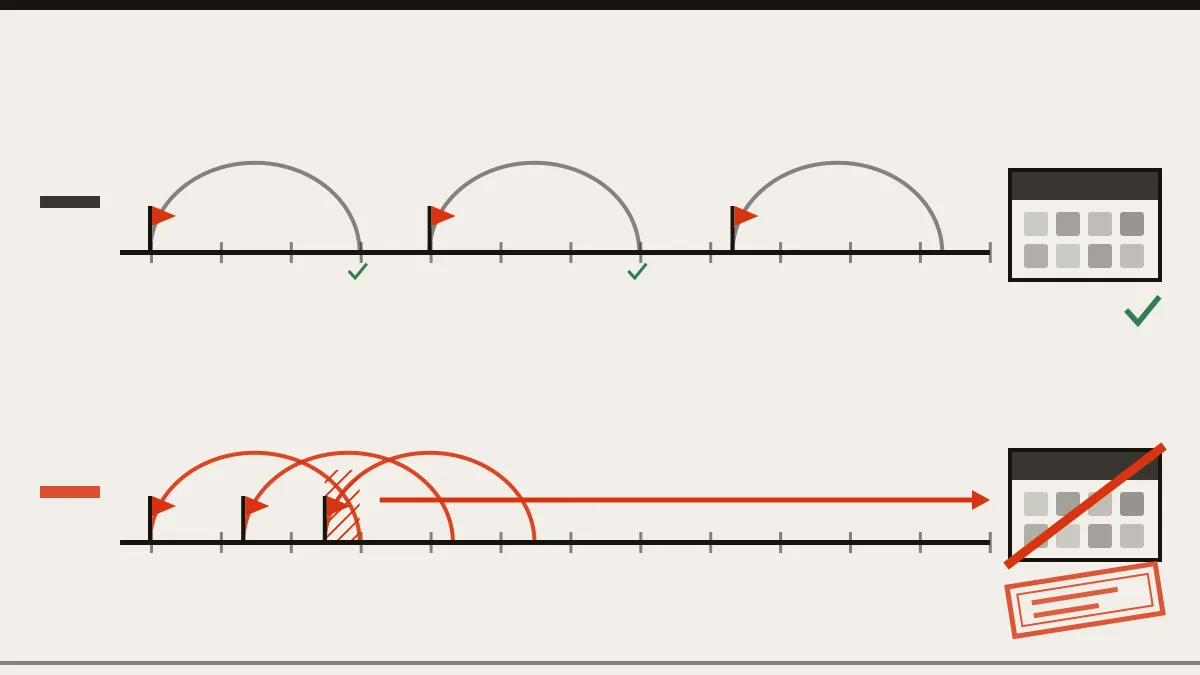
Sometimes, and the two are not the same thing. The takedown is the legal event; the strike is the platform's record of it. A copyright strike exists because section 512 makes the safe harbour conditional on something else as well: every service must adopt and reasonably implement a policy for "the termination in appropriate circumstances of subscribers and account holders of the service provider's system or network who are repeat infringers" (17 U.S.C. § 512(i), Cornell LII). The statute never says how many infringements make someone a repeat infringer, or what "appropriate circumstances" means. Each platform answers those questions in its own policy, and "strike" is YouTube's word for its answer. When a notice succeeds, the item comes down under the law. Whether the account also picks up a mark, how long the mark lasts and what three of them cost the uploader are all matters of platform policy, which is why the same notice can end a channel on one service and change nothing on another.
YouTube's version is the one people mean. A strike is issued when a legal removal request, not a Content ID claim, leads to removal. The first strike sends the uploader to Copyright School. Channels that collect three strikes within 90 days are subject to termination, and a strike expires after 90 days provided the uploader completes Copyright School and has fewer than three active strikes (YouTube Help). The uploader can clear a strike three ways: wait it out, obtain a retraction from the claimant, or file a valid counter-notification. A scheduled request, the seven-day option described above, lets the uploader delete the video and avoid the strike altogether.
A Content ID claim is a different animal again, and confusing the two causes needless fights. Content ID is YouTube's automated matching system for large catalogues. A claim usually leaves the video up and routes its advertising money, or its visibility, according to the owner's chosen policy, and YouTube's own transparency reporting says more than 90% of Content ID claims are monetised rather than blocked. A claim does not normally carry a strike. An uploader who disputes a claim without good grounds can, however, provoke the owner into a formal removal request, and that one does carry a strike. For an individual creator without Content ID access, the webform notice is the only lever, which is one reason its disclosure rules deserve careful reading.
From the complainant's side, two consequences follow. Your notice is more than a request about one video; it can be the third strike that ends somebody's channel, and a claimant who was careless about fair use can find that fact aired in a counter-notice or a court filing. And YouTube will not let you retract the strike alone. A retraction withdraws the removal and the strike together, so you cannot keep the video down and forgive the penalty.
Other services are less explicit. Bandcamp counts more than two notices or removals as repeat infringement. BitChute reserves the right to suspend or terminate repeat infringers without publishing a threshold. 4chan says repeat offenders will lose access, and Epic, for the services it still runs, has a policy of terminating users "deemed to be repeat infringers of copyright". None of these is a strike system in YouTube's sense, so a search for a strike count on those platforms has no answer to find.
Strikes also explain why a copyright notice is rarely anonymous. Because the uploader faces an account penalty, platforms give them enough to contest it, and that usually includes your name. Instagram behaves the same way: its copyright and trademark forms are the one report that is not anonymous, unlike most policy reports. Ordinary reports on other apps sit in separate queues again. Reporting a TikTok account, video, LIVE or comment runs through TikTok's community reporting, while a copyright complaint there goes through TikTok's own intellectual-property form with its own penalty rules.
What happens after you file: removal, counter-notice and the 10–14 business-day clock
Most guides explain the counter-notice from the uploader's side. This section is written for the person who filed the notice, because the clock that starts is yours.
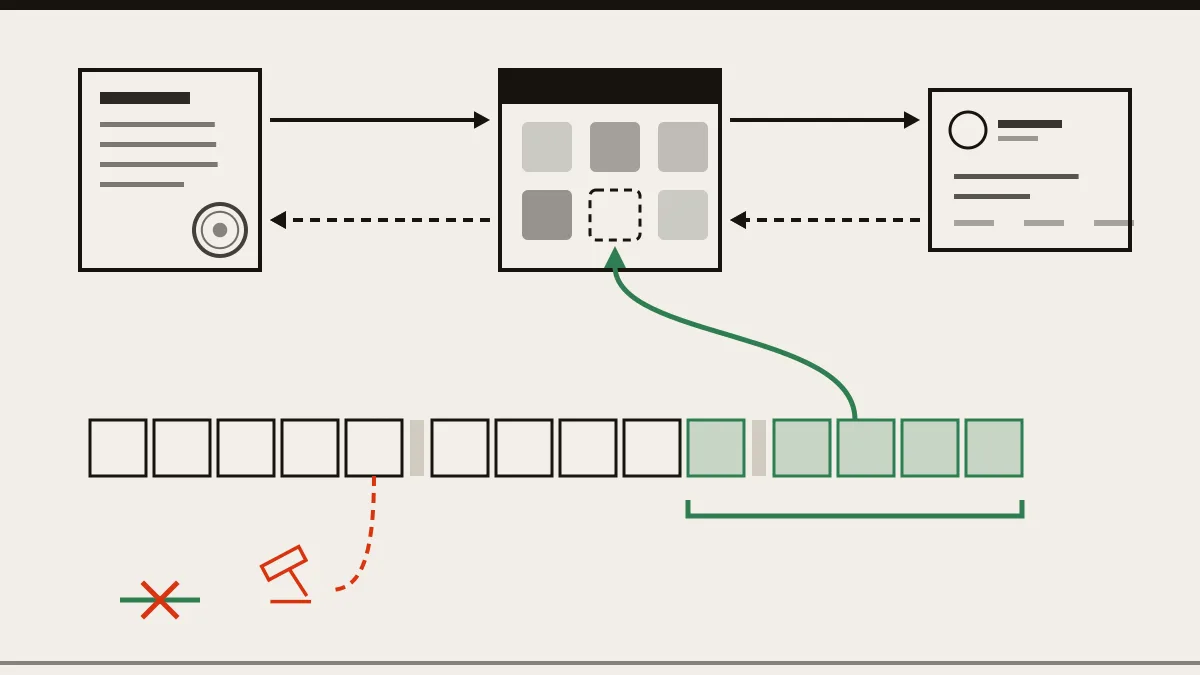
When a service acts on a valid notice, it removes the item, tells the uploader it has done so, and passes on enough of your notice for the uploader to respond. The uploader then has two choices: accept the removal, or send a counter-notice. Under section 512(g)(3) a counter-notice must be signed, must identify the removed material and where it appeared, must state under penalty of perjury that the uploader believes in good faith it was removed "as a result of mistake or misidentification", and must give the uploader's name, address and telephone number. It must also include consent to the jurisdiction of a US federal court, or, for an uploader outside the United States, any district where the service can be found, and agreement to accept service of legal papers from you.
Then the clock runs. The service sends you a copy of the counter-notice and tells you it will restore the item in 10 business days. It must put the item back "not less than 10, nor more than 14, business days following receipt of the counter notice" unless you tell it that you have filed a court action seeking an order to stop the infringement (17 U.S.C. § 512(g), Cornell LII). Bandcamp says it "may replace" material in 10 business days, 4chan says 10 to 14 business days "or more", and Epic says it restores if no legal proceedings begin within 10 business days. The effect is the same everywhere: two to three calendar weeks in which the only way to keep the item down is to sue. That is the moment a filer needs to have planned for before sending the first notice, and our note on the ten-to-fourteen-day restore window shows how often a quick removal quietly reverses itself because nobody was watching the calendar.
The counter-notice is also the one point in the process where an anonymous copier must identify themselves. Their name, address and telephone number arrive on your desk under penalty of perjury. For a UK client that information can be worth more than the removal. It is what a pre-action letter needs, and it can turn a whack-a-mole problem into a single defendant. Where no counter-notice arrives and the copies keep reappearing under new accounts, section 512(h) lets a copyright owner ask a US district court clerk to issue a subpoena to a service provider to identify an infringer. It is a real tool, but in practice it needs US counsel and a properly served subpoena.
Use the ten days well. Read the counter-notice against section 512(g)(3): a document with no signature, no perjury statement or no consent to jurisdiction is defective, and you can point that out to the service before it restores anything. Check whether the counter-notice raises a licence or a fair-use argument you had not considered, because that is the point at which walking away costs least. Pull together the proof of first publication, such as original files with their metadata, earlier posts, invoices or registration records, in case a lawyer needs them at short notice. And if the counter-notice names someone you can reach, a direct letter sometimes resolves in days what a lawsuit would take months to settle.
Whether to sue at the end of the clock depends on money, evidence and appetite, and it is not a decision to make on day nine. For a "United States work", registration must come first, and registration takes time unless it is expedited for a fee. For a UK work, the registration bar does not apply, but you will still want US counsel for a US federal claim. Many clients decide in advance that they will not sue over a single copy, and that is a perfectly sound decision. It simply means treating a restored item as the start of a different route, such as a host-level notice, a search delisting or a legal letter, rather than as a failure.
How long does a DMCA takedown take?
The statute sets no deadline for the first removal. It protects a service that "responds expeditiously", which leaves each company to decide what expeditious means, and none of the platforms in this briefing publishes a fixed turnaround for copyright notices. In practice a complete notice through a platform's own form is usually decided within days, an emailed notice waits in a triage queue first, and a host reached through a CDN can take longer because the notice travels twice. Incomplete notices take longest of all, since the service either asks for more or waits for a better one. The only fixed numbers in the whole process are the counter-notice window, 10 to 14 business days, and the 48-hour removal duty that the TAKE IT DOWN Act now imposes for intimate images, which is a separate law with a separate notice. If a platform has not acted after a couple of weeks, check the notice for a missing element before assuming it was refused.
Think about what your own notice exposes, too, because the forwarding rules differ:
- YouTube gives the uploader the copyright owner's name, your primary email and your full legal name, but keeps your postal address and telephone number confidential unless a court requests them.
- Bandcamp forwards a copy of your notice to the party responsible for the upload.
- 4chan may forward a complete copy, including your name and contact information.
- Google shares notices with the Lumen database, where names and reported URLs can be read by the public.
- Cloudflare forwards to the website operator unless you choose otherwise for categories where that option exists.
A notice can be signed by an authorised agent rather than by the owner, which keeps the owner's address and telephone number off it, although some forms will still pass on the owner's name. When we file for a client, we explain before signing exactly which details will travel and to whom, and how we handle the details you send us is set out separately.
When a DMCA notice is the wrong tool, and when it becomes a liability
The notice is powerful because platforms act first and ask later. That same speed makes it tempting to use on things it was never meant for. Section 512(f) is the counterweight: anyone who "knowingly materially misrepresents" that material is infringing, or that it was removed by mistake, is liable for the damages that misrepresentation causes, including costs and attorneys' fees, to the uploader, to a rights holder or to the service itself (17 U.S.C. § 512(f), Cornell LII). Epic's own form puts it more bluntly, in capital letters: submitting a notice means "making a formal legal accusation, under penalty of perjury" (Epic Games).
The best-documented abuse is aimed at journalism. In April 2022 researchers at the Lumen database described 33,988 notices sent to Google between June 2019 and January 2022 by more than thirty different senders against more than 550 domains, most of them news sites carrying allegations of corruption and fraud. The method was the "back-dated article": copy a real article onto a throwaway blog, date the copy earlier than the original, then send a DMCA notice claiming the original is the infringing copy. Lumen found that 99.2% of those notices failed, while 0.8% succeeded, removing about 300 legitimate URLs from Google's results (Lumen). The numbers show both halves of the story: most bad notices are caught, and the ones that slip through do real harm to someone else's speech. Amazon's 2023 lawsuits over forged "original" product photos followed the same playbook in a marketplace.
A few cases come to us wanting a copyright notice when copyright cannot help. The commonest is a hostile article, review or post about the client. Copyright protects expression, not reputation. A false statement about you is not your work, however damaging it is, and a notice claiming otherwise is a misrepresentation that invites exactly the counter-notice, 512(f) claim and publicity the client wanted to avoid. Copyright and defamation run on separate rails, with different tests, forms and courts. The exception is narrow and useful. If the hostile article reproduces your photograph, you may own that photograph, and the photograph can come down while the words stay up. That is a legitimate notice about a legitimate right, and it is often all the relief a client needs.
British law draws a helpful line here. The Copyright, Designs and Patents Act 1988 allows fair dealing for criticism, review and quotation, and for reporting current events, but section 30(2) excludes photographs from the current-events exception (legislation.gov.uk). A site that lifts your photograph to illustrate a news story cannot shelter behind "we were reporting the news", although it may still argue criticism or review if the piece is genuinely about the photograph itself. American fair use is broader and less predictable, and a US platform will apply US law to the notice it receives. Where a use sits in the grey zone of both systems, a direct request to the publisher, an invoice for a licence fee or a solicitor's letter is usually safer than a sworn notice that invites a counter-notice.
Some content cannot be removed by any lawful route, and it helps to say so plainly. Truthful journalism, genuine public records and honestly held opinion stay up. The most we can do there is lawful suppression, pushing other, accurate material above it in search, and forging a notice against it risks a lawsuit and a Streisand effect that spreads the story further. We never forge or bluff notices, never file for rights a client does not hold, never ask for account passwords, and never promise a guaranteed removal, and we file only for rights you hold is written into our terms. The limits of what we can promise are set out in full on a separate page.
Buying a filing does not move the risk. If a service files a notice in your name that turns out to be false, you are the person who swore it, and the section 512(f) claim lands on you as well as on them. Our briefing on who carries the risk when a bought filing is false makes the same point about report sellers, and it applies with more force to a sworn legal notice.
Leaked intimate images are the other case where copyright is usually the wrong first step. It can work when you took the picture yourself, because you own it. But the TAKE IT DOWN Act route and hash-matching through StopNCII.org or NCMEC's Take It Down are faster, do not depend on who pressed the shutter, and do not send your name to the uploader in a copyright file. We treat these cases as urgent and triage them free, and we never ask anyone to send us the images.
How to choose a DMCA takedown service, and what the best ones tell you first
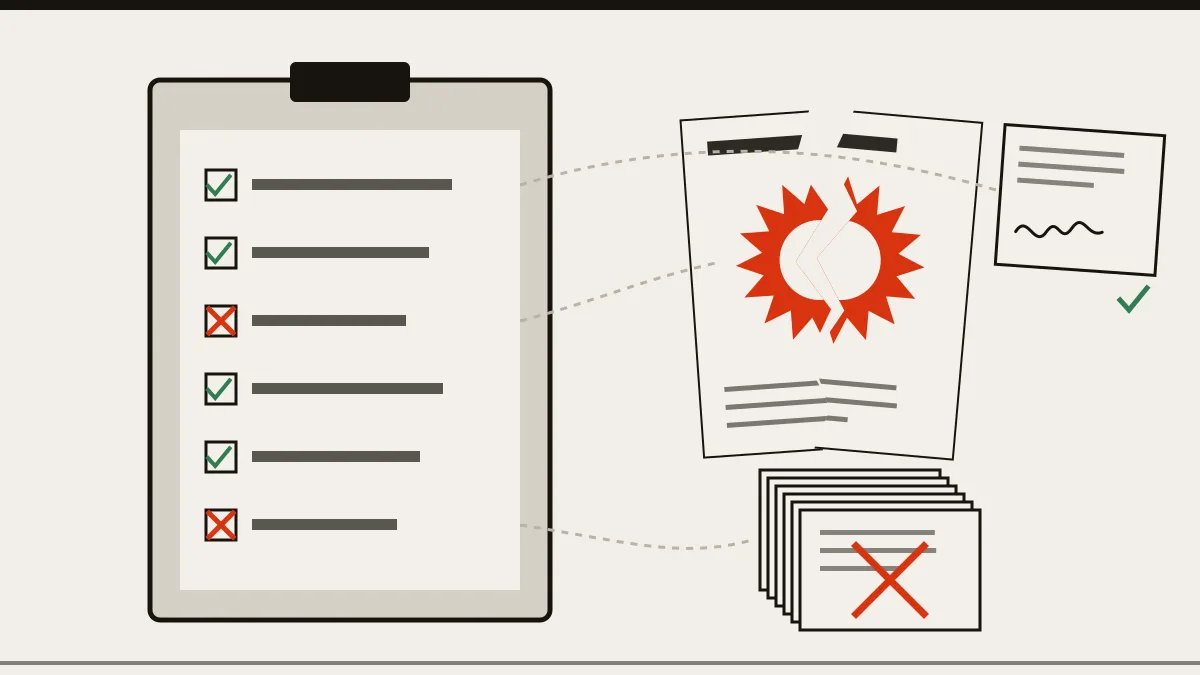
Everything above can be done by one person with a free afternoon and the patience to read each platform's page. People hire a dmca takedown service when the afternoon turns into a month: the copies are on a dozen sites, they keep coming back, the site owner hides behind a CDN, or the rights holder is a business that cannot spend its own staff time on it. A good provider does four jobs. It finds the copies, drafts and files the notices as your authorised agent, follows each one through to an outcome, and escalates when the first recipient cannot or will not act. Some also handle search delisting, counter-notices and the legal letters that come after.
Doing it yourself costs nothing but time, and the time is front-loaded. The first notice on each platform takes the longest, because you are learning the form; the fifth takes minutes. What the do-it-yourself route cannot easily supply is coverage and continuity: someone to find the copies you have not seen, to notice that a removed file came back under a new account, and to answer a counter-notice before the restore date passes. A single stolen photograph on one platform rarely needs a provider. A catalogue of product images copied across marketplaces, or a course leaked to a dozen file hosts, usually does, and so does any case where the rights holder would rather not have their own name on every notice.
The comparison lists that rank the best dmca takedown service mostly judge price, speed, monitoring and whether Google de-indexing is included. Those matter, but they leave out the questions that decide whether you end up better or worse off. A dmca takedown service provider signs sworn statements for you. Before you let anyone do that, ask these six questions, and expect straight answers.
- Whose name goes on the notice? A legitimate agent files with your written, signed authorisation and tells you which of your details each platform will pass on. Vague answers here usually mean the provider has not thought about it.
- Does a person review each URL before filing? Software is good at finding copies and poor at judging fair use, licences and quotation. A provider that files whatever its crawler finds is filing your perjury statements in bulk.
- Do they promise guaranteed removal? Walk away if they do. No provider controls whether a host in another country responds, whether an uploader counter-notifies or whether a court later agrees, and a guarantee usually means someone intends to cut corners to meet it.
- Will they report every URL by outcome? You want each item marked as removed, forwarded, delisted, refused or restored, with the date. "Removed from search" and "removed" are different results, and a report that merges them flatters the provider.
- What is the plan for a counter-notice? The ten-to-fourteen-business-day decision will come. Ask who tells you, how fast, and what the options cost.
- How is the price built? Per notice, per case or by subscription are all legitimate, but find out whether host escalation, search delisting and repeat filings for re-uploads are included or billed separately.
Ask, too, what happens to everything you hand over. A takedown file holds your original work, screenshots, your address and sometimes commercially sensitive material. A careful provider keeps only what the notices need, deletes the file when the case closes, can tell you where the data is stored, and never asks for intimate images at all, because hash-matching services exist precisely so that nobody has to hold them.
Two warning signs deserve a sentence each. A provider that offers to file against content you do not own, such as a critical review or a news story, is offering to make you the defendant in someone else's 512(f) claim. And a provider that wants payment only in cryptocurrency, up front, with no written engagement, gives you no way to recover the fee or prove what was filed in your name.
From our own desk: the platform forms are usually the fast part of the job. The slow part is the standalone site behind a CDN, where the first reply often confirms only that the complaint was forwarded, and the real work is identifying the host and writing to its designated agent in terms it will act on. A good provider will describe that honestly before you pay, which is also why a removal desk files; it never decides. The platform, the host or a court makes the decision, and anyone who tells you otherwise is selling certainty they cannot supply. If you want those six questions answered for your own case, Obscura's confidential intake will do it before any fee, and will tell you if the notices are ones you can safely send yourself.
A filing order that works when your work is on several sites
Most copyright cases that reach us involve more than one copy on more than one service. The order in which the notices go out makes a surprising difference to how fast the whole set comes down, because each filing can reveal information, such as a host's name or an uploader's address, that the next one needs.
- Capture every copy with its URL, the date, the account name and a full-page screenshot, before anyone is notified.
- Confirm the lane. Copyright covers your photos, text, music, video, code and artwork; trademark covers names and logos; defamation, privacy and intimate-image law cover the rest.
- Map each copy to its recipient: platform, host, CDN or search engine, using the table earlier in this briefing.
- File platform notices first, one per service, through each platform's own form where it has one. They are the fastest and the most predictable.
- For standalone sites, file with the CDN if there is one, then send a direct notice to the host's designated agent.
- Ask search engines to delist what survives, remembering that your name may appear in the Lumen database.
- Put two dates in the diary for each notice, ten and fourteen business days after any counter-notice, and decide in advance what you will do if one arrives.
- Re-check at intervals. A re-upload is a new item and needs a new notice, and YouTube's copy-prevention option and a monitoring service are both ways to see re-uploads sooner.
A typical multi-site case shows why the order matters. Take a photographer whose portfolio has been copied to a marketplace listing, a video on a sharing platform and a standalone gallery site behind Cloudflare. The marketplace and the video platform get their own notices on day one, through their own forms, because both hold the files and both run predictable procedures. The gallery site gets a Cloudflare complaint the same day, and the reply identifies the host, which receives a direct notice to its designated agent once its details are confirmed. Whatever is still live a fortnight later goes to Google Search as a delisting request, with the photographer told beforehand that their name may appear on Lumen. Every notice is logged with its date, its recipient and its outcome, so a counter-notice on any one of them triggers a decision rather than a scramble.
This order is not a promise that everything will come down. It is the sequence that gives each copy the best chance, wastes the fewest notices and keeps a clean record if the dispute ever reaches a court. For the other routes this briefing mentions, from defamation to account removal, more Removal law briefings cover each one in the same detail.