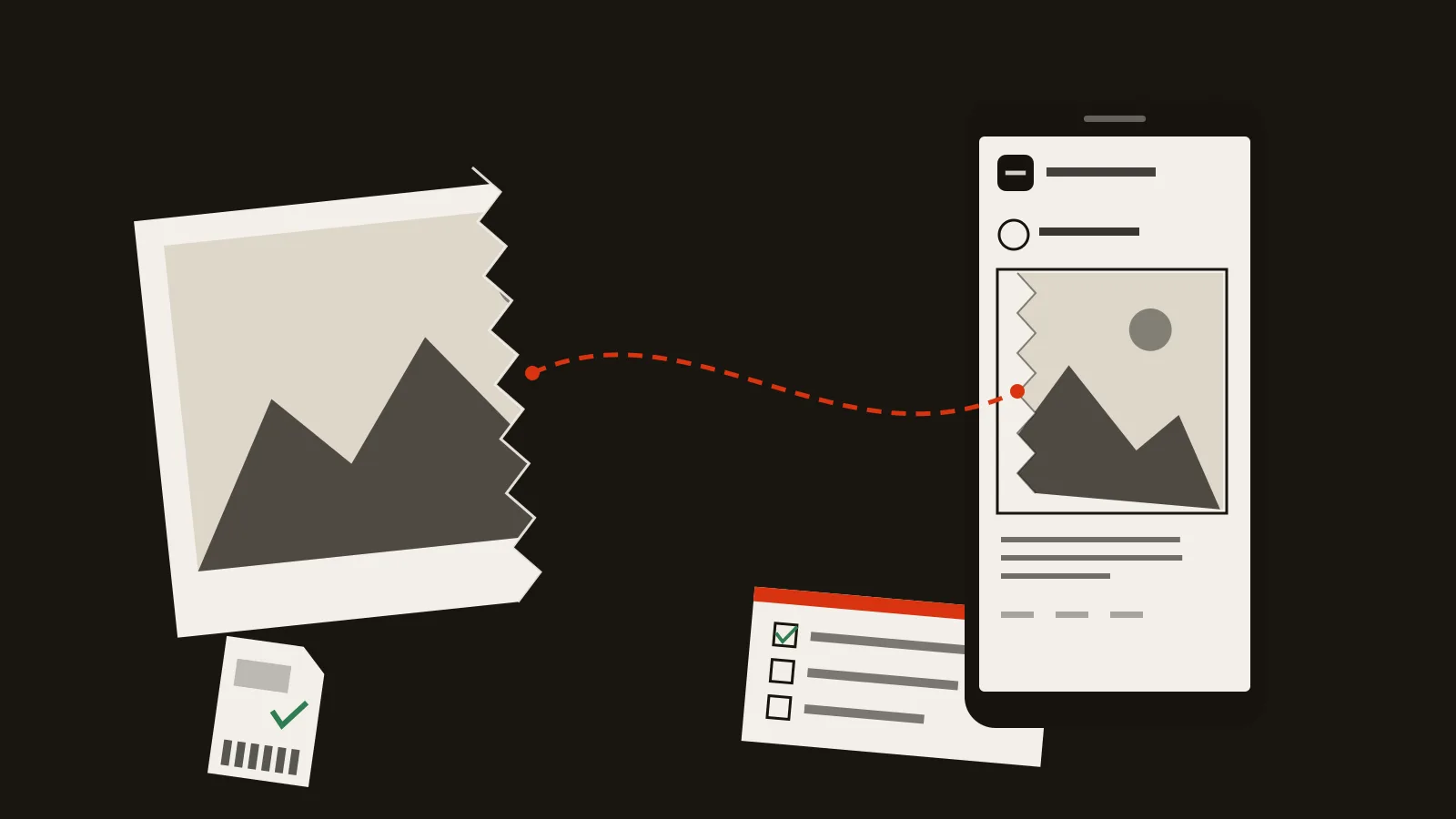
What is the Instagram copyright violation WhatsApp message?
It usually lands from a number you have never saved. The profile name says something like Meta Support or Instagram Copyright Team, and the text says one of your posts broke copyright law. There is a deadline and a link. Tap the link, the message says, and you can object before the account is closed. That is the instagram copyright violation whatsapp message in its classic form, and it has been in circulation for at least seven years.
The oldest dated warning we have found is a Better Business Bureau alert from 6 December 2019, which quoted a WhatsApp text telling Instagram users that their account was "about to be closed" over the last post they had shared, followed by a link to verify the account (BBB via WVLT, 2019). The wording has hardly moved since then. What moves is the delivery channel.
| Date | Delivered by | What it wanted | Reported by |
|---|---|---|---|
| Dec 2019 | A "verify" click | BBB | |
| Mar 2022 | Login and email password | BBB | |
| Nov 2023 | A form within 48 hours | University of Arizona | |
| Jul 2024 | Real takedowns | $3,000, or $1,000 a month | Mashable |
| Oct 2025 | Phone, fake email | ₹25k to ₹30k a strike | Tribune India |
The March 2022 version threatened deletion "within 24 hours" and harvested both the Instagram login and the password of the email account behind it (BBB, 2022). The November 2023 version gave 48 hours and a "Go to Form" button (University of Arizona, 2023). The last two rows are a different animal, and they get their own section below, because in those cases the takedown on the account was real even though the complaint behind it was invented.
For the phishing version, the useful definition is short. An Instagram copyright violation WhatsApp message is an unsolicited chat from an ordinary WhatsApp account claiming that Instagram or Meta found copyright infringement on your profile and will close the account unless you act through a link. It is not how Meta works. When Instagram removes a post because of a copyright report, the notice appears inside Instagram, names the rights owner who complained, carries a report number and explains how to appeal (Meta Transparency Center). Security emails about your account come only from a short list of Meta domains, and Instagram says it "will never reach out to you about account security through Direct Messaging" (Instagram Help Center). A chat that offers a link and a clock, instead of a report number and a named rights owner, is phishing. The link leads to a copy of the Instagram login page, and whatever you type into it goes to the sender.
WhatsApp takes the same line about itself. Its help centre says that a message claiming to be WhatsApp from an account without the verified badge "is a scam" and should be reported and blocked (WhatsApp Help Center). Meta does not run Instagram copyright enforcement through a WhatsApp chat at all, badge or no badge. The official help channel it does offer sits inside its own help pages: every Instagram Help Center article we checked in September 2026 carried a Meta AI support assistant chat, reached from help.instagram.com rather than from a phone number that found you.
A genuine Instagram copyright report travels the other way. It is filed by a rights owner against somebody else's post, and the real Instagram copyright infringement notice that follows goes to the person who posted the content, inside Instagram, with the complainant named. Meta does not ask someone who has genuinely been reported to verify a password in a WhatsApp chat first.
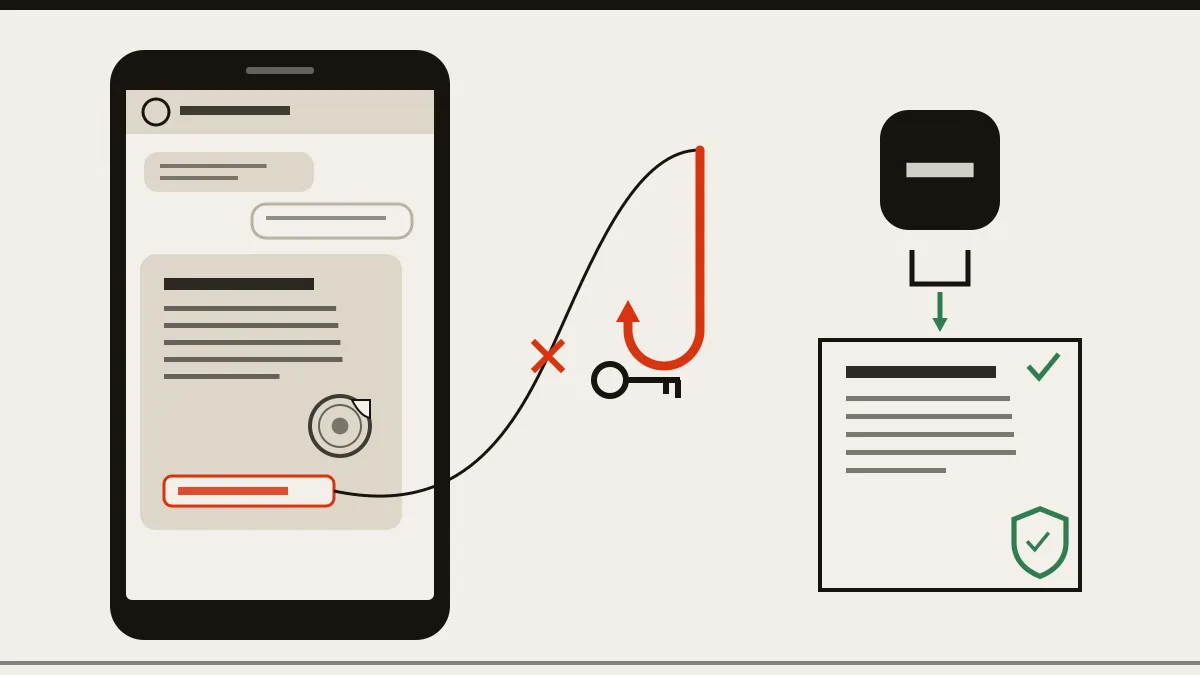
How do you check a copyright warning in 60 seconds?
Do the checks inside the apps you already have, never through anything the message links to. The sequence below takes about a minute, and it settles almost every case.
- Leave the link alone. Don't reply, don't tap, don't forward it to friends asking whether it looks real. A reply tells the sender the number is live.
- Open Instagram yourself and look at Account Status in your settings. A real copyright removal shows up there and in your notifications, with the removed post and the appeal route attached.
- Read Instagram's own email log. Go to Settings, then Accounts Center, then Password and security, then Recent emails, and choose the account. Instagram keeps 14 days of official email there, split into Security and Other tabs (Instagram Help Center). A copyright "final warning" that is missing from that list did not come from Instagram.
- Check the sender's domain on any email. Instagram lists five: support.facebook.com, support.instagram.com, facebookmail.com, mail.instagram.com and global.metamail.com. A domain that merely contains the word Instagram, such as a hyphenated appeals site, is not on the list.
- Report and block the WhatsApp sender. Screenshot the chat first, with the number visible. When you report a user in a one-to-one chat, WhatsApp receives up to five of the last messages that person sent you, and the sender is not told who reported them (WhatsApp Help Center). Reporting alone does not stop new messages, so block as well.
Most people stop there, and that is fine. The sender has lost nothing but a message, and you have lost nothing at all.
If you did type your details into the page, the order changes. Change the Instagram password from inside the app, then check Where you're logged in under Password and security and remove every session you do not recognise. Switch on two-factor authentication through an authenticator app rather than text messages. Change the password of the email account linked to Instagram too, because the 2022 variant collected that as well. If you are already locked out, start at instagram.com/hacked, which runs Instagram's recovery flow. And if you entered a six-digit login code, treat the account as taken over even if it still looks normal: a code typed into a phishing page is the one thing an attacker needs to get past two-factor protection on a fresh login. Then warn your followers, because a hijacked account is the cheapest way to send the same lure to everyone who trusts it.
For UK readers there are two public routes worth knowing. A scam that arrives by ordinary text message can be forwarded free to 7726, the reporting number the National Cyber Security Centre runs with the mobile networks (NCSC); WhatsApp messages go through the in-app report instead. If money or an account has actually been lost, report it to Report Fraud, the City of London Police service that replaced Action Fraud from 4 December 2025 (GOV.UK).
One thing the WhatsApp report cannot do is ban a number on demand, whatever sellers on the same platforms claim, and the reasons are in our piece on what a WhatsApp report actually sends to Meta. The honest goal of the report is narrower: get the message into WhatsApp's systems and get the sender out of your chats.
When the takedown is real and the copyright claim is fake
Since 2024 a second pattern has grown up next to the phishing text, and it is nastier because nothing about it is imaginary except the complaint. The account really is hit. Posts disappear with copyright notices attached, sometimes the whole account is disabled, and then a message arrives on WhatsApp, Telegram or the phone offering to make it all go away for a fee.
The first widely reported wave came out of the Middle East. Bloomberg reporting, summarised by Mashable on 31 July 2024, described Instagram and Facebook accounts with access to Meta's Rights Manager tool being sold on a black market, then used to file takedowns against creators who owned their own content (Mashable via Yahoo, 2024). One Iraqi influencer was asked for $3,000 to restore removed content, with an offer of $1,000 a month, or $7,000 a year, to stop future takedowns. Meta's response at the time was that its Rights Manager tools are global and that it invests heavily in them.
India produced the longest-running case on record so far. The Tribune reported on 23 October 2025 that a creator in Jabalpur running 96 Instagram pages with a combined 57 million followers had paid around ₹50 lakh over roughly a year, at ₹25,000 to ₹30,000 per fake strike, to people who kept filing complaints and then charging to withdraw them; the local cyber cell worked with Instagram's security team to trace the filings (The Tribune, 2025).
By July 2026 the problem had reached the Delhi High Court twice. A public interest petition by the creator Nitin Joshi, who has 1.6 million followers, alleged that fake complaints were triggering automated disabling with no verification and that victims were then asked for sums "running into several lakhs", and the court issued notice to the Union of India, the Ministry of Home Affairs, Meta and the Delhi government (LiveLaw, 28 July 2026). In a separate creator's case the same month, the court ordered Meta to hand over the complainants' subscriber information and IP logs within two weeks (EU IP Helpdesk, 2026).
Telling the two patterns apart takes one look at Account Status. In the phishing version, nothing has happened to the account at all: no removals, no warnings, only a chat. In the extortion version, the removals are real and visible in the app, each one naming a complainant you have never heard of, and the message asking for money arrives after them, not before. The first is a lure to steal the account. The second is a racket that has already used Meta's own reporting system against you, and the answer to it is evidence, not a password change.
If this is happening to you, the payment is the one move that makes nothing better. Whoever can withdraw a fraudulent complaint can file the next one, and a victim who has paid once is the best lead a racket has. Use the route Meta itself built instead.
Every copyright removal notice says which track it came through, and Instagram runs two. Content removed under the United States Digital Millennium Copyright Act can be challenged with a DMCA counter-notification; content removed on a copyright report submitted outside the DMCA procedures is challenged with an appeal, using the instructions in the notice, and a disabled account is appealed by logging in and following the on-screen steps (Instagram Help Center). Where a counter-notification is valid, Meta forwards it to the complainant and restores eligible content within up to 14 business days unless the complainant tells Meta it has gone to court, and content restored that way is not counted against you under the repeat infringer policy (Instagram Help Center). A fraudster who has to put a real name to a lawsuit usually disappears at that point.
Two more steps belong in the same afternoon. Keep every extortion message, with the number, date and time visible, because demanding money with menaces is blackmail under section 21 of the Theft Act 1968 and the police will want the originals rather than your summary of them. And collect every removal notice with its report number and the rights owner it names; that list is the thread that ties separate complaints to one filer. Meta says its IP team reviews reports by hand partly to guard against reports that are "fraudulent, erroneous, or submitted in bad faith" (Meta Transparency Center), and a tidy file of connected fakes is the kind of thing that review exists for.
When we take on one of these for a creator, the appeal is not the first job. The inventory is: every notice, every report number, every named complainant, and the original of every removed post. With that in hand an appeal takes ten minutes; without it, people send Meta three emails of outrage and no evidence, and the account stays down.
Are Instagram photos copyrighted when the photo shows you?
Yes, Instagram photos are copyrighted, but not always by the person in them. Under the law of England and Wales a photograph is an artistic work "irrespective of artistic quality", copyright arises automatically when it is taken, and nothing needs registering. The author is "the person who creates it" (CDPA 1988, s.9), and the author is the first owner of the copyright unless the photo was taken by an employee in the course of their job, in which case the employer owns it (s.11). So the question are instagram photos copyrighted has an easy half and a hard half. The easy half: nearly every photo on Instagram is protected. The hard half: the person who can use that protection is whoever pressed the shutter, which is often not the person the photo is about.
Walk through the usual cases. A selfie is yours. A photo of you taken by a friend on their phone belongs to the friend. A professional shoot belongs to the photographer unless your contract assigned the copyright to you, and most standard contracts do not. A photo taken by your employer's social media team belongs to the employer. For someone trying to get a hostile repost removed, that ownership map decides everything, because a copyright report can only be filed by the owner or somebody the owner has authorised.
Posting a photo to Instagram does not change who owns it. Instagram's Terms of Use say plainly that Meta does "not claim ownership" of your content; you grant Meta a "non-exclusive, royalty-free, transferable, sublicensable, worldwide licence" to host, display and adapt it, consistent with your privacy and app settings, and the licence ends when the content is deleted from Meta's systems (Instagram Terms of Use). That licence runs to Meta, not to the account that screenshotted your post. A stranger's repost is not licensed by your upload.
UK law adds two rights that most guides never mention. The first is section 85 of the Copyright, Designs and Patents Act. If you commissioned a photograph or film "for private and domestic purposes", a wedding, a family portrait, a christening, you have a right not to have copies issued to the public, exhibited or shown in public, or communicated to the public, even though the photographer owns the copyright (s.85). It does not apply to photographs taken before the Act came into force. A hostile account posting your wedding pictures is therefore touching a right that belongs to you, not only to the photographer. Section 85 is a moral right rather than copyright, so it does not sit neatly in Meta's copyright form; it is a point for a letter before claim, and for a court if it gets that far.
The second is the moral right against derogatory treatment. The author of a photograph can object to treatment that "amounts to distortion or mutilation of the work or is otherwise prejudicial to the honour or reputation of the author" (s.80). A mocking edit of a picture you took of yourself can engage it. There is a separate right to be identified as the author, but that one only works once it has been asserted, usually in writing. Neither right covers work made for the purpose of reporting current events.
The person reposting you may have defences too, and Instagram's terms point to them directly: users "may use someone else's works under exceptions or limitations to copyright and related rights under applicable law". The most important UK exception is narrower than people assume. Fair dealing for criticism or review needs the work to have been made available to the public and a sufficient acknowledgement. Reporting current events is a separate defence, and the Act excludes photographs from it by name: fair dealing "with a work (other than a photograph)" for reporting current events does not infringe (s.30). A gossip account that lifts your photo to "report" on you cannot lean on that exception. Caricature, parody and pastiche are protected as fair dealing since October 2014, which is why a genuine parody of your image is much harder to shift than a straight repost.
If the photo shows you but belongs to someone else, copyright is the wrong tool, and it helps to know that before filing a report that will be refused. Every large platform draws the same line between the rights holder and the identifiable subject, and gives the subject a different set of tools; the Instagram lanes for the person in the picture are in the matrix further down.
The evidence that proves an original is yours
Meta's IP reports are read by people. Its transparency pages describe a global IP operations team working around the clock in several languages, removing content when a report is "complete and valid" and asking for more information when it is not (Meta Transparency Center). That reviewer has two posts in front of them and a sworn statement. Your job is to make the ownership question answer itself before they have to ask it.
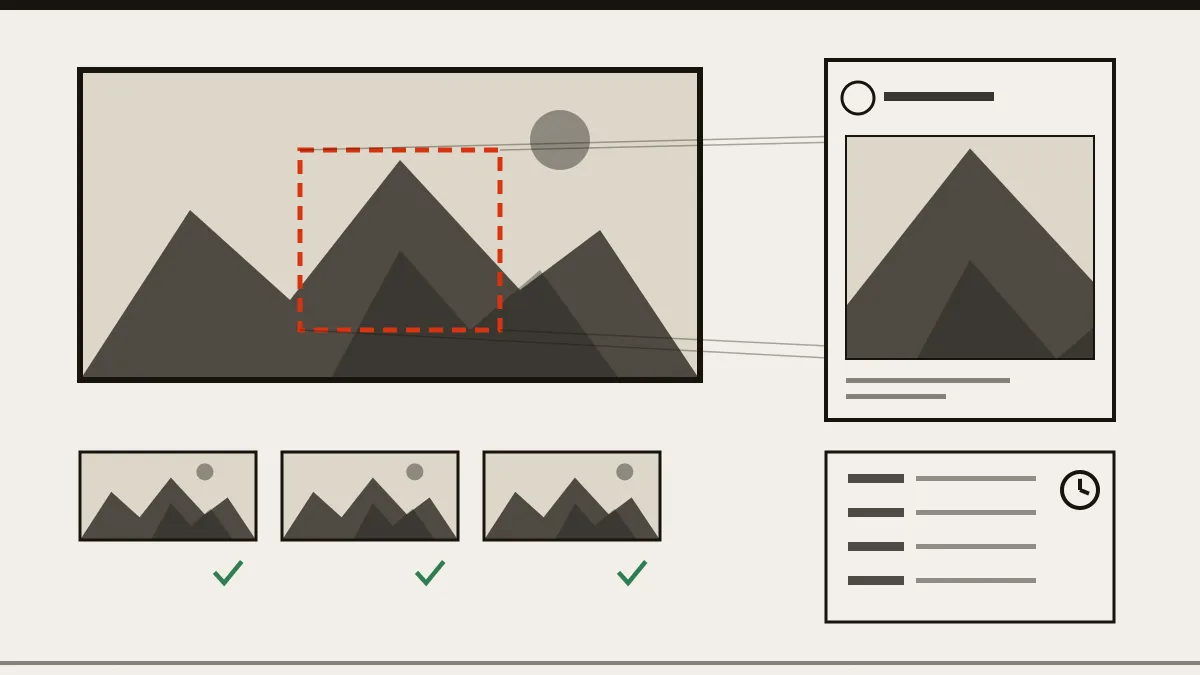
The copy is almost always weaker than the original, and that gap is your evidence. Social platforms recompress uploads, most strip the camera metadata, and reposters crop out whatever identified you. So the strongest single exhibit is the original file at full resolution, uncropped, with its metadata intact: camera or phone model, capture time, sometimes location. Next come the neighbours. Whoever took a photo usually took several, and the frames either side of it, the burst, the slightly blurred one before it, exist only on the photographer's device. For video, the longer raw clip or the editing project file does the same job. A reposter can copy a picture. They cannot produce the pictures around it. If your phone backs up to a cloud library, the upload date recorded there is one more independent timestamp that nobody on Instagram can edit, and it survives even if you have since deleted the photo from the phone itself.
Then there is the paper trail on Instagram itself. Your own post of the original, with its link and date, is the obvious one. A download of your account data, requested through Accounts Center under Your information and permissions, puts your posting history in a file you control, which matters if your account has been hacked or disabled and the original post is no longer visible. For commissioned or employee work, add the contract or email that says who owns the copyright, because the form asks you to swear to that under penalty of perjury.
On the other side, document the copy precisely. Each infringing post or Reel needs its own direct link, not the profile link, plus a screenshot showing the account name, the date and anything in the caption that matters. Note what was changed: cropped, flipped, filtered, captioned. If the reposter has already been reported by others, it may vanish before you file, and a copy that no longer exists is very hard to prove later.
Timing matters more than people expect. A story disappears after 24 hours, and a reposter who senses trouble often deletes first and reposts later under a new handle. A short screen recording that starts on the account's profile, scrolls to the post and opens it captures the handle, the date and the content in one continuous file, which is harder to dispute than three separate screenshots. Capture first, file second. And resist the urge to comment under the copy or message the account before you file: it tells them to delete, and a deleted copy leaves you with nothing to report and nothing to show a lawyer if the same person does it again.
| Exhibit | Proves | Who holds it |
|---|---|---|
| Original file | Authorship | The photographer |
| Burst frames | Authorship | The photographer |
| Your first post | Earlier date | Your account |
| Contract or email | Ownership | You and the author |
| Direct post link | Location | Anyone |
This is the same logic we use when proving a copied profile picture on Facebook, where proving a copied photo is yours before you report it decides whether Meta's reviewer believes you. When clients send us originals for a case, the files are held and deleted under our privacy notice, and we never need an intimate image itself to act on one.
How do you report copyright infringement on Instagram, and who may file?
Meta gives rights owners three routes into the same team, and it lists them side by side (Instagram Help Center). The first is the online reporting form. The second is Brand Rights Protection, a tool that lets approved rights holders find and report trademark, copyright and counterfeit problems in one place. The third is Meta's designated agent under the DMCA's notice-and-counter-notice procedure, which takes a complete copyright claim by post or email. For an individual with a handful of stolen posts, the form is the route, and it is faster than the other two.
The form is now Meta's shared Intellectual Property Reporting Form (Meta Help), and it opens without logging in, which matters when your account is the one that was hacked or disabled. In our test in September 2026 the older link inside Instagram's help pages sent a logged-out browser to the Instagram login screen, while the Meta form loaded directly. Once you choose Instagram and a copyright claim, it asks two things: where you are asserting rights, from a list of countries, and whether you are the rights owner. There are three answers. Yes. No, but authorised to represent the rights owner. Or no. Pick the last and the form stops, with a line saying a report "must come from the rights owner or someone authorised to report on their behalf". That is the first answer to anyone asking how to report copyright infringement on Instagram for a friend: you can't, unless the friend authorises you.
The country question is not a formality either. Meta says its DMCA notice-and-takedown procedure applies to content reported and removed for violating U.S. copyrights (Instagram Help Center). So the DMCA takedown Instagram describes is one legal track among several, and the country you choose tells Meta which law you are relying on. A photographer in Leeds asserting UK copyright is making a UK claim, and the removal notice the poster receives will say which track applies and whether their answer is an appeal or a counter-notification.
After that, Meta needs the same core information whichever channel you use (Instagram Help Center):
- your full name, mailing address and phone number;
- a description of your work and of the content you say infringes it;
- a direct link to each infringing item, so the team can find it;
- a declaration that you believe in good faith the use is not authorised by the owner, its agent or the law, that the report is accurate, and, under penalty of perjury, that you are the owner or authorised to act for them;
- your electronic or physical signature.
Those items track the six elements a US takedown notice must contain under section 512(c)(3) of the Copyright Act, which we take apart line by line in the anatomy of a DMCA takedown notice. If you are wondering whether an Instagram DMCA report is something different from the form, it mostly is not: the form collects a DMCA-shaped notice. What differs is the legal track Meta files it under, which decides what the other side can do next.
Sending a notice to the designated agent instead is the other way to get a DMCA Instagram takedown, and it suits three situations: a law firm filing a formal notice for a client, a batch too large or too messy for the form, and a case where the form has failed and you want the claim on the record in full. A DMCA copyright report Instagram receives by email or post reaches the same IP team, and Meta asks that it contain a complete claim (Instagram Help Center). For one person with a few stolen posts, an Instagram DMCA takedown through the agent is slower than the form and gains nothing.
One more distinction saves wasted effort. The Report button beside a post sends a Community Guidelines report, which is anonymous and is judged against Instagram's rules on bullying, nudity, scams and the rest. It is not a copyright claim, however many times it is pressed, and where each Instagram Report option sits is a separate set of steps from the ones below. Nor is there a dedicated Instagram report copyright infringement button inside the app that files a claim for you; the rights route always runs through the form, the brand tool or the agent. TikTok keeps the same two doors apart, and its in-app menus for an account, a video, a LIVE or a comment are a separate process from its copyright webform.
How to report stolen content on Instagram
This is the working order our desk uses when someone asks how to report stolen content on Instagram, and it holds for photos, carousels, videos and Reels.
- Open each copy and copy its own link from the three-dot menu or the share button. One item, one link.
- For a carousel, note which slide is yours; the reviewer should not have to guess.
- Open the Meta form, answer the owner question honestly, and describe your original with a link to where you posted it first.
- Paste the infringing links, describe what was copied and what was changed, sign, and submit.
- Save the automated email that follows. It carries a unique report number, and Meta asks you to quote it in any follow-up and to reply directly if its team writes back for more information (Instagram Help Center).
Most searches for how to report Instagram post for copyright are really asking about step four, the form, when step one matters more. Reports against a profile link, when the complaint is really about two posts, are the most common reason we see a complete-looking report bounce.
How to report an Instagram Reel for copyright
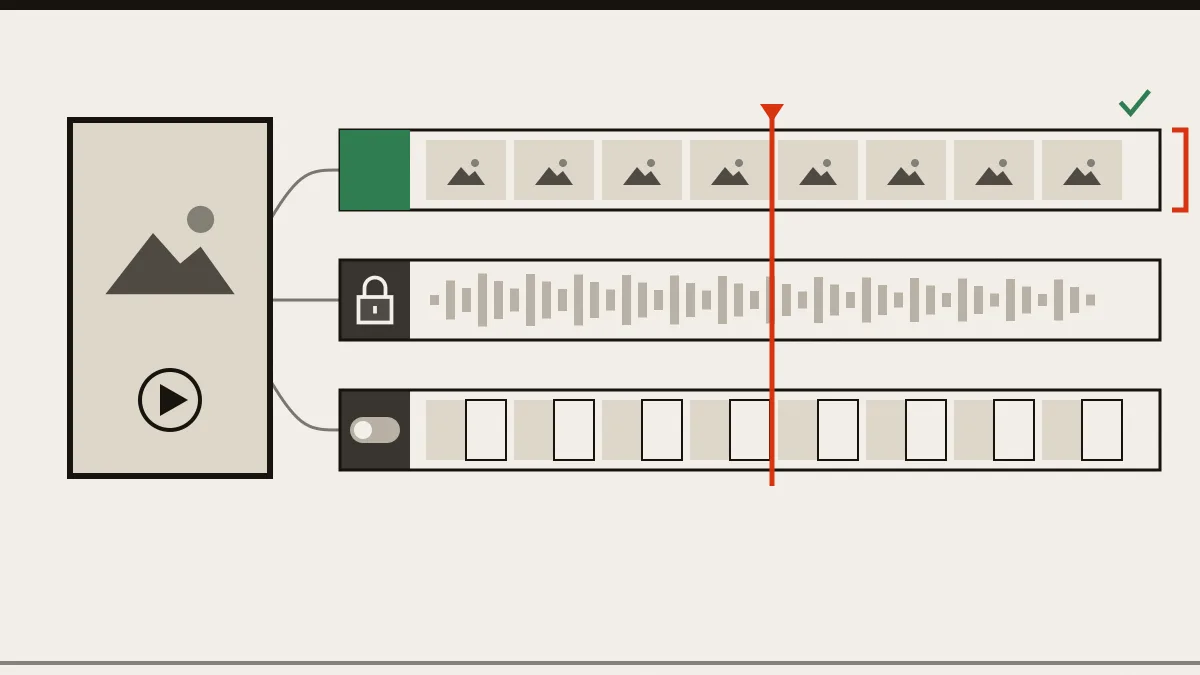
The steps are the same, with one extra decision. A Reel has at least three layers: the pictures, the audio and, sometimes, a remix of somebody else's clip. Anyone researching how to report Instagram reel for copyright should first work out which layer is theirs. Your filmed footage re-uploaded under another name is a clear claim. A commercial song playing under your footage is not yours to report, even if it is your Reel that was copied. And a remix made while your remix setting was switched on is a harder argument than a straight re-upload, for reasons covered in the Reels section below.
Reporting a whole account
Meta allows rights holders to report more than single posts. Its transparency pages say a report can cover anything from individual posts, photos, videos or ads to "an entire profile, account, Page, group or event", if the rights holder believes the whole thing infringes. An account that exists only to repost one photographer's portfolio is the case this was built for. An ordinary account that stole two of your photos is not; list the two posts.
How long it takes depends on the report more than the queue. Meta says that when a report is complete and valid, its team will "promptly remove the reported content, typically within a day or less", and confirm that to the rights holder (Meta Transparency Center). That is Meta's own published figure, and it is quicker than the 24 or 48 hours some paid services advertise. Incomplete reports are where the days go.
What does Instagram tell the person you report?
More than most people expect. Instagram's reporting is anonymous for almost everything, with one stated exception: "your report is anonymous, except if you're reporting an intellectual property infringement" (Instagram Help Center). A copyright or trademark report is the one kind of report where the other side learns who complained.
When Meta removes content after an Instagram copyright complaint filed through its form, it typically sends the person who posted it the report number, the rights owner's name, the email address the reporter supplied, the details of the report, and instructions on how to appeal (Instagram Help Center). Meta adds a warning in plain terms: the person whose content was removed may contact you using that information. Its form footnote goes a little wider still, saying Meta regularly provides "your name, contact information and the contents of your report" to the poster. Read that before you file against someone who frightens you.
The common advice here is to use an agent so that your name stays out of it. That is only half true, and the half that is false matters. Meta says that when an authorised representative files, it provides "the name of the organization or client that owns the right in question". The client's name still travels. What an agent changes is the email address and the contact point, which is why Meta itself suggests a generic business or professional email. For a photographer that is usually enough. For someone reporting an abusive former partner who reposted their photos, it may not be, because the one detail they want is a name they already know, attached to proof that you are watching. An agent cannot fix that, and nobody honest should sell it as if it could. What does change the name is ownership itself: where the copyright really belongs to a company, the company is the rights owner and its name is the one Meta passes on.
That last point has a legal edge. Moving a copyright into a company is an assignment, and an assignment of copyright is not effective unless it is in writing, signed by or on behalf of the person assigning it (CDPA 1988, s.90). Professional photographers and creators who trade through a limited company often do this for business reasons anyway. Doing it after the fact, on a single stolen selfie, purely to change the name on a report, is the kind of manoeuvre that looks bad in front of a reviewer and worse in front of a judge. Whatever you type into the form, assume it can reach the poster: the name, the email, and possibly the address and phone number the form requires, since Meta's own footnote speaks of passing on your "contact information" without listing every field.
There is one narrow exception in Meta's wording. Where a report arrives by fax, post or email rather than through the online form, Meta says that "in rare cases" it can only provide the report number and a description of the removed content. It also says it "may provide additional information if it's requested by the person who posted the reported content". So a notice to the designated agent narrows the first disclosure. It does not promise anonymity, and we would never advise a client to rely on it for their safety.
The traffic runs both ways. If the poster sends a DMCA counter-notification, Meta forwards it to you, and it includes their contact information. Copyright on Instagram is a named dispute between two parties with a platform in the middle, not a silent flag.
For anyone whose real problem is harassment, that changes the calculation. A Community Guidelines report for bullying, harassment or a privacy violation stays anonymous. A copyright report does not. Sometimes the right move is to file the anonymous report first, keep copyright in reserve, and use it only if the policy report fails and the ownership is clean. The same trade-off runs through which Instagram reports stay anonymous, and X handles copyright complaints in the same exposed way.
Reels, remixes, embeds and the licence you already granted
Most stolen-content disputes on Instagram are not really about the photo. They are about a feature. Somebody remixed a Reel, used a sound, embedded a post on a website, or reposted through a tool Instagram itself provides, and the person who made the original wants to know whether that counts as copyright infringement on Instagram or as the platform working the way it was designed.
Start with the licence. The Terms of Use grant Meta a worldwide licence to host, display, modify and create derivative works of what you post, "consistent with your privacy and application settings" (Instagram Terms of Use). That phrase is doing a lot of work. Remix is one of those settings. If your account allowed remixing when someone built a Reel on top of yours, the remix happened inside a feature you left switched on, and a copyright report against it is a weak argument. You can turn remixing off for future posts in your settings, and for a single post from its three-dot menu, but switching it off stops new remixes rather than unwinding the ones already made. The same applies to Instagram's other built-in reuse tools: a share to someone's story, with your handle attached, is the product doing what you allowed it to do. A downloaded copy re-uploaded under another name is different. That was never a feature, and it sits squarely inside copyright.
Audio needs its own sentence. When a copied Reel has a commercial song under it, the song belongs to the label and publisher, who have their own tools for it. The part you can report is the footage you filmed, the edit you made, the voice-over you recorded. We have seen reports refused because the reporter described the whole Reel, song included, as theirs; describing only the layer you own is both more honest and more likely to work.
Embeds are the next surprise. A news site or blog that embeds your Instagram post has not copied the file onto its own server; the picture still loads from Instagram. In July 2023 the US Court of Appeals for the Ninth Circuit held in Hunley v. Instagram that, under its "server test", an embedding site does not display a copy of the image at all, so Instagram could not be secondarily liable for letting third-party sites embed photographers' posts (Hunley v. Instagram, 9th Cir. 2023). An embed dies with its source. Get the underlying post removed, or delete your own if it was yours, and every embed of it turns into an empty box.
Meta has also started offering detection at scale, though not to everyone. On 18 November 2025 it launched a content protection feature for Facebook creators that scans Facebook and Instagram for Reels matching a creator's original Facebook upload, then lets the creator block the copy, track it, add an attribution link or leave it up; access went to creators in Facebook's content monetisation programme who meet what Meta called enhanced integrity and originality standards (PetaPixel, 2025). Its bigger sibling, Rights Manager, requires an application that Meta approves. Neither helps an ordinary account holder whose holiday photos were lifted by a stranger, and the Rights Manager black market described earlier is a reminder that access to a tool is not the same as ownership of the work.
The copy problem looks the same on every short-video platform. TikTok's duets, stitches and extracted sounds create derivative copies that a single report does not reach, which we mapped in how duets, stitches and extracted sounds survive. On Instagram the equivalents are remixes, templates and reused audio, and the rule of thumb is the same: report the copy that was never licensed, not the reuse the platform's own switches allowed.
Not sure whether the copy of your photo or Reel is a copyright case at all? Send us the links for a confidential read. We will tell you which lane fits, whose name the report would carry, and whether a free form you can file yourself is the right answer, before any fee is mentioned. We never ask for your password.
Copyright, trademark or a different lane?
There is no single Instagram copyright trademark report. Meta runs separate forms for copyright, trademark and counterfeit goods, and separate again for impersonation, privacy, intimate images and legal complaints such as defamation. Filing in the wrong one is the most common way a legitimate complaint gets refused, because each reviewer can only apply the rules of their own lane. The table sorts the usual situations.
| What was taken | Lane | Who can file | Anonymous? |
|---|---|---|---|
| A photo or video you made | Copyright form | You or your agent | No |
| A photo of you someone else took | Privacy or bullying report | You | Yes |
| Your registered brand or logo | Trademark form | You or your agent | No |
| Your name and face on a fake account | Fake-account form | You or your agent | Yes |
| Intimate images of you | In-app report and StopNCII | You | Yes |
| Counterfeit goods using your mark | Counterfeit form | You or your agent | No |
The first row is the only one where copyright is the right tool on its own. Everything below it either belongs to somebody else's lane or needs another right that the copyright form was never built to judge.
A photo of you taken by someone else is the case people most often try to force through copyright. It rarely works, for the ownership reasons above, and it exposes the reporter's name for nothing. The better route is a Community Guidelines report for bullying, harassment or privacy, which stays anonymous. If you commissioned the photo for a private occasion, the section 85 right gives you a legal argument too, but it is argued in a letter, not in Meta's copyright form. Where the photo is intimate, the route is different again: report it in the app, and use StopNCII, which creates a hash on your own device so the image itself never has to be sent to anyone (StopNCII). Meta says that after it removes an intimate image it uses photo-matching technology to stop future attempts to share it on Instagram, Facebook and Messenger (Instagram Help Center). Nobody at our desk will ever ask to see such an image to act on it.
An account pretending to be you is an identity problem, not a copyright one, even when it is built entirely from your photos. Instagram's impersonation route asks for proof of who you are, not proof of who took the pictures, and it keeps the reporter anonymous. We cover the two queues that report can land in, and why most people pick the wrong one, in the identity-first route for Instagram clones.
A false caption on a genuine photo is a third kind of problem. If the picture is yours, copyright can remove the post, caption and all. If the picture is not yours, the harm is in the words, and that is defamation or harassment. Meta does run a defamation route, but it is gated by jurisdiction, and in practice a court order or a properly founded legal letter carries more weight than the form. We set out how that works on Meta's platforms in the Instagram and Facebook defamation form and its limits.
Counterfeit goods get their own form because the question is different. A counterfeit listing is not using your logo to talk about you; it is selling a fake of your product. The trademark form's opening screen offers a switch to the counterfeit route for exactly this reason, and an Instagram trademark report filed against a counterfeit listing tends to come back with a request to use the right form.
Threads sits inside the same system. Meta's copyright and trademark help pages are written for "Instagram or Threads", and the same IP team handles both, so a stolen photo cross-posted to Threads goes into the same report with its own link. The kind of copyright infringement Instagram acts on is the same on both apps: a specific item, a specific owner, a specific link. What changes from lane to lane is not the platform but the question the reviewer is allowed to ask, and that is why choosing the lane comes before writing a word of the report.
How do you file an Instagram trademark infringement report?
An Instagram trademark infringement report goes through a form that asks for more than the copyright one, and its first screen tries to send you elsewhere (Instagram trademark report form). If you own a registered trademark, Meta suggests applying for Brand Rights Protection, which lets brands find and report trademark, counterfeit and copyright problems across Meta's platforms in one place. If you don't have access to that, the form continues, with a warning that "abuse of this form may result in the termination of your account".
The fields, as they stood when we read the live form in September 2026:
- Your relationship to the rights owner: the rights owner, reporting for your organisation or client, or reporting for someone else.
- Contact details: your name and an email address, with a note that Meta will give the rights owner's name, your email and the nature of the report to the person who posted the content, and a suggestion to use a business or professional address.
- The rights owner and their official online presence, such as a website or Facebook Page.
- The trademark itself: each report must cover only one registered trademark.
- Where it is registered: a country list that also includes the EUIPO and WIPO, so international and EU registrations are accepted.
- The registration number, with a link to the registration in an online trademark database, or an option to send a registration certificate when the team asks for it.
- Why the content infringes: the mark is used in a photo, video, post, story or ad; it is used in the profile picture, name, username or bio; or other.
- Up to 30 links or IDs, one per box.
- A description, an option to say you hold a court order, and an electronic signature under a declaration made under penalty of perjury.
For UK brand owners two details matter. The registration number you give is normally a UK Intellectual Property Office number, or an international registration designating the UK through WIPO. An EU trade mark registered before 2021 was cloned onto the UK register as a comparable UK mark at the end of the transition period, so that UK number is the one to use for a UK dispute.
The second detail is the word registered. The form asks for a registration, repeatedly. A business with an unregistered name has rights in the UK through the law of passing off, but the Instagram form is not built to judge them. The practical workarounds are copyright in the logo artwork, which exists whether or not the mark is registered, and the impersonation or fake-account routes when an account is posing as the business itself.
Clone accounts are where brand owners most often reach for the trademark form first, and sometimes they are right to. The form's own reasons include a mark used "in the profile picture, name, username or bio", which is exactly what a clone does. If the clone is selling, taking deposits or messaging your customers, a trademark report on the profile, backed by a registration number, is a strong filing. If it is only copying your posts, the copyright report on those posts is simpler. If it is pretending to be you, the person, the identity route fits better than either.
What the trademark form will not act on
Meta's help pages spell out one limit directly. Using another's trademark "in a way that has nothing to do with the product or service for which the trademark was granted" is not a violation, and usernames are handed out "on a first-come, first-served basis and may not be reserved" (Instagram Help Center). Owning a mark in bakery goods does not give you a username that a photographer registered first.
Criticism is the other limit, and it is where brand owners most often talk themselves into a mistake. UK trade mark infringement requires use of a sign "in the course of trade" (Trade Marks Act 1994, s.10). The Court of Justice explained that phrase in Arsenal v Reed as use "in the context of commercial activity with a view to economic advantage and not as a private matter" (Arsenal v Reed, C-206/01). A customer's gripe account that uses your company name to complain about you is not usually trading, so a trademark report against it has little to stand on. If what it says is false, that is a defamation question. If it is true, the only honest answer is suppression, and filing a sworn trademark report against true criticism is exactly the move that turns a small complaint into a story.
One asymmetry is worth knowing if you are on the receiving end. Meta says that for content removed on the basis of United States trademark rights, it includes instructions on how to appeal (Instagram Help Center). It does not make the same statement for other countries' marks, so a UK poster may find the route back less clearly signposted.
As for the Instagram trademark infringement report Reddit threads people go looking for, we checked in September 2026 and found none ranking for that search; the results were WIPO domain decisions and court filings. What people describe on forums generally is the pattern above: a report refused because the mark was unregistered, filed against the wrong content type, or aimed at a critic rather than a trader. An Instagram trademark infringement report Meta can act on is narrow, registered, specific and aimed at trade use. Other platforms split the forms the same way; LinkedIn, for one, keeps separate copyright and trademark forms with different evidence.
What happens after the report, and can you give a copyright strike?
Three things can happen after an Instagram copyright infringement report goes in. The content comes down, and the poster receives your details and an appeal route. Meta writes back asking for more information, in which case you reply directly to that email. Or the report is declined, usually because ownership was unclear, the links pointed at a profile rather than the content, or the complaint belonged in another lane.
Speed follows completeness. Meta's published figure is removal "typically within a day or less" for a complete and valid report, and our own experience matches it: a clean report with direct links and a clear original often clears inside a working day, while a vague one can sit through two or three rounds of questions. Keep the report number from the automated email, because it is the only reference Meta will accept in a follow-up.
A declined report is not a verdict on the work. It is usually a verdict on the report. Before filing again, fix the reason: swap a profile link for the direct post links, describe the original properly, attach the proof of ownership, or move the complaint to the right lane. Sending the same report five times does not add weight, because reviewers judge content, not volume, and a pattern of identical refused reports from one address reads as exactly what Meta's review is designed to screen out.
Can you give someone a copyright strike on Instagram Reels?
No, and the word is the problem. People who search how to give copyright strike on Instagram have usually met the idea on YouTube, which runs a formal counter where three copyright strikes in 90 days can end a channel. Instagram publishes no strike count for copyright. What it has is a repeat infringer policy: if someone repeatedly posts content that infringes others' copyrights or trademarks, "your account may be disabled or your Page removed", and their ability to post photos or videos may be limited in the meantime (Instagram Help Center). So the honest answer to how to give copyright strike on Instagram Reels is that nobody gives one. You file a valid report, Meta removes the Reel, and that removal is recorded against the account. Enough of them, and Meta may disable it.
Two details make that record fairer than people assume. When content is restored because of an appeal, or because the rights owner withdrew the report, Meta says it takes the restoration into account under the policy. And content restored through an effective DMCA counter-notification "will not be counted against" the poster at all (Instagram Help Center). A copyright report that does not survive challenge does not leave a mark.
The counter-notice clock
On the DMCA track, after an Instagram DMCA copyright takedown, the poster can send a counter-notification saying the removal was a mistake or misidentification. Meta forwards it to you, with the poster's contact details, and restores the content within up to 14 business days unless you tell Meta you have filed a court action to keep it down. The statute sets the window at "not less than 10, nor more than 14, business days" after the counter-notice (17 U.S.C. §512(g)).
For a UK owner that raises an awkward question: a court action where? The counter-notice process is a creature of US law. A UK work does not need registering with the US Copyright Office before a US infringement suit is filed, because foreign works were taken out of that requirement in 1988. But US law still bars statutory damages and attorney's fees for works that were not registered in time (17 U.S.C. §412), which makes a US suit expensive and slow for most individuals. In practice, most of the UK owners we advise decide at this point whether the dispute is worth a letter before claim at home, which is covered below. That is also why a DMCA Instagram removal is the least permanent kind: it holds only as long as nobody pushes back. A post restored by counter-notice can also come back into view weeks after you thought it was finished, a problem we see across Meta's platforms and describe in what a Facebook post removal leaves behind.
Withdrawal works in the other direction. A rights owner who filed in error can withdraw the report, and Meta will take that into account for the poster. If you realise mid-dispute that the photo was not yours after all, withdraw quickly. The declaration you signed was made under penalty of perjury, and knowingly false claims carry liability for damages and costs under section 512(f).
The copies Instagram's removal never reaches
An Instagram removal acts on the links you listed, on Instagram. Everything else keeps running: the same photo reposted by three other accounts, the screenshot on X, the thumbnail in Google Images, the copy on a website that scrapes public Instagram profiles, and any page that saved the image rather than embedding it. Each copy lives on a different server under a different owner, and each needs its own route.
On Instagram itself, each repost is a separate item for the report, so list every link you can find rather than filing against the most visible one and hoping the rest go with it.
Finding the copies is a search job, and it works better with the original than with the copy. Run a reverse image search on Google Lens, Bing Visual Search and TinEye, once with the full frame and once with a tight crop of the most distinctive part, because reposters crop and the full image often fails to match a cropped copy. Search Instagram for the caption text if the copier kept it, and search the handle of the account that stole it, since people who lift one photo usually lift several. Keep the results in the same log as your report numbers, so that each copy has a date found, a link, a route and an outcome against it.
Search is the next layer. Google says it is "Google's policy to comply with notices of copyright infringement pursuant to the Digital Millennium Copyright Act" (Google Legal Help), and its legal removals channel takes copyright requests against specific result URLs. What a successful request does is delist the URL from Google's results. The page itself stays online at its host until the host acts, and the same URL can still appear on other search engines. This is the half of the job our de-indexing work lives in: removal at the source first where it is possible, delisting where the source will not move, and a check afterwards that the result has actually dropped out. When the Instagram post itself has gone but Google still shows its old title or thumbnail, the result is stale rather than live, and Google's outdated-content tool, which anyone can use, asks it to recrawl the page and drop what is no longer there.
Scraper and viewer sites that mirror public Instagram profiles are a particular nuisance for people whose photos were stolen, because they copy the thief's posts too. They usually run on hosting companies with their own abuse or DMCA contacts, and a notice to the host tends to work better than a message to a site that is anonymous by design.
Embeds are the easy case. Because an embedded post still loads from Instagram, it disappears everywhere once the source post is removed. Screenshots and re-uploads are the hard case, because they are fresh copies, and on X, TikTok or Facebook they need each platform's own copyright form. A copy forwarded into a Telegram channel goes to Telegram's own copyright address, one of the routes set out in taking down a Telegram channel lawfully. We walk through where each kind of copy lives, and which route reaches it, in one post ID and all its copies, and the other platform guides sit in our library of takedown briefings.
What can you do in the UK when the report fails?
When Meta declines a report, or a counter-notice restores the content, the dispute moves from the platform to the person who posted it. In England and Wales that usually means a letter before claim, then, if needed, the small claims track of the Intellectual Property Enterprise Court.
A letter before claim should give "concise details of the claim" and allow a reasonable time to reply, which the court rules describe as 14 days in a straightforward case and no more than three months in a very complex one (Practice Direction on Pre-Action Conduct). For a stolen photograph the letter is short: what the work is, who owns it, where it was copied, what you want (removal, an undertaking not to repost, sometimes a licence fee), and by when. Where the facts support them, add the rights that the Instagram form cannot carry, such as the section 85 privacy right in a commissioned photograph or an objection to a derogatory edit. Send it by email and by post, keep a copy, and diary the deadline. Most reposters who receive one comply, because the alternative is a court with power to award damages.
What the letter must not do is threaten the wrong thing. A demand backed by the prospect of civil proceedings is normal. A demand for money backed by a threat to report someone to the police, or to expose them, is a different matter, and an unwarranted demand with menaces is the definition of blackmail under section 21 of the Theft Act 1968. Victims of the fake-strike racket sometimes want to answer in kind. The law does not care who started it.
That court is the IPEC small claims track, for claims of £10,000 or less. It hears copyright, UK registered trade marks, passing off and unregistered designs, and the government's guide to it was last updated on 12 August 2025 (GOV.UK). Infringement is actionable by the copyright owner, and where the infringement was flagrant, or the infringer benefited from it, the court can award additional damages "as the justice of the case may require" (CDPA 1988, s.97). Costs recovery on the small claims track is limited, which cuts both ways: cheap to bring, not a route to getting a solicitor's bill paid.
The platform's own legal position explains why a complete notice matters so much. Under the UK's hosting defence, a service like Instagram is not liable for what users post while it lacks "actual knowledge" of unlawful activity, or if, on obtaining that knowledge, it "acts expeditiously to remove or to disable access" (Electronic Commerce Regulations 2002, reg.19). A precise report is what turns vague suspicion into actual knowledge. A vague report gives the platform nothing it is obliged to act on.
Do not expect the regulator to step in. The Online Safety Act 2023 excludes offences concerning "the infringement of intellectual property rights" from the part of its illegal-content definition that would otherwise cover them (Online Safety Act 2023, s.59), so Ofcom's illegal-content duties are not a copyright route.
If the poster is anonymous, the High Court can order a platform to disclose who is behind an account through a Norwich Pharmacal order, the same kind of disclosure the Delhi High Court ordered against Meta in the fake-strike case above. It is expensive and rarely proportionate for a single photo, but it exists. Where the goal is to get someone to delete their own account or posts, the letter, undertaking and order sequence we describe in getting someone to delete their own Instagram applies here too. None of this is legal advice on your particular claim, and it describes England and Wales; Scotland and Northern Ireland have their own courts and procedure. The written limits on what we take on, and on what we promise, are set out in our terms of engagement.
When is an Instagram copyright takedown service worth paying for?
A legitimate instagram copyright takedown service does work that Meta's form does not do for you. It files as your authorised representative, which moves the contact point to a professional address, though, as covered above, not your name. It builds the evidence file. It handles volume, where an account has reposted forty of your images or a counterfeit shop has copied your whole catalogue, and a trademark report can carry up to 30 links at a time. It applies for Brand Rights Protection or Rights Manager where a brand qualifies. It traces the copies off Instagram, sends the letter before claim, and checks afterwards that what was removed stayed removed. The same is true of an instagram dmca takedown service or an instagram trademark infringement removal service; the names differ, the work is the same.
What no service can do is just as specific. It cannot make Meta faster than Meta's own "typically within a day or less" for a valid report, so a paid promise of 24 or 48 hours is selling you the platform's default. It cannot file for content you do not own, because it signs a declaration under penalty of perjury on your behalf, and Meta warns that abuse of its forms can cost the filer their own account. It cannot keep your name out of a copyright report. And it cannot guarantee a result, because the decision is Meta's.
The red flags follow from that. Be wary of anyone who guarantees removal, offers to "ban" the other account, quotes a fixed turnaround shorter than Meta's own, asks for your Instagram password, wants payment only in crypto before looking at the case, or offers to file for content that is plainly not yours. Be most wary of any "service" that contacts you on WhatsApp or Telegram shortly after your own posts were taken down. That is not a service. That is the second half of the extortion pattern described at the top of this page. The questions worth asking any provider are set out in five questions to ask before paying a removal service.
For most individual clients the paid part of the job is smaller than they expect. We check ownership first, because a report built on a photo that belongs to someone else fails and exposes the reporter for nothing. We choose the lane, prepare one clean filing with the evidence attached, and follow it through Meta's questions. Then we look for the copies. Often the honest advice is that the free form, filed properly, is the whole answer, and we would rather say that than sell a monitoring plan nobody needs. The larger jobs are the ones with volume, with a counter-notice, or with a racket behind them.
Some things no copyright, trademark or legal route will remove, and we say so before anyone pays. Truthful reporting about you, public records and honest opinion stay up; where they rank badly, the only lawful answer is suppression, pushing better results above them, and that is a different job with different odds. A photo that belongs to someone else cannot be claimed as yours to make it disappear. We never forge a notice, never file a copyright claim we do not believe is true, never bluff a lawsuit, and never ask for your password. Those limits are written down in our disclaimer, and the people who make these calls are introduced on the Obscura team page.
If a copyright warning, a takedown or a refusal has left you unsure which of these situations you are in, send us the link for a confidential review. We will tell you whether it is a scam, a copyright case, a different lane or nothing at all, and whether the free form is the whole answer.