What does getting someone banned actually mean?
Two different machines answer to the word "ban", and almost every bad outcome we see starts with someone pulling the wrong lever.
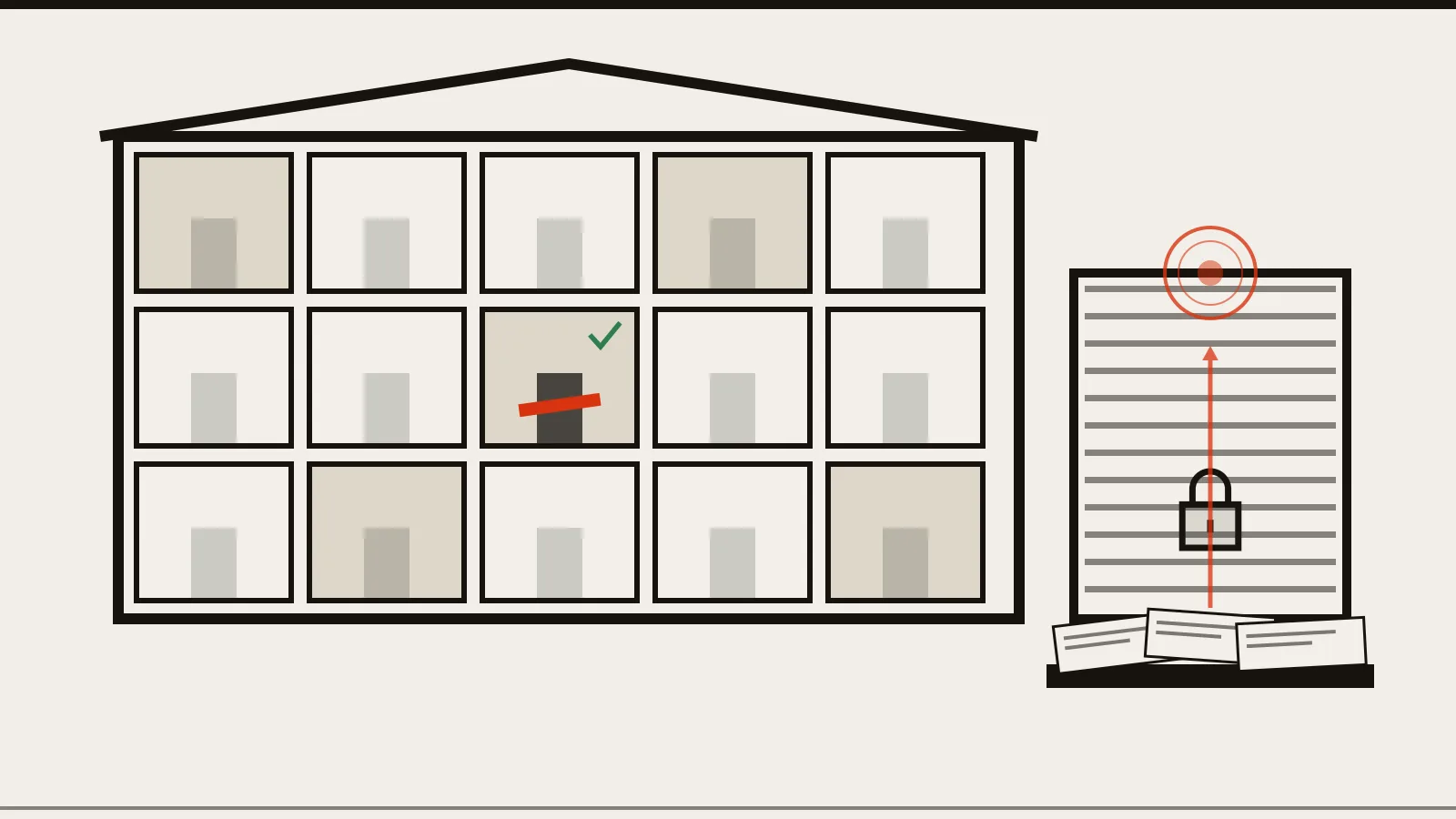
The first is a house ban. The owner or a moderator of a space removes a person from that space and keeps them out: a Roblox experience, a Discord server, a YouTube channel's comments, a Kick chat, a Kik group. Nobody has to approve it. It takes effect at once, and it stops at the edge of that space, so the person can carry on everywhere else on the platform. The second is a platform ban. The company behind the service suspends or deletes the account itself, across every server, channel and game it runs. Only the company can do that, and it does it after its own review or automated detection finds a rule broken. A report is how you hand evidence to that review. It is not a ballot. No platform covered here publishes a number of reports that switches an account off, and the few that talk about report volume at all treat it as a hint, never a verdict.
You can hear the confusion in the searches. People type how to get someone banned on roblox when the real problem is one player wrecking their own game, which is a house-ban job. Others want a platform ban and keep pressing a block button that was never going to deliver one. Working out which machine you need is step one, before any report gets filed.
We drew the same line for how to get someone banned on Instagram, for how to ban someone on Twitter and for anyone trying to get someone banned from Facebook. The games and smaller apps below follow the same split, with stranger edges.
How to get someone banned on Roblox
You report the account, with the rule it broke and the moment it happened, and Roblox's moderators decide. That is the whole of how to get someone banned in Roblox, and the detail that matters most is where you file from.
Roblox's help page on rule violations routes in-experience reports through the Roblox menu: open it from the logo at the top left (or Esc on a computer), click the flag beside the player's name or open the Report tab, choose to report a person, pick the user and the reason, add a line of detail and submit (Roblox Support, how to report rule violations). The same page warns that a report made only from someone's profile page doesn't let moderators see what the person actually did in the game. File from inside the experience, while it is happening or straight after, and the report arrives with the context that makes it checkable.
What happens next is mostly machine work. Roblox's own figures put the platform at an average of 97.8 million daily active users sending about 6.1 billion chat messages and 1.1 million hours of voice communication a day, in 28 languages. Between February and December 2024 users uploaded roughly one trillion pieces of content, of which 0.01% was detected as violating, and nearly all of that was screened out automatically before anyone saw it (Roblox newsroom, July 2025). At that scale, human review is reserved for what the filters miss and what players report. Your report is how a person ends up in that smaller queue. It does not, by being repeated, decide what the reviewer finds.
Consequences escalate. Roblox's content-moderation page describes repeat violations moving from a warning, to a timeout, to a suspension, while severe violations can go straight to the end of that ladder (Roblox Support, content moderation on Roblox). A child-safety violation is the obvious example. One verified report there can end an account.
Is there a way to get someone banned on Roblox fast?
Not by volume, and not by paying anyone. Every seller promising how to get someone banned on roblox fast is offering the same product: a pile of reports from throwaway accounts, which Roblox's systems see as exactly that. The quick routes that do exist are dull ones.
- If it's your experience, ban them yourself. The Ban API (next section) acts in seconds and is the only instant ban on the platform you can personally trigger.
- If a child is at risk, go beyond the report. Report in-game, then contact the police. In the UK that can be through CEOP; in the US, the NCMEC CyberTipline. A platform ban removes an account. It does not stop a person.
- If the person has moved the conversation off Roblox, report on the app they moved to as well. Pulling a younger player onto Discord or Snapchat is a pattern every safety team watches for, and our notes on how someone gets banned from Snapchat cover that end of it.
Can you ban someone from a Roblox server?
Yes, if the server is an experience you own or manage. No, if it is a private server you rented inside someone else's game. That split decides how to ban someone from Roblox server spaces, and it is the part most guides skip.
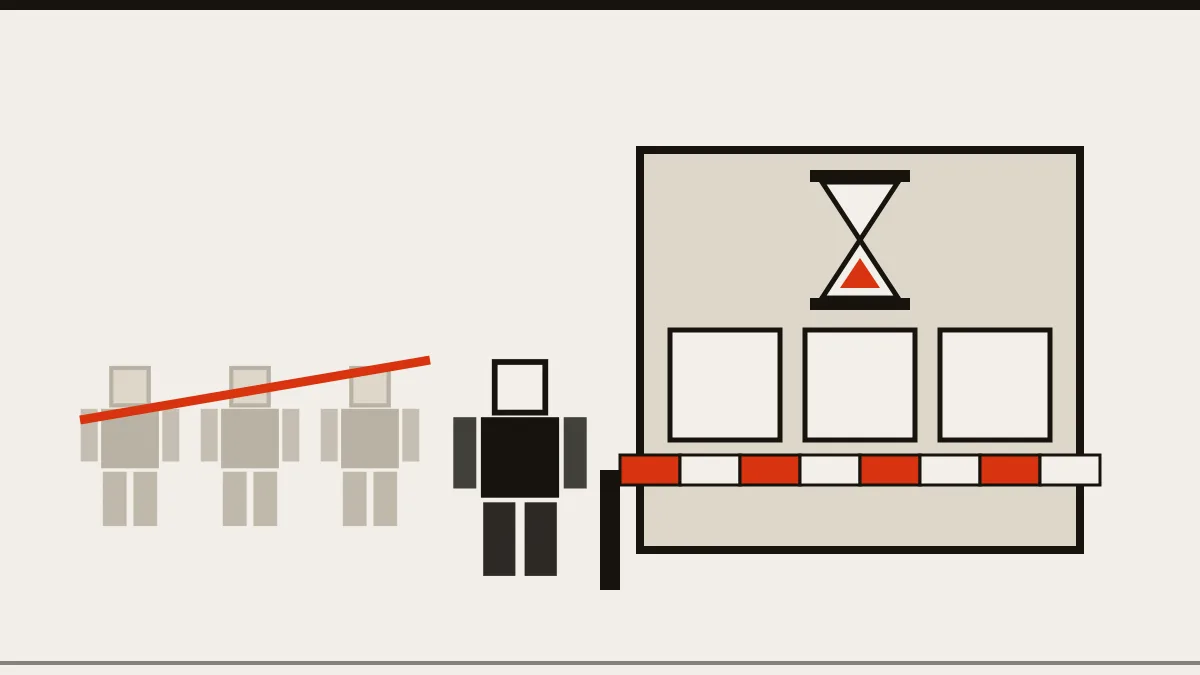
Experience owners got a proper tool on 25 June 2024, when Roblox shipped its Ban API with alt-account detection (Roblox DevForum announcement). A creator's script can ban a user for a set duration given in seconds, or permanently, with one reason shown to the player and a private one kept for the team. Applied to the universe, the ban covers every place in the experience. The part that changed things for moderators is the default: Roblox says "suspected alt accounts are also banned in real-time", so the banned player's spare accounts are caught by the same call unless the developer sets ExcludeAltAccounts to true (Roblox Creator Docs, Players:BanAsync). Before mid-2024, a kicked player could rejoin on a second account within a minute. Now the alt has to slip past Roblox's own matching first.
A private server is a different object. Roblox's creator documentation describes private servers as letting owners "decide who can play a game with them" (Roblox Creator Docs, private servers), and the help FAQ lists the controls: name the server, invite specific users or your friends, share a link. Neither page describes a kick or ban button. Where a private-server owner can kick or ban, it is because the game's developer wrote admin commands that grant it. So the honest answer to how to ban someone from a Roblox server you merely rent is: take them off the invite list, stop sharing the old link, and report them if they broke a rule.
An experience ban is still a house ban. The player loses your game, not their Roblox account. If they did something in your game that breaks Roblox's own rules, do both: ban them from the experience so your players are safe tonight, and report them through the Roblox menu so the account itself gets a look. The two actions don't interfere with each other, and only the second can reach the account.
How many reports do you need to get banned?
None of the platforms below publishes a number, because none of them counts that way. The question of how many reports do you need to get banned has a straight answer, and it is the one sellers least want you to hear: one accurate report on a real violation does the work, and a thousand on nothing do none.
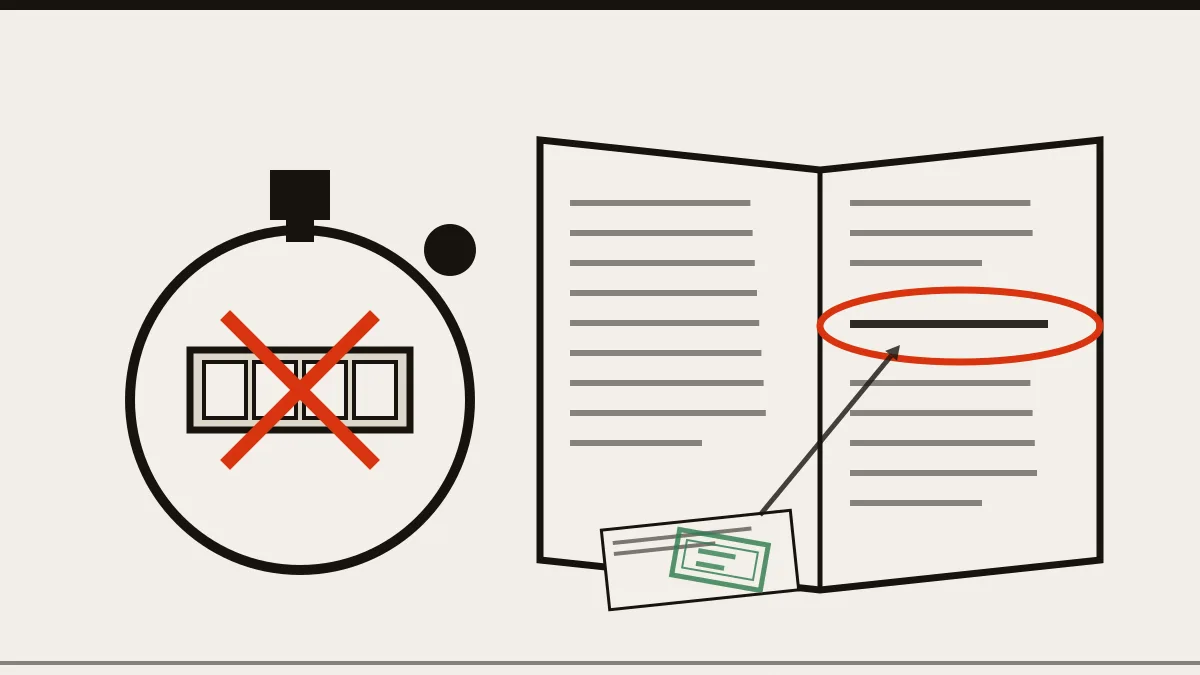
Meta says it in a single sentence: "The number of times something is reported doesn't determine whether or not it's removed from Facebook" (Facebook Help Centre). YouTube's transparency report says user flags lead to action only after review by trained human reviewers (Google Transparency Report help). Riot and Activision say reports matter, and both describe them as input to detection and review, not as a trigger. We tested the same claim against Instagram's strike system in how many reports it takes on Instagram and against TikTok in what actually triggers a TikTok ban. The pattern held both times.
So the people asking how many reports to delete someone's account, or how many reports to disable an account, are asking about the wrong input. Deletion follows the rulebook: Meta's strike ladder, YouTube's three strikes in 90 days, Riot's escalating penalties, Discord's account standing. A tally is not on any of those lists. That is why a TikTok mass report bot, the panels that promise to mass report an Instagram account and every Instagram spam report bot on the forums sell a number the reviewer never reads.
Two honest exceptions exist, and both are small.
Kick's page on how it reviews user reports, dated 21 May 2026, says: "Multiple reports about the same user, even if no single report would warrant action, can collectively point to a problem" (Kick Help Center). That is volume as a pointer. A reviewer still has to find the problem.
Kik is blunter, in one corner of the app. Its Meet New People feature, which pairs Android users with strangers for 15-minute chats, carries this line: "If you are reported, you'll receive a temporary ban, preventing you from using the feature. This ban can't be disputed" (Kik Help Center, using Meet New People). One report, one feature ban. It covers the random-chat feature only, not the account. It is the closest thing to a report-count ban we have found anywhere.
None of this makes report spam safer. The same logic sinks a YouTube mass report bot, the scripts sold to mass report a Twitter account, the Telegram mass report bot panels and the Facebook mass report tool adverts, and it sinks the encrypted-chat versions harder, because a WhatsApp mass report bot or a Snapchat mass report bot is reporting into a system that can barely see the content at all.
What a report that gets actioned looks like
When our team files a report for a client, on a game or anywhere else, the work goes into making it checkable in under a minute. A reviewer is looking at a queue, not a story. So the report names one rule, quotes or links the exact message, clip or post that breaks it, and gives the time it happened, in the platform's own terms: a match ID, a server name, a message link, a username with its numeric ID beside it. If there are ten incidents, we pick the clearest two and file those properly rather than lodging ten thin reports. Volume from one reporter reads as a grudge, and the strongest single item usually carries the rest.
The other thing we check is who is filing. Several platforms act faster when the target files, because harassment rules often turn on whether the person on the receiving end objects. A friend reporting on your behalf is fine for spam or cheating. For threats and abuse, your own report counts for more.
How many reports to get banned on Valorant or Call of Duty?
No published number for either. Riot's 2021 behaviour update put it plainly: "your reports do matter—in fact, they're absolutely essential in making sure we know what you've experienced", and it listed the penalty ladder reports feed into: "Warnings, Comms bans, Extended comms bans, Ranked queue bans, Game bans, Extended game bans" (VALORANT dev update, behaviour detection and penalties). Since patch 2.05, "Players will be notified when their reports have been actioned on", so a Valorant reporter gets a message the target never has to know about. That is the full answer to how many reports to get banned on Valorant: one, if Riot's checks confirm what you reported.
Activision's Security and Enforcement Policy, dated 31 July 2026, says "Reports by other players may also support enforcement", and describes a state in which accounts "may be placed in limited matchmaking lobbies" with similar accounts (Activision Support). Asking how many reports to get banned on Call of Duty misses that the reports often come last. Activision said in January 2024 that more than two million accounts had faced in-game enforcement for disruptive voice chat, and that only about one in five of those players had been reported by anyone (Call of Duty anti-cheat progress report, January 2024).
How many reports to get banned on Bumble?
Bumble publishes no threshold either. Its guidance on blocking and reporting says a member of the support team reviews each report and acts "based on Bumble's community guidelines", and that "Bumble will not tell the person who you reported that you reported them" (Bumble, the Buzz). So the answer to how many reports to get banned on Bumble matches every other platform here: one report that shows a real breach, with screenshots, beats a dozen that say "creepy".
Which ban can you hold yourself?
Most people asking how to ban someone already hold a ban button and haven't noticed it. Here is who holds which switch.
| Platform | The ban you can hold | Who bans the account |
|---|---|---|
| Roblox | Experience ban via the Ban API, if you own the game | Roblox moderation |
| Discord | Server ban, with Ban Members permission | Discord Trust and Safety |
| YouTube | Hide user from your channel | YouTube, through strikes |
| Kick | /ban or /timeout in your channel's chat | Kick's review team |
| Kik | Ban from Group, as owner or admin | Kik |
| Steam | Block, or a group ban in a group you run | Valve's VAC, or the game's developer |
| Mastodon | Block; a server ban if you run the server | Each server's moderators |
| Valorant, CoD, Fortnite | Mute, block, kick from your party | Riot, Activision, Epic |
| Hinge, Bumble | Remove or block from your side | The app's safety team |
| LinkedIn, Lemon8, Truth Social | Block | The platform |
The left column is fast and certain and small. The right column is slow and uncertain and total. Pick from the left whenever it solves the problem.
How to ban someone on Discord
In a server you run, or one where your role carries the Ban Members permission, right-click the member (or open their profile on mobile) and choose Ban. Discord's permissions guide notes that the permission "will allow you to select how much message history of a user to delete", which matters when a raider has just flooded three channels (Discord, permissions on Discord). That is how to ban someone on Discord, and it is a house ban: they lose your server and keep their account.
To get someone banned on Discord as a platform matter, you report the messages or the profile to Trust and Safety. Discord's Warning System shows each user an account standing on a five-step scale from "All good" to permanent suspension, and most violations drop off that record after 90 days (Discord Support, Warning System). Report the message links and user IDs, not screenshots alone. Our walkthrough on how to report a Discord server or user by ID covers the ID part step by step.
How to ban someone on YouTube
On your own channel, YouTube's version of a ban is called Hide user from channel. Use it from a comment or a live-chat message, and that person's comments, live-chat messages and posts stop showing to anyone else on your channel. YouTube's help page is clear on the awkward part: "If you hide someone, they aren't notified" (YouTube Help, hide users from your channel). The list sits in YouTube Studio's settings, in the community-moderation section under Hidden users, which is also where you undo it. Past comments stay up until you remove them. That covers how to ban someone from your YouTube channel, and it answers the clipped search "how to ban someone youtube channel" too.
How to ban someone from YouTube entirely is a different question with a published answer. YouTube's strike rules say "the first violation is typically only a warning", and that "Three strikes in the same 90-day period may result in your channel being permanently removed from YouTube" (YouTube Help, Community Guidelines strike basics). Reports are how a reviewer finds the violations. Strikes are what end a channel. We went through that machinery in detail for anyone trying to get someone's YouTube channel banned, and separately for single uploads, where the job is to get a YouTube video taken down and keep it down.
How to get someone banned on Kick
In your channel's chat, owners and moderators type /ban <username> <reason> for a ban or /timeout <username> with a duration for a cooling-off period (Kick Help Center, chat commands). Kick's own help pages disagree on whether the timeout length is counted in seconds or minutes, so check the result in your moderation log the first time you use it. For a platform ban, click the offending message or username and choose Report, then give the reason and the detail. That is the whole of how to get someone banned on Kick, with the volume caveat from earlier: repeated reports can draw a reviewer's eye, and the reviewer still decides.
How to ban someone on Steam
Steam gives an ordinary user a block, not a ban. On the person's profile, open the More menu and choose to block all communication, which cuts their chat, friend invites, group invites and profile comments. If you run a Steam group, its officers can kick or ban members from that group. That is how to ban someone on Steam as far as your own spaces go.
To get someone banned on Steam across the platform, know which system you are addressing. Cheating is VAC's job, and VAC works by automated detection, not by player votes. Valve's support page states that "VAC bans are permanent, non-negotiable, and cannot be removed by Steam Support" (Steam Support, Valve Anti-Cheat system). Game bans are a separate track that each game's developer decides. Scams, harassment and impersonation go through the Report Player option on the profile, which lands with Steam Support rather than any anti-cheat.
Not sure which ban fits your situation? Tell us what happened and where. Our team will say which switch you already hold, which report has a real chance, and whether anything needs more than a report. Start a confidential review. Nothing is charged before that review.
Why don't reports ban players in Valorant, Call of Duty or Fortnite?
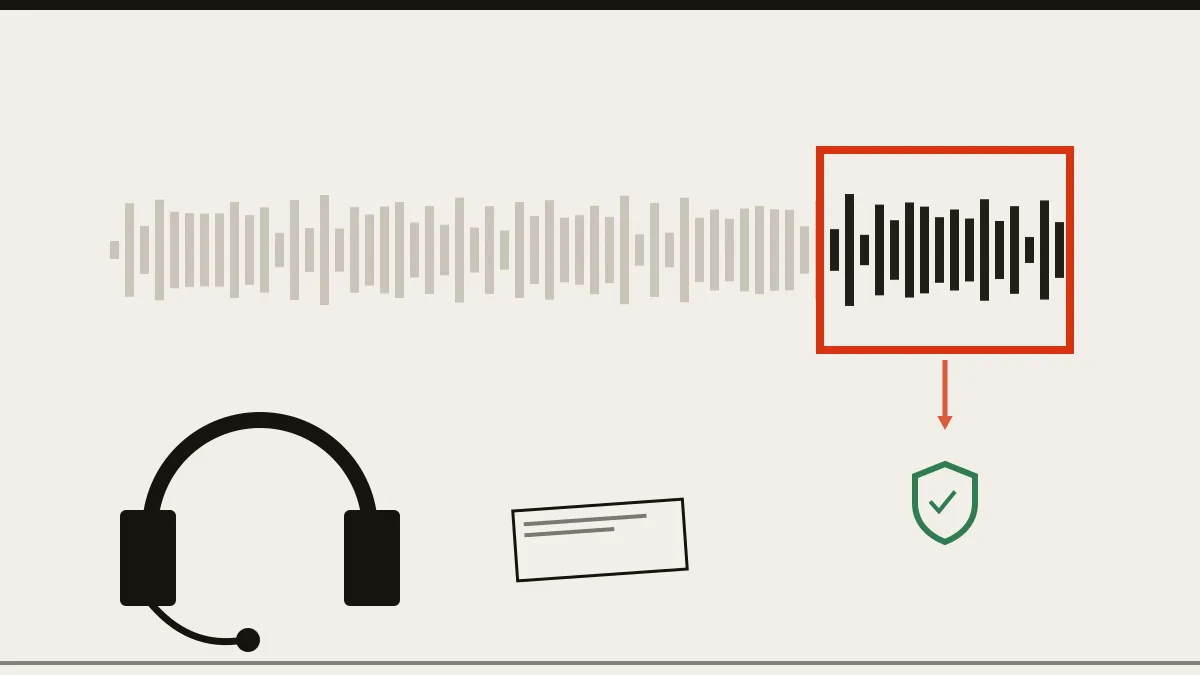
They do contribute. They are just not the main engine. Competitive games run on detection first: anti-cheat that reads the client and the network, text filters on chat, and, increasingly, voice systems that listen as play happens. A report is a timestamp telling those systems where to look.
To get someone banned on Valorant, report them from the in-game menu or the end-of-match screen, choosing the category that matches, such as cheating or abusive comms. Riot's checks confirm or discard it, and the penalty ladder quoted above takes over. Zero-tolerance offences skip the ladder.
How to get someone banned on Call of Duty works the same way, with one twist. Since its voice-moderation system went live, a large share of toxic voice chat is flagged without any player report at all. Activision's voice-chat page says the AI "only submits reports about toxic behavior" and that Activision "determines how it will enforce" (Activision Support, voice chat moderation). So the machine files reports too, and a human-written policy still decides. Cheating goes through Ricochet anti-cheat, where your report from the scoreboard is one signal among the telemetry.
How to ban someone in Fortnite, and how a report reaches Epic
There is no player-run ban in Fortnite's public modes. What you hold is smaller: kick someone from a party you lead, mute them, block them. That is the realistic answer to how to ban someone in Fortnite.
How to get someone banned on Fortnite runs through Report Player, and Epic built something unusual into it in November 2023. With voice reporting switched on, the last five minutes of voice chat are captured on a rolling basis on the player's own device, and uploaded only if a report is submitted, for Epic's moderators to review (Epic Games Player Support, how voice reporting works). In practice that means timing matters more than numbers. Report while the abuse is still inside that five-minute window and the reviewer hears it. Report an hour later and the clip has already rolled over.
How do bans work on Hinge, Bumble and Kik?
Dating apps and chat apps hand you a fast personal exit and keep the account decision for their safety teams. None of them tells the reported person who filed.
To get someone banned on Hinge, open their profile or your chat, tap the three dots, choose Report and pick the reason that fits. Hinge's help page describes reporting as confidential and permanent, and says the person is not notified (Hinge Help, how do I report someone). The profile disappears from your side immediately. Whether it disappears for everyone is Hinge's call. Bumble works the same way: Block & Report from the three dots in a chat, or Hide & Report at the foot of a profile you haven't matched.
Kik is the interesting one, because it gives group owners a real ban. To ban someone on Kik from a group, open the group chat, tap the group name to reach the Group Info screen, tap the person's photo and select Ban from Group. Kik describes this as permanent "so they can't join until they're removed from the ban list", and notes an owner or admin can ban a user "even if the user has already left the group" (Kik Help Center, ban a group member). Group bans can stack into something bigger, too. Kik's public-groups guidance warns that someone repeatedly banned from groups may be barred from joining public groups altogether.
To get someone banned on Kik as a whole account, report them to Kik. Its safety pages describe temporary bans for Community Standards breaches and permanent bans for serious or repeated ones. So how to get someone banned on Kik comes down to the same thing as everywhere else: a report that points at a specific breach.
When the harassment follows them to another app
It usually does. A match moves to WhatsApp, a Roblox "friend" moves to Snapchat, a Discord raider turns up on Instagram. Ban them in each place on its own terms, because no platform reads another platform's ban.
- On WhatsApp, there is no content to show a reviewer unless you send it, which is why the guide to ban someone's WhatsApp number starts with block-and-report from the chat itself.
- On Snapchat, the account and its messages expire fast; the steps to take down a Snapchat account depend on capturing evidence first.
- On Instagram, impersonation and harassment run on different forms, set out in our Instagram account takedown briefing.
- On TikTok, a single upload is often the real target, and the honest way to get a TikTok taken down is through the policy it breaks.
- On Facebook, the profile, the Page and the group are separate objects when you take down a Facebook account.
- On Telegram, a channel is its own target, and the routes to take down a Telegram channel differ from a user report.
- On X, the evidence file is what decides whether you can take down a Twitter account.
Who bans on Mastodon, Truth Social, Lemon8 and LinkedIn?
Each of these four puts the decision in a different place, and on Mastodon there are several such places at once.
To get someone banned on Mastodon, remember that Mastodon is thousands of independently run servers. Its documentation says "you can report that user to your site's moderators", and for an account on another server you can also "forward the report to their site's moderators" (Mastodon documentation, moderating). Either team can act. Your own server's admins can limit the account, hiding it from everyone on that server except its followers, or suspend it, which Mastodon says "means the account is effectively deleted" there. They can even block the entire domain, "equivalent to suspending all past and future accounts from the server" (Mastodon documentation, moderation actions). So a Mastodon ban can be local and immediate even when the person's home server shrugs. It is the only network here where the house ban and the platform ban can be the same thing.
Truth Social runs on Mastodon's open-source code, which it published after Mastodon's lawyers wrote to it in 2021 (Vice, 2021). Its reporting is centralised, though. To get someone banned on Truth Social, tap the three-dot icon on the post, then "Report Truth" (Truth Social Help, report a Truth), and Truth Social's own team weighs it against its community guidelines.
To get someone banned on Lemon8, report the post or profile from its menu and match the reason to Lemon8's community guidelines. Lemon8 and TikTok share an owner, ByteDance, and Lemon8's supplemental terms allow serious violations on one app to carry penalties on the other. That makes it the one app here where a ban can cross over, and it is worth knowing if you are also trying to get someone banned on TikTok.
How to get someone banned on LinkedIn: open the profile, click More, choose Report or Block, and pick the reason. LinkedIn's help page says the member won't be told who reported them (LinkedIn Help, report a member's profile). Fake profiles and libellous posts have their own routes, covered in our LinkedIn account takedown briefing.
What we will and won't do about someone else's account
We don't sell bans. Not on Roblox, not anywhere. No one can sell one honestly, because the switch belongs to the platform, and the people who claim otherwise are selling reports, stolen accounts or nothing at all. We have taken apart the pricing behind an Instagram ban service, a Twitter ban service, a TikTok ban service, a Facebook ban service and a WhatsApp ban service. Each one charges for a step the buyer could take free, and adds the risk that the buyer's own accounts are flagged for coordinated reporting.
What we do is narrower and more useful. Our team works out which switch fits, builds the evidence file a reviewer can check in a minute, files through the platform's own channels or the legal route that applies, and follows up. When the problem is content rather than an account, such as a defamatory post, leaked images or impersonation, removal routes exist that a ban never touches. The same discipline sits behind a good Twitter account removal service: evidence first, filing second.
Some things can't come down. Truthful reporting, genuine public records and honest opinion stay up, however much the subject dislikes them, and the most we can do there is lawful suppression, pushing newer and better results above them. We never forge a copyright notice, never bluff a lawsuit and never ask for anyone's password. Our disclaimer sets out those limits in full, and our lawful content-removal routes briefing explains what removal can and can't reach.
If a child is in danger, skip us and go to the police, then report on the platform. That order matters more than any ban.