How many reports to get banned on IG? The number Instagram never keeps
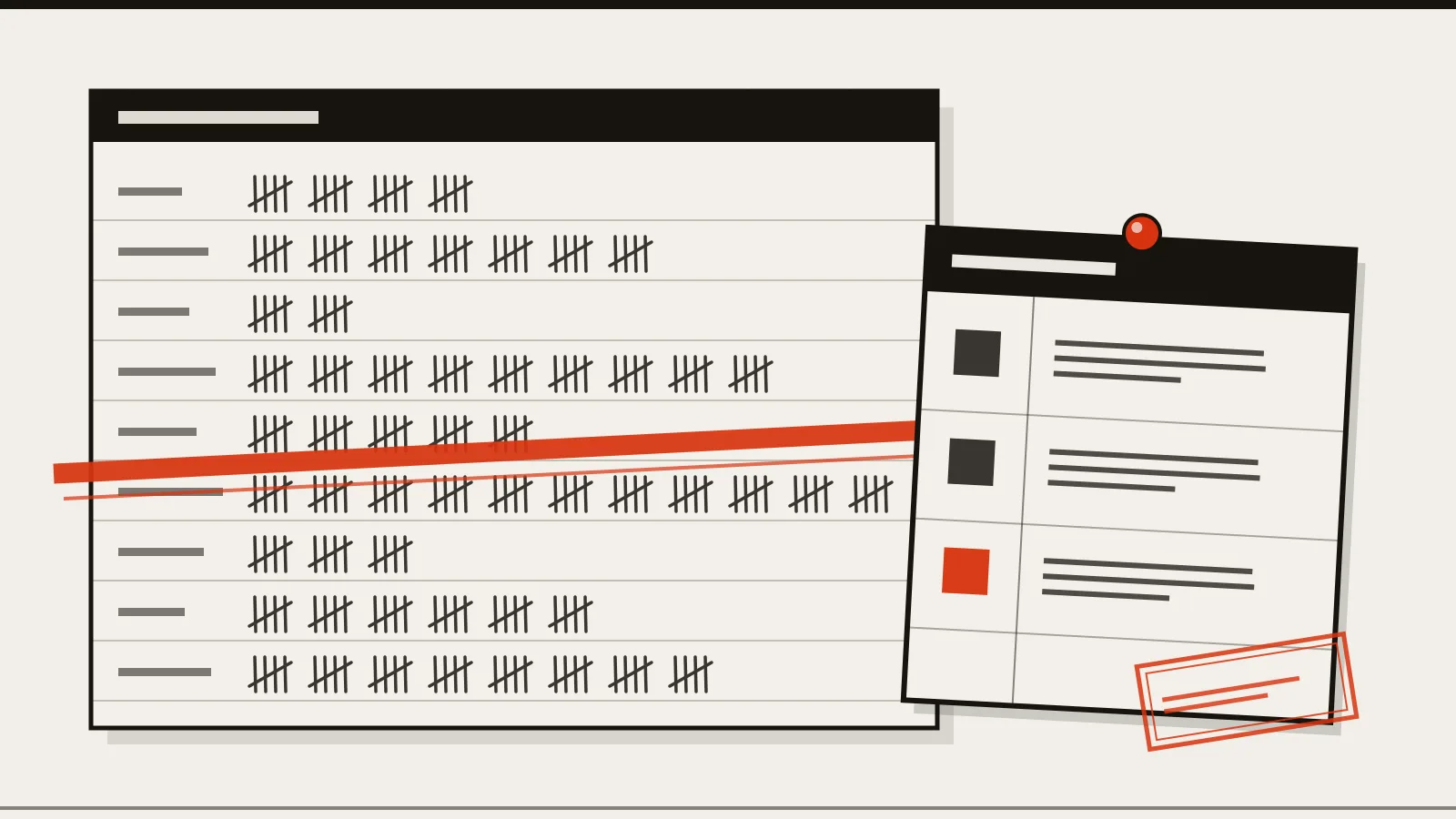
There is no report threshold on Instagram. No figure of ten, fifty or a thousand reports sends an account to a ban. Meta states the principle outright on its sister service: "The number of times something is reported doesn't determine whether or not it's removed from Facebook" (Facebook Help Centre), and Instagram runs on the same enforcement system, with the same Community Standards and the same strike records. A report is a request for review. It names an item and a rule, and a reviewer, human or automated, decides whether the item breaks that rule. If it does, the item comes down and the account may collect a strike. Strikes, not reports, are what pile up towards a disabled account. So the honest answer to how many reports to get banned on Instagram is that the count of reports is not an input anyone at Meta reads as a vote.
People keep asking because the idea of a number feels fair. A crowd of complaints should mean something. It does, a little, and we come to what it means below. But the question "how many reports on Instagram to get someone banned" assumes a tally that the platform does not publish, does not describe and, on its own account, does not use.
Ban, delete or take down: three outcomes hiding in one question
The searches blur three different results, and each has its own rules. A ban is what Instagram calls a disabled account: the profile disappears, the owner cannot log in, and an appeal may reverse it. Deletion is permanent removal of the account and its content, which the owner can request; Instagram does not delete an account because other people asked for it. A takedown is narrower still, the removal of one post, reel, story or comment, with the account left standing.
So how many reports to delete an Instagram account, how many reports to delete instagram account and how many reports can delete instagram account are really one question about a result no reporter can order. How many reports to take down an Instagram account and how many reports to take down instagram account are usually questions about a ban. And how many reports to get someone banned on Instagram, or how many reports to ban instagram account holders who harass you, all come back to the same mechanism: a confirmed breach, recorded as a strike or as an account-level finding. The count of reports appears nowhere in it.
The figures the search results hand you
We checked what the pages people actually land on say. On 27 September 2026 we ran seventeen searches built on the report-count questions in this briefing, including "how many reports to delete an Instagram account", "after how many reports insta id gets deleted" and "how many reports to get an Instagram post removed". That gave 35 distinct third-party pages on the topic, from blogs and vendor sites to videos and question-and-answer threads. We left out our own network's pages. Twenty-three of the 35 could be read in full; the rest were dead, blocked or behind a login wall.
The result is lopsided. Thirteen of the 23 say there is no fixed number. Two hedge without giving one, and seven make no claim about a count at all. Only two state a figure. One is a blog post from January 2023 that says an account needs "at least three reports", in an article that also says the number varies by country. The other is an automated answer on a question site that sorts accounts into bands of "few reports (5–50)" and "hundreds+" a sentence after saying no threshold is published. Neither cites Meta for its figure, because there is nothing to cite.
The more telling number is commercial. Ten of the 23 pages sell something or carry someone selling something. Four belong to sellers of followers and likes, all of which, to their credit, say there is no fixed number. One is a mass-reporting vendor quoting $400 to $900 a case while describing Meta's system as "signal-weighted rather than count-weighted", which is an odd pitch for a product made of reports. Another is a takedown vendor offering a guaranteed permanent disable within 72 hours with "no appeals". Nobody outside Meta can promise that, and Meta does not sell it.
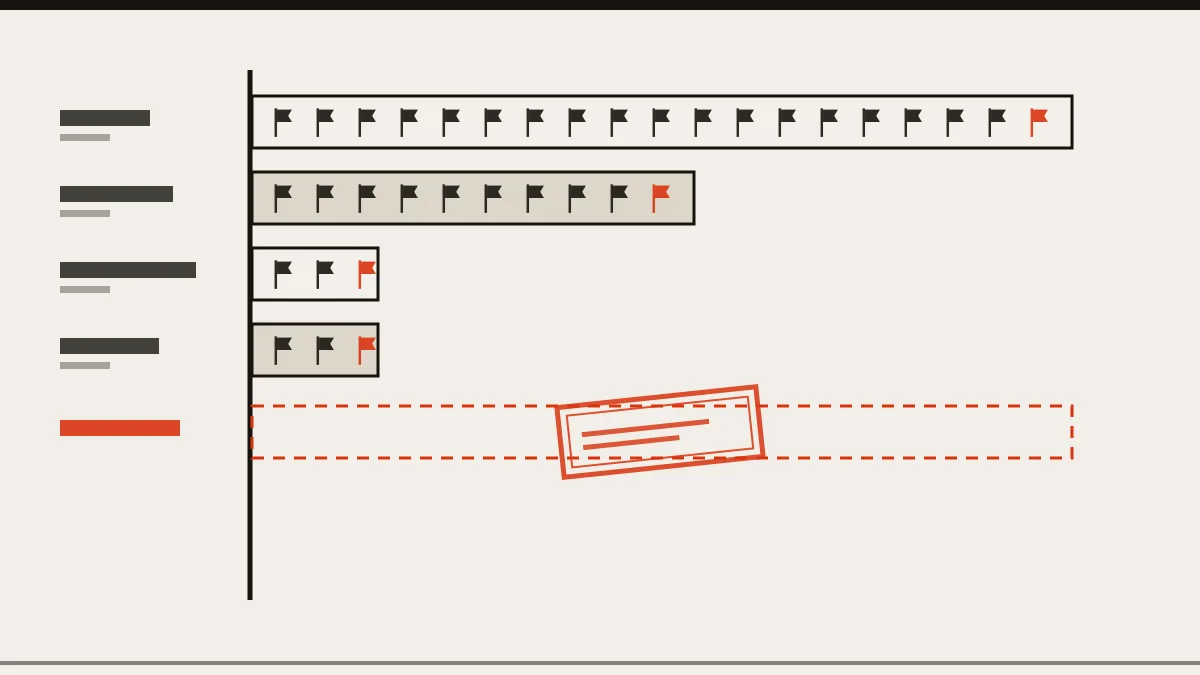
Every other large platform gives the same non-answer when you look closely. On TikTok the report counts on a TikTok video matter less than which rule the video breaks. YouTube publishes nothing like a report count for a YouTube video, and X has no threshold either, which is why the five instruments in how to take down someone's Twitter account are all rule-based. Snapchat, which deletes its own evidence quickly, is the same: nobody can tell you how many reports to delete a Snapchat account, because the answer is none.
What does one report do once it reaches Instagram?
A report opens a review of one thing. You tap Report on a post, a comment, a story, a reel, a message or a profile, choose a reason, and Instagram records which item you flagged and which rule you think it breaks. That record joins a queue. Meta's own description of that queue is short and specific. Content is ranked for review by three factors: severity ("How likely is it that the content could lead to harm, both online and offline?"), virality ("How quickly is the content being shared?") and the likelihood that it violates the rules at all (Meta Transparency Centre, Prioritizing content for review, updated 12 November 2024). Report volume is not on that list. A credible threat reported once sits above a mildly rude caption reported four hundred times, because the threat is more severe and more likely to break a rule.
That ranking explains most of what people experience. The report that seems to vanish was usually looked at, found not to break the rule chosen, and closed.
Does reporting an Instagram account get it deleted?
Rarely, and never because of the report alone. When you report a whole profile rather than a post, Instagram checks the account against the rules that apply to accounts as such: impersonation, an account belonging to someone under 13, an account that exists to break a rule (a page built only to harass one person, for example), or an account run by someone who has already been removed. If none of those fits, the account stays up, whatever the number of people who reported it. Our earlier briefing on six ways a report against a person can end walks through each of those outcomes from the reporter's side.
Reporting the profile is often the weaker move. Reviewers decide on evidence, and the evidence usually lives in individual posts, comments and messages. An account that posts one abusive comment a week looks, from its profile page, like an ordinary account.
How many reports to get an Instagram post removed?
One, if the post breaks a rule and the report names that rule. A post is judged on its own content, so the right question is not how many reports to take down an Instagram post but which rule it breaks and whether the report says so. Choosing "I just don't like it" sends nothing to review at all. Choosing "Bullying or harassment" for a post that is actually a stolen photo sends it down the wrong lane, where it will be closed as not bullying, while the copyright route would have removed it. When we file on a client's behalf we usually find that the first failed report used the wrong reason, not that too few people reported.
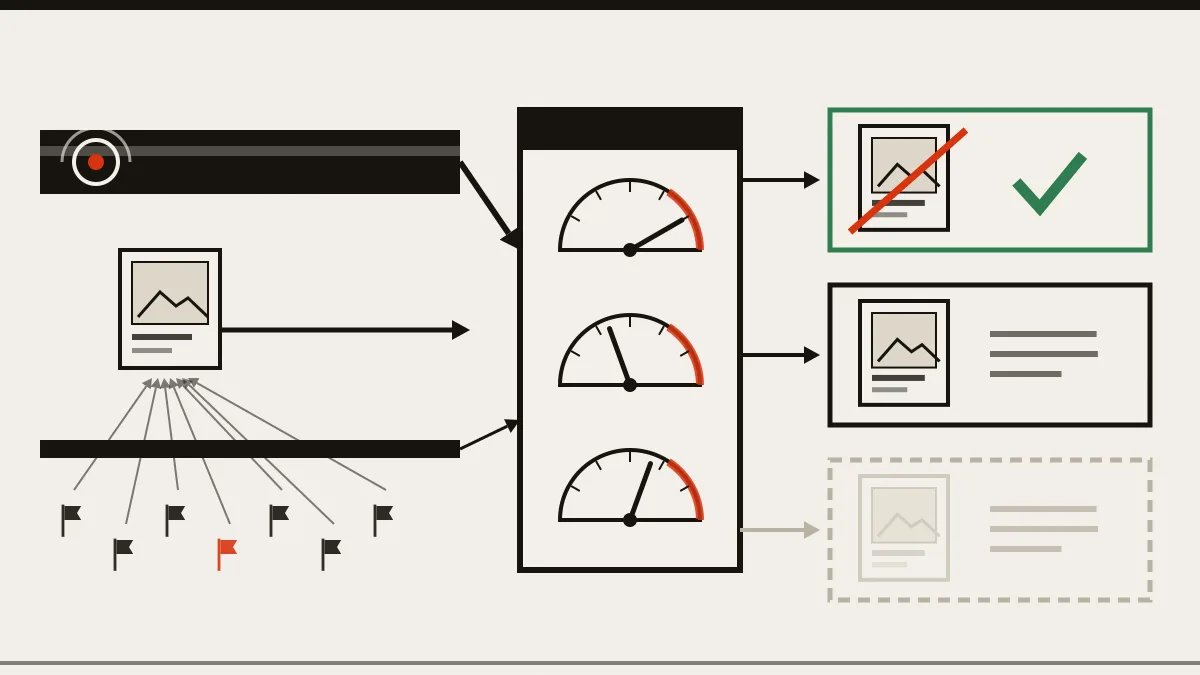
Duplicate reports on the same item add surprisingly little. Meta publishes no rule on how duplicates are merged, and we will not invent one. What the priority factors do tell you is that a second, tenth or hundredth report of the same post adds no new severity and no new evidence. The same logic runs through every mass-report product we have examined. Instagram's platform API has no reporting endpoint, a point made in detail in the look at mass-report panels and GitHub scripts for Instagram. On Facebook, too, what a report wave actually does inside Meta's review queue is add copies of a request already made.
What Instagram counts instead: strikes, a one-year clock and one-strike offences
Meta keeps a count, but it counts violations, not complaints. When a reviewer or a classifier decides that content broke the Community Standards, Meta removes it "and may then apply a strike to your Facebook or Instagram account" (Counting strikes, updated 23 April 2025). The same page sets the clock. "All strikes on Facebook or Instagram expire after one year." Old material is not dug up to build a case, either: Meta says it won't count strikes for content "posted over 90 days ago for most violations or over 4 years ago for more severe violations". And some violations skip the ladder. Posting child sexual exploitation content disables an account "after one occurrence". Some removals carry no strike at all, such as someone sharing their own financial details.
Put plainly, an Instagram account moves towards a ban by breaking rules repeatedly within a year, or by breaking one of the gravest rules once. Reports only matter to the extent that they lead a reviewer to a violation that then becomes a strike.
| Signal | Counted towards a disabled account? | What Meta says |
|---|---|---|
| Number of reports | No | Number of reports "doesn't determine" removal |
| A confirmed violation | Yes, as a strike | Strikes expire after one year |
| Old content | Mostly not | 90 days, or 4 years if severe |
| One grave violation | Yes, alone | Disabled "after one occurrence" |
| Evading an earlier ban | Yes, without strikes | "Created to get around our restrictions" |
The last row matters for the next section. Meta's page on disabling accounts (updated 17 July 2025) lists reasons an account can be removed without any strikes, among them "Accounts created to get around our restrictions". Otherwise the rule is gradual: "After 5 strikes, you may receive additional 30-day restrictions from creating content, or we may remove your account, depending on the severity and frequency of the violations."
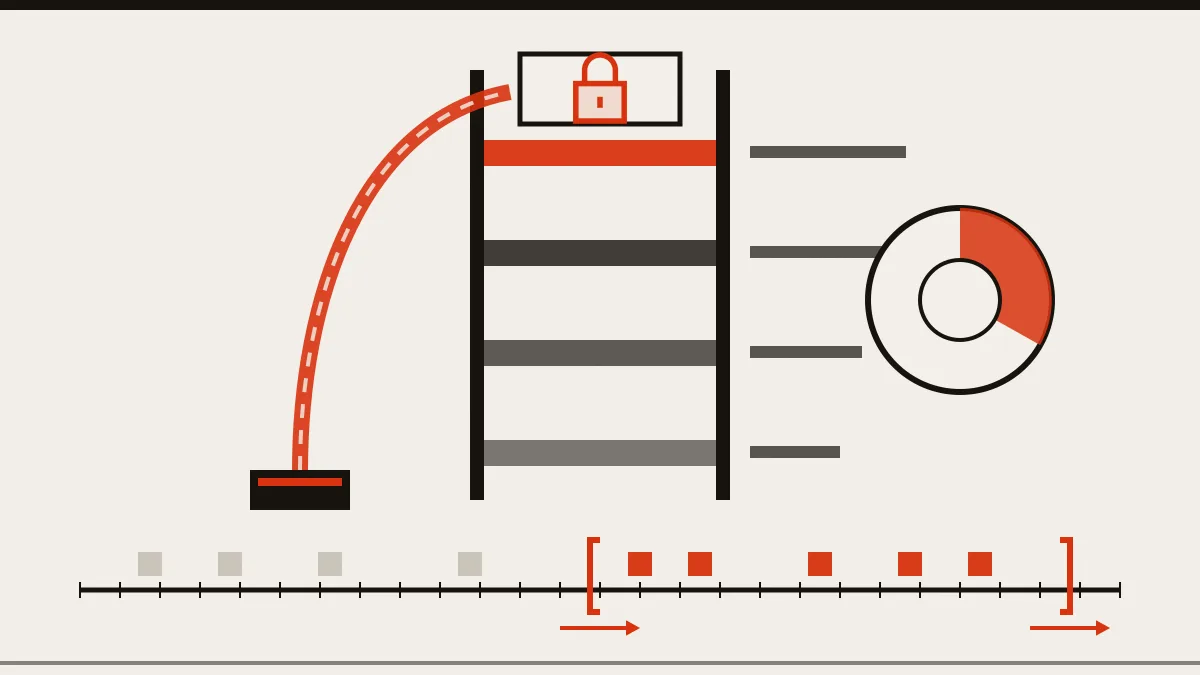
Meta's published ladder of restrictions, one strike for a warning and up to a 30-day posting block at ten, is written for Facebook (Restricting accounts); the page gives no separate Instagram ladder. Instagram's own last public statement on the subject is older. In July 2019 it said it would keep removing accounts with "a certain percentage of violating content" and would add removal for "a certain number of violations within a window of time" (Instagram, Account Disable Policy Changes, 18 July 2019). Neither the percentage nor the number has ever been published, and no current Meta page repeats that wording, so treat it as history rather than as today's rule. Facebook's version works the same way, and Obscura's note on the Facebook strike clock Meta runs sets it out step by step.
How many reports to ban an Instagram account permanently?
The same answer, with one refinement. A permanent ban on Instagram is a disabled account that stays disabled after review. It comes from repeated strikes, from a single grave violation, or from an account-level finding such as impersonation or ban evasion. It never comes from a report count. People who ask how many reports to ban instagram account permanently are usually asking two things: how to make a ban stick, and how to stop the same person coming back. The first depends on the violation being real and documented. The second is a separate rule, covered below under repeat accounts.
YouTube is the one large platform that publishes a fixed strike number, which is why Obscura's YouTube strikes briefing can say exactly what ends a channel. Instagram gives no such number.
Limits first, a disabled account last
Most accounts that break rules are not banned at all. They lose features. Meta's restrictions page describes warnings for a first strike and then limits on specific features, such as creating content, for a set period, with the account disabled only "if you continue to post content that goes against the Community Standards after repeated warnings and restrictions" (Restricting accounts). On Instagram the owner sees this in Account Status, under the features they cannot use. For the person who reported them, nothing visible happens. The account is still there, and it still posts. That gap between what Meta did and what the reporter can see drives a good deal of the belief that more reports are needed. In many cases the account was penalised; the penalty just does not show from outside.
Account Status: the only counter anyone can read
The owner of an account can see its standing. Instagram's Account Status page lists removed content, the features the account cannot use, and a way to request a review. Its help page says: "If you repeatedly post content that is removed for going against our Community Standards, you may lose access to your account. Note: In most cases, you'll get a warning before losing access to your account." (Instagram Help Centre, Account Status). Nobody else can see that screen. The reporter never learns the target's strike count, which is one reason the Obscura case desk works from the evidence a client holds rather than from guesses about the other side's record.
Most bans begin with no report at all: Meta's own numbers
If reports decided bans, most removals would start with a report. They do not. Meta's Community Standards Enforcement Report gives a "proactive rate" for each policy, the share of actioned content that Meta found and acted on before anyone reported it. We read the Instagram figures for April to June 2026 from the Transparency Centre on 27 September 2026.
| Instagram policy, Q2 2026 | Found before any report |
|---|---|
| Suicide and self-injury | 99.3% |
| Terrorism (dangerous organisations) | 98.8% |
| Firearms | 97.8% |
| Adult nudity and sexual activity | 96.2% |
| Drugs | 94.1% |
| Bullying and harassment | 66.6% |
| Hateful conduct | 66.4% |
(Meta Community Standards Enforcement Report, Instagram, Q2 2026, read 27 September 2026.)
Two rows stand out. For bullying and hateful conduct, about one actioned item in three came to Meta through a user report. That is where reports carry the most weight, and Meta says why on its bullying page: because bullying "is highly personal by nature", proactive detection is harder, so "we also rely on people to report this behavior to us" (Meta Transparency Centre, Bullying and Harassment). Even there, the report is the route by which Meta learns of the content. The decision still turns on the rule. Instagram actioned 2.2 million bullying items in that quarter, down from 3.2 million in the first quarter of 2026 (same source), and no count of reports per item appears anywhere in the data.
The European Union's register of moderation decisions points the same way. Under the Digital Services Act, Instagram must log each restriction it imposes on EU users in the public DSA Transparency Database. Between 1 April and 26 September 2026 Instagram filed 51,867,827 statements of reasons. Of the 42,314,118 that terminated an account, 42,306,610 were logged as Instagram acting on its own initiative, 7,426 followed a formal Article 16 notice of illegal content, and 82 came from trusted flaggers (DSA Transparency Database, platform Instagram, counted by us on 27 September 2026). There is an honest caveat. The register's category for other notifications, where ordinary user reports would sit, held zero Instagram statements over the same period, so Meta evidently files the outcome of an in-app report as its own initiative, and the register cannot tell you how many of those 42 million bans began with a tap on Report. What it does show is that formal legal notices, the heaviest tool a member of the public holds, sit behind fewer than one account termination in five thousand.
TikTok's own figures tell a similar story, and TikTok's own arithmetic on mass reports shows how little a flood of reports adds there. YouTube is the odd one out because it publishes a flagging interface with a daily cap, and the account of the one platform that publishes a reporting endpoint shows what that cap means in practice. LinkedIn goes furthest the other way: it is a network that stops most fake accounts before anyone reports them.
What a single report is still good for
None of this makes reporting pointless. A report does three things that no amount of volume improves. First, it tells Instagram the content exists, which matters most for bullying and hateful conduct, where one item in three reaches Meta that way. Second, it creates a dated record. Your report and Instagram's decision sit under Support requests, and that record is what an appeal, a complaint under the Online Safety Act or an EU notice builds on. Third, it can change the legal position of the platform. Under the EU's Digital Services Act, a host that is notified of illegal content and does nothing loses the protection it otherwise enjoys, which is why a properly framed Article 16 notice carries more weight than a menu tap. In England and Wales, the Defamation Act 2013 gives website operators a defence that depends in part on how they respond to a notice of complaint. Neither rule counts complaints. Both turn on whether the platform was told, clearly, what was wrong and why.
That is the useful version of the crowd instinct. One accurate, specific report from the person affected does more than a hundred copies from strangers who have never seen the content.
A practitioner's note. When our team files reports for a client, the ones that succeed share three features: the right reason, the specific items, and evidence a reviewer can check in under a minute. We have never seen volume rescue a report that lacked those, and we have seen single, well-built reports remove accounts that hundreds of angry reports had not touched.
How to report an Instagram account and get it deleted, when it really breaks a rule
Reporting works when the report does the reviewer's job for them. These steps are the ones we follow ourselves.
- Name the rule first. Read the relevant Community Standard and decide which one the account breaks. If you cannot name one, no report will remove it.
- Report the worst items, not only the profile. Report each post, comment, story or message that shows the breach, choosing the matching reason each time.
- Use the specialist form where one exists. Impersonation, copyright, trademark, underage accounts and hacked accounts each have their own Help Centre route, and those forms reach a different team from the in-app menu.
- Keep the evidence yourself. Screenshot with the username and date visible, copy the profile link, and note the time. Content gets deleted, and a report without a copy is hard to escalate.
- Follow the decision. Your reports and their outcomes appear under Support requests in Instagram's settings. Some decisions can be sent for another review from there.
- Escalate outside the app when the law is broken. In the EU the notice of illegal content under the Digital Services Act; in the UK the Online Safety Act complaints route; for crimes, the police.
The account-level forms are where deletions actually happen. An impersonator is removed on the impersonation form, not by a crowd; our removal-versus-suppression briefing explains which Instagram problems can be removed outright and which can only be pushed down in search. The question of who holds the key to deleting someone's Instagram account matters as well: only the owner, Instagram, or a court can delete one.
| Problem | Route | Who can file |
|---|---|---|
| Someone pretending to be you | Impersonation form | You or your representative |
| Your photo or video reposted | Copyright form | The rights owner |
| Your brand name misused | Trademark form | The trademark owner |
| Account of a child under 13 | Underage account form | Anyone |
| Intimate image shared | StopNCII, Take It Down, report | The person shown |
| Threats or extortion | Report, then police | The target |
Impersonation cases often turn on a step people skip, and the second impersonation filing explains why it so often decides the outcome. Cases against a person, rather than a single post, are usually decided before anything is filed, by the quality of the record: the same point is made for X in removal cases built in the first 48 hours.
If an account is harming you and the reports have gone nowhere, send us the profile link and your screenshots for a confidential review. We will tell you which route fits, a form, a legal notice or a court application, before any fee, and we will tell you plainly when nothing lawful will remove it. We never ask for passwords and we do not sell reports.
Get someone banned on Instagram immediately? The lanes that move fast
There is no button that gets someone banned on Instagram immediately. Some cases do move within hours, and they are defined by severity, not by the number of reporters. Child sexual exploitation, credible threats of violence, terrorism and intimate images shared without consent are ranked at the top of the review queue because of how much harm they can cause. For intimate images, the fastest route bypasses the report button entirely: StopNCII.org creates a digital fingerprint of the image on your own device, without the image leaving it, and participating platforms, Instagram among them, use that fingerprint to block uploads. For images taken when the person was under 18, NCMEC's Take It Down works the same way. Threats to kill, extortion and sextortion are also crimes, and the police can act where a platform cannot. If you are in the UK and in danger, call 999.
A search for "get someone banned ig" or "get someone banned instagram" rarely comes from one of these cases. If yours is one, report it, keep a copy, and contact the police or us the same day.
After how many reports insta ID gets deleted in India
Indian users have a statutory route the rest of the world does not. Under India's IT Rules 2021, Instagram must run a grievance mechanism for users in India, with a Grievance Officer whose contact details sit on Instagram's India grievance page. Meta's monthly India report shows what that route produces. In July 2026, Instagram received 1,15,908 reports (115,908) through the Indian grievance mechanism. It gave users self-help tools in 96,694 cases and "took action on 19,214 reports in total" (Meta India Monthly Report, July 2026, published 31 August 2026, via the Meta regulatory transparency reports). Meta notes that a technical issue means the split by surface may be wrong, though the totals are accurate. Over the same month, Meta's own systems actioned 5.9 million spam items on Instagram in India, 99.9% of them before anyone reported them (same report).
So after how many reports insta ID gets deleted is the wrong question in India too. A grievance is a formal complaint that must be answered. It is not a vote. If the Grievance Officer's answer is unsatisfactory, the Grievance Appellate Committee hears appeals "within 30 days of the receipt of communication from the Grievance Officer", entirely online. The committee reviews the decision on its merits, not on the number of people complaining.
When the reporters become the problem: mass reporting and ban services
Coordinated reporting is itself something Meta removes. In its Adversarial Threat Report of 1 December 2021, Meta said: "We will remove any adversarial networks we find where people work together to mass-report an account or content to get it incorrectly taken down from our platform." One network it named, in Vietnam, had used "authentic and duplicate accounts to submit hundreds — in some cases, thousands — of complaints against their targets through our abuse reporting tools" to silence activists (Meta, Adversarial Threat Report, 1 December 2021). The rule now sits in the Community Standards. The Inauthentic Behavior policy forbids creating or using accounts to "Misuse Meta reporting systems to harass, intimidate or silence others" (Meta, Inauthentic Behavior, updated 11 December 2025). Instagram's Terms of Use add a plainer line: you may not misuse "any reporting, dispute or appeals channel, such as by making fraudulent or groundless reports or appeals" (Instagram Terms of Use).
That is the trap inside every offer to get an account banned by volume. The offer depends on groundless reports, and groundless reports are a breach by the people filing them.
The paid version is the same idea with a price tag. Obscura's briefing on what an Instagram ban buys traces what those sellers deliver, and the spam-report variant is covered in why a bot that spam-reports an account backfires on its operator. The pattern repeats on every network. On TikTok, what TikTok ban sellers charge is typically for a report, not an outcome. On Telegram, the panel trade selling Telegram mass reports sells reach into a system that reads content, not totals. Snapchat has a reporting bot with no door to knock on, since no public reporting interface exists.
X is no different. The claims behind the X mass-report bot and what the API allows fall apart on inspection, and what ban-for-hire sellers deliver on X is mostly reports and risk. Telegram's lawful alternative, the lawful routes for taking down a Telegram channel, shows the difference between buying reports and building a case. On Facebook the buyer carries the exposure: a Facebook ban service aimed at your Page is also the thing to expect if a competitor buys one.
English law has a view of its own. Under the Protection from Harassment Act 1997, a course of conduct means conduct "on at least two occasions" (legislation.gov.uk, s.7), and the Crown Prosecution Service lists "making spurious complaints to the authorities" among harassment tactics, noting that its guidance "covers collective harassment" (CPS, Stalking or Harassment). We know of no English court decision that has treated a mass-reporting campaign on a social network as harassment. The ingredients are there, though, and we would not advise anyone to test it. Our own position is set out in what we will not file for anyone. It is short: no false reports, no bought reports, no campaigns.
How to get someone banned from Instagram when the rules really are broken
There is a legitimate version of what the sellers promise, and it involves no crowd. If an account is harassing you, impersonating you or selling counterfeits of your products, the reports that count come from the people it harms, about the items that harm them. Each person reports the posts, comments and messages sent to them, under the matching reason, and keeps copies. One person, usually the one most affected, gathers those copies into a single timeline with dates, usernames and links. Where an account-level form exists, that timeline goes with it. Five people who each received a threat and each reported it are five separate violations, and that is how an account reaches a ban quickly. Five hundred strangers reporting a profile they have never interacted with are one allegation copied five hundred times, and a groundless one if they have seen nothing. That is the whole of how to get someone banned from Instagram lawfully: real breaches, reported by the people who saw them, with evidence.
Wanting someone off Instagram is understandable. Wanting to know whether you can actually get a person banned is a fair question to ask about any platform, and the answer for TikTok, in whether you can actually get a TikTok user banned, matches the one here.
Why does every Instagram account I make get banned within days?
Because Instagram links the new account to the old one. This is the other side of the report-count question, and people ask it because a fresh account disappears within days, often before it has posted anything worth reporting. Three rules cause it. Instagram's Terms of Use make it a condition of using the service that "We must not have previously disabled your account for violation of law or any of our policies." They also forbid "creating accounts or accessing or collecting information in an automated way without our express permission." And Meta's Account Integrity standard allows it to restrict or disable accounts "Created or repurposed to evade a previous account or entity removal, including those assessed to have common ownership and content as previously removed accounts" (Meta, Account Integrity, updated 28 May 2026). The same standard covers accounts "Created to contact a user that has blocked an account". So if the first account was disabled, every account recognised as belonging to the same person can be disabled without a single report and without a single strike.
Meta does not publish which signals it uses to link accounts, and we will not guess at a list. What we can say is that a new account created to reach someone who blocked you is the clearest case the standard describes.
Can your Instagram account get banned because someone reported it?
Yes, but only if the reviewer finds a violation. Can your account get banned on Instagram by reports alone, with no breach behind them? No. A report against you starts the same review as any other. If the content breaks a rule, it comes down and a strike may follow. If it does not, the report fails, whatever its number. Innocent accounts do get caught, usually because automated systems make mistakes, and the remedy is the appeal: request a review from Account Status, or through the link in the notice. For EU users the Digital Services Act adds a right to appeal and to an out-of-court dispute settlement body; in the UK the Online Safety Act requires a complaints procedure that is "easy to access, easy to use (including by children) and transparent", and it covers complaints where a provider has "suspended or banned the user" (Online Safety Act 2023, s.21).
The fear of being reported off the platform is common on every service. The same fear on WhatsApp is dealt with in a mass-reporting scare on WhatsApp, and the harder case, where a paid campaign really does get a number banned, is in Obscura's WhatsApp ban-service briefing. On Facebook, appealing when Facebook takes your content down follows the same Meta process. WhatsApp's own reporting logic is a little different, which is why why WhatsApp report volume matters, though not as a vote is worth reading if the ban you are worried about is there.
Before you open another account
Fix the reason the first one went. Instagram says that if an account was disabled, "you'll see a message telling you when you try to log in" (Instagram Help Centre, disabled accounts), and that message is where the appeal starts. Use it, and keep a note of the date and the reason given. If the account was hacked before it was disabled, say so in the appeal, because a hijacked account that posted spam is a different case from an owner who broke the rules.
Then look at what the account was connected to. Apps that log in as you to count followers, automate likes or "report" other accounts are a common cause, and the report-app products that ask for your login are covered in a separate briefing. Revoke their access and change your password. If you did break a rule, stop, and wait out the appeal. A new account opened while the old one is under review only gives Instagram a second reason to act, and if the account you want back is the one Instagram disabled, a fresh one will only add an evasion finding to the file.
How to ban someone from Instagram yourself: comments, live, followers and your page
You cannot remove anyone from Instagram, but you can remove them from your part of it, instantly and without review. The shortest answer to "how to ban someone instagram" is Block. Most people who search how to ban someone from Instagram mean this. None of these controls needs anyone else's agreement, and none depends on a report.
| You want to stop them | Control | Do they know? |
|---|---|---|
| Seeing you or contacting you | Block | Not notified |
| Commenting where others see it | Restrict | Not told |
| Following your private account | Remove follower | Not notified |
| Piling on for a while | Limits, up to four weeks | Not told |
| Using certain words to you | Hidden Words | Not told |
| Watching your live video | Remove from live video | Cannot rejoin |
(Instagram Help Centre, read 27 September 2026.)
Blocking is the strongest. Instagram says "People aren't notified when you block them", and the block option can extend to "other existing accounts that they may have or any new accounts that they may create" (Instagram Help Centre, Block). That is also what triggers the rule described earlier: a new account created to reach you after a block is itself a breach of the Account Integrity standard, so report it as such.
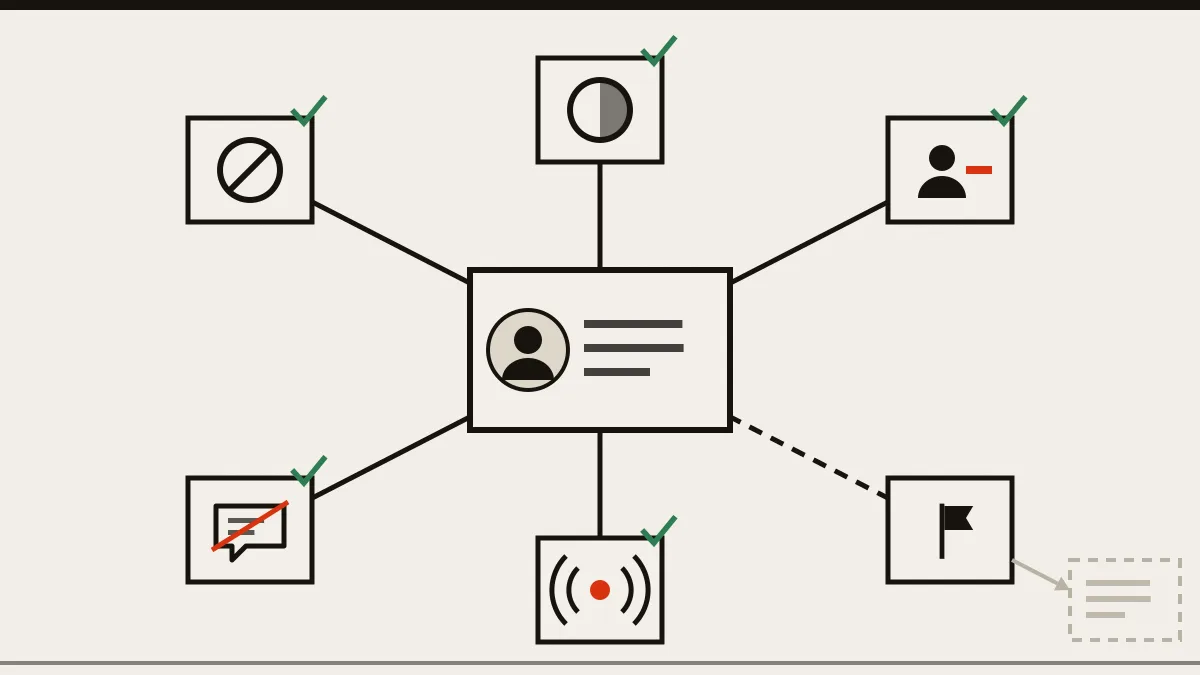
How to ban someone from commenting on Instagram
Block them from commenting, restrict them, or turn off comments on a post. Blocking someone from commenting means "Any new comments from them won't be visible to anyone else except for them", though comments they left earlier stay until you delete them. Restrict works more quietly: "Their new comments on your posts will only be visible to that person" (Instagram Help Centre, Restrict). For a single post under attack, you can turn off commenting on that post (Instagram Help Centre). Hidden Words filters comments and message requests containing words you choose, and "the person who sent it won't know" (Instagram Help Centre, Hidden Words).
How to ban someone from an Instagram live stream
People type it as "how to ban someone from a instagram live stream", and the tool is Remove from live video. During a broadcast, you or your moderator can remove a viewer. Instagram's moderator guidance says a removed viewer "won't be able to rejoin", and "you can assign one moderator" to do this while you present (Instagram Help Centre, Live moderator). Blocking them before you go live keeps them out altogether.
How to ban someone from following you on Instagram
On a private account, remove them as a follower: "When you remove a follower, they won't be notified that you've removed them" (Instagram Help Centre, Remove follower). They would have to request to follow again, and you can decline. On a public account anyone can follow, so blocking is the only way to stop a specific person following you.
How to ban someone from an Instagram page you run
A business or creator page uses the same tools. From the page's own account, block the person, restrict them, or remove them as a follower, and use Limits during a pile-on: it lets you "temporarily limit interactions from certain groups of people on Instagram without them knowing", for up to four weeks at a time (Instagram Help Centre, Limits). So the answer to how to ban someone from Instagram page accounts you manage, or how to ban someone account on Instagram from your business profile, is these controls, applied from the page itself.
X splits the same idea into block, mute and report, and blocking someone on X versus getting them banned sets out the difference. Snapchat's version is in getting a Snapchat account banned immediately, where speed depends on the evidence, not on how many people complain. And Obscura's original guide to banning someone from your own comments, live or Business page remains the quickest walkthrough of the menus.
Where reporting stops, and what we will not do
Some accounts break no rule, and no report, form or firm should remove them. An account that criticises you, reviews your business badly or reports true facts about you is not a policy violation because it hurts. Truthful journalism, genuine public records and protected opinion cannot be removed by a legitimate route. Where material like that ranks on your name, the lawful option is suppression, not removal: making accurate, better material outrank it in search. We say which of the two applies before any work starts.
We will not file a report we do not believe is true, forge a copyright notice, bluff a legal threat or run a reporting campaign. A false claim invites a counter-notice, a complaint against the person who filed it and, often, far more attention for the material you wanted gone. We never ask for anyone's password, and we do not take payment in crypto only. If intimate images of you are being shared, contact us straight away; triage is free and we never need to see the material. Our limits are set out in full in the disclaimer, and the evidence advice in our piece on how to capture the comment thread first applies to every case above.