Can you report someone on Telegram, and what does the report carry?
Yes. Every Telegram app can report a message, a profile, a bot, a group or a channel, and that includes messages inside a private one-to-one chat. Telegram's privacy policy, last revised on 21 August 2026, says its moderators may check messages "reported to them by their recipients" (Telegram Privacy Policy, section 5.3). The permission question is closed. The open question is what your report carries once it leaves your phone, because a moderator can act only on what arrives.
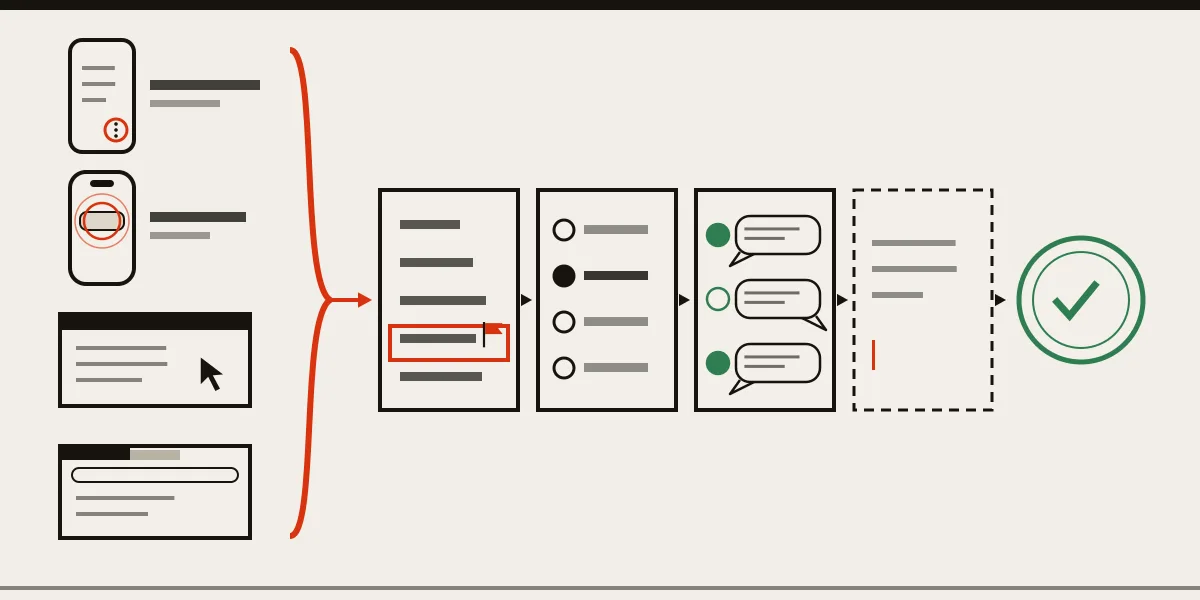
Whether you phrase it as how to report someone in Telegram or on it, you are doing one thing: attaching a flag to something Telegram can open. The flag points at an object, it carries a reason chosen from a menu, and on current apps it can carry a short comment or a handful of selected messages. That bundle lands in a queue which, according to Telegram's own safety page, has combined user reports with machine-learning detection since 2015. Nothing in the bundle describes the harm unless the object does. A report against a profile whose owner has already wiped the offending messages points the reviewer at an empty room. A report against the message that carried the threat points them at the evidence itself. The reason you pick then decides which queue reads it, so the nearest honest reason beats the most alarming one every time, and one sentence of context beats a paragraph of feeling.
That combination of machine detection and human reports tells you where a report earns its keep. Automated systems are good at catching volume: mass spam, known abuse images, accounts that behave like software. They are much worse at context, at knowing that a harmless-looking message is the ninth from a former partner, or that a profile photo belongs to someone who never agreed to its use. Those are exactly the harms that reach a moderator through a person's report, and the reason a clear one still matters.
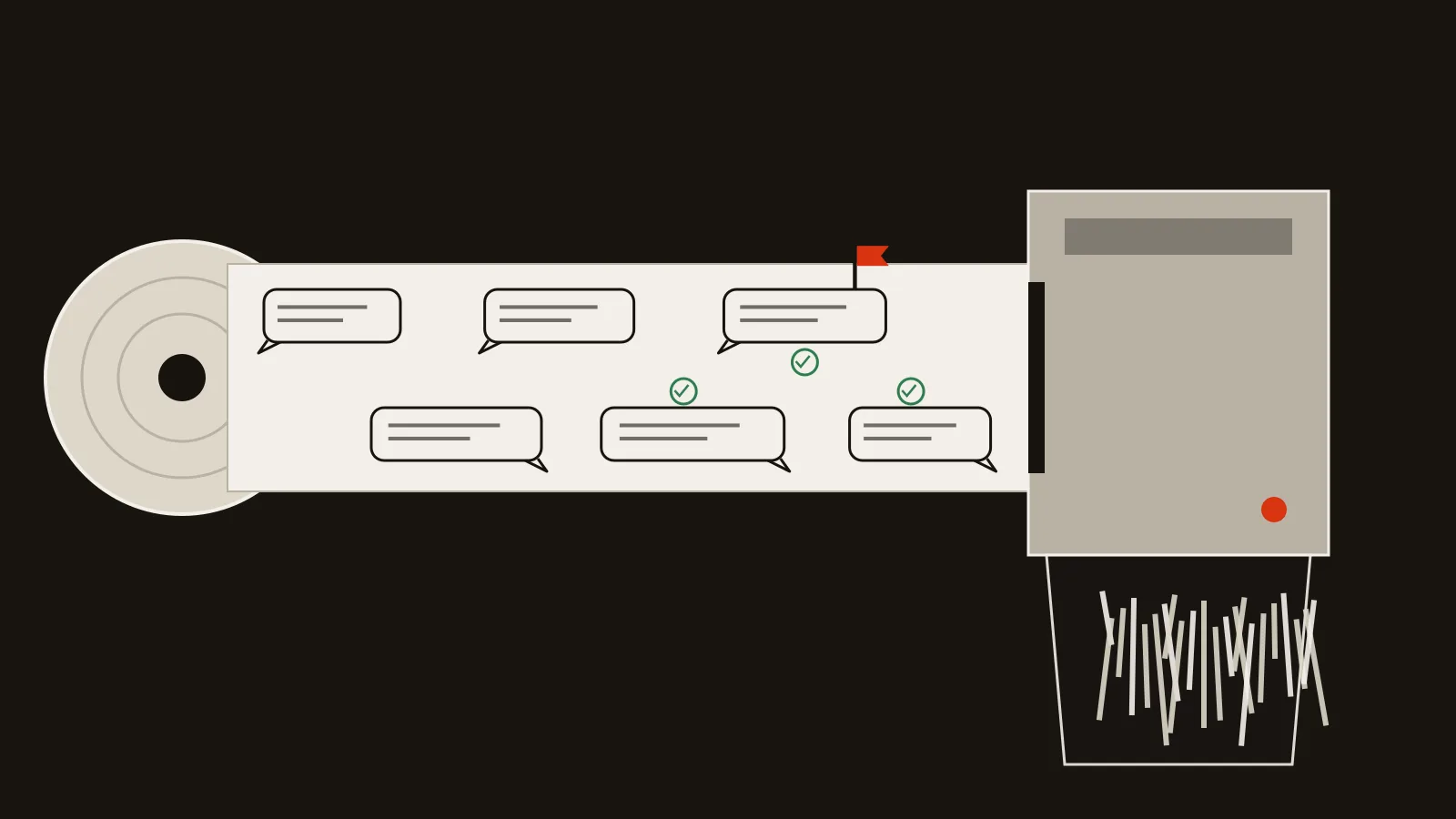
What comes back to you is nothing. Telegram's published material describes no receipt, no case number and no decision notice for the person who reports, and no notice to the person reported. You find out by looking, which a later section covers.
The machinery behind that silence is large. On 25 September 2026 the safety page counted 26,467,281 groups and channels blocked during 2026, including 423,341 for child sexual abuse material and 178,930 for terrorist content. Those are communities. The page gives no figure for individual accounts removed after a report, which is worth remembering whenever a seller quotes one.
"Someone" on Telegram can also be several objects at once. The same person may hold a personal account, run a bot, post in a channel and administer a group, and each of those carries its own report. Report the object that carries the harm. If the threats arrive from the personal account and the photos sit in a channel, that is two reports, filed separately, each pointing at its own evidence.
Three questions settle most of the work before you press anything:
- Which object carries the harm: the message, the profile, a bot, a channel or a group?
- Which rule does it break? Pick the reason by meaning, not by how serious it sounds.
- What else needs filing? A threat is also a police matter, a fake shop is also a bank matter, and a copy of your own photographs may be a copyright matter.
If you cannot answer the second question, the problem may be one Telegram's rules do not reach, such as rudeness between adults. The honest tool there is the block button rather than a report.
Three different people hold three different levers. Blocking is yours: it stops that account messaging or calling you and changes nothing else. Removing someone from a group belongs to that group's admins and reaches no further than the group. Banning belongs to Telegram alone. X splits its powers the same way, which is the point of our note on how to ban someone from Twitter: the button you can press and the outcome you want sit with different people.
A crowd of reports does not change who decides, either. Meta's enforcement makes the same point from another angle, and our breakdown of how to get someone permanently banned from Facebook shows violations being counted where report totals are not. On Telegram the practical consequence is plain. One accurate report on the right object does more than twenty vague ones.
If you are being threatened with the release of intimate images, or asked for money to stop it, do not pay and do not delete anything. The extortion section below sets out the order of steps, and our first review of those cases is free and urgent through a confidential message to our desk.
Everything else here follows from one Telegram-specific fact. In a private chat, the person you are about to report can erase the conversation from your phone as well as from theirs. So the order matters: capture, then report, then block, then escalate wherever the harm is also a crime.
How do you report someone on Telegram from each app?
The message report is the one route that works in every Telegram app and in every kind of chat, so learn that first. Telegram documents the gesture for each platform in its FAQ, and the gestures differ: a tap on Android, a long press on an iPhone, a right-click on a computer. Instructions copied between guides fail for exactly that reason. On Telegram, how to report user accounts depends less on your device than on where you met the person, so the steps below go by platform first and by situation second.
How to report someone on Telegram: Android
- Open the chat and find one message that shows the problem without needing the rest of the conversation to explain it.
- Tap that message once. Android opens the message menu on a single tap; Telegram's FAQ tells Android users to tap the message and select Report.
- Choose Report, then the reason that describes what the person did rather than how it made you feel.
- If the app offers to add further messages or a comment, add the ones that show a pattern and write one factual sentence: what happened, when, and which rule it breaks.
- Send the report. Leave blocking until you have finished the capture steps in the next section.
Some problems live in the account rather than in one message, such as a profile built to look like yours. For those, open the chat and tap the name at the top to reach the profile, then open the menu with three vertical dots. Bots, channels and groups carry Report there. Many user profiles do as well, although not every build shows it for a private contact. When it is missing, report their messages instead; that reaches the same moderators with better evidence attached.
How do you report someone on Telegram on an iPhone?
The iOS apps use a long press. Press and hold the message, choose Report, then pick the reason. The account-level route mirrors Android's: tap the name at the top of the chat, then open the More menu on the profile.
One iPhone habit costs people their evidence more than any other. Swiping a chat away in the chat list and deleting it, usually in anger and usually late at night, removes your copy for good. A screenshot of the notification banner is no substitute, because a banner shows a display name rather than the account behind it, and a reviewer cannot open a display name.
Report user: Telegram Desktop, macOS and Web
On a computer the gesture is a right-click. Telegram's FAQ gives Telegram Desktop, the web versions and Telegram for macOS the same instruction: right-click the message and select Report. The computer matters for a second reason. Telegram Desktop is the app that can export a whole chat to a file, so if you are about to report from a laptop, export first and report second. The next section explains why that order holds.
Report user on Telegram: groups, comment threads and first contact
Knowing how to report Telegram user accounts inside a group comes down to the same gesture: a group message is reported exactly like a private one. Tell the group's admins as well. They can remove the person from that group straight away, while Telegram decides what happens to the account everywhere else. Two routes, two scopes, both worth using.
Comments under a channel post live in the channel's linked discussion group, so report the comment itself rather than the channel. The channel is a separate object with a separate route, and if the person runs it, our guide on how to report a Telegram channel covers that path.
When a stranger writes first, Telegram puts a bar across the top of the new chat with a spam report and a block option. That Telegram report spam user control does what it says. Telegram's spam FAQ explains that pressing it forwards the messages to its moderators for review, which is a real report rather than a filter.
Sometimes the chat is gone and all you hold is a name. Here is how to report a user on Telegram in that position: search for their @username or open their t.me link, which brings up the public profile whether or not a chat still exists, and use the profile's Report option. If there is no username, or the profile shows no Report control, email abuse@telegram.org instead. Telegram's FAQ asks email reports to include links to the content, in the t.me or @ form, so send the profile link, links to any public posts, and dated screenshots that show the display name, the message and the time together. An email report carries your own address and has no in-app object attached, so it has to explain itself. Keep it short and factual. Write it for a reader who has thirty seconds and no context, and send it once: the same complaint sent every morning adds nothing a reviewer can use.
If they blocked you, or never set a username
Being blocked does not stop you reporting. When someone blocks you on Telegram, your copy of the chat normally stays where it was, and the messages in it can still be reported with the same gesture as before. What changes is how much of them you can see. If they deleted the conversation for both sides before blocking you, there is nothing left in the app to point at. Email becomes the fallback: send abuse@telegram.org your screenshots, the t.me link if they had a username, and the from_id number if you exported the chat earlier. An account with no username can still be reported from any message in your chat with it. Only when the chat and the username are both gone does the numeric ID become the one thing that still points at the account, which is another reason to export early.
One address people try is the wrong one. Telegram's support form at telegram.org/support is a general help form which, according to Telegram's own FAQ, is answered by volunteers, and it is not a reporting route. Use the in-app report, the abuse address or the specialist desks described below.
The reason labels themselves change between app versions, so choose by meaning rather than by the exact wording you read in a guide. And keep the two buttons apart in your head. Reporting does not block anybody. Blocking does not report anybody. Apart from the stranger bar, which offers both, you press each one separately.
Before you tap Report, capture what the other side can erase
A report is only as good as the evidence it points at, and on Telegram the other party controls more of that evidence than most people realise. Telegram's FAQ says anyone may delete any message they sent or received in a one-to-one chat "for both sides", at any time, and that deleted messages leave no mark in the chat. In groups the rule is narrower. There, people can delete only their own messages.
That makes the person you are about to report the second editor of your evidence. The Android app even gives the option its own tick-box, "Also delete for" followed by the other person's name. A reply you meant to screenshot tomorrow may not exist tomorrow, and nothing in the chat will show that it ever did.
Groups keep a little more. Telegram's privacy policy says messages deleted in supergroups, and the original versions of edited ones, are held for 48 hours so that admins can see them in the Recent Actions panel (section 10.2). If you administer the group where the abuse happened, that log is your window. After two days it closes.
Names change; the account number does not
The second problem is identity. A Telegram account has a display name anyone can edit in seconds, an optional @username that can be changed or dropped, and a numeric user ID that stays with the account for its whole life. People who expect to be reported often rename, clear their username or swap their photo, which leaves your screenshot showing a name that no longer leads anywhere. Telegram itself keeps a trail: section 5.2 of its privacy policy lists the history of username changes among the safety metadata it may hold for up to 12 months. You cannot see that history. What you can do is capture the one identifier that survives a rename, and on a computer there is a clean way to do it.
Export the chat on Telegram Desktop before you block
Telegram Desktop has exported chats since the August 2018 update that introduced the tool, in readable HTML or machine-readable JSON. The steps take about five minutes:
- Install Telegram Desktop on a computer and sign in by scanning its QR code from your phone.
- Open the chat, click the three-dot menu at the top right and choose Export chat history.
- Tick the media you need (photos, videos, voice messages, files) and choose a format. HTML is for reading; JSON is the record.
- Save to a folder you control, then copy that folder somewhere else without opening or editing the files inside it.
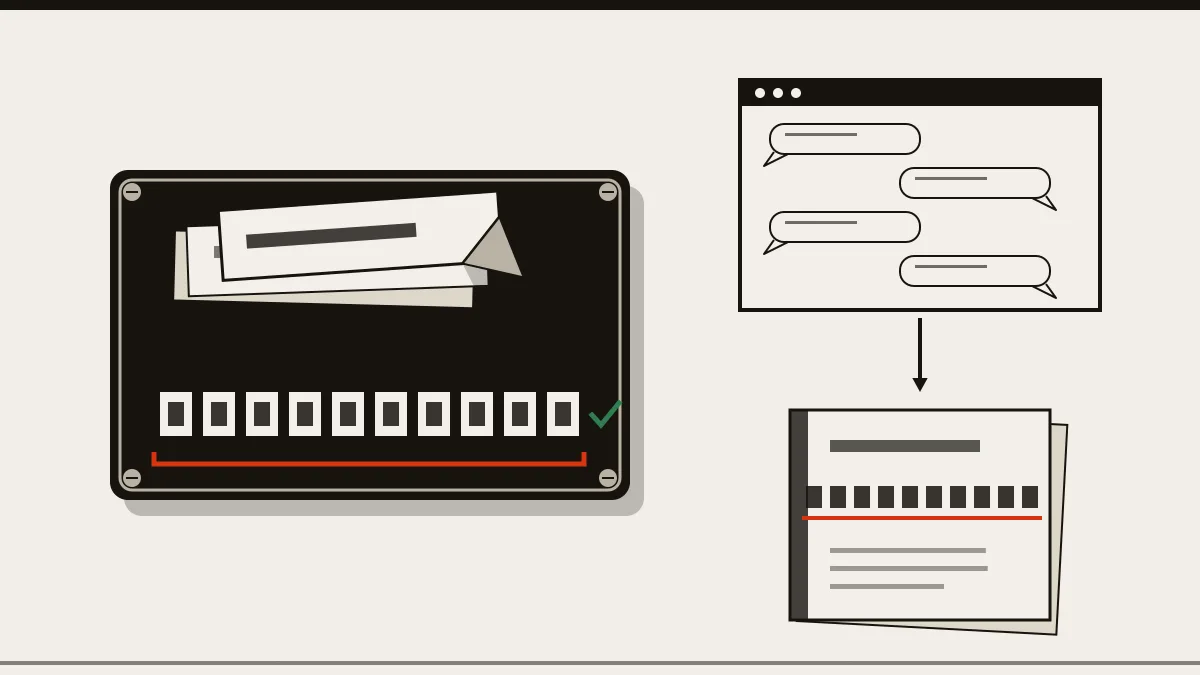
Why the JSON copy matters is set out in Telegram's own data export schema. Every message in the file records the sender's name and a from_id written as a type followed by a number, such as user123456. Each message also carries its date twice, as an ISO 8601 timestamp and as a Unix timestamp, plus the date of any edit. The export stores the display name rather than the @username, so pair it with a screenshot of the profile that shows the handle. Together those two files do what a screenshot alone cannot: they tie words, times and edits to an account number that stays the same after the person renames, clears their username or wipes the chat on their side. A moderator or an officer who reads "user" followed by that number can find the account even when every visible label on it has changed.
Treat the export like any other evidence. Write down when you made it, keep the original folder unopened and work from a copy. Do not trim it to the worst messages either. A reviewer, a police officer or a solicitor will want the context around them, including your own replies, and a file that has been cut down invites the question of what was cut.
Two limits apply. Secret chats exist only on the two devices that started them, so a computer cannot export them, and Telegram's FAQ says it tries to alert people to screenshots taken in secret chats while conceding that some systems allow silent ones. Treat a secret chat as one where the other person may learn you captured it. And an export copies what is still there. If messages are already gone, the file will not bring them back.
No computer? Capture it on the phone
Without a computer the export is not available, but a phone can still produce a solid record. Scroll through the chat from the top and take screenshots that overlap slightly, so nobody can suggest a gap between them. A screen recording works too: start it, open the chat, scroll slowly through the whole conversation, then open the person's profile so the username appears on the same recording. Email the files to yourself straight away, which gives each one an independent timestamp, and keep them somewhere the phone cannot lose them, such as a second device or cloud storage. Do not crop anything at this stage. If your own name or number appears and you would rather it did not, redact a copy later and keep the original untouched.
What a usable capture looks like
- A full-window screenshot of each key message, showing the name, the message and the time in one frame.
- The profile screen with the @username visible, and the t.me link copied as text.
- The Desktop export folder, untouched, with a second copy kept somewhere else.
- Message links for anything posted in a public group or channel, copied from the right-click menu.
- A dated log in your own words: when each incident happened, what was said, what you did about it.
- Payment references, wallet addresses and transaction hashes if money moved.
The log is not busywork. English harassment law needs a course of conduct, which the Protection from Harassment Act 1997 defines as conduct on at least two occasions (section 7(3)), so a pattern proves more than any single message. The same principle decides cases on X, where a Twitter harassment takedown is won on the file assembled before anything is filed, and a one-screenshot case rarely succeeds there either.
Snapchat reaches the same problem through a different door, deletion by default rather than deletion on demand, which is why our answer to how does someone get banned from Snapchat also starts with capture. On Telegram the risk is quieter and just as final.
Then block, and block carefully. On Android the prompt that opens when you block someone, titled Block followed by their name, can carry a tick-box to delete the chat. Leave it empty. The National Crime Agency's advice to people being blackmailed online is to stop contact and block them, and in the same breath to avoid deleting anything that could serve as evidence (NCA sextortion guidance). Telegram lets you do both at once, provided you untick one box.
When I open a Telegram file for a client, the first thing I look for is the number, not the name. Screenshots arrive in almost every case and exports in very few, and the difference shows up later, when the account we are asking Telegram or the police to examine has a new name and an empty profile. A screenshot proves what was said. An export ties it to an account that still exists under a number, and its edit dates answer the familiar reply that a message never said that. We hold what clients send under the terms in our privacy notice, and in intimate-image cases we never need the images themselves; those go through hashing tools, covered further down.
Which route fits the harm, on Telegram and off it?
The in-app report handles the platform side of a problem. It does nothing about the crime side, and several things people report on Telegram are crimes in the United Kingdom. Match the harm first, then file on both sides where both apply. The table below is the version we work from at our desk, trimmed to the cases that reach us most often; the two route columns run in parallel, not one after the other.
| The harm | On Telegram | Outside Telegram (UK) |
|---|---|---|
| Spam or mass messages | Report spam, then block | Usually nothing further |
| Scam, fake shop or investment pitch | Report the messages; email the abuse address with links | Your bank on 159, then Report Fraud |
| Someone posing as you | @NoToScam, with both profile links | Police if money or threats are involved |
| Threats of violence | Report the message; do not reply | 999 if immediate, otherwise 101 |
| Blackmail or sextortion | Report it, never pay, keep the chat | Police; CEOP or Report Remove if under 18 |
| Intimate images posted | Report, then email the abuse address | Police; StopNCII for partner platforms |
| Child sexual abuse material | Report; email stopCA@ | IWF or police, and never copy it |
| Counterfeit goods | Report the listing and the seller | Citizens Advice, then Trading Standards |
| Your own photos or writing copied | A copyright notice to Telegram | A solicitor, if the notice fails |
The criminal routes matter because they reach the person rather than the account. Blackmail, an unwarranted demand with menaces, carries up to 14 years' imprisonment under section 21 of the Theft Act 1968. Threatening to share intimate images is a separate offence under section 66B of the Sexual Offences Act 2003, in force in England and Wales since 31 January 2024. A threat of death or serious harm sent online falls under section 181 of the Online Safety Act 2023 in England, Wales and Northern Ireland, with a maximum of five years. Repeated unwanted contact can amount to harassment under the 1997 Act mentioned above. None of these depends on Telegram agreeing that its own rules were broken, and none of them is weakened by a moderator saying nothing.
Money has its own order. If you paid a scammer by bank transfer, call your bank first; dialling 159 connects you to the fraud line of most UK banks. Then report to Report Fraud, the service that replaced Action Fraud on 4 December 2025, at reportfraud.police.uk or on 0300 123 2040. It issues a crime reference number, which your bank may ask for. It does not investigate every case itself, and saying so plainly now saves a disappointment later. Scotland runs its own system: contact Police Scotland on 101, and note that the Online Safety Act's threatening-communications offence does not extend there.
The route that can put a name to the account
The police route has a second benefit that most guides skip: identity. Telegram's privacy policy covers the case where a valid order from judicial authorities confirms that a user is a suspect in a criminal case. Telegram then runs a legal analysis and may disclose that user's IP address and phone number to the relevant authorities, recording any disclosure in a quarterly report at t.me/transparency (section 8.3). Read that clause closely. It names judicial authorities and criminal cases. It does not describe any route for a private person, a solicitor's letter or a civil court claim. So if you need to know who is behind an account, a crime report is the documented way in, and a civil claim against someone you cannot name is a much harder road. It also explains why the export described earlier matters so much. An officer asking Telegram about user123456 is asking a question Telegram can answer; an officer asking about a display name that changed last Tuesday is not.
X shows the same pattern from a different angle. The strongest routes for threats and defamation there also run outside the platform and often begin with unmasking the account, which is the thread running through our note on Twitter account takedown options.
Impersonation turns on who reports it
Impersonation is the one harm where Telegram names a separate desk. Its FAQ gives @NoToScam a single job: if a scammer is pretending to be you, contact it. That is narrower than most guides suggest, and it means the strongest report comes from the person being copied. Send it the link to your real profile and the link to the copy, plus a screenshot of the copy contacting someone in your name if you have one. If the impersonator is using your name to take money from people, it is fraud as well, and the police column of the table applies. TikTok draws a similar line around who may report a copy, set out in our guide on how to get a fake TikTok account taken down; the person being impersonated, or someone acting for them, carries the most weight.
When you know who is behind the account
Many Telegram cases are not about strangers at all. The account belongs to an ex-partner, a former friend, a family member or someone from work, and a Telegram ban does little against a person who knows where you live and can open another account tonight. Here the civil courts offer something no platform can. Under section 3 of the Protection from Harassment Act 1997, a victim can bring a civil claim, seek damages for anxiety and financial loss, and ask for an injunction. Breaching that injunction without reasonable excuse is a criminal offence carrying up to five years (section 3). The Family Law Act 1996 goes further where the person is an ex-partner, a relative or someone else it treats as associated with you. A non-molestation order can forbid contact on any app at once, and breaching it is an offence under section 42A with the same five-year maximum. These orders reach the person, whatever number they register next.
When the harm is a false statement about you
Defamation sits somewhere else again. In England and Wales it is a civil wrong rather than a crime, and a statement must have caused, or be likely to cause, serious harm to your reputation before a claim can succeed (Defamation Act 2013, section 1). Telegram publishes no defamation form. A false and damaging post in a public channel can be reported under the nearest reason and emailed to abuse@telegram.org with the link and a short account of why it is false. But a moderator is not a judge, and cannot decide whether a claim about you is true. The routes that carry weight lie elsewhere. One is a solicitor's letter to the author, where the author can be identified. The other is the search side, because a false post that ranks for your name can often be de-indexed or pushed down even while it stays on Telegram. No route removes a true statement or an honest opinion.
Facing threats, blackmail or a fake shop trading on your name? Send us the links for a confidential review. You will hear which route suits the case, what it is likely to change and where it runs out, before any fee is mentioned. Intimate-image cases get a free, urgent first review, and we never ask to see the images.
Why do spam users and spam bots keep coming back?
Because a report works on an account, and people who send spam for a living run many accounts. The report itself does real work. Telegram's spam FAQ says that pressing the report button forwards the messages to its moderators. An account limited as a result can send messages only to people who have saved its number as a contact, though it can still reply to anyone who writes to it first. Repeat offences bring longer periods of restriction. For a sender whose business is writing to strangers, that limit ends the usefulness of the account. So they replace it.
The replacement is cheap. Telegram's own FAQ hints at why the next one gets caught quickly too, noting that some numbers trigger an overly harsh response from its systems because of what their previous owners did, or because they are virtual or VoIP numbers (Telegram spam FAQ). Bulk senders live on exactly those numbers. The result is a churn you experience as the same spam arriving from a different name every week, which feels like reporting does nothing. It does something. It shortens the life of each account, and it gives Telegram's systems another example to learn from. When you report a spam account on Telegram, you are not deleting a person from the platform; you are costing an operator one more number and one more account. The useful measure of success is not whether the sender vanishes. It is whether the next account reaches you at all, and that part sits under your own control through the settings described below.
The trade in "anti-ban" tools
Search for a Telegram DM bot with anti-ban and you find the sender's side of that churn. It is bulk-messaging software, sold with features that rotate accounts, spread sending across proxies and throttle message rates so that each account stays under the level that gets it limited. The anti-ban label means evading the moderation you just used. Telegram's terms for developers using its API are blunt about accounts used for flooding or spamming, which they say will be banned forever (Telegram API terms). The vendors sell to senders; the people on the receiving end are the ones reading this page.
Many of those tools also ask for the operator's own login session, the same trade buried in every WhatsApp mass report tool: hand over a live session and you have handed over the account. The account farms that feed bulk messaging feed bulk reporting as well, which is why the Facebook mass report service market and the Telegram spam trade share so much of their plumbing.
The phrase Telegram bot anti-ban means something else to group admins. For them it describes defensive bots added to a group to screen new members, usually with a captcha on joining or a shared list of known spam accounts. If you run a group that is being flooded, those are the tools you want, alongside Telegram's own anti-spam features for larger groups and a group-level report of the worst offenders.
Settings that stop strangers reaching you
For an individual, the better answer is to stop cold messages arriving. Telegram's API documentation describes three privacy controls that do this (Telegram privacy settings):
- A setting that lets only Premium users, your contacts and people you already have a private chat with write to you. Depending on your app it may need a Premium subscription to switch on.
- Paid messages, which require anyone who is not a contact to pay a set number of Telegram Stars before their message reaches you.
- Automatic archiving and muting of new chats from non-contacts, so that a cold message waits in a folder instead of buzzing your phone.
In the apps these sit under Privacy and Security, with labels that shift between versions. None of them reports anybody, and none replaces a report when something illegal arrives. They reduce how often you need to file one.
Spam also arrives as calls, and a fourth setting covers them. The same privacy section decides who may call you, and restricting it to contacts ends the stranger calls that often follow a burst of spam messages.
A fifth setting deals with the other common delivery route. A lot of spam arrives not as a direct message but by being added to a group you never asked to join, where the spam then sits in plain view. Telegram's privacy controls include one that decides who may invite you to group chats. Limit it to your contacts and that route closes. If you have already been added, leave the group, and report it from its info screen if what it posts breaks the rules.
One comparison is worth making. People who meet spam on Instagram often go looking for a bot that reports the spammers back, and our Instagram spam report bot briefing explains why that is mostly myth and what the real route is. The Telegram version of the lesson is identical: the built-in report and the privacy settings are the tools; anything sold as a shortcut is somebody else's business model.
How do you report a bot on Telegram?
The same way you report a person, because on Telegram a bot is an account run by software. Open the chat with the bot, tap or click its name to reach its profile, open the menu and choose Report; or report the individual messages it sent you with the tap, long press or right-click described earlier. Bot usernames always end in "bot", which is the quickest way to tell that the thing messaging you is automated. To report Telegram bot accounts that run scams, include the bot's link and a screenshot of whatever it asked you to do.
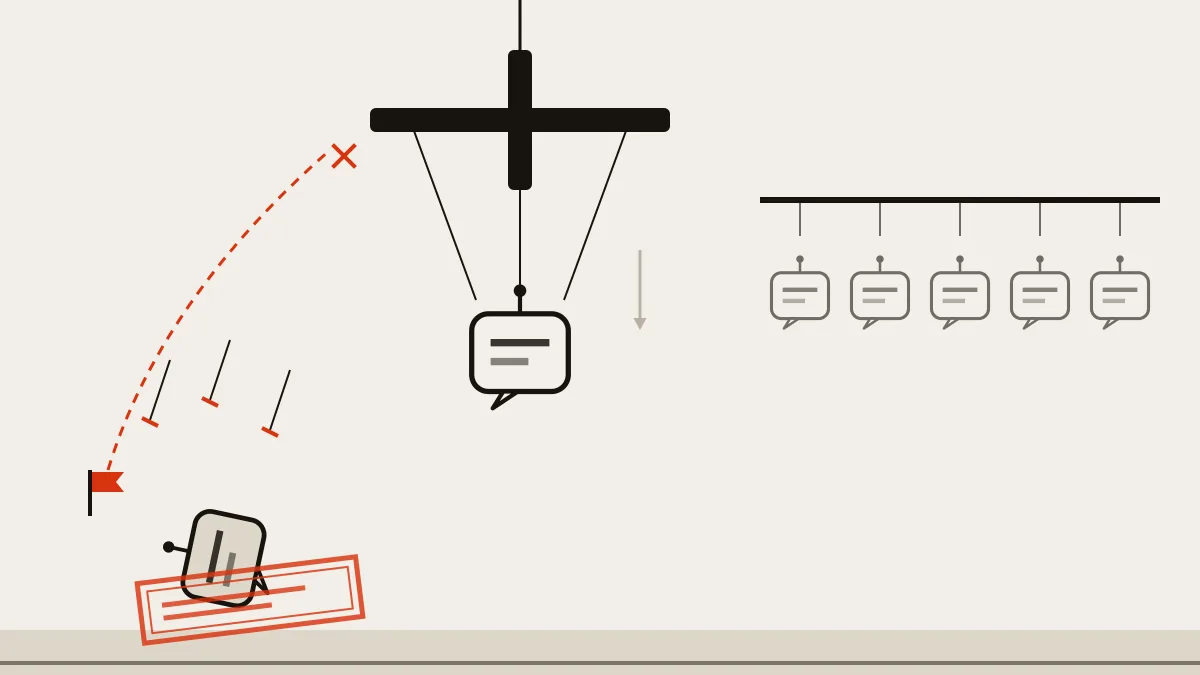
Knowing how to report a bot on Telegram matters, because bots deliver much of the worst material on the platform. Think of fake investment dashboards, phishing flows that ask for a login code, "verification" bots that verify nothing, and services that generate sexual images of real people. The report is the easy part. The harder part is that a bot is the front end of an operation, and its profile does not show who operates it. An operator can put up a replacement quickly. The person running it, the channel advertising it, the website it links to and the payment account collecting the money are separate objects, each reported through its own route, and they keep an operation going after any single bot disappears. So a useful bot report travels with at least one more: the channel that promoted it, a complaint to the company hosting its website, or a report to your bank about the account that took your payment.
Bots that generate sexual images of real people need a note of their own. In England and Wales, creating a purported intimate image of an adult without consent has been an offence since 6 February 2026, under section 66E of the Sexual Offences Act 2003. Threatening to share such an image falls under section 66B, which covers images that merely appear to show you. The image does not have to be real for the offence to be. If a bot has produced images of you, report the bot and every channel that posted its output, report to the police, and use the hashing tools described in the extortion section to stop copies spreading to other platforms.
Telling a bot from a person is usually easy once you know where to look. Where a person's chat header shows when they were last seen, a bot's shows the word bot, and its username ends in "bot" as well. Some scam operations use ordinary user accounts driven by software instead, which look human in the header and behave like machines: instant replies at three in the morning, the same wording to everybody, links in every other message. Report those as user accounts, and say in the comment that the account appears to be automated.
Bots also turn up inside groups, added by an admin or by a compromised member, where they post spam and links. Telegram's bot documentation adds a detail worth knowing: in privacy mode, which is the default, a bot in a group receives only commands and messages addressed to it, unless it has been made an admin. So check what rights any unfamiliar bot holds. If you run the group, remove the bot first and report it second. If you do not, tell the admins, report the bot's messages, and leave if nothing changes.
Before you report a bot, capture it without touching it
- Screenshot the bot's profile, its messages and any buttons it offers, without pressing them.
- Copy the bot's @username and its t.me link as text.
- Note every link, wallet address or payment handle it pushed at you.
- Never send a bot your phone number or a login code. Telegram's FAQ says login codes should never be shared with anyone, and a bot asking for one is attempting to take over your account.
Telegram's own accounts, and the ones pretending to be
Telegram runs a few service accounts of its own, and people misuse them in good faith. @SpamBot is not a Telegram report spam bot: it exists so that people whose own accounts were limited can appeal, and it reports nobody. @NoToScam handles one thing, a scammer pretending to be you. Official accounts carry Telegram's own checkmark, and Telegram's verification page says only Telegram can assign it, while third-party verifiers use different icons (Telegram verification). Anything else claiming to be Telegram support in your private messages is not.
What a paid "Telegram reporting bot" actually is
The other thing sold as a Telegram reporting bot is a service that promises to report accounts for you, in bulk, for a fee. Behind the chat window sits a pool of other people's accounts and a script, not a bot in Telegram's sense: Telegram's reporting methods are for user accounts, and bots cannot file reports at all. We took the trade apart in our briefing on the Telegram mass report panel, and the same sellers usually list an Instagram mass report bot on the next line of their price list.
The claim falls apart differently on each platform. Snapchat publishes no reporting endpoint for anyone to call, so a service offering to mass report Snapchat accounts is selling something that cannot exist in the form described. YouTube is the rare platform with a programmatic reporting call. It is quota-capped and queued like everything else, which is why a promise to mass report YouTube channel pages into oblivion runs into a daily limit long before it reaches a decision. On Telegram, the only reporting that reaches a moderator is the kind you can do yourself, from your own account, about something you actually saw.
Telegram phone number banned: what the ban reaches, and what it misses
A ban ends an account. It does not end a person, and on Telegram the gap between those two is wider than on most platforms. Every Telegram account is registered to a phone number, so a ban attaches to that account and, in practice, to the number it used. The person behind it can register again with another number. Since 6 December 2022 they have not even needed a SIM card: Telegram's own announcement of that update says users can sign up and log in with blockchain-based anonymous numbers bought on the Fragment platform (Telegram blog, 6 December 2022). A banned Telegram number is therefore a closed door on one account, not a lock on the person who used it. For someone being harassed, that is the most important sentence on this page after the one about exporting the chat, because it decides where the effort should go next.
That changes what counts as a result. If the goal is that a particular person stops reaching you, the ban is one step and your own settings are another. If the goal is that the person faces consequences, the number was never the lever; the crime report and the evidence file are. A phone number on a Telegram account is also weak evidence of identity, since it may be a Fragment number, a virtual number or somebody else's recycled SIM.
If the person you reported comes back
Treat the new account as a new report on its own conduct. Report the messages it sends, and use the comment box to say that it appears to be the same person as a previously reported account, giving that account's number from your export. Keep the export from the first account with the new material; together they show a course of conduct, which matters under the harassment law described earlier. Then tighten the privacy settings covered in the spam section, so that a fresh account cannot message you cold.
Returning accounts tend to give themselves away. The same profile photograph, the same way of writing a name, the same phrases, the same time of night: none of it proves identity alone, but together they make the comment on your report credible. Note the similarities as you spot them, with dates.
WhatsApp ties accounts to phone numbers too, which is why our guide on how to ban someone from WhatsApp runs into the same wall: a number-level ban is real, and so is the next number.
If your own number shows as banned
Most people who search the phrase Telegram phone number banned are not trying to report anybody; they are locked out of their own account. The notice appears when you try to log in or register, and it means Telegram has barred that number from its service. The route back is the one the notice itself gives you: it points to an email address for help, and that address, not a third-party form, is where an explanation belongs. Write once, from an email address you control, with the number, the date the ban appeared and a short account of how you use Telegram.
Two other states get confused with a ban. A limited account can still read and reply but cannot message strangers, and Telegram's spam FAQ sends people who think the limit is a mistake to @SpamBot. A frozen account is read-only, and here Telegram's developer documentation is unusually direct. The app configuration for a frozen account carries a date on which the account will be deleted unless an appeal is submitted, along with a link for filing that appeal (Telegram API configuration). If your account is frozen, the appeal has a deadline, and missing it is the one mistake you cannot undo.
A banned Telegram number can also be one you bought second-hand. Telegram's spam FAQ says some numbers trigger an overly harsh response because of what their previous owners did, or because they are virtual numbers, so a fresh SIM can arrive with somebody else's history attached. Say so in your appeal if it applies.
If you believe a harasser's reporting campaign triggered the ban, say that too, with whatever shows it: threats to report you, screenshots of a group organising it, the timing. Telegram's terms for the European Union reserve the right to suspend the processing of reports from people who repeatedly submit ones that are manifestly unfounded, fraudulent or misleading (Telegram EU DSA terms). Coordinated false reporting is written into Telegram's own terms as something it can act on, so it is a legitimate point to raise.
Can a banned Telegram number be used again?
Sometimes, and nobody outside Telegram can tell you in advance. Telegram publishes no rule on how long a number ban lasts, or on whether it follows a number that a mobile carrier later reissues to somebody new. What its published material does say is narrower. The spam FAQ accepts that numbers can inherit trouble from previous owners, and the developer documentation describes frozen accounts as deleted on a set date unless an appeal arrives first. Neither reads like a system in which a number is tainted forever by definition, or in which every ban is final by definition. For a victim, that uncertainty points one way only: the number was never the person, so plan around the person.
Do not pay anyone to lift a ban. Nobody outside Telegram can reverse one. The sellers of a WhatsApp number ban service make the mirror-image promise on the other side of the same market, and it fails the same way: they cannot open what the platform has closed, and they cannot close what it has not.

What gets a Telegram user banned, and what never will
Evidence of a rule breach does; volume never does. To get Telegram user accounts banned, the account has to break Telegram's rules and your report has to show it. Telegram's terms prohibit using the service to send spam or scam users, promoting violence or posting illegal pornographic content on public channels and bots, and activity recognised as illegal in most countries (Telegram Terms of Service). A moderator reads the reported material against those rules. Severity matters more than anything else: a report showing a threat, an extortion demand or abuse material is handled very differently from a report of rudeness. Nothing in Telegram's documentation ties an outcome to a number of reports.
Severity shows even in what Telegram chooses to publish. Its safety page keeps separate running totals for groups and channels blocked over child sexual abuse material and over terrorism, the only two categories it breaks out. For the harms most individuals report, such as harassment, threats between private people and impersonation, it publishes no tally at all. The strength of those reports rests entirely on what they show.
What the moderator can do comes in stages, and only some of them are visible to you.
| Outcome | What changes for the account | What you can see |
|---|---|---|
| Warning label | A red SCAM or FAKE mark on its profile | Yes, on the profile |
| Limited | Can message only contacts, and reply | No |
| Frozen | Read-only, with a deletion date unless appealed | No |
| Deleted or banned | The account stops existing on Telegram | Often a "Deleted Account" name |
The labels are the stage people forget. Telegram's developer documentation describes two separate flags on a user account. One marks a user who "may be a scam". The other marks a user reported by many users as a fake or scam user, with a warning to be careful (Telegram API: user). That second flag is a warning to everyone else who meets the account. It is not a ban, and nothing in the documentation says a ban follows it.
What sellers of Telegram bans are really selling
Search get Telegram user banned and the first page fills with sellers. They sell the same product on every platform: reports filed from accounts they control, dressed up as an outcome. On X, the promise to mass report Twitter account targets meets the same reality we describe here, a moderator reading material rather than counting complaints. On TikTok the price list is public, and our breakdown of how much does it cost to get a TikTok account banned shows what those packages buy: reports, not results.
The buyer carries more risk than the target. A campaign of fabricated reports is exactly the manifestly unfounded reporting Telegram's EU terms describe, and Telegram's API terms promise a permanent ban for accounts used for flooding. The pool of accounts doing the reporting often includes accounts whose sessions were stolen from their owners, which puts the buyer's money into the same economy that produces the scams they may be trying to fight. We made the same argument about the Twitter ban service market, where the paperwork is thinner and the legal exposure lands on the customer.
Meta's version of the trade has its own price bands, and the Facebook account ban service listings we examined sell the same promise with a longer menu. On YouTube the gap between promise and mechanism is starker still, because a YouTube channel takedown happens through strikes for real violations, not through a queue of complaints from strangers.
Stripped of the sales talk, the method for how to get a Telegram user banned fits in one paragraph. Find the material that breaks a rule. Capture it with the account number attached. Report that material, not the person in general, under the reason that matches it. Report every surface the person uses to cause harm, their bots and channels as well as their account. Where the conduct is a crime, report it to the police in parallel, because an investigation can reach the person even when Telegram's decision reaches only the account. Then leave it. Asking friends to file identical reports adds names to the same case and nothing else, and it risks looking like the coordinated reporting Telegram's EU terms say it can stop processing. What improves a weak case is better evidence: a message preserved in your export after the sender deleted it, a second incident that turns rudeness into a pattern, a screenshot of the same account messaging someone else in your name.
What happens to people who file false reports
Less than they fear, usually, and more than the sellers admit. Telegram's EU terms reserve the right to stop processing reports from anyone who repeatedly files manifestly unfounded, fraudulent or misleading ones, which means a serial false reporter can lose the ability to be heard when something real happens. The API terms go further for anyone running automated accounts, with permanent bans for flooding. And under English law, a campaign of false reports aimed at one person can form part of the course of conduct that the Protection from Harassment Act 1997 is about. A single honest report that turns out to be mistaken is none of those things. Mistaken reports are an ordinary part of moderation, and filing one in good faith carries no penalty that Telegram describes.
Report Telegram extortion or a counterfeit seller beyond the app
Two Telegram harms need far more than an in-app report: extortion, usually sexual, and counterfeit goods sold through channels and bots. Both need a report inside Telegram and a report outside it, and in both cases the outside report is the one that can reach the person. When you report Telegram extortion or a counterfeit seller, file on both sides the same day.
Sextortion and other threats for money
The pattern is familiar: someone obtains an intimate image, or claims to have one, or has generated a fake, and demands money under threat of sending it to your contacts. The National Crime Agency's guidance for adults is consistent, and worth following to the letter. Do not pay. Stop all contact and block the offender on every platform. Try not to delete anything that could be evidence, and report to the police on 101, or 999 if you are in immediate danger (NCA sextortion guidance). Paying is the step people most regret: the NCA warns there is no guarantee it stops the threats, and someone who has been paid once has every reason to ask again.
Fakes change nothing about that advice. Some extortion now starts with an image that was generated rather than taken. The law treats the threat the same way: section 66B of the Sexual Offences Act 2003 covers threatening to share an intimate image, including one that only appears to show you. The person demanding money does not need a real photograph to commit the offence, and you do not need to prove the image is fake to report it. The same holds for the evidence. Keep the demand, the image if it was sent to you, the account details and any payment instructions, and hand them to the police rather than to anyone who offers to make the problem go away for a fee. Be wary of recovery or removal services that contact you unprompted soon after a threat. Unsolicited offers of that kind are a well-documented second scam, and no legitimate service will ask you to pay the extortionist.
On Telegram, that guidance becomes a sequence. Export the chat first. Report the messages that contain the demand and the threat. If the images have been posted in a channel or group, report those posts and email abuse@telegram.org with the links. Then block, leaving the option to delete the chat unticked. If anyone in the images is under 18, do not save, forward or screenshot the images themselves; report them in the app, email stopCA@telegram.org, and report to the police or the Internet Watch Foundation. Under-18s can also use Report Remove, run by Childline and the IWF, and the NCA's CEOP Safety Centre, while Take It Down from NCMEC helps stop images of minors spreading.
For adults, StopNCII creates a digital fingerprint of an intimate image on your own device and shares only that fingerprint with partner platforms, which then block matching uploads. Check who those partners are before relying on it. When we checked the partner list on 25 September 2026 it named 19 companies, among them Facebook, Instagram, TikTok, Snapchat, Reddit, X and Bluesky, and Telegram was not one of them (StopNCII partners). StopNCII protects you everywhere else. The Telegram copy needs Telegram's own routes.
Extortion that starts on one app rarely stays there. If the same person has found you on Snapchat, our guide to how to report Snapchat account for harassment covers that route. Where a photo has been reposted to Facebook, the steps for how to take down a photo on Facebook apply alongside the StopNCII hash.
Fake goods sold through channels and bots
Counterfeit goods move through Telegram channels and bots in volume, usually with payment taken outside the platform. Report the listing posts and the seller's account in the app, and email abuse@telegram.org with the t.me links to the listings, because a channel full of fakes is public content a moderator can open.
Then deal with the money and the crime. If you paid by card, ask your card issuer about a chargeback; if you paid by bank transfer, call your bank on 159 and report to Report Fraud. Crypto payments are rarely reversible, which is why sellers ask for them. Report the seller to Trading Standards through the Citizens Advice consumer service. Be clear about what that report does: Citizens Advice says Trading Standards will use the information to decide whether to investigate, will contact you only if it needs more, and cannot help you get a refund (Citizens Advice). It is a report about the seller, not a complaint service for you.
For brand owners the stakes are higher and so are the tools. Selling goods under a trade mark without the owner's consent is a criminal offence under section 92 of the Trade Marks Act 1994, carrying up to ten years on indictment. A brand owner's report to Telegram should identify the registered mark, the infringing listings by link, and the prices or test purchases that show the goods are not genuine. Inside the European Union, Telegram's DSA terms add a notice form that asks for a clear explanation of why the content is illegal.
Test purchases do much of the work in these cases. A brand owner, or an investigator acting for one, buys from the channel, photographs the goods on arrival and compares them against genuine stock, which turns a suspicion into a documented fake with a sender, a payment trail and a date. The same purchase record serves the Telegram report, the Trading Standards referral and any civil action at once. Consumers should not attempt that deliberately, but anyone who has already bought a fake holds the same evidence without meaning to: keep the parcel, the packaging and the receipt. Keep the courier's tracking number as well. It records where the goods came from.
When the same person follows you onto Instagram or TikTok
You then have one person and several reports to make, and the mistake is to treat them as unrelated problems. People who harass or scam on Telegram rarely confine themselves to it. Scam and sextortion scripts commonly move a conversation from a public platform into a private messenger, and someone who loses one account tends to pick up another app rather than stop. Each platform then asks for its own report, in its own format, judged against its own rules, and none of them can see what the others hold.
The answer is to keep one file and report from it everywhere. The export and the dated log you built for Telegram are its core, because they carry times, words and an account number that do not depend on any one platform's goodwill. Add a single page that cross-references every account the person uses: the platform, the handle or link, the date you first saw it, what it did, what you reported and when. Note anything that links the accounts to each other, such as the same photographs, the same unusual phrasing, the same payment details, or messages arriving within minutes of each other on two apps. A reviewer on any single platform sees a fragment. The police, if it comes to that, need the whole picture, and a report that lists every account under one course of conduct is far stronger than several reports that each describe a slice. It also spares you telling a distressing story from scratch each time.
Report in the order the harm demands
Order matters when the same person is active in several places. Safety comes first: if there is a threat of violence, or someone under 18 is involved, the police call comes before any platform report. Next come the places where the harm is most visible to other people, usually public posts, because those do the most reputational damage per hour and are the easiest for a moderator to verify. Private messages come after that, and the search results that collect all of it come last, since they change only after the underlying pages do.
Watch for links between the platforms as well. Think of a channel link in an Instagram bio, a Telegram handle painted into a TikTok video, or a payment link repeated in both. Each of those is content on the hosting platform, reportable there under its own rules on spam, scams or harassment. Removing the bridge often slows an operation more than removing either end, because it cuts the route by which new people reach the private part.
Each platform wants a different object to point at: a web address on most of them, a username on some, a phone number on WhatsApp, the numeric ID on Telegram. Get each one right and the reports reach the right queue. Get one wrong and that report reaches nobody.
On Instagram, the report has to name a violation that Meta's rules recognise, and the account's pattern matters more than any single post. Our guide on how to get someone banned on Instagram sets out which violations lead to account-level action and how to present them without relying on volume.
TikTok works on the same principle with its own vocabulary and its own forms. If the person has moved their harassment or their fake profiles there, how to get someone banned on TikTok covers what the platform acts on and what it ignores.
Professional impersonation follows its own path. People who pose as a colleague, a recruiter or a company representative on Telegram often keep a matching LinkedIn profile to borrow credibility. LinkedIn's process for how to report a fake LinkedIn profile is separate from everything above, and it has its own evidence expectations for employers and for named individuals.
If your business is being impersonated across platforms
Brands meet this problem at scale: a fake support account on Telegram, a copied shop on Instagram, a cloned page on Facebook, all pointing customers at the same payment details. Two things make every one of those reports stronger. The first is a public list of your official accounts on your own website, so that any reviewer can check in seconds which accounts are genuinely yours and which are not. The second is a registered trade mark, which turns an argument about confusion into a document a reviewer can verify. On Telegram specifically, know what the checkmark can and cannot do for you. Telegram's verification page says it does not verify user accounts at the moment, so a personal-looking account claiming to be your support team cannot carry the official mark, and your customers can be told that in plain terms. Official channels, groups and bots can be verified, and a verified channel gives customers a fixed point that no copy can reproduce.
The same logic reaches the platforms covered elsewhere on this page. X appears in the section on routes outside Telegram, Facebook and Snapchat in the extortion section, WhatsApp in the section on phone-number bans, and YouTube in the section on buying bans. For anything we have not covered here, our platform-by-platform briefings are the next place to look.
How can you tell whether a Telegram report worked?
Nothing arrives. That is the single biggest difference between Telegram and the platforms most people have reported on before. Instagram lists your reports and their outcomes under Support requests. TikTok sends decisions to your Inbox, sometimes within minutes and sometimes not at all. X can quote the reported post back to you in follow-up emails. YouTube keeps a Reporting History with a status for each flag. As of September 2026, Telegram has no equivalent screen, and nothing in the Telegram report user flow promises a reply. The person you reported is not told either, as far as anything Telegram has published says.
So you find out by looking, and it helps to know what each outcome looks like from outside. A warning label is visible: a red SCAM or FAKE mark next to the account's name. A deleted or banned account usually shows as Deleted Account in your chat list, and from outside you cannot tell which one happened. Telegram's developer documentation files both under a single phrase, an account that has been "deleted/deactivated". There is a third cause as well: the privacy policy says an account that stays offline for 18 months is deleted by default, along with its messages. A limited account looks unchanged to you unless it tries to write to you as a stranger, and a frozen one looks unchanged too. A channel removed for breaking the rules shows a notice to anyone who opens it.
You do not need to unblock someone to check on them. Their profile stays reachable through your old chat or through a search for their username, and looking at it tells them nothing. Unblocking, on the other hand, reopens the channel you closed, so the check costs you nothing only if you leave the block in place.
There is no published timeline. Guides that promise a decision within a day or two are inventing the figure. The same is true of report counts: no number of reports removes a Telegram account, just as there is no honest answer to how many reports to take down a YouTube video on YouTube. Even where a platform does send the reporter an update, volume changes only the size of the queue. TikTok mass reporting campaigns show that from the target's side: the reports pile up, and the standard applied to them stays where it was.
What we do instead is check deliberately. Look at the profile a few days after the report and again a few weeks later. If the account has gone, keep your export anyway, because a person who returns under a new number is best identified against the old file. If the account is still there and still causing harm, report the new material rather than refiling the old. A second report about fresh conduct gives a moderator something new to weigh; the same complaint sent again gives them nothing. And if the harm is a crime, the platform's silence is no reason to wait. The police route runs on its own clock, and it is the one that can reach the person.
How long to wait before you escalate
Because Telegram gives no timeline, you have to set your own, and the right one depends on the harm rather than on the platform. A crime is escalated at once, in parallel with the report, never after it. For conduct that is harmful but not criminal, such as a persistent spam account or a fake profile that has not yet taken anyone's money, a week of watching is reasonable. If the account is still active and still doing the same thing after that, file again with the new material, and consider whether the problem has an outside route after all. Where the material is visible to others and damaging your reputation, the search side is worth starting early, because de-indexing and suppression run on longer clocks than any platform report.
The silence is also why a written record of your own matters so much here. On platforms that show a report's status, the platform keeps your paper trail for you. Telegram does not, so keep it yourself: the date and time of each report, the object you reported, the reason you chose and the comment you wrote. It takes a minute per report. Months later, when a police officer, a solicitor or a Telegram appeal asks what you did and when, that page answers in seconds, and it shows a pattern of careful reporting rather than a single angry complaint. It also stops you reporting the same message twice from memory. When we take on a Telegram case, that log is one of the first things we ask for, alongside the export, because together they reconstruct the whole history without anyone relying on recollection.
What we can take down, and what stays up
Telegram's moderators decide what happens to an account, and nobody outside Telegram can make that decision for them, including us. What a takedown desk can do on a Telegram case is everything around the decision. We build the evidence file described above. We choose the routes and draft the filings: the report to Telegram, the crime report, the complaint to Trading Standards, the brand owner's notice, and a copyright notice where you own the work. Where the law supports it, we work with a solicitor on a formal letter for harassment or defamation. And we deal with the part of the problem Telegram never touches, which is what a search for your name shows.
That search tail is a separate job. Public Telegram channels and posts have web addresses, and search engines index them. When Telegram removes a post, the search result can outlive it, and copies on mirror sites and in screenshots often outlive the original. Where a result no longer matches the page, Google's outdated content tool can clear it. Where a result exposes your phone number, home address or similar details, Google's personal information policy may apply. For people in the UK and EU, the right to erasure is set out in the ICO's guidance. Where none of those fit, the honest answer is suppression: building legitimate results that outrank the one that cannot be removed. It is slower and less satisfying than removal, and it is sometimes the only thing that works. We draw the same line between removal and suppression in our briefing on Instagram account takedown routes.
You can check the search side yourself before paying anyone. Search for the exact t.me address of the channel or post, in quotation marks, and see whether it appears; public channels also have a web preview at an address that begins t.me/s/, and those previews can be indexed too. Search your own name alongside the words "Telegram" and "t.me" and note what comes up and where. If nothing appears, the problem is confined to the app, and the platform and police routes are the whole job. If something does, write down the exact URLs and the date you saw them, because every search-engine request starts with the precise address.
Some things stay up whatever anyone files. Truthful reporting, genuine public records and honestly held opinion are not removable, and a notice that pretends otherwise gets the content reinstated and gives the other side a better story. We file no copyright claims over material you do not own, and no legal letters we would not be prepared to follow through. We will never ask for your password or a Telegram login code, which Telegram says should never be shared with anyone. We will not ask you to send intimate images; those cases go through hashing tools and the police. And we do not sell reports, bans or anti-ban tools on Telegram or anywhere else, which is the point we make about every Instagram ban service and its equivalents on other platforms. What we can and cannot do is set out in our published limits, and our scope and fees are on the terms page before anybody pays us anything.
What a first review with us involves
A first review is a conversation about evidence and routes, not a sales call. We ask for the links to the accounts, bots, channels and posts involved, the export if you made one, your log, and a sentence on the outcome you want. We look at what each object is, which rules and laws it plausibly breaks, and which filings have a realistic chance. Then we tell you plainly what we think each route can achieve and where it stops, including when the honest answer is that nothing will remove the material and suppression is the only lever. We do not need your password, a login code or access to your account at any point. We do not need to see intimate images; for those cases we work from descriptions, links and hashes. And if the problem is one you can solve yourself with the steps on this page, we will say so.
If a Telegram account is threatening you, impersonating you or selling fakes under your brand, start with the capture steps near the top of this page, then talk to our takedown desk. The first review is confidential, and for intimate-image cases it is free and urgent.