What does a Google review removal service actually file?
A Google review removal service is a firm that, for a fee, prepares and submits removal requests to Google on behalf of a business or a person. It holds no key of its own. Google does not give agencies a back office, a priority lane or a delete button, and it has never licensed anyone to remove content from Maps or Search on its behalf. What the service touches is the same set of public forms you can open yourself, signed in with an account that has standing to file. The value it can add is narrower than the sales pages suggest: choosing the right form, framing the report against the right policy line, attaching evidence Google will actually read, and knowing when a request cannot succeed. Google makes the decision in every case. That is why the useful question is never "can you remove it?" but "which form will you file, under which rule, and what happens if Google says no?"
The broadest version of the question, how to report content on Google, has no single answer for the same reason. Our team sees the same misunderstanding every week. A business owner believes a bad review lives in one place and needs one kind of pressure. In fact Google runs separate intake doors for reviews, listings, Search results, images, predictions, panels, apps and websites, each staffed against a different policy, and a complaint sent through the wrong door is closed without anyone reading the merits.
Eleven doors, and who is allowed to knock
Counted by intake form rather than by product, Google has eleven places where a complaint about content can start. The table below is the map we work from, checked against Google's help pages on 27 September 2026.
| Complaint | Google door | Who can file |
|---|---|---|
| A review on your profile | Report review, then the Reviews Management tool | Owner or any user |
| A wave of 1-star reviews plus a demand | Merchant extortion report form | The targeted owner |
| A fake or scam listing | Suggest an edit, then the Business Redressal form | Anyone |
| A defamatory Search result | Legal removal request | The person or business named |
| Your address or phone in Search | Results about you | The person shown |
| An intimate image in Search | Remove result, sexual image of me | The person shown |
| A page that has already changed | Refresh Outdated Content | Anyone |
| A prediction under your name | Report this, or the legal form | Anyone; legal route for the person named |
| A knowledge panel fact | Feedback link, or claim the panel | Anyone; claim for the subject |
| A fake app or Play review | Flag as inappropriate | Any Play user |
| A phishing or scam website | Safe Browsing or spam report | Anyone |
Our pillar on what a content removal service does groups Google's Search forms into four mechanisms; the table splits them further, because reviews, listings and Play each run their own intake under their own rules.
Two things follow from that table. First, most of the doors are open to you without a middleman. Second, the service you hire is only as good as its judgement about which row you are in, which is the same point our briefing on Instagram account takedown makes about Meta's queues: the route is chosen before the evidence is sent, not after.
Filing is not deciding
The distinction matters because it is where most paid promises break. A service can file a report, an appeal and a legal request. Google alone decides whether a review breaches policy or a URL is delisted, and only a court can find that a statement is false and defamatory or order an anonymous author to be identified. Anyone who blurs those three roles is selling something they do not control. We made the same argument about a TikTok account takedown service, where a fee buys a report and never an outcome, and about the evidence-first intake that decides whether a tweet removal service wins before it files anything. Our team's backgrounds, in media law and in search de-indexing, are set out on our about page; neither background changes who holds the decision.
How do you remove a Google review someone posted?
To remove a Google review someone posted, you report it to Google against a named content policy and wait for Google's decision; nobody, including the business and any agency it hires, can delete another person's review directly. The owner's route starts in the Business Profile: Read reviews, then Report on the review, a reason, then Send report. Anyone else can flag the same review from Google Maps, where the review's menu opens a Report review form. Google's help page is blunt about the limit: "Do not report a review just because you disagree with it or dislike it" (Google Business Profile Help). A review stays up if it complies with policy, however much it hurts. A first report usually settles within "several days", in Google's words, and if nothing happens the owner moves to the Reviews Management tool, which shows the status and opens the only appeal on offer. Everything a Google review removal service does for a review happens inside those two screens, and knowing how to remove a Google review someone posted mostly means knowing which of the two you are in.
Report review, from the profile or from Maps
You do not need to own the business to report a Google review. The owner's report and a customer's report reach the same moderation system, but they are tracked differently. A Maps user who reports a review can follow it in the Reports section of the app, where Google shows one of five states: "Processing report", "Content removed", "Content not removed", "Content restored" or "Report cancelled" (Google Maps contribution help). An owner sees the business-side view instead.
Reporting the same review ten times from ten accounts adds nothing. The review is judged once, against the rule, and a pile of duplicate flags reads to Google's systems as coordinated behaviour rather than consensus. We have watched sellers make the opposite claim for years, the way the Instagram spam report bot trade sells volume as if volume were evidence.
The Reviews Management tool and its three statuses
The Reviews Management tool is Google's case screen for owners. Its path is short: Continue, Report a new review for removal, Continue. After that the tool shows exactly three statuses, which we confirmed on 27 September 2026: "Decision pending", "Report reviewed – no policy violation" and "Escalated – check your email for updates". There is no "Removed" badge in the current version. A review that comes down simply disappears from the profile, and the result of an escalation arrives by email. When clients forward us a screenshot showing "no policy violation", that is Google's first answer, not its last, but the next step is narrow.
One appeal, up to ten reviews
If a flagged review does not qualify for removal, the owner can "submit a one-time appeal", selecting up to ten reviews at once from Appeal eligible reviews. One appeal per review. There is no second appeal, no phone escalation that overrides it, and no agency channel that reopens it. That is why the wording of the first report and the appeal matters more than the number of them.
A question we hear constantly is whether flooding the flag helps, and the answer is the one we give about platforms Google itself runs. Our piece on whether mass reporting works on YouTube shows how Google treats repeated flags on its own video service, and the same logic holds on Maps. Readers who ask whether mass reporting works on TikTok get the same answer for a different company.
Which policy line the review has to cross
Google's Maps policy on prohibited and restricted content is the rulebook every review report is measured against (Prohibited and restricted content). Its headings are the only reasons that work. The ones that matter for reviews are:
- Fake engagement. Reviews "paid for, directly or in kind", and content "posted from multiple accounts by or at the request of one person".
- Conflict of interest. Current or former employment, a contractual relationship, a competitor, a family tie.
- Off-topic. "General, political or social commentary or personal rants" with no connection to an experience at the place.
- Personal information. A review that names a staff member's home address or phone number.
- Harassment, hate speech and obscenity. Threats, slurs, sexual content.
- Impersonation and misrepresentation. A review written in someone else's name.
A review that is angry, unfair, one-sided or plainly wrong about the facts does not appear on that list. Google does not adjudicate truth in a review. That point decides most of the cases we are asked about, and it is why many reviews we are sent are ones we decline to touch.
Remove fake Google reviews: what Google treats as fake
Google treats a review as fake when it breaks the fake-engagement rules: it was paid for or incentivised, written by someone with a conflict of interest, posted from several accounts controlled by one person, or aimed at a competitor "to undermine that business' or product's reputation". The scale is large. In the year to December 2025 Google says it "blocked or removed over 292 million policy-violating reviews" and removed more than 13 million fake Business Profiles, up from over 240 million reviews and 12 million profiles the year before (Google, 16 April 2026). Most of that happens before a review is ever published. What reaches a business owner's inbox is the residue that got past the filters, and to remove fake Google reviews from that residue you have to show the pattern, because a single review rarely proves itself.
The evidence that moves a fake-review report is structural rather than emotional. Reviewers with no other activity, several reviews posted within minutes, identical phrasing across accounts, a reviewer who is visibly a former employee or a rival trader, a review describing a visit to a branch that does not exist. Those are things a moderator can check. "This customer never came in" is harder, because Google cannot see your till records, so we ask clients to pair that claim with booking or CRM gaps and any sign of coordination.
Competitor and ex-employee reviews
Competitor attacks are the most common fake-review story we hear and the hardest to prove. Google names the behaviour explicitly, so the report is easy to file; the difficulty is that a competitor rarely signs the review. We look for overlapping reviewer histories, the same device language across profiles, reviews on rival businesses that are uniformly glowing. Ex-employees are easier, because Google's conflict-of-interest line covers "current or former employment" in so many words, and a review that mentions internal matters usually identifies itself. Treat either case the way a newsroom treats a tip: collect before you file, file once, and file under the heading that fits.
Buying a counter-wave of positive reviews is the tempting response and the wrong one. It is the same move as an X mass report bot in reverse, a flood meant to swamp a signal, and Google's systems are built to see floods.
When Google punishes the business instead
Fake reviews cut both ways, and Google now sanctions the business that benefits from them. Its restrictions page lists a public warning on the profile "to let consumers know that fake reviews were removed", temporary blocks on new reviews and temporary unpublishing of existing ones (Google Business Profile Help). In the UK those sanctions are backed by undertakings Google gave the Competition and Markets Authority on 24 January 2025: prominent warning alerts on offending profiles, review functions switched off, and repeat offenders having "all their reviews deleted for 6 months or more", with Google reporting to the CMA for three years (CMA, 24 January 2025). Google says the alerts went live in the US, UK and India in April 2025.
The practical effect is that a service which "fixes" your rating by planting reviews can land you with a warning banner that no removal request will lift.
What happens when a review bomb comes with a demand for money?
When a sudden run of 1-star and 2-star reviews is followed by a message demanding money, goods or services to make them stop, Google classes it as negative review extortion and has a dedicated form for it. The help page is titled "Report negative review extortion scams on your Business Profile", and the form behind it is the merchant extortion report form (Google Business Profile Help). Google announced the route in its November 2025 fraud and scams advisory as "a new way for merchants to directly report extortion attempts", and on 16 April 2026 it added an automatic response: when spam reviews spike, Google will "pause new reviews on the profile, alert the Business Profile owner and display a notification banner". The instruction for owners is short and correct: "Do not engage with or pay the malicious individuals." The form is for owners who were "directly subjected to an extortion attempt", so the demand itself is your evidence.
The first hour after the demand arrives
The order matters, because extortionists delete their messages once they are reported. Screenshot the demand with the sender's number or handle and the timestamp visible. Export the chat if the app allows it. Note the first and last review in the wave, with reviewer names and times. Then file the extortion form, then report the reviews individually through the normal route, citing the extortion report. Do not reply to the reviews while the wave is live; a reply in anger becomes part of the page. These demands arrive most often by WhatsApp or text, and blocking the sender is fine once the evidence is saved. Our guide on how to ban someone's WhatsApp number covers what reporting the sender actually does to their account.
Extortion is also a crime in its own right. In England and Wales, a demand with menaces is blackmail under section 21 of the Theft Act 1968, and a report to the police gives you a crime reference number that strengthens every later filing.
Is it legal to pay a Google review removal service?
Paying a Google review removal service is legal in the UK and the US when it files genuine reports about reviews that break Google's rules. It becomes unlawful, for the business and often for the service, when the aim is to hide genuine negative reviews, to buy fake positive ones, or to scare reviewers into deleting what they wrote. Both jurisdictions tightened this recently. In the UK, schedule 20 of the Digital Markets, Competition and Consumers Act 2024 has banned fake reviews and the misleading publication of reviews since 6 April 2025, with the CMA able to fine up to £300,000 or 10% of turnover. In the US, the Federal Trade Commission's review rule, in force since 21 October 2024, bans review suppression by "an unfounded or groundless legal threat". A service that promises to remove every negative review is, on those definitions, offering to break both.
The UK position: DMCC Act schedule 20, paragraph 13
Paragraph 13 of schedule 20 is a single paragraph that covers the whole review economy (legislation.gov.uk). It bans submitting or commissioning a fake consumer review, publishing consumer reviews "in a misleading way", failing to take reasonable steps to prevent and remove fake ones, and offering any of those services to traders. The definition of "misleading way" includes "failing to publish, or removing from publication, negative consumer reviews whilst publishing positive ones". That is the clause a UK business should read before hiring anyone to thin out its 1-star reviews. The CMA's guidance on fake reviews (CMA208) was published on 4 April 2025, and on 27 March 2026 the regulator opened five investigations, including one into a review platform and a car marketplace over 1-star reviews that were not published (CMA, 27 March 2026).
A Google review removal service UK buyers hire therefore needs to answer one question plainly: which of these reviews breaks Google's policy, and what is your evidence? If the answer is "all of them, trust us", the buyer is the one exposed.
The US position: the FTC rule and review suppression
The FTC's Trade Regulation Rule on the Use of Consumer Reviews and Testimonials, 16 CFR Part 465, was announced on 14 August 2024 and took effect on 21 October 2024 (Federal Register). Its section 465.7 bans using "an unfounded or groundless legal threat, a physical threat, intimidation, or a public false accusation" to stop a review being written or to cause one to be removed. Civil penalties run to $53,088 per violation; the FTC left that figure unchanged for 2026. The first enforcement step came in December 2025, when the FTC sent warning letters to ten companies about possible violations (FTC). The rule is aimed at businesses, but a vendor who drafts the threatening letter is not outside it.
The parallel with the social-media ban trade is exact. Our analysis of whether it is illegal to pay someone to get a Facebook account banned reaches the same conclusion from a different statute: the payment is lawful, the method is where liability lives. None of this is legal advice for your situation, and our disclaimer says so in more detail.
Forged court orders, and why Google now reads them closely
The darkest corner of the trade is the fake or fraudulent court order. Research by the law professor Eugene Volokh, reported by Harvard Law Today in December 2019, found that close to 200 of about 700 court orders submitted to Google looked forged, fraudulent or suspicious, including at least 80 outright forgeries (Harvard Law Today). Some were invented outright; others came from sham lawsuits against a defendant who had agreed in advance to lose. Google, for its part, says it will "only accept valid court orders signed by a judge", and warns that "a copy of each legal notice that we receive may also be sent to the third-party organisation, Lumen, for publication" (Google Legal Help). A removal bought with a fake order is fragile for that reason: the paperwork can end up in a public archive where journalists and the reviewer's lawyer can read it.
We covered the same collapse on review sites that have no removal process at all in our briefing on how to remove a Trustpilot review or a Ripoff Report page. The lesson carries across: a removal that depends on paperwork nobody may examine is a removal on loan.
What 363 owners' posts and 25.9 million EU decisions show
Sales pages quote success rates; nobody publishes the other side. So we counted. Through the Arctic Shift archive we pulled every post in r/GoogleMyBusiness from 1 September 2025 to 26 September 2026, 5,532 in all, and read and hand-coded the 863 that touched review removal. Of those, 363 came from business owners who wanted a review taken down. Among the 124 owners who said how their case ended, 92 (74%) reported that the review stayed up, 19 (15%) said it was removed and 13 (10%) said some reviews came down and others did not (our internal survey, coded 27 September 2026). The remaining owners were still waiting or never said.
Read that as a picture of people who got stuck, not as a removal rate. Owners rarely post when a report works the first time, and 105 of the coded posts had their text deleted from the archive. What the sample does show well is the mix of problems and the market that gathers around them.
| What owners said the review was | Posts |
|---|---|
| Fake, or never a customer | 135 |
| A sudden wave of low ratings | 83 |
| Posted by a competitor | 46 |
| Followed by a demand for money | 39 |
| Wave or extortion, combined | 121 |
| Defamatory, personal or hateful | 22 |
| Genuine but unfair, in the owner's view | 22 |
| From an ex-employee or partner | 7 |
Posts can carry more than one label. On routes, 167 owners had flagged the review, 59 had used the Reviews Management tool or its appeal, 17 had gone to a lawyer, the police or a regulator, and six had paid a removal service; 134 did not say.
The sellers in the comments
Removal sellers turn up in the replies. We pulled all 1,142 comments on the 47 threads that mentioned a service and hand-coded the 442 that talked about paying, services or private messages. The count:
- 130 offered removal, often by DM, at quoted prices from $50 to $425 a review.
- 107 warned that nobody can guarantee removal or that the offer was a scam.
- 40 said a service had worked.
- 8 were first-hand accounts of paying and getting nothing, or of reviews that came back.
Nine of the 40 success claims praised the same firm across four threads within about six weeks, some with invisible characters inside its name; we read that as planted praise and have not named the firm. Posts advertising removal also rose, from 4 in September 2025 to 15 to 17 a month in July to September 2026, and moderators deleted 52 of the 144 we counted.
Some owners' wins reversed. Reviews came back after the reviewer made a small edit. One owner reported that 40 removed reviews reappeared about two months later. Several said that after a removal, their profile was blocked from receiving any new reviews for a time. In six threads the extortionist offered to remove the reviews for a fee. That one detail explains most of this market.
What the EU transparency database adds
Google files a statement of reasons with the EU for each moderation decision on Maps, and the public DSA Transparency Database counts them. Between 1 April and 31 August 2026 it holds 25,920,273 statements for Google Maps (DSA Transparency Database). Of those, 97.0% were Google's own initiative and 94.2% were fully automated, and 38% fell under scams and fraud; the totals include ads shown on Maps, not only reviews. Legal notices under Article 16 of the Digital Services Act produced 764,722 decisions. Almost all were classed as illegal or harmful speech, give "Defamation" as the legal ground, and 99.8% are limited to Germany, where the review is hidden for German users only. The pattern matches our survey: nearly everything that comes down is caught by Google's own systems, and the legal route is narrow and national.
How to remove a fake Google business listing, or report a scam business on Google Maps
To remove a fake Google business listing, anyone can open the place in Maps, choose Suggest an edit, then "Place is closed or not here", then "Offensive, harmful or misleading", and submit; Google says you "can request a business to be removed, even if you don't own the Business Profile" (Google Business Profile Help). A listing that copies your name, phone number or website goes further, to the Business Redressal Complaint form, which Google points to for "misleading business names, phone numbers or business URLs" and which accepts bulk reports of ten or more profiles at once (Google Maps Help). Scale explains why the second route exists. Google removed more than 13 million fake Business Profiles in 2025, and its April 2025 post described taking down over 10,000 fake locksmith listings and filing a lawsuit against the operator behind them. Fake listings are an industry, not a prank. Most people who search "how to remove fake Google business listing" or "report a fake listing Google Maps" are either the business being copied or a customer who has already been caught, and the steps below serve both.
Report a fake listing on Google Maps in the right order
Order matters here, as it does with reviews, and it is the same whether you want to remove fake Google Maps listing entries that copy you or simply learn how to report a business on Google Maps as a customer. First capture the listing: its name, address, phone number, website, photos and the Maps URL, with a date on the screenshot, because a reported listing often changes its details overnight. Then file the Suggest an edit report from a signed-in account. If the listing uses your identity, file the redressal form as well and say so plainly. If customers have been defrauded, the police and, in the UK, Report Fraud (the service that replaced Action Fraud in December 2025) are the right second channel, because Google does not investigate money that has already left a victim's account.
A removed scam listing often returns under a slightly different name, with the same phone number. We treat that the way platforms treat a banned account that reappears, which is why our note on how to report someone on Twitter for ban evasion is more relevant than it sounds: the evidence that links the new profile to the old one is what gets it removed faster the second time.
How to report a business on Google when the problem is conduct
Sometimes the listing is real and the conduct is the problem: a business offering discounts for 5-star reviews, or a trader running a fake storefront at a genuine address. How to report a business on Google in that case depends on the conduct. Review incentives go through Suggest an edit, then "Report business conduct", in the Maps app. A listing that is real but defamatory about a third party goes to the local-law removal route. A business that is a scam end to end is reported as misleading, with the victims' evidence attached; that is the whole answer to how to report a scam business on Google, plus a police report where money was lost.
Scam businesses rarely live on Maps alone. The same operator usually runs a Facebook Page and paid ads, and reporting all of them on the same day closes the loop faster. Our explanation of how you get someone banned from Facebook covers what Meta acts on when the Page, rather than the listing, is the storefront.
How to remove defamation from Google search results
To remove defamation from Google search results, you can ask Google to delist the page through its legal removal request, but the stronger move is to remove the statement at its source first, because Google "can only remove content from search results pages" and a delisted page remains live everywhere else. Google's defamation branch asks for "the exact web addresses (URLs) of the content you want removed" and "why you believe the statements are false" (Google Legal Help). It does not promise to rule on truth. It says it will "respect the territorial scope of the relevant laws in your location", and that a court ruling in your favour will be taken into account. In practice a clear, specific request about plainly false factual claims can succeed in the UK and Europe; a vague complaint about an unflattering article will not, and a US request with no court order behind it rarely does.
Get an article removed from Google by removing it at the source
When clients ask us to get an article removed from Google, we start with the publisher, not with Google. The search "get article removed from Google" assumes Google holds the article. It holds a copy of the address. A correction or deletion at the source makes Google's job mechanical: once the page is gone or changed, Google's Refresh Outdated Content tool asks Search to recrawl it, and the request needs no site ownership (Google Search Central Help). It "will not remove a page or image that still exists and has not changed", and its denial codes include "Denied: Content still on page", so it only works after the source has moved.
The same rule applies when the result is a social post rather than an article. A Google result that points at a tweet disappears for good only once you know how to get a tweet taken down at X. One pointing at a short video needs you to get a TikTok video taken down at TikTok. A result that leads to a YouTube clip goes through a YouTube take down request, which runs through Google's own legal webform family. After each, the recrawl request clears the stale snippet.
The legal request, and where it ends up
Google's legal troubleshooter lists a separate option to "Report content that defames you or your business/organization" and another for content a court has already found unlawful. That second option carries far more weight. On court orders, Google's transparency report says it is "more likely to remove links to content that a court has found to be false, including in some cases in jurisdictions beyond that of the original order" (Google Transparency Report). Every request may also be copied to the Lumen database, with private contact details redacted. Before filing, assume the request itself could be read by the person you are complaining about. A Google search results removal service files this same form with the same exposure, so ask any firm you hire how it words requests that will be public. To remove defamation from search results well, you write for two readers: Google's reviewer and, later, anyone who finds the notice.
UK and US law behind the request
The legal footing differs sharply across the Atlantic. In England and Wales, a statement is defamatory only if it "has caused or is likely to cause serious harm", and a company must show serious financial loss (Defamation Act 2013, section 1). Section 5 gives website operators a defence that falls away if the poster cannot be identified and the operator ignores a proper notice, and section 13 lets a court order an operator to remove a statement it has found defamatory. In the US, section 230 says no platform "shall be treated as the publisher or speaker" of what users post (47 U.S.C. § 230), and the California Supreme Court held in Hassell v. Bird (2018) that Yelp could not be ordered to remove reviews in a case it was never part of. For a UK or EU resident there is a third lever. The European privacy delisting route, the right to be forgotten, has received 2,179,278 requests covering 8,351,158 URLs since May 2014, and 54.2% of the URLs reviewed were delisted (Google Transparency Report, to the week of 20 September 2026).
The same split between source and index holds on every network that ranks in Search. A fuller treatment of the legal tests sits in our briefing on social media defamation and the routes that remove it.
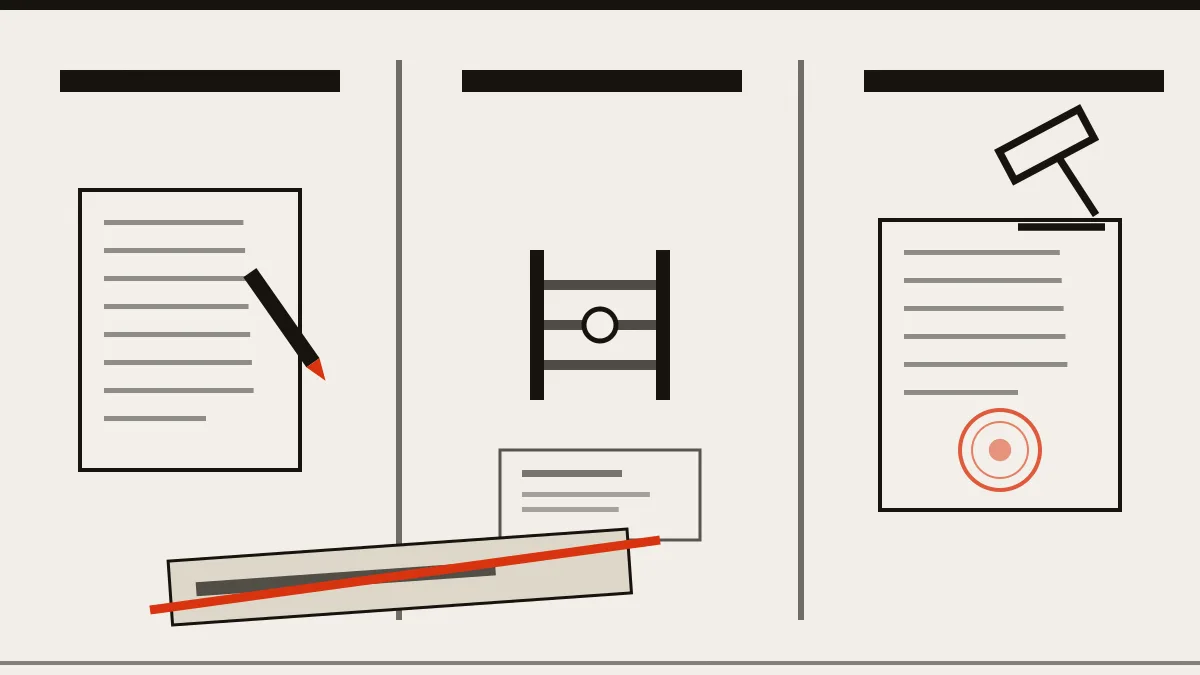
Remove doxxing content from Google with Results about you
To remove doxxing content from Google, file a personal-information request through Results about you or the "Remove my private info" page, which covers home addresses, phone numbers and email addresses, confidential ID numbers, bank and card numbers, pictures of signatures or IDs, medical records and login credentials (Google Search Help). Google defines doxxing as when "people share your private information to harm you", and it removes personal information shown "along with explicit or implicit threats against you (or calls for others to harm or harass you)", or "a significant amount of aggregated personal info without a legitimate purpose". Results about you, in the Google app and on the web, watches for your phone, email and address and lets you file with a few taps; its request statuses are "In progress", "Approved", "Denied" and "Undone". Google says over 10 million people have used it.
What changed in 2026, and what Google still keeps
On 10 February 2026 Google added driver's licence, passport and Social Security numbers to the tool, rolling out in the US first (Google, 10 February 2026). The limit is stated on Google's own page: some results are "valuable to the public", including government and educational sites and online newspapers, and those can be refused. If you need to remove doxxing content on Google that keeps coming back on new pages, turn on the tool's alerts rather than searching your own name each week. Google doxxing removal is therefore strong against people-search pages and paste sites and weak against a council planning register or a court list.
Two further steps belong alongside the Google request. The person or account that posted the address is a separate report on the platform where it sits, and on Instagram that means understanding how to get someone banned on Instagram for doxxing rather than for rudeness. And if the number is being passed around in a messaging app, Google has no reach inside it; our briefing on the limits of a WhatsApp takedown service explains why. Evidence you send us about a doxxing case is handled under our privacy notice, and we only ask for what the filing needs.
How to remove leaked photos from Google search
To remove leaked photos from Google search, use the image's three-dot menu, choose "Remove result", then "It shows a sexual image of me", and submit; since 10 February 2026 you can select several images in one request and opt in to having Google "proactively filter out any additional explicit results" (Google, 10 February 2026). Google's intimate-image policy also says "we do our best to find and remove duplicates" once one request is approved, and since July 2024 it demotes sites that attract many removals for fake explicit imagery, a change Google says cut exposure to such results "by over 70%" on the affected searches. If you are dealing with this, you do not need to send the images to anyone, including us. Our team triages these cases urgently and without charge, and we never ask to see the material.
Hashing instead of sharing: StopNCII
StopNCII.org lets an adult create a digital fingerprint of an intimate image on their own device; in its words, "a hash will be sent from your device, but not the image/video itself" (StopNCII). Participating platforms then block matching uploads. Under-18s are pointed to Take It Down, run by NCMEC. Google announced on 17 September 2025 that it would begin using StopNCII hashes in Search "over the coming months". When we checked StopNCII's industry partners page on 27 September 2026, Google was not yet listed, so we treat Search as covered by Google's own form and the social platforms as covered by the hash.
The UK offences
Sharing an intimate image without consent is an offence under section 66B of the Sexual Offences Act 2003, inserted by the Online Safety Act 2023 from 31 January 2024. Since 6 February 2026, section 66E has also made it an offence to create a purported intimate image of an adult, the deepfake offence added by the Data (Use and Access) Act 2025 (legislation.gov.uk). A police report sits comfortably alongside the Google request.
Google images removal service, or a takedown at the host?
A Google images removal service can only do what the form does: take the image out of Google's results. The file stays on the host. Leaked images usually start in chat apps and move to channels and forums, and a Snapchat screenshot that deletes itself is the evidence you need to save first. Our guide to how someone gets banned from Snapchat covers what Snap does when the sender is reported, and a Snapchat takedown request is the host-side filing. Images that spread through Telegram need the channel handled as well; our briefing on how to take down a Telegram channel explains why the channel can come down while the link stays up. A true Google images takedown service therefore files two things for every image: the host takedown and the Search removal.
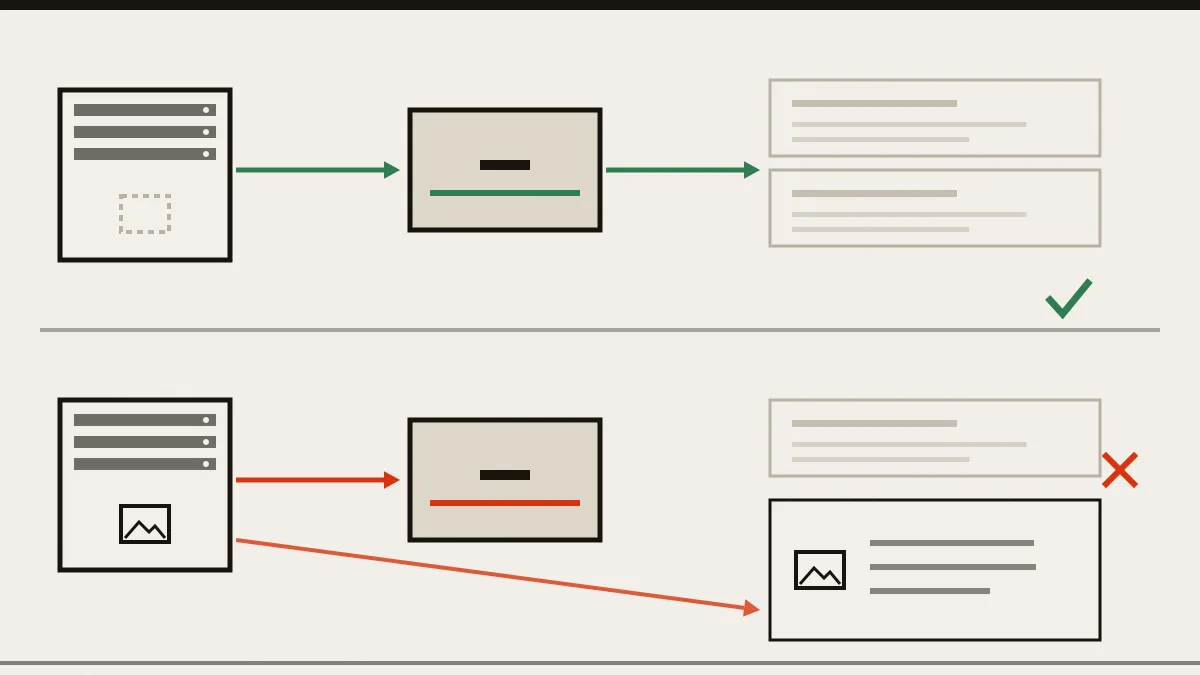
Autocomplete and knowledge panels: the boxes nobody writes
Autocomplete predictions and knowledge panels are Google's own text, generated from searches and sources, which is why they can only be changed through Google's policies and legal process rather than through any author. A Google autocomplete removal service reports a prediction against Google's autocomplete policies, which bar "predictions that associate potentially disparaging or sensitive terms with named individuals" and predictions that read as accusations of "serious malevolent acts" without well-established evidence (Google Search Help). On a phone you touch and hold the prediction and choose "Report this"; Google "looks at what you said, but might not remove the prediction". A knowledge panel is corrected through its feedback link or, for the subject, by claiming the panel. Neither route removes a panel on request. Both are slow, and both reward specific evidence over complaint.
Google autocomplete defamation removal
Most name-plus-"scam" or name-plus-"fraud" predictions fall squarely inside Google's disparaging-terms policy, so a policy report is the first step, and it costs nothing. Where it fails, Google autocomplete defamation removal goes through the legal form, and courts have treated predictions as capable of defaming. In Trkulja v Google LLC [2018] HCA 25, the High Court of Australia held that at least some predictions about the plaintiff could convey defamatory imputations to an ordinary user (Columbia Global Freedom of Expression). Google autosuggest removal services that promise to "delete" predictions overnight are describing the report form with a price attached.
Predictions usually reflect a burst of real searches, often after a pile-on elsewhere. A TikTok campaign against a named person can seed "name + scam" within days, and the source account matters more than the prediction. That is why people who ask how to get someone banned on TikTok for a harassment campaign are often, in fact, trying to stop an autocomplete problem at its origin.
Google knowledge panel removal service claims
A Google knowledge panel removal service that promises to delete the panel is overselling. Google's help page describes two routes: the subject can claim the panel by signing in to an official site or profile listed in it, and anyone "can use the feedback link on the bottom right-hand corner of a knowledge panel and suggest edits for review" (Knowledge Panel Help). Google also warns that "not all knowledge panels are claimable". To remove defamatory content from Google knowledge panel entries, correct the source the panel draws from, send feedback citing a better source, and use the legal form for a false factual claim.
Panels often pull a profile row from social networks, so an impostor account can leak into your panel. If Facebook won't take down a fake profile of you, our guide on how to take down a Facebook account covers the identity form that usually works. Clients also ask how to remove a fake LinkedIn account for the same reason, because a cloned LinkedIn page can feed false job titles straight into Search.
Fake apps, fake Play reviews and fake websites
Google Play and Google Search take reports about fakes through different doors. For an impersonating app you open its Play listing, choose More, then "Flag as inappropriate", pick a reason and submit (Google Play Help); Play's misrepresentation policy bans apps that "impersonate any person or organisation". Fake reviews on a Play listing are flagged individually, and developers can report review manipulation, which Play bans outright: "We prohibit any manipulation of ratings, reviews or install counts". For a website, the phishing report at Safe Browsing is the one that has visible teeth, because Google shows warnings "on Google Search and in web browsers" once a site is confirmed unsafe. Google says it prevented over 1.75 million policy-violating apps from reaching Play in 2025 and blocked 160 million spam ratings and reviews, so a report is joining a large, automated effort rather than starting one.
How to report a fake app on Google Play
How to report a fake app on Google Play is simple, and the people who search "how to report fake app on Google Play" usually know the steps already; knowing which fakes to report is the useful part. The commonest are clones of banking and wallet apps, and apps selling reporting or "ban" powers that no platform grants. Our research on the mass report Instagram account trade found those tools distributed as sideloaded APKs precisely because Play would not list them. A Facebook mass report tool asks for your login before it does anything, the signature of credential theft. A Snapchat mass report bot cannot work at all, because Snap has no endpoint for it to call. If one of them reaches Play, flag it.
Remove fake Google Play reviews
To remove fake Google Play reviews from your own app, flag each one and keep a record of patterns: bursts after an update, identical phrasing, reviews from accounts that review only your competitors. Play's policy names "repeatedly submitting ratings posing as users" as manipulation. Google says its anti-spam systems prevented an average half-star rating drop for apps targeted by review bombing in 2025. A developer reply cannot ask for a higher rating, so reply to the substance only.
How to report a fake website on Google
How to report a fake website on Google depends on the harm, and "how to report fake website on Google" has three different answers. A site that steals logins or payment details goes to the Safe Browsing phishing report; a site hosting malicious software goes to the malware report; a site gaming rankings goes to the Search spam report, which Google says it may "use to take manual action" (Google Search Central). Google's spam policies, updated on 28 August 2026, now include a scam and fraud policy covering "impersonating an official business or service through imposter sites". Scam ads are reported from the ad itself, under "Report ad".
Shopfront sites selling a Telegram mass report panel are a textbook case for a phishing report, because most of them exist to collect accounts and payments. Sites selling a WhatsApp mass report tool ask for your number and session codes first, which is phishing by any definition.
How to judge the best Google review removal service
The best Google review removal service is the one that tells you, before taking money, which reviews it will report, under which Google policy heading, through which form, and what it will do if Google says no; it will also tell you which reviews it will not touch. Price and speed matter less than those answers, because every service files into the same queues and waits for the same decision. Sellers ranking for these searches advertise "guaranteed removal", "no win, no fee" and success rates of 95% or more. None of those phrases describes a power over Google. A guarantee is a refund policy, and a success rate depends entirely on which cases the firm accepts. Ask to see the reasoning for your own reviews, in writing, before you sign anything.
Eight questions to ask before you pay
| Question | Honest answer | Red flag |
|---|---|---|
| Which reviews will you report? | A named list, with the policy each breaks | "All the negative ones" |
| Which Google form? | Report review, the Reviews Management tool, extortion or legal | "Our contacts at Google" |
| Do you need my login? | Manager access at most, never your password | "Send your password" |
| What if Google says no? | One appeal, then a legal view or nothing | "We keep trying until it works" |
| Will you post reviews? | No | "We balance it out" |
| Will you contact reviewers? | Only lawfully, never with threats | "We send a legal letter" |
| What do I pay for? | Work done, stated in the terms | Pay per deleted review only |
| Can I see report IDs? | Yes, screenshots of every filing | "It's confidential" |
The table is our checklist, and it applies to us. Two answers deserve a closer look. "Pay only if removed" sounds safe for the buyer, but it rewards a vendor for getting reviews down by any means, including the ones the DMCC Act and the FTC rule ban. And a request for manager access is reasonable, because the Reviews Management tool is tied to the profile; a request for your Google password is not, and no legitimate filing needs it.
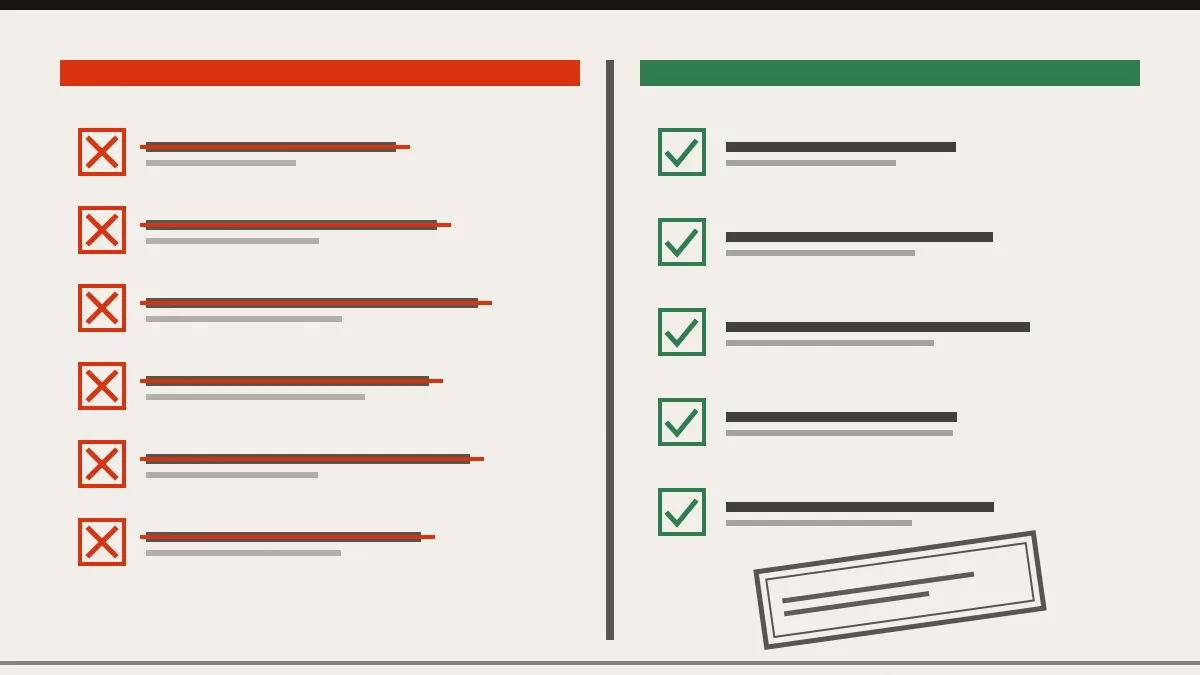
Google negative review removal service or ban-for-hire?
A Google negative review removal service that promises volume is the same product as the ban-for-hire trade under a different label. The pitch, the pricing and the evasions are identical to the Instagram ban service offers we examined, and to the Twitter ban service market, where fake copyright claims play the part that fake defamation claims play on Google. The tell is the same too: the seller never names the form.
What we will and will not do
When we file a review case, the work is mostly reading. We check each review against the policy text, look for the structural signs of fake engagement, and write one report per review under one heading, with the evidence Google can verify. We tell the client in writing which reviews we will not report and why. We do not post reviews, contact reviewers with threats, draft legal letters that have no legal basis, or ask for passwords, and our fees are for work done rather than for deletions, as our terms set out.
If a Google review, listing or search result is damaging you, send us the link and your evidence for a confidential review. We will tell you which Google form fits, whether it is likely to succeed, and what we would charge, before you pay anything. We never ask for your password, and we will tell you when the honest answer is to reply rather than to remove.
What no Google form will remove
No Google form will remove a genuine review that complies with policy, a truthful news report, a public court record or an honest opinion, and anyone who says otherwise is proposing to deceive Google or a court. Google states that "if the review complies with our policies, it will remain live", and it refuses privacy delisting where information is "strongly in the public interest", such as a person's professional life, a past crime or political office. The lawful options for that content are different in kind. You can reply to a review publicly and calmly, which readers weigh more than the review itself. You can correct the record at the source. You can publish better, accurate material that outranks the old result, which is suppression rather than removal and should be described that way. Forging a notice to shortcut that process invites a counter-claim and draws attention to the very page you wanted hidden.
The same limit applies on every platform we cover. A terminated channel's search result can linger, as our note on how to get a YouTube channel taken down explains, and a review that breaks no rule is closer to that channel's legitimate critics than to its abusers. We say plainly in our disclaimer what we cannot remove, and the rest of our briefings are written on the same terms.