What is an Instagram impersonation report, and when is the copyright report form the better tool?
An Instagram impersonation report is a complaint that an account is pretending to be a specific real person or organisation: you, someone you represent, someone you follow, a public figure or a business. The Instagram copyright report form is a different instrument. It says that a photo, video or piece of writing you own was copied without permission, and it can remove that content wherever the copy sits, including on an account that is not pretending to be anyone. The two overlap on the typical fake profile, which uses both a real person's name and their photographs. Which one to use depends on what was taken. If the harm is that people believe the account is you, the impersonation report is the fit. If the harm is that your pictures are on it, the copyright form works even when the name is different. Both forms have costs, and those costs are different. That is the reason this briefing exists.
In an ordinary week our desk sees about half a dozen kinds of Instagram abuse, each with its own route. Instagram's Help Centre lists the reasons you can pick when you report a post: bullying or unwanted contact, scam, fraud or spam, false information, intellectual property and several more. It adds that a profile can be reported for "pretending to be someone else" (Instagram Help Centre). Behind those menus sit a handful of separate web forms, and the right one is not always the obvious one.
| What was taken | Route, and who files it | What the account learns about you | What it can remove |
|---|---|---|---|
| Your identity (name plus face) | Impersonation report, in-app or web form; you, or someone you represent | Nothing: it is anonymous | The whole account |
| A stranger's photos, used by a fake persona | Impersonation report, filed by the person in the photos | Nothing | The whole account |
| Your photos or videos, under another name | Copyright report form; the rights owner or an authorised agent | Your name, email and the report | The copied items, sometimes the account |
| Your registered brand name or logo | Trademark report form; the owner or an agent | The owner's name, your email | Items, or a profile used "in its entirety" |
| Fake goods sold under your brand | Counterfeit report form; the owner or an agent | The owner's name, your email | Listings, or an entire account |
| Your money, via a fake shop or support account | In-app "Scam, fraud or spam" report; anyone who sees it | Nothing | Content or account, never your money |
| Your peace of mind, through abuse | In-app bullying report (no web form now); the target, for most private adults | Nothing | Content, sometimes the account |
The sentence in Instagram's rules that settles most arguments
One line on the impersonation help page decides more of our cases than any other. Instagram says you can report an account "for impersonating someone or something, but not for misrepresenting itself" (Instagram Help Centre). A profile that invents a person who does not exist is misrepresenting itself. A profile that claims to be you is impersonating. The first is a scam or authenticity problem. The second is an impersonation report. Most failed filings we are asked to rescue were the wrong kind of report sent to the right company.
Anonymous forms and named forms
The other dividing line is disclosure. Instagram states that "your report is anonymous, except if you're reporting an intellectual property infringement" (Instagram Help Centre). An impersonation report, a scam report or a bullying report never tells the account who filed it. A copyright, trademark or counterfeit report does. That is not a flaw to work around. It is the price of a legal notice, and it matters most in cases where the person behind the fake already knows you. For the wider picture of what reporting can and cannot achieve against a whole profile, our briefing on an Instagram account takedown sets out removal against suppression, and our guide to getting someone banned on Instagram without bots covers the enforcement side. Neither route involves volume: the notion that an Instagram spam report bot can force the decision is a myth we have already taken apart.
How to report someone impersonating you on Instagram
If an account is impersonating you, report it from inside the app when you have an account and through the web form when you do not. That is the whole answer to how to report someone impersonating me on Instagram, and to the longer question of how to report an Instagram account that is impersonating me while I am locked out of my own. Either way, report one impostor at a time, attach proof that you are the real person, and keep a copy of the profile before you file, because the owner can rename it the moment it is noticed.
From the app: four kinds of impostor
Instagram's in-app route runs from the impostor's profile: open the menu next to the username, choose Report, then Report account, then It's pretending to be someone else, and select the type (Instagram Help Centre). As of September 2026 the help page lists four types. An impostor can be pretending to be:
- You.
- Someone you follow.
- A celebrity or public figure.
- A business or organisation.
That list is how to report impersonation on Instagram for most people, and it also answers the question people ask when they type "how to report someone impersonating you on Instagram" on a friend's behalf. A friend can flag the clone of someone they follow. What a friend cannot do is prove the identity of the person being copied, so the strongest report still comes from the person themselves. If you are the parent of a child being copied, Instagram sends you to its contact form rather than the in-app flow.
Without an account: the impersonation form's three branches
When an Instagram account is impersonating me and I have no account of my own, the route is the web form titled "Report an impersonation account on Instagram or Threads" (impersonation form). When we last walked through it in September 2026, it opened with three situations. The first is an account pretending to be you or a friend. The second is an account pretending to be someone you represent, such as your child. The third is "I can't log in to my old account", which is not an impersonation report at all: it leads to account-recovery steps. People who pick the third option because the clone copied their old, lost profile end up in the wrong queue. If your old account was stolen and a stranger is running it as you, you have two problems, and they need two filings.
The form asks for the impostor's username and profile link and a photo of you holding your government ID. It accepts one impersonating account per submission. That rule matters when a clone ring runs five accounts: five reports, each with the ID photo, is slower than one, and there is no shortcut. Instagram's help page also mentions an "impersonation protection benefit" for Meta Verified subscribers, aimed at people who are copied again and again, such as creators and small-business owners. It is not a guarantee: in the Reddit sample described below, one subscriber reached a live agent who removed a clone, the clone came back, and a second chat was refused. We covered the two filings an impersonation case usually needs, and how to read a refusal, in someone is impersonating me on Instagram.
An account impersonating me on Instagram, and my business too
An account impersonating me on Instagram is one problem; an impersonating Instagram account that also borrows a company's name is two. As of our last check, the impersonation form has no business branch. A clone that copies a founder's face and the company name therefore needs two instruments: the founder files the impersonation report as a person, and the company files a trademark report for the name and logo if it holds a registration. The same split turns up on other networks. LinkedIn impersonation removal works on a similar person-versus-page line. Meta's other big app handles it differently again, which is why the familiar complaint that Facebook won't take down a fake profile of me often comes down to reporting the profile under the wrong person. X splits the task across five separate instruments, and we explain how to get someone's Twitter account taken down through each of them.
There is no separate Instagram fake account report form. When you search for one, or for how to use the Instagram report fake profile option, you land on the same two doors: the in-app It's pretending to be someone else report, or the impersonation web form. A fake that copies nobody in particular is reported as spam or scam instead. People also type the phrase backwards, "impersonating account instagram", and they get the same answer.
After you file: status, refusals and a second report
Instagram does not publish a turnaround time for impersonation reports. Its help pages say only that you "may be able to check the status of your report" after filing, and that it may use a report to show you less of that kind of content even when nothing is removed (Instagram Help Centre). In our experience the useful signal is not speed but the reason given. A refusal that says the account does not break the rules usually means one of three things: the reviewer could not match the fake to you, the report went in under the wrong type, or the account had already changed its name and photo. Each has a fix. Re-file from the web form with a clearer ID photo, choose "You" rather than "Someone you follow", or attach the screenshots that show the old name. What does not help is asking twenty friends to report the same account the same way; the review looks at the account against the rule, not at the number of people who asked.
What to have ready before you file:
- The impostor's username and full profile link (not a screenshot alone; usernames change).
- Dated screenshots of the profile, the bio and any messages the clone sent in your name.
- A clear photo of you holding your ID, taken on a plain background.
- For a represented person, proof of your authority, such as being the parent.
- A short note of where you first saw the account and who told you about it.
How to report a catfish on Instagram when the photos belong to someone else
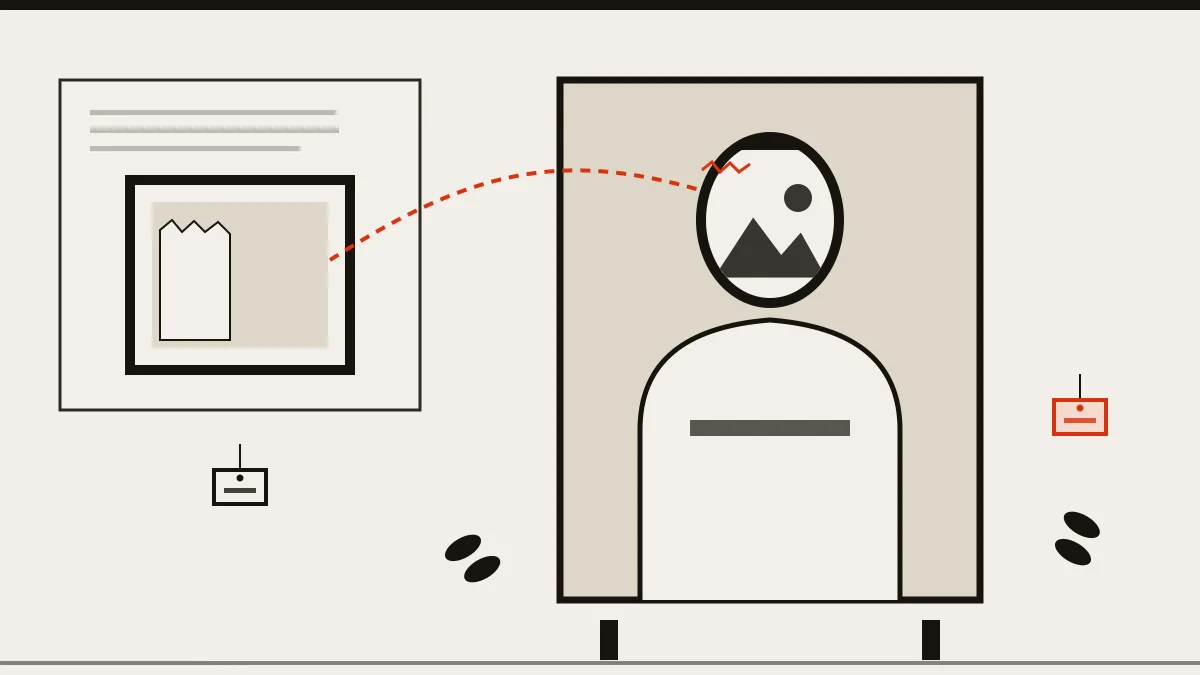
A catfish is an account that builds a fake persona, usually for romance or money, out of another person's pictures. How to report catfish on Instagram, or report catfish Instagram accounts at all, works differently depending on which of the two victims you are. The person being deceived and the person whose photos were stolen have different rights on Instagram, and treating them as one victim is the commonest reason catfish reports go nowhere.
| Who you are | What you can file | What helps it succeed |
|---|---|---|
| The person being catfished | In-app report: "Scam, fraud or spam", or "It's pretending to be someone else" if you know whose photos they are | Chat screenshots, any payment request, the profile link |
| The person in the stolen photos | Impersonation report (in-app or web form with ID) | Your own account link, ID photo, the fake's link |
| The photographer who took the pictures | Copyright report form | The original files or the earliest posting |
| A friend who spotted it | In-app report naming the account being copied, if you follow it | Telling the real person so they can file |
If you are the person being catfished
The deceived person usually cannot file an impersonation report, because the catfish is not pretending to be them. Unless you know whose photos they are, the in-app path is Scam, fraud or spam once money, gift cards or "investment" talk appears. Instagram's own scam guidance describes the pattern: romance scammers "may engage in conversation for weeks or months before they ask for money" (Instagram Help Centre). Report the chat as well as the profile. Instagram says it reviews "up to 30 of the most recent messages" in a reported conversation (Instagram Help Centre), so the chat report carries the evidence that the profile report lacks.
If your photos are the bait
Here the order reverses. You are the one Instagram's rules protect, so you file the impersonation report with your ID. Finding out is the hard part: most people learn about a catfish only when a stranger messages them to ask why "they" asked for money. A reverse image search of your most-used pictures, run every few months, catches copies earlier. When the catfish has also moved your photos elsewhere, the same logic applies platform by platform. We explain how to take down a Snapchat account built on stolen pictures, how someone gets banned from Snapchat under its own rules, and how to get a fake TikTok account taken down when the persona has spread.
Instagram catfish report or romance-scam report?
In practice the "instagram catfish report" people search for is either of these two, and the choice depends on the victim, not on the account. When we handle these, the useful move is to bring the two victims together. The deceived person usually has the screenshots, and the photo owner has standing. A single message that tells the real person that their photos are being used, with a link, turns one weak report into two strong ones. Nobody needs to confront the catfish, and we advise against it: a warned scammer deletes the chat before anyone has saved it.
Catfishing on its own is not an offence in the UK. Asking for money under a false identity is a different matter: fraud by false representation under the Fraud Act 2006 carries up to ten years on indictment (legislation.gov.uk). If you have paid anything, the money now has its own route, and the next section covers it.
How do I report a scam on Instagram, and what happens to the money?
How to report a scam on Instagram: use the Report option on the post, profile or chat and choose Scam, fraud or spam. An Instagram scam report is anonymous and free, and anyone who sees the scam can file one. Report the conversation as well as the account, save the payment evidence before you block anyone, and go to your bank on the same day. Instagram can remove the account; it cannot return what you paid.
How to report scammers on Instagram, step by step
This is how to report a scammer on Instagram when the scam reached you through a profile and a chat. The same steps cover how to report a scam on Instagram account pages that sell nothing but promises. Whether you are working out how to report scammers on Instagram app menus or on instagram.com in a browser, the order is the same:
- Before anything else, screenshot the profile, the username, the "About this account" panel and the whole chat, including payment details the scammer sent.
- Open the profile, tap the menu next to the username, choose Report, then Report account, and follow the prompts for scam or fraud.
- Open the chat, press on a message the scammer sent, choose Report and pick the scam reason. This is the report that carries the conversation to a reviewer.
- If a post advertised the scam, report the post separately under Scam, fraud or spam.
- Block the account only after steps 1 to 4. Blocking first can hide the profile and make it harder to report.
The "About this account" panel is worth a minute. Instagram shows when the account was created, which country it is based in and any former usernames (Instagram Help Centre). A "luxury watch shop" created four weeks ago in another country, with three earlier names, tells you most of what you need.
Fake support accounts and fake shops
The most damaging scams we see on Instagram in 2026 are not romance cases. They are accounts that pose as a brand's customer support, or as Instagram itself, and reply to people who complained in public. The tell is the direct message. Instagram's scam guidance says: "Instagram will never send you direct messages about your account in the Instagram app" (Instagram Help Centre). Official emails from the last 14 days are listed in your settings, so a "Meta Support" DM about a violation is a scam by definition. When the fake support account copies a real company's name and logo, the company can go further than a scam report and file a trademark report, covered below.
Meta's scam policy was renamed and widened on 9 September 2026. It is now called Prohibited Commercial Practices, and repeat penalties can reach associated users, Pages and business portfolios. We set out what Meta acts on when you try to get someone banned from Facebook, and the same enforcement logic runs across Instagram.
The money is a separate case
A report to Instagram and a claim for your money are two different cases, and the second one runs to a much tighter clock. In the UK, call your bank first. For bank transfers since 7 October 2024, the Payment Systems Regulator's reimbursement rules let you claim for up to 13 months, capped at £85,000. The 159 service connects you to most UK banks' fraud lines. Report the crime to Report Fraud, which replaced Action Fraud on 4 December 2025 (Report Fraud); it gives you a crime reference number but does not investigate individual cases. In the US, the FTC takes reports at ReportFraud.ftc.gov and shares them with law enforcement. On 24 September 2026 the FTC asked for public comment on extending its Impersonation Rule to cover platforms' ad-optimisation practices, citing more than a million imposter reports and nearly $3.5 billion in losses (FTC, 2026).
Two warnings, both from cases we have seen. First, scammers often move you to WhatsApp once the chat gets serious, and we explain how to ban someone's WhatsApp number and what reporting there does. Second, anyone who offers to "hack back" your money, or sells a WhatsApp mass report tool that needs your login, is running the second half of the same scam.
How to report scammers on Instagram: what Reddit threads show
People who search "how to report scammers on Instagram reddit" want to know whether reporting works for anyone. So we counted. Using the Arctic Shift archive, we pulled 704 posts from r/Instagram, r/Scams and r/catfish dated 2 September 2025 to 26 September 2026, kept the 180 about reporting an Instagram scammer, impersonator or catfish, and hand-coded the 90 whose text survives (our research, September 2026). Most were impersonation cases, not money scams: 45 posters had been cloned themselves and 11 were acting for a friend or relative. Only 8 had lost money, and fewer than half of those mention reporting inside Instagram at all.
| What the 53 threads with an outcome said | Threads |
|---|---|
| The account was still up when they posted | 42 |
| Told it "doesn't go against our Community Standards", or close to it | 17 |
| Removed at least once | 11 |
| Removed, then back (appeal, new clone or reappearance) | 5 |
| The reporter's own account was suspended | 3 |
The route people used tells its own story. Of the 63 threads that describe reporting, 34 used the in-app report and 26 relied on friends or followers mass-reporting, which the numbers above do not reward. Nine used the ID-based impersonation form. None of the nine says it got the account removed, and seven were rejected, five of them because the ID did not match "the information listed on the account". That is the catfish problem in miniature: the fake carried a different name, so the real person's ID looked wrong to the reviewer. Where the ID route fails for that reason, the copyright form for your own photos is often the better instrument, because it asks whose work it is, not whose name is on the profile.
Three findings changed how we advise clients. First, the moderators of r/Scams removed eight of the coded posts for asking readers to report a scammer; the subreddit will not act as a reporting crowd. Second, several clones blocked the real person before they could report, leaving only friends able to do it, which is why the screenshots come first. Third, "recovery" offers surround these threads: 15 separate posts described losing money to people promising to restore an account or clear a fake copyright strike, including a scammer who took over moderation of a help subreddit in November 2025.
The caveat is obvious and important. People post on Reddit when reporting fails, so a 21% removal rate among these threads says nothing reliable about Instagram's real rate. What the threads do show is where reports go wrong: the wrong form, an ID that cannot match a fake name, a clone that blocks first, and a paid "fix" waiting in the replies.
Filed and heard nothing? A clone that survives two correct reports usually needs a different instrument, not a louder one. Our team reviews Instagram impersonation, copyright and brand-abuse cases confidentially before any fee is discussed. Tell us what was taken and we will say which route fits, including when the honest answer is "none yet".
Is there still an Instagram harassment report form?
No. As of 27 September 2026 the old Instagram harassment report form at help.instagram.com/contact/188391886430254 returns "Not Found", and the link that replaced it now opens a help article rather than a form. That article tells people without an account, or who have been blocked, to "ask a friend with an account" to report the content (Instagram Help Centre). The Instagram report harassment form that older guides link to is gone. Harassment and bullying are now reported inside the app, from the comment, message, post or profile.
So what does "instagram harassment report form" mean in practice today? It means the Report link beside the abuse, plus your own evidence file. The chat report is stronger than it looks. Instagram says deleted, unsent or edited messages "could be included in a report if the entire chat or a surrounding message is reported" (Instagram Help Centre). A harasser who unsends the worst message after you screenshot it has not removed it from the review.
This matters because harassment reports carry a rule that impersonation reports do not. Meta's Bullying and Harassment policy says that "in certain instances, we require self-reporting because it helps us understand that the person targeted feels bullied or harassed". For private adults, several kinds of abuse are acted on only when the target reports them. A friend's report of a cruel comment about you may not count. Your own report will.
| Situation | Where to report | Who should file |
|---|---|---|
| Abusive comment on your post | Press the comment, then Report | You |
| Abusive direct messages | Report the message or the whole one-to-one chat | You |
| A profile set up to mock or expose you | Profile: Report account | You; add an impersonation report if it poses as you |
| A group chat pile-on | Report the individual messages and people (whole group chats can't be reported) | You |
| You have been blocked or have no account | Ask a friend to report; keep your own screenshots | A friend, plus your evidence |
The Instagram bullying report form for a child
There is no separate Instagram bullying report form for parents. A parent reports the content in the app. If the bullying account is a fake of the child, the parent can use the impersonation form's "someone I represent" branch with their own ID. Schools and parents in California have an extra lever: state law requires large platforms to let anyone, with or without a profile, report cyberbullying of a minor and to confirm the report within 36 hours.
When the fake account exists to harass you
Some impostors are not after money. They post as you to embarrass you. Here two reports stack: the impersonation report removes the account and the harassment report deals with its posts. In England and Wales, sending a message you know to be false, intending to cause non-trivial psychological or physical harm to a likely audience, is an offence under section 179 of the Online Safety Act 2023 (legislation.gov.uk). A course of conduct that amounts to harassment falls under the Protection from Harassment Act 1997. Other platforms treat pile-ons differently. Our notes on how to report someone on Twitter for ban evasion, how to get someone banned on TikTok for a real violation and how to take down a Telegram group that coordinates abuse show where each one draws the line.
The Instagram copyright report form, field by field
The Instagram copyright report form is now Meta's Intellectual Property Reporting Form. It opens without a login and asks where you assert rights, whether you own them, your full contact details, a description of the work, the links to the copies and a signed declaration. Its most important feature is not on the screen: the reported account receives your name, your email and the details of your report.
When we walked through it in September 2026, the first screen asked "Where are you asserting rights?" with a long country list, then "Are you the rights owner?" with three answers. "No" stops the report, because it "must come from the rights owner or someone authorised". The older help.instagram.com/contact/552695131608132 page is superseded.
| Field | Why Meta wants it | Who ends up seeing it |
|---|---|---|
| Rights owner's name | Identifies whose work it is | The reported account |
| Your email | Contact about the report | The reported account |
| Postal address and phone | Legal notice requirements | Meta; passed on in a counter-notice |
| Description of your work | Proves an original exists | The reported account |
| Links to the copies | Tells Meta exactly what to remove | Meta's reviewers |
| Declaration and signature | Makes the notice binding | Meta, and the court if it goes that far |
What the reported account is told
Meta's help page on what the poster receives lists the report number, the rights owner's name, the reporter's email, the details of the report and instructions for appealing. If an agent files for a client, the agent's email can stay private, but Meta still gives "the name of the organisation or client that owns the right in question". A law firm filing on your behalf hides the inbox, not the name. For a stalking or harassment case, that single fact can make the copyright route the wrong one, even when it would work.
The Instagram DMCA form or the ordinary copyright report?
It is one form, with two tracks behind it. Meta applies the DMCA procedure to content "reported and removed for violating U.S. copyrights". If the poster files a counter-notice, Meta forwards it to you, including their contact information, and restores the content within up to 14 working days unless you tell Meta you have started court action. Removals outside the DMCA track are handled by an appeal instead. Instagram also lists a DMCA designated agent, reachable by post or at ip@instagram.com, for copyright claims only; there is no equivalent email for trademarks. Meta's transparency pages say valid reports are usually actioned "within a day or less". In the first half of 2026, Instagram counted 94,759 intellectual-property notices among 388,783 notices under the EU's Digital Services Act (Instagram DSA transparency report, H1 2026).
Who owns the photos a fake account copied?
Being in a photograph does not make you its copyright owner. Instagram's copyright page says "if you take a photo, you are likely to own the copyright", and that appearing in one "doesn't necessarily mean you have a copyright". Selfies are yours. The holiday portrait your partner took is theirs unless they assign it, and a professional shoot usually belongs to the photographer. This decides who can file the copyright report against a catfish, and it is why the impersonation report, which only needs your face and your ID, is often the better first move for a person. Our longer guide explains where a DMCA takedown notice goes on each platform. For comparison with video platforms, we explain how to get a YouTube video taken down with the copyright webform, how to get a YouTube channel taken down through strikes rather than reports, and the answer to does mass reporting work on YouTube: it stalls at a daily quota.
The Instagram copyright infringement form without an account
You do not need an account to use the Instagram copyright infringement form. The Meta form opened for us while logged out, and the fields do not change. One trap: the link printed in some Instagram help pages, instagram.com/help/ipreporting/report/copyright/, sent a logged-out browser to the login screen when we tried it. Go to the Meta form directly. If a message arrives on WhatsApp claiming your account faces a copyright strike, it is not from Meta: we covered fake copyright notices sent over WhatsApp separately.
Brand abuse: the Instagram trademark report form and the counterfeit form
The Instagram trademark report form handles a brand name, logo or slogan used without permission, including in a profile picture, name, username or bio. It needs a registered trademark, one per report, and it accepts up to 30 links. Fake goods have their own counterfeit form, which can target "an entire account".
Meta's trademark form opens with a pitch for Brand Rights Protection, its tool for registered rights owners, before the report itself. When we checked it in September 2026 it asked for your relationship to the mark (owner, "my organisation or client", or someone else), the office where the mark is registered (EUIPO and WIPO are in the list), the registration number with a database link or certificate, and the reason. One reason covers a trademark "used in the profile picture, name, username or bio". A separate line notes that accounts "contain many individual photos", so a whole-account report works only if the account infringes "in its entirety". The form warns that "abuse of this form may result in the termination of your account". Like the copyright form, it passes the rights owner's name and your email to the account, and suggests using a business address.
A clone uses your brand name, but you have no registration
This is the gap that catches small firms. Without a registered mark the trademark form will not act, and usernames on Instagram are first come, first served. The honest options are narrower:
- If the clone copies a real person at the company, that person files an impersonation report with their ID.
- If it copies your photographs or product shots, the copyright form works without any trademark.
- If it is running a scam in your name, every customer who is approached can report it as a scam.
- In the UK, unregistered goodwill is protected by the law of passing off, which is a court action, not a form.
Registering the mark is the lasting fix. A UK registration also opens the civil route under the Trade Marks Act 1994.
Why brand reports come back refused
When our team files trademark reports for companies, refusals tend to have ordinary causes rather than mysterious ones. The registration was entered for a different country or office from the one selected on the first screen. The links pointed at the profile when the infringing use was in three specific posts. Or the seller turned out to be reselling genuine stock, which a trademark does not stop once the goods were first sold with the owner's consent. Each of these is fixable in a second filing. Sending the same report again, unchanged, is not.
Fake support accounts deserve their own line. A clone that replies to your customers' complaints as "Help Desk" uses your name and logo, so a trademark report fits it. It is also running a scam, so every customer it contacts can file a scam report. Both reports can go in on the same day. We ask clients to post a short, pinned notice on their real account saying that support never asks for payment or login codes by direct message. It costs nothing, and it gives customers something to check.
Counterfeit sellers
Meta's counterfeit form defines a counterfeit as an imitation or copy of a product that carries the rights owner's trademark without permission. It lets you report photos, stories, ads or an entire account, and a report from "someone else" is refused. Trading in goods under a counterfeit mark is also a criminal offence under section 92 of the Trade Marks Act 1994, which is the route when a seller operates at scale. The same brand-clone pattern appears elsewhere: we cover a Facebook page takedown service and its legal risk, what a TikTok takedown service can actually buy, and when a Twitter account removal service for brand impersonation earns its fee.
After the account is gone: what still shows in Google
Removing an impersonating Instagram account does not remove it from Google straight away. The profile's title, snippet and profile image can stay in search results until Google recrawls the page. Copies on viewer and mirror sites are separate pages that Instagram's decision never reaches. A few Google tools clear most of this. Each works one URL at a time.
This is the part of an impersonation case that most guides skip, and it is where our de-indexing team spends much of its time. A fake profile ranking for your name can do more harm than the account itself, because recruiters, dates and customers search Google, not Instagram. When Instagram removes the account, the URL starts returning an error, and Google eventually drops it. "Eventually" can mean weeks, and the image of your face can linger in image results longer than the page.
Google's Refresh Outdated Content tool is built for exactly this case: pages or images that "no longer exist" and that you do not own. You must be signed in to a Google account. For a page that still exists but has changed, Google asks for one or two words that appeared in the old snippet but are no longer on the live page. Requests can take a few days, and an approval expires after 180 days or when the URL no longer exists. One rule catches almost everyone: "for an image request, you must file a separate request on every page where the image appears".
| What is left behind | Tool | Who can use it | The limit |
|---|---|---|---|
| The removed profile's result and snippet | Refresh Outdated Content (page) | Anyone signed in to Google | Only once the page is gone or changed |
| Your photo in image results | Refresh Outdated Content (image) | Anyone signed in to Google | One request per page showing the image |
| A copy on a viewer or mirror site | The site's own removal route, then Google | The rights owner, or the person shown | Each copy is its own URL |
| Your phone, address or email in a result | Google's personal-information removal ("Results about you") | You or a representative | Contact details and doxxing only |
| Your copyrighted photo on a live site | Google's copyright removal request | The rights owner | The notice may be published on Lumen |
When our de-indexing team cleans up after a removed clone, the order is always the same. First, a signed-out search for the client's name and the fake handle, in both web and image results, and a list of every URL that shows the profile, its photo or its bio text. Second, a check of each URL: gone, changed or still live. Only the first two go to Google's refresh tool; a live copy needs its own takedown first, or the request is simply denied. Third, a note of the date, because approved requests can expire and a stale result sometimes reappears when a copy is re-crawled. It is dull work. It is also the part that decides whether the next person to search the client's name finds the fake.
The per-URL rule, and copies on viewer sites
Anonymous Instagram viewer sites show profiles to people who are not logged in, and some are indexed by Google under their own addresses. When Instagram removes the original, those pages may keep a stale copy. Google's refresh tool works on those URLs too, once the copy is gone or has changed. If a site keeps serving your photos, the site itself has to be asked, and a copyright notice to Google is the fallback. Before you send one, know that Google says it may forward the content of your notice to Lumen, "which publishes these notices after removing certain personal information" (Google Legal Help). Google's personal-information policy covers home addresses, phone numbers, email, ID numbers and doxxing with threats (Google Search Help). An impostor's profile is outside that policy unless it exposes those details.
When Google will not drop it: suppression
Some copies cannot be removed: a news report about the scam that names the fake handle, a forum thread quoting it, an archive capture. Those pages are lawful, and no honest firm will pretend otherwise. What is left is suppression, which means building real, accurate pages about you until the stale result is no longer on page one. We are candid that suppression is slower and never final. It is still better than a ban-for-hire seller's promise, and the reason is that a report never touches Google's index at all. A Twitter ban service, an Instagram ban service or a Telegram mass report panel can at most trigger a platform review. None of them can make a search result disappear.
Why we don't sell mass reports or "impersonation removal guaranteed"
People who have been impersonated are an ideal target for a second scam, and the second scam usually sells reports. The pitch is always similar: pay a fee, "our network" files hundreds of reports, the fake is gone in 24 hours. We have tested what sits behind those offers across every major platform, and the answer is the same each time. Volume does not decide an Instagram review; the policy does.
Our teardown of the tools to mass report Instagram account targets found four sources and one dead end: GitHub scripts, sideloaded apps, web panels and Telegram bots, most of which want your login. The X mass report bot market works the same way, and the Facebook mass report tool sold on the same forums is often a credential grab with a checkout page. If you have already paid one of these sellers, stop paying, change your password, and report the seller.
Here is what we will not do, whoever asks:
- File a report under a policy that does not apply, or a copyright notice for a work you do not own.
- Forge a DMCA notice, a trademark registration or a court order.
- Ask for your Instagram password or a login code.
- Promise removal, or take crypto-only payment before a review.
What we do is quieter. We confirm who owns what, choose the form that fits, file it with the evidence a reviewer needs, track the result, and move to the next instrument when the first one fails. The confidential review comes first, and our team handles your evidence under our privacy notice.
What no Instagram form can take down
Some things that feel like impersonation are not, and no form removes them. A fan account that says it is a fan account is allowed. So is parody that labels itself as parody. A username similar to yours is not impersonation unless the account also claims to be you. Criticism of you or your business under someone's real name is opinion, and truthful reporting about a scam that once used your name is lawful. Defamation is a separate question, with its own tests and its own forms, which we cover under social media defamation.
Some impostors also cannot be identified through Instagram. Meta does not hand private individuals the details behind an account on request; it says it provides basic subscriber information only in response to valid legal process. In England and Wales the usual tool is a Norwich Pharmacal order, a court order that makes a third party disclose who is behind a wrong. It is expensive, and it is worth it only when the harm is serious and the account keeps coming back.
Where content is true, public-interest or protected opinion, the only honest answer is suppression, and we will say so before you pay for anything. Those limits are listed one by one in our disclaimer. It is the same line we draw everywhere else: a WhatsApp ban service cannot unseal an encrypted chat, a Snapchat mass report bot has no endpoint to call, and the evidence on whether mass reporting works on TikTok points the same way. The forms in this briefing are slower than any of those promises. They are also the routes that end with an account actually removed, or with a straight answer about why it cannot be.