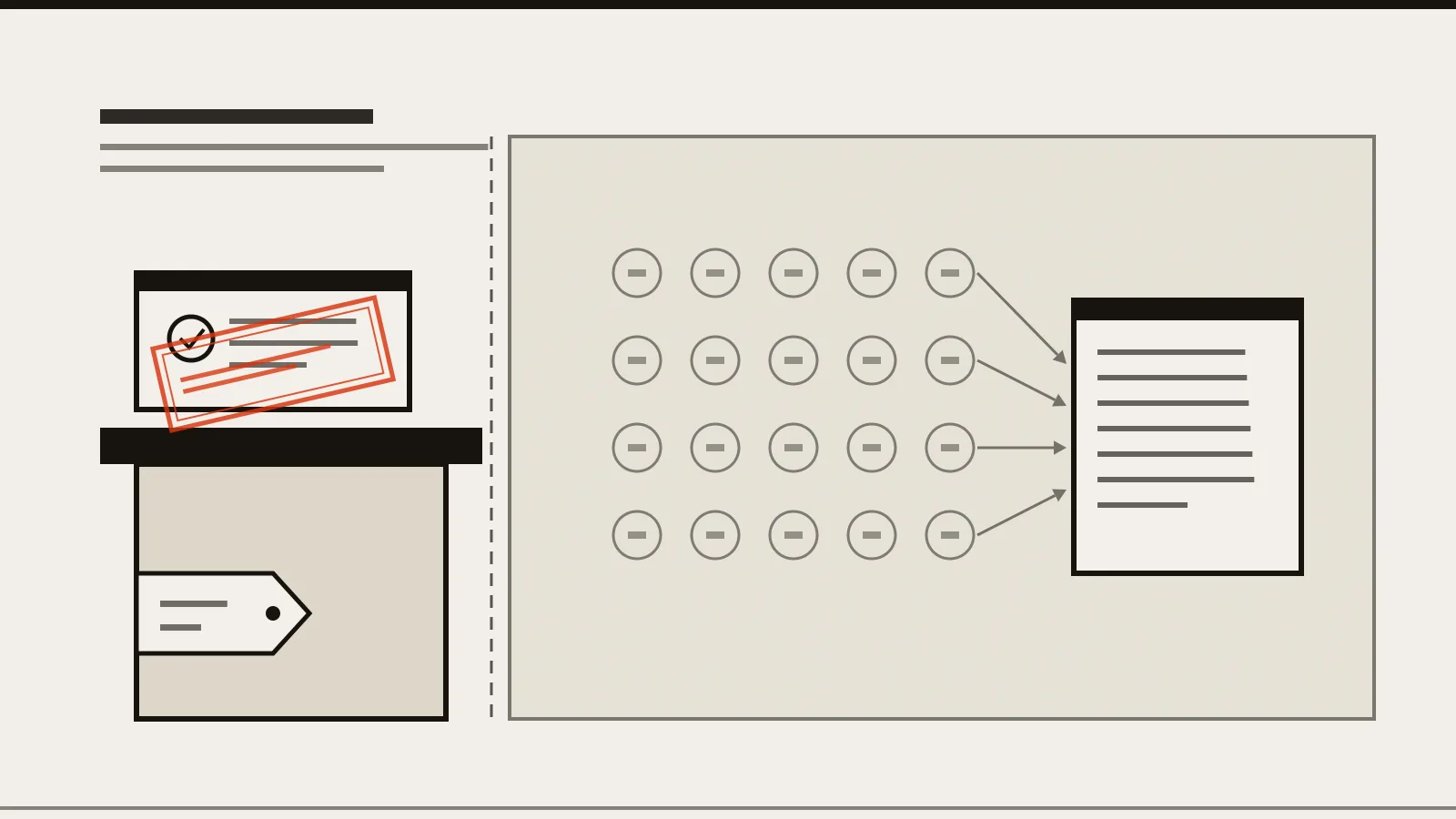
What does a telegram report bot listing actually say?
A telegram report bot listing is a sales page squeezed into a chat window: an @username, a field for the target, a price and a progress counter. Sellers rarely explain anything beyond that, so the wording deserves a close read. Obscura is a content-removal firm that files lawful notices and sells no reports, and we read these listings the way a contract gets read, line by line, asking what each line commits the seller to.
The left column below is our paraphrase of the pattern across the repositories and front ends we surveyed in October 2026. It quotes no single seller.
| What the listing says | What it leaves you assuming | What the record shows |
|---|---|---|
| "Paste the @username or link" | The bot can act on any target | The Bot API offers no report call, and a ban call only works inside a chat the bot administers |
| "10,000 reports, priced per thousand" | Quantity is what moderators respond to | Telegram publishes no rule giving a count any weight |
| "Instagram, TikTok, Telegram, all supported" | One tool reaches every platform | Telegram is the shop; nothing in the Bot API talks to Instagram |
| "Pay in Stars or crypto" | You have normal buyer protection | Stars sales are final at Telegram's level, and crypto has no Telegram route back |
| "Free trial: log in, or join these channels" | Free means free | The price is your session, your login or your attention |
| "Channel down overnight" | The seller controls the timing | A moderator or an automated system decides, and the seller sees neither |
Telegram has its own phrase for the whole table. Section 5.2(d) of the Bot Platform terms, read on 4 November 2026, says a bot must not misrepresent its functions, including by "misleading users into performing certain actions in the pursuit of an unachievable outcome". A ban-for-sale listing fits that sentence uncomfortably well, and the same clause names "social growth manipulation" as a forbidden use. The shape repeats elsewhere too: what runs behind a Facebook mass report tool and the machinery of a WhatsApp mass report bot are different products with the same front page.
Which Bot API methods could the storefront call?
None that reports anyone. Telegram runs two separate interfaces, and the listing depends on buyers not knowing that. Bots speak the Bot API, whose current version is 10.3, dated 24 August 2026 on the changelog. We searched that reference on 4 November 2026, and the only reporting function it mentions is inside an administrator right, the line about being able to "report spam messages". There is no method that takes a stranger's channel and hands it to moderation.
Reporting lives in the other interface, MTProto, which full user accounts speak. The reference page for account.reportPeer states "Only users can use this method" and lists three parameters: the peer, a reason and a comment for moderation. No field exists for how many. Each call is one account saying one thing, which is a poor foundation for a price list quoted in thousands.
So a listing has two possible engines. It may run nothing at all, printing a timed "Report sent" line. Or it may pass your order to real user accounts out of sight, which moves the question from what the bot can do to whose accounts those are. Snapchat has a cousin of this gap, where the bot has no endpoint to call at any level.
Two official bots do carry reports, and neither takes an order. Telegram's safety page names @SearchReport for search terms, and its EU DSA terms name @EURegulation as the single point of contact for users.
Where a telegram ban bot is genuine
A telegram ban bot is a real thing in one setting: your own group. The Bot API's banChatMember method says the bot "must be an administrator in the chat for this to work", so an admin who installs a moderation bot has delegated a power they already held. It removes someone from that chat. It tells Telegram's moderators nothing and reaches no other chat. Anyone selling a telegram ban bot that removes a stranger's channel is selling something that method cannot do, and the same line separates what you control when you ban someone on Twitter from a ban-for-hire pitch.
What the telegram mass report bot software behind a listing does
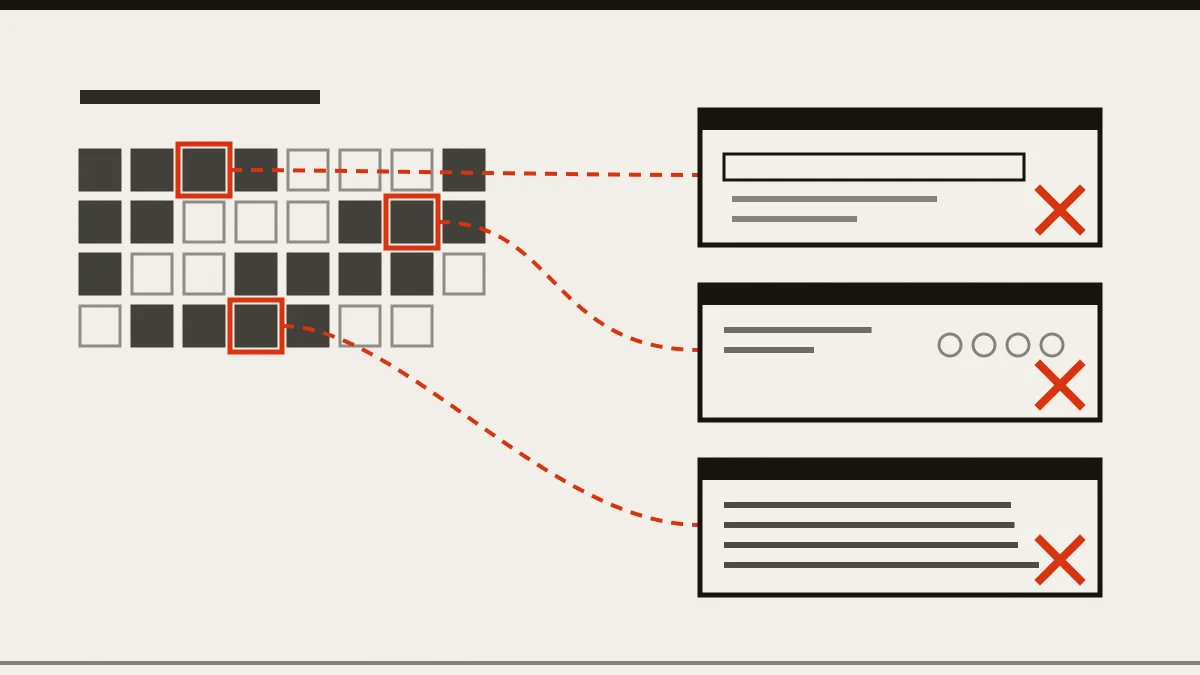
Much of what sits behind these @usernames is public, which makes the claims checkable. Our survey has two dates, and they measure different things.
6 October 2026, code read. A GitHub search for "telegram mass report" returned 34 repositories, 31 of them on topic. Of those, 19 dated from 2026, eight showed a push within ninety days, twelve had zero stars and the median was a single star. All the findings about what the code does come from this read, and we have not repeated it.
4 November 2026, raw counts only. The same search returned 36 repositories, 21 created in 2026 and eight pushed since 6 August. "Telegram report bot" returned 1,635 and "telegram ban bot" 656, and those two broader searches were mostly forks and re-uploads when we read them in October. Four of the 36 are newer than our code read, so the total should have reached 38 had nothing left. At least two entries vanished in four weeks, which is a short shelf life for something sold as dependable.
The October code sorted into four kinds of telegram mass report bot software, and only one of them touches a report method:
- Scripts that need session strings for several user accounts. These do reach a real report call, and only by holding what amounts to a full login for each account.
- Scripts that post to Telegram's public support form through rotating proxies with invented contact details. Telegram gets junk mail in a support inbox, and no report is filed. Inbox flooding fails on other platforms too, as YouTube's quota and queue show.
- Payloads. Three identically named scripts shipped one obfuscated line under three account names, and others said in the README that the password was for sale by direct message.
- Theatre. Friendly bots that demand you join several promo channels, then loop a fake success message, which is also most of the truth about an X mass report bot.
We describe these so buyers can recognise them, and this page gives no setup detail for any of them. Whichever kind sits behind the counter, the listing looks identical from the front.
Why does an instagram spam report bot telegram listing cover every platform?
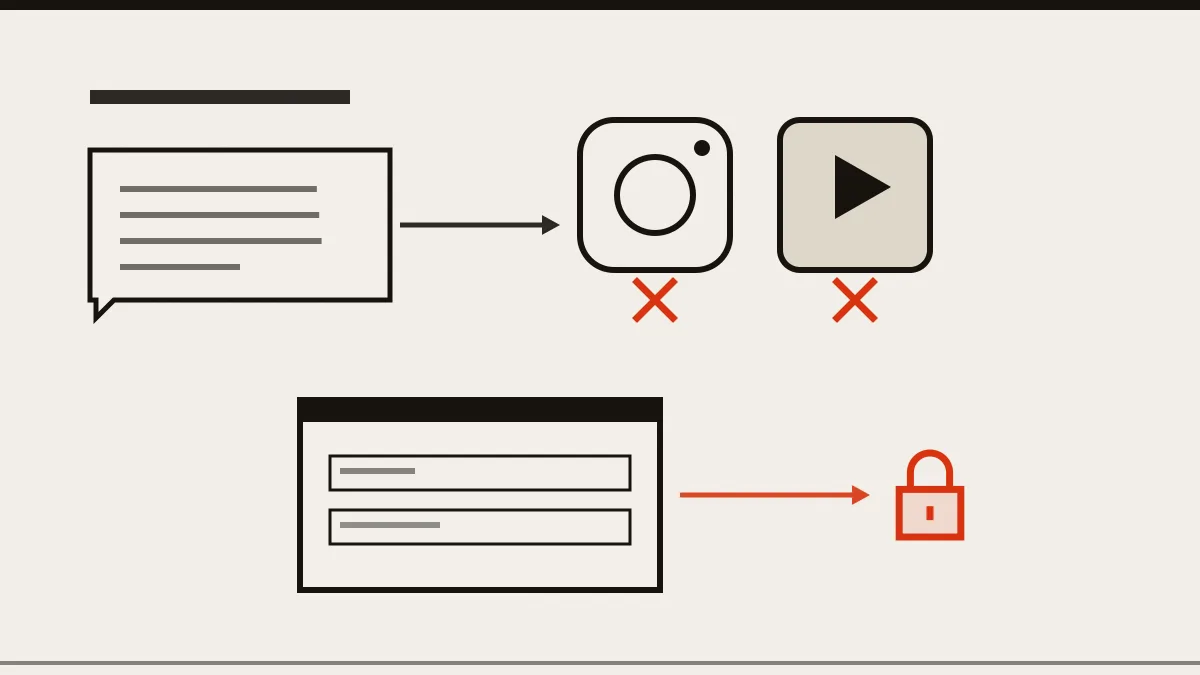
Because the platform named in the listing is marketing, and Telegram is only where the till sits. An instagram spam report bot telegram seller has no special access to Instagram. We know of no documented public method on Instagram, TikTok or Meta for filing moderation reports in bulk, and a Telegram bot holds no Instagram credentials of its own. To do anything on Instagram it has to borrow some, and the obvious source is the customer.
That is the commercial logic of the free tier. A tiktok mass report bot online free telegram offer, or one tiktok report bot telegram channel reselling another, costs money to run if it runs at all, so "free" needs a second look. A request to "log in and report from your side too" is a credential transfer with a sales script on top. On GitHub a raw search for "instagram spam report bot" returned 11 repositories on 4 November 2026; we counted those without reading the code, so we make no claim about what they do. Anyone shopping for a github or telegram instagram mass report bot should still assume the login request comes first.
Instagram's Terms of Use, read on 4 November 2026, cover both ends of the deal. Misuse of reporting channels includes "making fraudulent or groundless reports or appeals", and users may not "solicit, collect, or use login credentials" of others. So the seller's request breaks one rule and the buyer's purpose can break the other. Telegram's section 5.2(d) separately lists "Asking users for their Telegram password or OTP" as forbidden.
Why volume fails on Instagram has its own pages: what Meta treats as abuse in a spam report bot, where report counts stop mattering on an Instagram account, the Instagram report apps we benched, and, on TikTok, what review counts in a mass-report wave. The honest answers to getting someone banned on Instagram, on TikTok, on Snapchat and on Facebook all begin with the violation, never with a tally.
Who is exposed once a telegram report bot takes an order?
Rarely the target. Exposure in this trade runs in a different direction from the one the listing advertises, and it is worth going party by party.
The buyer carries the money risk first. The Telegram Stars terms say "All sales of Telegram Stars are final", and that Telegram gives no refund for unwanted purchases. What remains is the seller: send the bot /paysupport, then escalate through Telegram's dispute route if a legitimate refund is refused. Section 6.2 of the Bot Platform terms requires digital goods and services in a bot to be paid for in Stars, so on our reading a bot taking crypto for a digital service is already outside the rules, and we know of no way back through Telegram for that payment.
Whoever owns the accounts carries the ban risk. Telegram's developer page says API use for flooding or spamming means being "banned forever", and that accounts on unofficial API clients are "automatically put under observation". If the sessions are yours, those sentences are about you. If you bought them, Instagram's rule on buying accounts is one more problem. A hijacked account may also belong to someone who never heard of the seller.
Someone trying to mass report a Telegram group picks up a risk the group may not share. To mass report telegram group pages with bought accounts is to create the flooding the API terms punish, while the group may have broken nothing. Telegram's safety page says moderation has "combined user reports with proactive monitoring powered by machine learning" since 2015, with AI tools added in early 2024, and gives no formula. Anyone quoting a report threshold is inventing it. Its 2026 counter of blocked groups and channels stood at 29,364,015 on 4 November, against 27,126,529 on 6 October. That is roughly 77,000 a day, and the page does not break it down by cause. No seller can show that one of them came from a counter. Our briefing on who reads Telegram mass report panels goes further into that system.
The target is exposed only to the extent that something on the account really breaks a rule, which a single report would surface anyway.
Group owners can meet the trade from the other side. Pavel Durov, Telegram's founder, said in August 2026 that a "takedown extortionist" who seeks payment from group owners caused the app's short removal from the App Store (MacRumors, 4 August 2026). In his telling, the attacker planted illegal material in public groups and then reported it to Apple. Apple's stated reason was child sexual abuse material found in a content review, and it has not addressed the extortion claim. If someone demands money to leave your group alone, keep the messages, report the account in the app, go to the police and do not pay.
Telegram account, channel, group & bot ban services explained
Move up from a bot and the labels multiply, though the fee buys one of only two things: reports or paperwork. A telegram group ban service, a telegram channel report service and most of their rebrands resell the same machinery with a better invoice, much as an Instagram ban service and a Twitter ban-for-hire do. Sort them by what the invoice itemises.
| The invoice says | You are paying for | Our verdict |
|---|---|---|
| Reports, per thousand (telegram group ban service, report service) | Volume from accounts you never see | Decline. Nothing published gives it weight, and the risk is yours |
| Removal or takedown of a named channel or group | A notice, if the facts support one | Only useful with a stated rule or right, and proof |
| Banning a bot | A report that the bot breaches the Bot Platform terms | Plausible. Section 10 lets Telegram remove a bot from the platform |
| Reaching a private group | Nothing that exists | Telegram's FAQ says "We do not process any requests related to them" |
A telegram removal service worth the name opens by asking what the content does wrong. A telegram channel takedown service or a telegram group takedown service should name the rule or right before quoting a fee, and should turn you down when neither applies. Promising a date is the giveaway, because the deciding party is Telegram. The same test applies to a TikTok ban service's price, a Facebook ban service's price bands and the fee on a WhatsApp ban service. Any telegram removal service should also stop at the private-chat line above.
A telegram channel removal service versus a per-report invoice
Compare the two deliverables. A report seller hands you a screenshot of a counter. A telegram channel removal service, done properly, hands you a copy of one notice: which post, which rule or right, what proof, sent where and when. Copyright claims about public channels, bots or sticker sets go to dmca@telegram.org and belong to the owner or an authorised agent. A telegram channel takedown service filing on other grounds is using the same public doors you could use yourself, which is a fair thing to ask about before paying. Our Telegram channel takedown route guide lists them, and the evidence limits on a Twitter account removal service show the same standard on another platform.
What replaces the storefront when a rule is really broken?
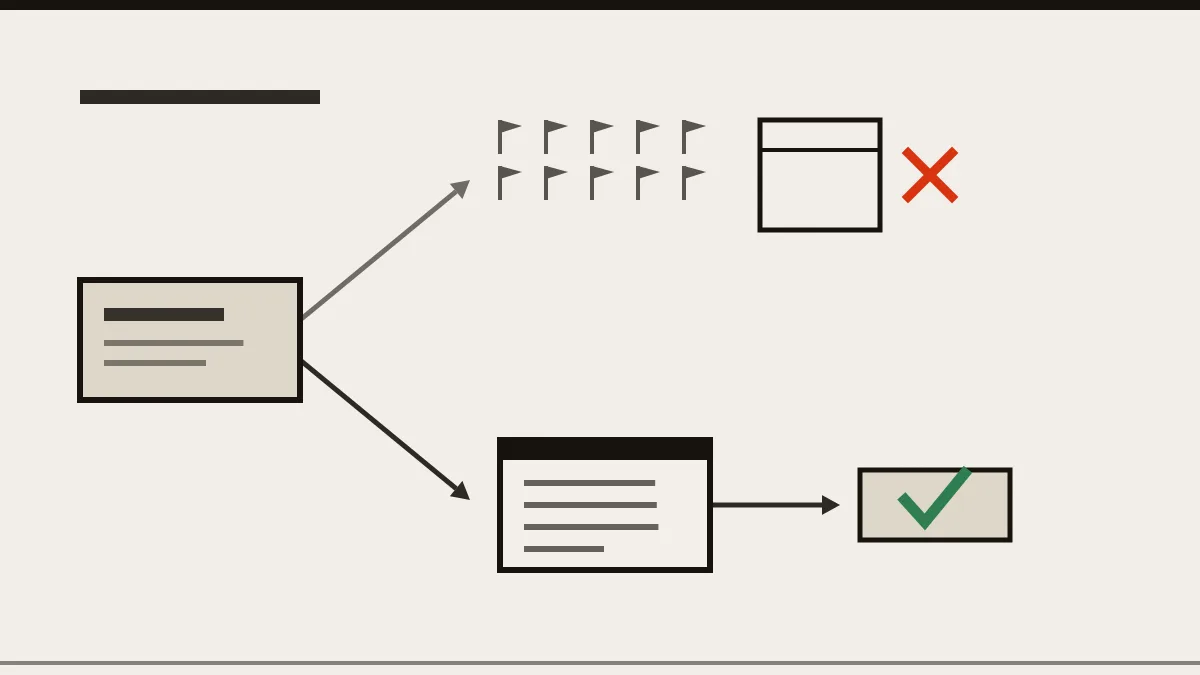
One report, built properly, by someone with standing. People searching "report illegal content under the EU Digital Services Act Telegram" tend to expect a tool, and the reality is a short sequence that costs nothing.
- Report inside the app. On Android you tap the message, on iOS you hold it, and on Desktop or Web you right-click, then choose "Report", as the safety page sets out. The FAQ describes these buttons as the way to flag illegal content for moderators. Report an abusive or deceptive bot the same way; the listing itself may be the violation.
- Use the takedown address for public content. The FAQ gives abuse@telegram.org as its automated takedown email. Include the t.me link and say which rule applies.
- For content illegal under EU law, use the notice form at telegram.org/dsa-report. The EU DSA terms say it asks for "your name, contact information and a clear and convincing explanation" of why the content is illegal. Article 16 of Regulation (EU) 2022/2065 adds the exact location and a statement of good faith.
- Keep the evidence. Save links, dates and screenshots outside the chat, because a channel can edit or delete what you are complaining about.
Here is the clause that makes a report bot worse than useless. Article 23(2) says platforms "shall suspend, for a reasonable period of time and after having issued a prior warning", the processing of notices from anyone who frequently submits ones that are "manifestly unfounded". Telegram's DSA terms carry the same warning. Flood a queue, and the channel you need for a genuine complaint can close on you. Telegram also says it had "significantly fewer than 45 million" average monthly active EU recipients as of August 2026, below the very-large-platform line, and outside the EU the first two steps remain your route.
The lever is the same on every platform, from lawful Instagram account takedowns and taking down a TikTok lawfully to a Twitter account, what terminates a YouTube channel, keeping a YouTube video down, a Snapchat account that is not yours, a Facebook account and LinkedIn impersonation.
When we file a Telegram matter, the slow part is rarely the form. It is deciding which rule the content actually breaks, and whether the client is the right person to complain.
What Obscura declines, and what no report reaches
Obscura has no report bots or account farms to run or to rent out, and it will not aim anything at an account that follows the rules, however much a client dislikes the person behind it. It will not ask for your password, your codes or your session files. Any provider that asks is running the attack described earlier. It will not exaggerate a notice to make it fit, because a false statement can cost the client the route and expose them legally. And it guarantees neither a ban nor a date: Telegram makes that decision, and we can only prepare and file.
Some material cannot come down at all. Truthful reporting, genuine public records and protected opinion stay up, and forging a complaint against them invites a worse problem. There the honest option is suppression, pushing a result down rather than removing it, and we will say which of the two applies. Our disclaimer sets out those limits.
Two kinds of harm should skip every queue. Intimate images shared without consent go to StopNCII for hash-matching and to the police, and you should never send the images to a vendor, us included. Child sexual abuse material goes straight to the police or a national child-protection hotline.
If a listing has already taken your money or your login, change the password from a clean device, end any active sessions you do not recognise and report the bot. If the harm you wanted to fix is still online, tell us what is up and where. We will read it and say plainly whether a route exists.