What does a Twitter impersonation report ask X to decide?
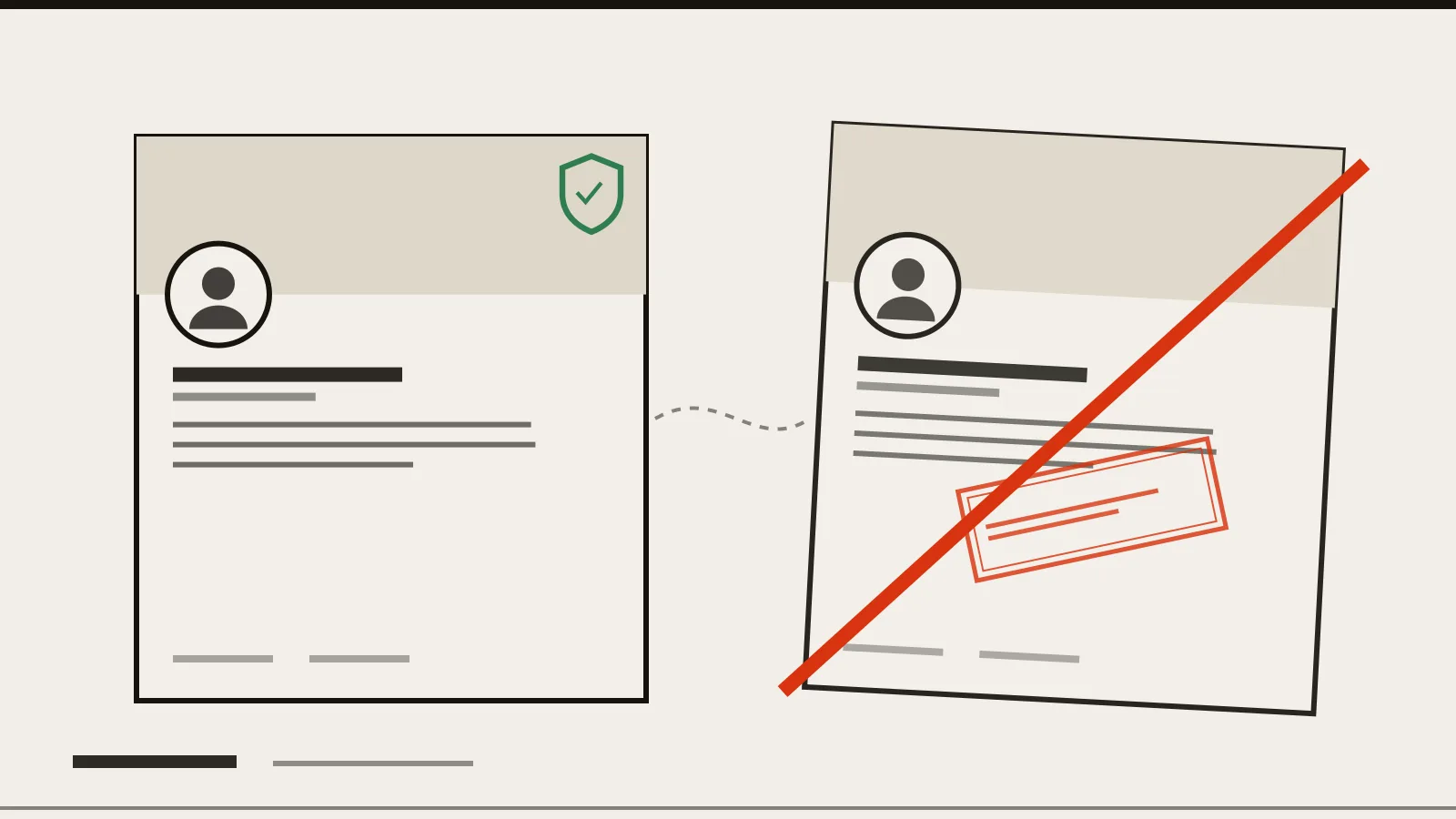
A Twitter impersonation report asks X's reviewers one narrow question: is this account using another person's or organisation's identity to deceive people? Those last three words carry the case. X's Authenticity policy, dated April 2025, says you "may not impersonate other identities of individuals, groups, or organizations to deceive others", and in the same paragraph it allows anonymity and compliant parody (X Authenticity policy). A copy of your name and photo is therefore not automatically a breach. A copy that talks to your followers as if it were you, or answers your customers as if it were your support desk, almost always is, because the deception is visible in its own posts. That is the kind of impersonation Twitter acts on quickly. Everything else on this page follows from that test: which form you use, what you attach, and why some reports come back marked "no violation" even when the copy is plainly unpleasant.
Impersonation on Twitter has two close relatives in the same policy. "Fake personas" covers manufactured identities built from stock, stolen or AI-generated photos and copied bios. Ban evasion covers, in X's words, "imitating a suspended account to replace it". We check all three when we open a file. A clone that was suspended once and has come back under a new @ is easier to remove the second time if the report says so.
One housekeeping change matters for anyone with a scam on their hands. When we checked on 5 October 2026, the address of X's old financial-scam policy redirected to the same Authenticity page. Scam links are now judged under its "Malicious URLs" clause (phishing, malware and deceptive redirects), and scam accounts under fake personas or impersonation. The clone and the scam it runs answer to one rulebook. You still report them through different doors.
Enforcement is graded. X lists "Profile Modifications" for accounts that are "potentially confusing in terms of its affiliation", with suspension if the account offends again after that warning, and permanent suspension "at first detection" for severe cases. The help article on impersonation reports gives the two outcomes plainly: the account is suspended, or it is asked to update itself so it no longer breaks the rules (X Help Center: report impersonation accounts). Neither outcome hands you the handle. X says it generally does not accept individual requests for inactive or suspended usernames.
You cannot trigger any of this yourself. Blocking and muting are the only controls you hold, and our guide on how to ban someone on Twitter separates them from the decisions that belong to X. If you are weighing every lever at once, the briefing that answers how do you take down a Twitter account puts the impersonation report alongside the other four instruments.
Parody, memes and the best Twitter impersonations that stayed up
Searches for the best Twitter impersonations, and for Twitter impersonation memes, mostly lead back to November 2022. Paid blue checks went on sale that month with no identity check, and within days a verified-looking account posing as Eli Lilly announced free insulin, a fake Nintendo account posted an obscene Mario, and the comedian Kathy Griffin was suspended on 6 November after renaming her account to impersonate Elon Musk. The paid tier was paused and relaunched on 12 December 2022 at $8 a month on the web and $11 on iOS. The screenshots still circulate.
Most of the accounts that made them did not last a week. Parody that lasts looks different. X's Parody, Commentary and Fan (PCF) rules require all four of these: a PCF label on the profile, an avatar that is not identical to the real one, a word such as "parody", "fake", "fan" or "commentary" at the start of the display name, and the same kind of word in the bio. An account that meets all four will usually survive a report, however irritating it is. An account that misses one is open to a profile-modification order, which is often all a client needs: once "PARODY" leads the name, nobody is deceived.
Clone, scam or both: which report fits what you are looking at?
The fastest way to lose a week is to file the right facts through the wrong door. X runs separate forms for identity, trademarks and copyright, plus an in-app flow for posts, messages and accounts, and each one is reviewed against different criteria by people looking for different proof. The table sorts the common cases by what you can actually see on screen.
| What you see | Where it goes | Who can file |
|---|---|---|
| An account using your name or photos to speak as you | Impersonation form, self branch | You, or someone with written authority |
| An account posing as your company, product or support desk | Impersonation form, brand branch, or the trademark form | Staff, a law firm, or a marketing or PR agency |
| Your own photos or videos reposted by the clone | Copyright form (sign-in required) | The copyright owner or their agent |
| A post or DM pushing a giveaway, wallet or "support" link | In-app report on that post or DM | Anyone who sees it |
| Someone else being impersonated | In-app report from the clone's profile | Any bystander |
| Your real account taken over and renamed | X's hacked-account support | The account owner |
Most real cases sit on two rows at once. Picture a clone of a small-business owner that messages customers about "refunds". It is an identity problem and a scam problem. The identity report removes the account, while in-app reports on the messages put the scam in front of a reviewer with the context attached. A Twitter scam report on its own may hide one DM and leave the account standing. An impersonation report on its own may remove the account and leave no record of what it said to whom. File both, and the second report strengthens the first rather than duplicating it, because each one lands with the team whose rules it actually engages.
The last row needs its own warning. On 2 October 2026 Microsoft confirmed "unauthorized access to our account on X" after its official account spent about half an hour promoting a Clippy-themed crypto token (SecurityWeek, 2 October 2026). That was not impersonation in X's sense. The account really was Microsoft's. A hijacked account goes through account-compromise support, yet the followers it targeted need exactly the warning they would get after a clone.
Someone is impersonating me on Twitter: the self branch
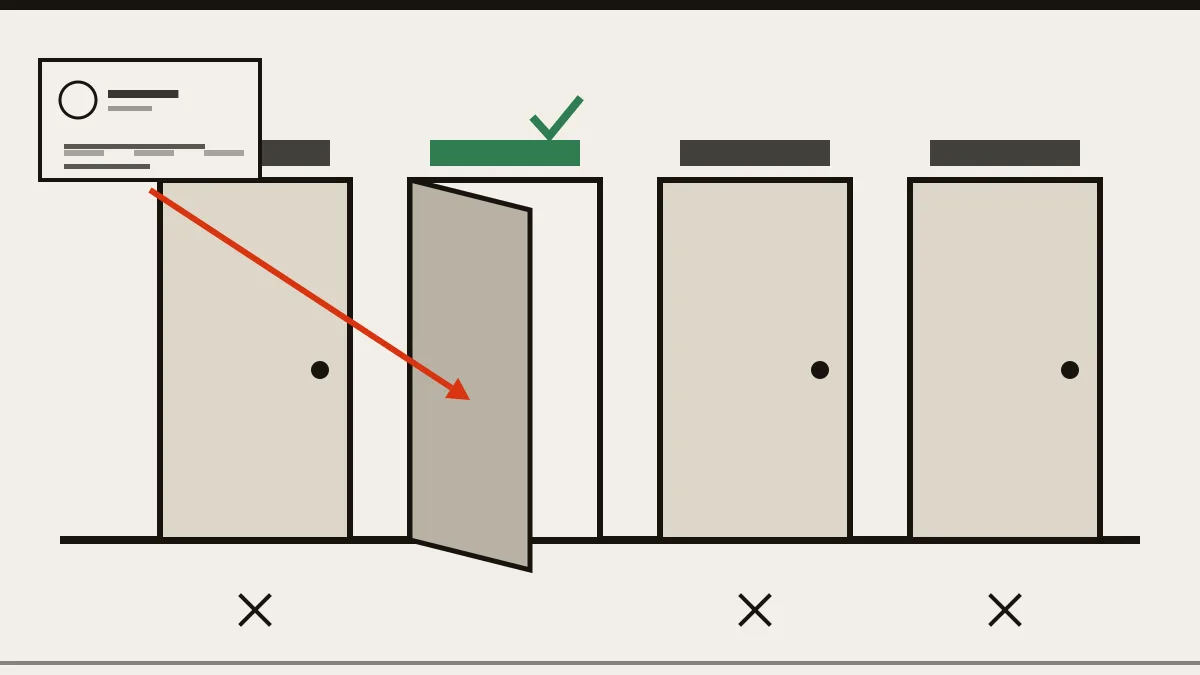
If someone is impersonating me on Twitter, the form at help.x.com is the strongest route, and it starts with a question about who is being impersonated. Every branch then puts the filer through an identity check run by Persona: a government ID and a selfie. When we read it on 23 September 2026, the form said the check "usually takes about 5 minutes", asked for consent to "extracted biometric data", and said Persona may store that data for up to 30 days. After the check, the self branch is short. It wants your email, the copy's @, links to the offending posts one per line, and a note capped at 280 characters.
Two traps catch people. First, if your own X account is the one being copied, the signed-out form asks you to sign in to it before proceeding, even though the help article says you do not need an account to report; both are true, for different filers. Second, acting for a client, a parent or an executive means the "someone I represent" branch, which requires proof of authority: X names an agent's agreement or a power of attorney. A friend cannot file on goodwill. Anyone can report impersonation on X from a profile, but wherever you can, report someone impersonating you on X from the self branch.
Report brand impersonation on Twitter: brand branch or trademark form?
To report brand impersonation on Twitter you choose between two routes that X describes differently in different places. The impersonation form has a branch for "my company, brand or organization". It asks for a company email, your relationship to the brand (with an option for people at a law firm, marketing or PR company), your job title, and four boxes describing what was copied: the name, a photo or image, a phone number or address, or content posted as if it were the copier's own. It then asks whether the company wants the username. It does not ask for a trademark number.
The help article, by contrast, tells companies to file under the trademark policy. That form wants the exact registered mark, the registration number, the class and the office, and it says pending applications are not sufficient. It never releases the username either. Our rule of thumb for Twitter brand impersonation is simple. A fake support desk or a fake founder goes through the brand branch, because the harm is deception. A seller trading under your registered mark goes through the trademark form. When both apply, file both and quote each ticket number in the other.
The support-desk pattern is growing. Check Point reported on 16 September 2026 that "thousands of impersonation accounts" posing as airline support had been found across X, Facebook and Instagram, with "hundreds of new accounts appearing daily". They answer public complaints, then move the customer to WhatsApp to collect payment details (Check Point, 16 September 2026). Any brand with a public complaints queue is exposed to it.
When the clone wears your photos: the Twitter copyright form
Many clones are built from your own photos, which opens a third door. The Twitter copyright form, which most people search for as the Twitter DMCA form or the Twitter DMCA takedown form, reaches the avatar, the header and any uploaded media. Three details in X's copyright policy decide whether it helps.
The owner of a photo is the person who took it. Your selfie is yours; a professional headshot may belong to the photographer, who would have to file or authorise you. The form also requires you to be signed in to an X account. And X forwards the full notice to the account you report, including your name and contact details, so many people file through an agent. X adds that "a link to a profile page is insufficient": point at the specific media. A copyright notice cannot remove a clone whose photos are not yours. It is a supplement to the identity report, not a substitute, and our Twitter DMCA notice briefing covers which copies on X a notice can reach.
How to report impersonation on Twitter, step by step
How to report impersonation on Twitter depends on who you are in relation to the clone, but the order of work is the same for everyone, and it begins before any form is opened. Most failed reports we see failed at step one: the evidence was gone by the time anyone looked.
- Capture first. Screenshot the clone's profile, @, display name and a handful of posts, with the date visible, and copy the profile URL. Clones rename themselves once they sense a report.
- Warn your real audience. Post and pin a short statement from your genuine account naming the copy's @ and saying you will never message anyone for money or login codes.
- Pick the branch. Use the table above. Gather proof of authority before you start if you act for someone else.
- Pass the ID check and file. Have a passport or driving licence ready. In the post-links box, list the posts that show deception, one per line, not every post the account has made.
- Report the scam content separately. Report each scam post and DM in the app so the evidence sits with a reviewer even if the account report is handled elsewhere.
- Keep the ticket. Save the confirmation email. X's help pages say reports are acknowledged within 24 hours, usually resolved in a few days, and can take up to 30.
The note field is where reports are won. You have 280 characters to say what the reviewer cannot see from the links. Something like: "This account uses my name and my 2024 profile photo and is messaging my followers for payment. My genuine account is @… and has been since 2014." One fact per sentence. No adjectives, no threats, no capital letters.
Speed is not usually the problem. In X's EU transparency report for April to June 2025, the median time to handle EU-wide notices was two hours for scams and three for defamation (X DSA transparency report, October 2025). A reviewer working at that pace compares two profiles and a few posts. Make the comparison obvious and it goes your way.
Report a Twitter account for impersonation as a bystander
If you want to report a Twitter account for impersonation and you are not the person being copied, X gives you no form. The help article says a bystander should flag it "by reporting directly from the account's profile", and the bystander option on the form leads to the same sentence. Open the clone's profile, use the three-dot menu, choose Report, and follow the prompts for an account pretending to be someone else. X may also ask you to pick posts from the account. That is your chance to show the deceptive ones rather than the dull ones.
A bystander report helps, but it carries less weight. Among the decision factors X lists in its EU reporting is whether the reporter is the target or a bystander, and an impersonation reviewer cannot rule out that the copied person authorised the account until that person speaks. The most useful thing a bystander can do after reporting is message the real person a screenshot. Whether you search report Twitter impersonator, report X account for impersonation, report Twitter account for impersonation or report Twitter for impersonation, you arrive at the same two doors.
What makes a reviewer say yes in one look
Knowing how to report Twitter impersonation well is mostly about one comparison, so build it for the reviewer. Put the clone and the genuine profile side by side in one screenshot. Note both join dates: a copy created last Tuesday against an account active since 2014 does half the argument. Link the posts or messages where the copy asks for money, codes or a click, since those prove intent to deceive in a way a matching avatar never can.
Leave out what does not help. A long thread of insults belongs in a harassment report, not here. Twenty links to bland reposts bury the three that matter. If the copy has renamed since you started, give both the old and the new @ in the note.
Our team treats every Twitter report impersonation case as one file with one argument, the method set out in our account report as a case file briefing. If you want a second pair of eyes before you file, the people who read these files trained in media law and search, and the review is confidential.
How to report a scammer on Twitter without losing the evidence
How to report a scammer on Twitter comes down to order: preserve, warn, report, then follow the money. The order matters because blocking first deletes your view of the conversation, and reporting first sometimes prompts the scammer to delete theirs. Screenshot the whole DM thread, including the account name at the top, before you do anything else. Then report the message itself: in a DM, open the conversation's information icon and choose "Report @username". Report public scam posts from the post's own menu. If money or card details have already moved, call your bank before you touch X; in the UK, dialling 159 reaches most major banks' fraud teams. After that, file with the police service for your country: Report Fraud in England, Wales and Northern Ireland, which replaced Action Fraud on 4 December 2025 (0300 123 2040), or the FTC's ReportFraud site in the United States.
Keep expectations about volume realistic. In September 2026 X filed 690,425 statements of reasons with the EU's public DSA Transparency Database. Of those, 650,812 were account suspensions, and 570,678 of the suspensions were in the scams and fraud category, with 569,877 marked as taken without human involvement (our count of the DSA Transparency Database, 5 October 2026). X's own systems catch most scam accounts. Your report matters for the one that slipped through, and as a record.
The scale is large on the victim side too. The FTC says people reported losing nearly $3.5bn to imposter scams in 2025, including nearly $1bn to business impersonators, and $2.1bn to scams that started on social media (FTC, April and June 2026). A Twitter scam report will not return any of that money. If money comes back, it comes through your bank.
The most common scam shapes we see on X are worth naming, because the report goes to a different place for each. Giveaway reply-bots answer your popular posts using your name and a lookalike avatar. Fake support accounts answer customers who complain in public. "Verify your account" messages lead to a lookalike login page. Investment and romance approaches arrive in DMs from accounts that borrowed someone's face. The first two are impersonation plus scam. The third is a malicious URL. The fourth is usually a fake persona, and the person whose face it borrowed may not know.
Twitter report abuse form or the in-app report?
The Twitter report abuse form exists, but it is built for harassment, not scams. It sits in X's safety forms menu and opens by asking whether the abuse is directed at you or at someone else. For a scam, the in-app report is the route X expects: its spam form says plainly that reports "cannot be created using this form". Two legal forms sit above both. In the EU, X's illegal-content form under the Digital Services Act accepts fraud, and the decision you receive can be appealed. In the UK, X runs a separate Online Safety Act report form, and fraud has been a priority offence under that Act since its illegal-content duties began on 17 March 2025. X's UK page adds that it "does not disclose information about the person who submitted the complaint".
Clones that move victims onto other apps need a report there as well. Support clones commonly push people to WhatsApp, where the guide on how to ban someone's WhatsApp number sets out what WhatsApp can act on, and investment clones often move to Telegram, where knowing how to take down a Telegram channel matters more than any report on X.
Twitter accidentally reported scam: a DM, or a real mistake?
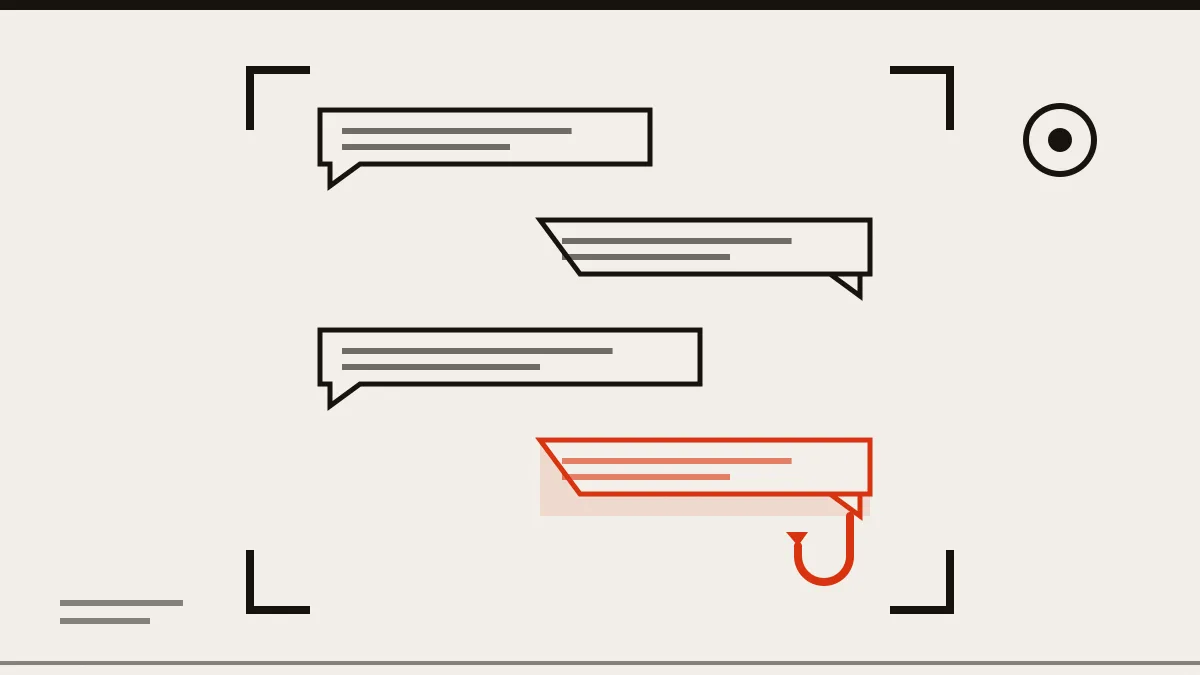
The Twitter accidentally reported scam is a message, not a mistake. Someone writes to say they "accidentally reported" your account, that it will be banned, and that you must contact an "agent" or a "support" account at once to stop it. That account then asks for your login code, a payment or a "verification" fee. Bitdefender documented the same script on Discord. X does not resolve reports through private messages from strangers, and no genuine reviewer needs your password or a two-factor code. This is the Twitter report scam in its commonest form. Report the message and block.
A real mistake is less dramatic. When we checked X's help pages on 5 October 2026, we found no way to withdraw an in-app report once sent. That rarely matters: the reviewer judges the content, not the report, the Authenticity policy expressly allows good-faith reports, and X does not tell the reported person who filed. Only a copyright notice has a formal retraction, and only the person who sent it can retract it.
Why do some Twitter impersonation reports come back with no action?
A report that comes back with "no violation" is not always a wrong decision. Often the reviewer applied the Twitter impersonation policy correctly to a weaker file than the one you meant to send. The table sets the usual outcomes against their likely causes.
| What came back | Likely reason | Next move |
|---|---|---|
| "No violation" | The account meets the four PCF rules | Check each rule; a miss supports a profile-change request |
| Nothing after 30 days | ID check unfinished, or the ticket stalled | Refile once and quote the first ticket |
| Account renamed, still live | The report named the old @ | Refile with both the old and new @ |
| Brand report refused | No registered mark, or only an application | Use the brand branch instead |
| A new clone appears | Ban evasion after a suspension | Report it and name the suspended @ |
| Clone edited its profile | Profile-modification outcome | Monitor; a repeat breach can mean suspension |
What does not help is volume. The Authenticity policy lists duplicate or false reports "in large numbers" and "using or promoting third-party services" as engagement spam, and the person who organises a pile-on carries the risk. The X mass report bot briefing explains what those tools send and why reviewers discount it, and the piece on the Twitter ban service trade covers what the fee buys. A second, better-evidenced report from the person who was copied beats fifty from strangers.
Twitter Blue impersonation and the checkmark
Twitter Blue impersonation still worries clients, so it helps to be precise about the badge. A blue check means a paid Premium subscription, not a confirmed identity. X's own page says changing a profile photo, display name or @ causes "a temporary loss of the blue checkmark" until the account is re-validated, which blunts the 2022 trick of renaming a verified account. It does not stop a clone from subscribing. On 5 December 2025 the European Commission fined X €120m in its first Digital Services Act non-compliance decision, finding the blue check design deceptive (European Commission, 5 December 2025). X is appealing.
For your report, a checkmark on a clone is useful evidence rather than an obstacle. A paid badge that lends a copy credibility is exactly the harm the Commission described, so say so in the note.
What a Twitter impersonation removal service can and cannot do
A Twitter impersonation removal service files the same forms you can, as your authorised representative, and X's forms make room for that: the brand branch lists law firms and PR or marketing agencies, and the individual branch accepts an agent's agreement or a power of attorney. What a good service adds is judgement and stamina. It picks the branch, builds the comparison, files identity, trademark and copyright reports in parallel where each applies, answers X's follow-up, escalates through the EU or UK legal forms when the policy route stalls, and watches for the clone's return. A Twitter account removal service wins or loses on that evidence before anything is filed.
What no service can do is just as important. Nobody can guarantee a suspension, skip X's identity check, or win you the copied handle. Nobody can lawfully remove a parody account that meets the PCF rules, a genuine critic, or a victim's truthful post about being scammed by an account using your name. Those can only be answered publicly or, where they rank on your name, pushed down in search: suppression, not removal. We never forge notices, never threaten litigation we have no instructions to bring, and never ask for your X password. Our disclaimer sets out those limits in full.
Where the platform will not act, the law sometimes will. In England and Wales impersonation is not a crime in itself, but the scam usually is (fraud by false representation, Fraud Act 2006, s.2). A clone that posts damaging falsehoods as you can found a defamation claim if it meets the serious-harm test in section 1 of the Defamation Act 2013. A brand has passing off and trade mark infringement. Several US states make online impersonation a specific offence, California's Penal Code 528.5 among them. A letter from a solicitor reaches the person; a report reaches the account.
Clone still live? Send us the copy's @ and your genuine one through our confidential contact form. We will tell you which branch fits, what X will ask for, and whether a service adds anything over filing it yourself. No password requests, no upfront crypto, and a free first look.
Red flags in a Twitter impersonation takedown service pitch
A Twitter impersonation takedown service that promises a ban "within 24 hours" for a flat fee, or offers to "mass report" the clone, is selling volume to a queue that weighs evidence. The same pitch appears on every platform with a different logo. Our research on the Instagram ban service market, the Instagram spam report bot myth and the offers to mass report Instagram account targets found the same gap between promise and mechanism. So did our work on the TikTok mass report bot, on TikTok ban service pricing, and on the Telegram mass report bot panels.
Meta's apps attract the same sellers. A Facebook mass report tool runs on the accounts its buyers supply, and a Facebook ban service leaves the legal risk with the person who pays. A WhatsApp mass report bot needs the buyer's own number, and a WhatsApp ban service cannot read an encrypted chat it claims to have reported. Elsewhere the story repeats. A YouTube mass report bot hits a reporting quota, a YouTube ban service cannot issue strikes, and a Snapchat mass report bot has no public endpoint to call.
The questions to ask any provider are dull and decisive. Who files, and under whose name? Which form, and why that one? What happens if X says no? Any provider who cannot answer those without the word "guaranteed" has told you what you need to know.
After the takedown: what does repairing the damage involve?
Knowing how to take down a Twitter impersonation account is half the job. The suspension removes the copy; it does not remove what the copy did. Four kinds of residue are left, and each has its own fix.
The first is people. Followers who paid the clone often post about it, naming you. Those posts are truthful accounts of being scammed, and they stay up; asking a victim to delete one usually makes things worse. Reply in public, confirm the account was not yours, point to your pinned statement, and if a victim agrees, ask them to add that the account was a copy. The second is search. Google may keep showing the clone's profile for your name until it recrawls the page. Once the page shows a suspension notice, Google's Refresh Outdated Content tool asks it to update the result. Screenshots of the clone's posts on forums and news aggregators are a different matter: they are third-party pages, and the answer depends on what they say and where they rank.
The third is other platforms. Clones rarely live on one app. Check Instagram with our guides on how to get someone banned on Instagram and on Instagram account takedown routes. For TikTok, see how to get someone banned on TikTok and how to get a fake TikTok account taken down. Snapchat has its own pair: how to get someone banned on Snapchat and how to take down a Snapchat account. So does Facebook, in how do you get someone banned from Facebook and how to take down a Facebook account. Professionals should check how to report a fake LinkedIn profile, and creators whose videos were re-uploaded will want how to get a YouTube video taken down.
The fourth is your own account. Turn on an authenticator app rather than SMS codes, review connected apps, and change the password if you ever typed it into a link the clone sent.
A 30-day watch list after a clone comes down
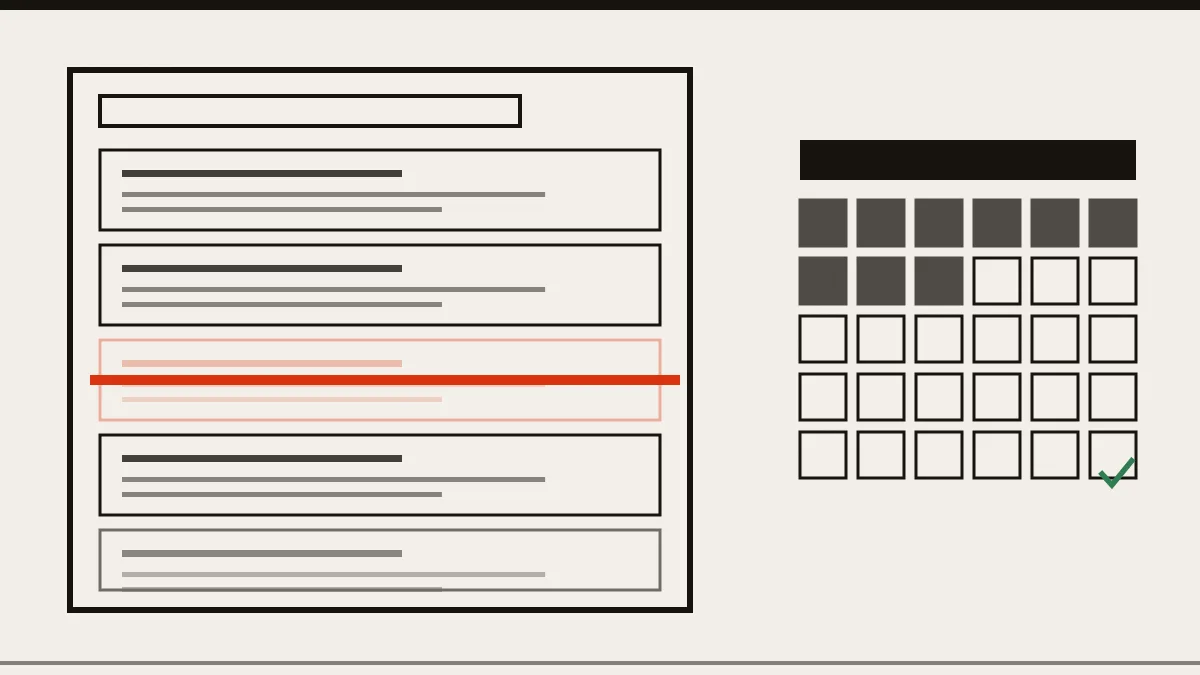
When we close one of these files, the client gets a short watch list rather than a promise. Clones that were profitable tend to return, and the second one is easiest to remove in its first days.
- Days 1 to 3: search your name and your @ on X daily. Look for near-miss handles: an extra underscore, a swapped letter, "real" or "official" bolted on.
- Days 4 to 14: check replies under your most popular posts, where giveaway bots cluster. Keep the pinned warning up.
- Days 15 to 30: search your name on Google and on the other apps above. Unpin the warning once nothing new has appeared for a fortnight.
- Any time: if a new copy appears, report it at once and name the suspended @ in the note. Ban evasion is a breach of its own.
A practical note from our files: the slowest part of these cases is rarely X's queue. It is evidence that went missing because a client blocked the clone before capturing it, or a brand report that went to the trademark form without a registration. Get those two right and most cases are straightforward. Where the clone has done lasting damage to how your name reads in search, that becomes a suppression project, and our overview of content removal routes and limits explains how that work differs from a takedown.