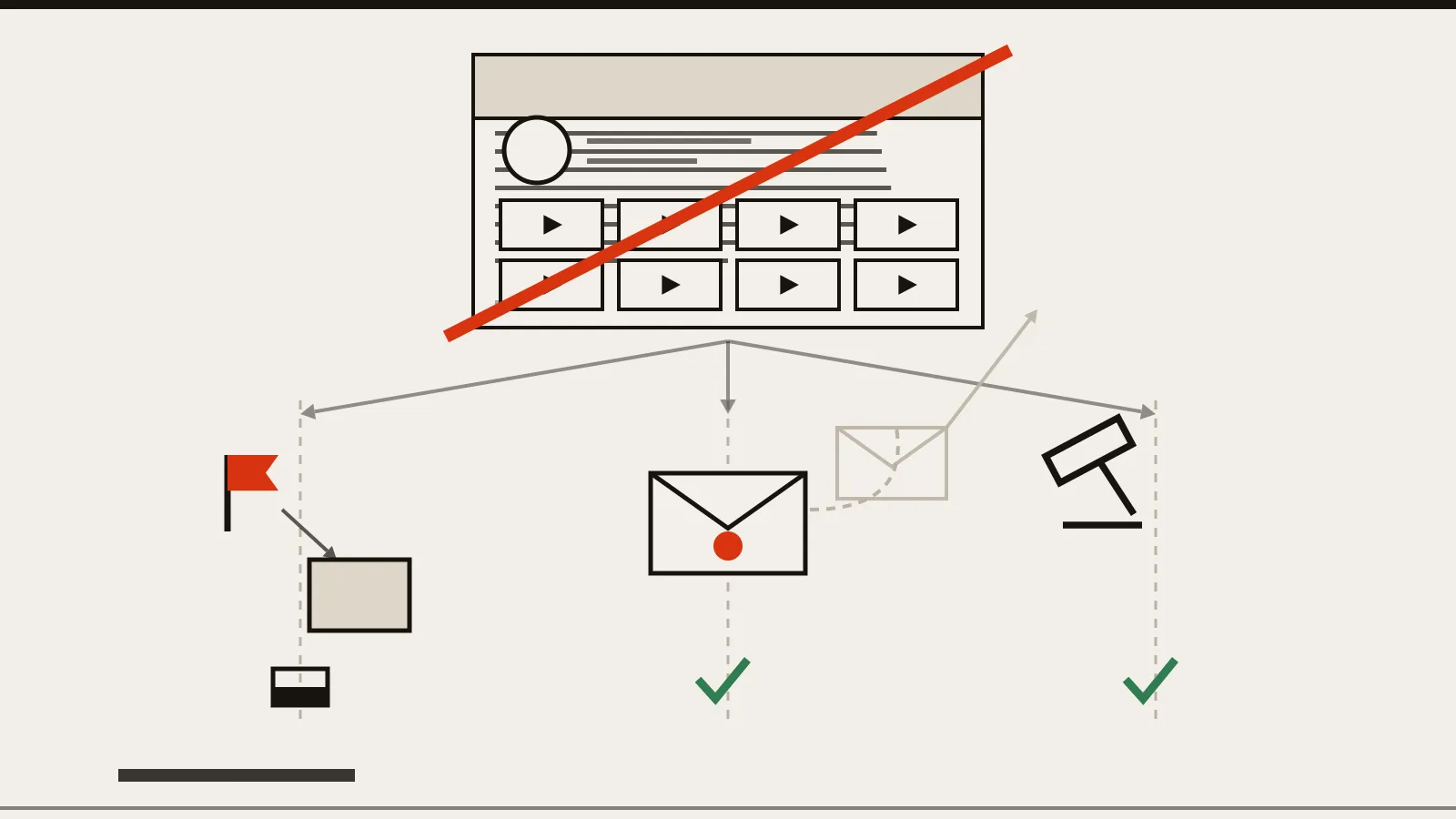
Who reads a takedown request about someone else's channel, app or listing?
Every takedown request about content you do not own is a document, and every document has readers. The first reader is the platform: a moderator for a rule report, a legal or IP team for a copyright, trademark or counterfeit notice, a court clerk for an order. The second reader, far more often than people expect, is the person you are complaining about. Bandcamp, BitChute and Tumblr forward copyright notices to the uploader. Apple hands an App Store dispute to the developer and asks the two of you to sort it out. eBay tells sellers to contact the rights owner through the owner's VeRO profile. Cloudflare sends complaints on to the host and the site operator. So before choosing a route, decide what you are prepared to have the other side read, because on most of the services in this briefing they will read it within days.
That second reader changes how a notice should be written. It has to be accurate enough for a stranger's lawyer, calm enough that it cannot be quoted back as harassment, and narrow enough that it names only what you have standing to name.
| What you want gone | The document that moves it | Who reads it | Does the other side see you? |
|---|---|---|---|
| A YouTube channel | Rule report, clone report, or copyright removal request | YouTube moderators or its copyright team | Not for a rule report; a copyright removal names the claimant |
| An App Store app | App Store Content Dispute or App Name Dispute | Apple's legal team, then the developer | Yes: Apple asks the developer to work with you directly |
| A marketplace listing | eBay VeRO notice, Etsy Reporting Portal, Depop notice | Its IP team | Usually: sellers are told how to reach you |
| A post on a small platform | Copyright notice by form or email | A legal inbox | Bandcamp, BitChute and Tumblr forward it |
| A domain or website | Abuse report, UDRP complaint, or court order | Registrar, host, CDN | Cloudflare forwards to host and operator |
| Your face in a search engine | Its Remove My Photos form | The search site's own staff | No: you verify yourself, nothing is forwarded |
How to take down a YouTube channel
You cannot delete another person's YouTube channel, and neither can any number of people reporting it. YouTube removes channels for four things: three Community Guidelines strikes inside 90 days, one case of severe abuse, three copyright strikes inside 90 days, or impersonation of a real person or brand. Everything you file should aim at one of those four events.
The Community Guidelines ladder is gentler than most people assume. YouTube's own rules say "the first violation is typically only a warning", and if the uploader completes an optional policy training, that warning expires after 90 days. Strikes come after the warning, and "three strikes in the same 90-day period may result in your channel being permanently removed". The exception is the one that matters for serious cases: "a single case of severe abuse will result in channel termination without warning" (YouTube Help, Community Guidelines strike basics). YouTube's examples of severe abuse include predatory behaviour, which is usually the material a client wants gone fastest.
Copyright runs on its own counter. Three copyright strikes in 90 days leave "your account, along with any associated channels" subject to termination (YouTube Help, copyright strikes). A strike follows a valid removal request, which YouTube accepts from the copyright owner or "an authorised representative, such as a lawyer". The request needs the exact video URL, and you can schedule it to take effect in seven days, which gives the uploader a window to take the video down before a strike lands (YouTube Help, submit a copyright removal request). That seven-day option is one we use more than clients expect, because a channel owner who removes the copy voluntarily rarely re-uploads it. The fields of the request itself are covered in our walk-through of the YouTube copyright takedown form.
Impersonation is the fourth door, and it is the one that removes whole channels without any strike count. Where a channel copies your name, photo or brand, YouTube's impersonation policy says you can report the channel and that "the channel may be removed to protect our community" (YouTube Help, impersonation policy). The proof is the same side-by-side bundle that works everywhere: your original, their copy, and dates. If you came here because a whole channel posts harassment rather than copies, our deeper piece on how to get a YouTube channel taken down walks the strike ladder rung by rung, and the single-video route, including how to stop re-uploads, sits in our guide on how to get a YouTube video taken down.
A channel takedown campaign is just volume, and volume is not a strike
A channel takedown campaign is a coordinated push: a Discord server, a Telegram group or a paid seller sends hundreds of reports at one channel in the hope that the count triggers a ban. It does not. YouTube says plainly that when content is reported "it's not automatically taken down", and that if a video does not break the rules, "no amount of reporting will change that" (YouTube Help, reporting). Each report lands in the same queue and is judged against the same policy, so the hundredth report about a lawful video gets the same answer as the first.
Sellers dress this up in different ways on every platform. A YouTube mass report bot runs into the reporting quota a signed-in account gets each day, the TikTok mass report bot offers sell the same queue under a different logo, and the X mass report bot listings promise counts that X does not use. On Instagram the code is often public, and the GitHub Instagram mass report repositories turned out to be one of four sources we traced to the same dead end. The word "channel" also means a Telegram broadcast, and the lawful routes for that are different again; our briefing on how to take down a Telegram channel covers them.
Did Project Zorgo take down YouTube?
No. Project Zorgo is the masked "hacker" organisation the Spy Ninjas fight in videos that Chad Wild Clay and Vy Qwaint began making in 2018. In the storyline, Zorgo agents hack channels and threaten to delete them. It is scripted entertainment. We found no record of any real YouTube outage, ban or channel termination connected to it, and the pages claiming otherwise read like content farms. Children who search "did project zorgo take down youtube" are usually asking whether a favourite channel is gone; the honest check is whether the channel's URL still loads.
Can YouTube take down private videos, or unlisted ones?
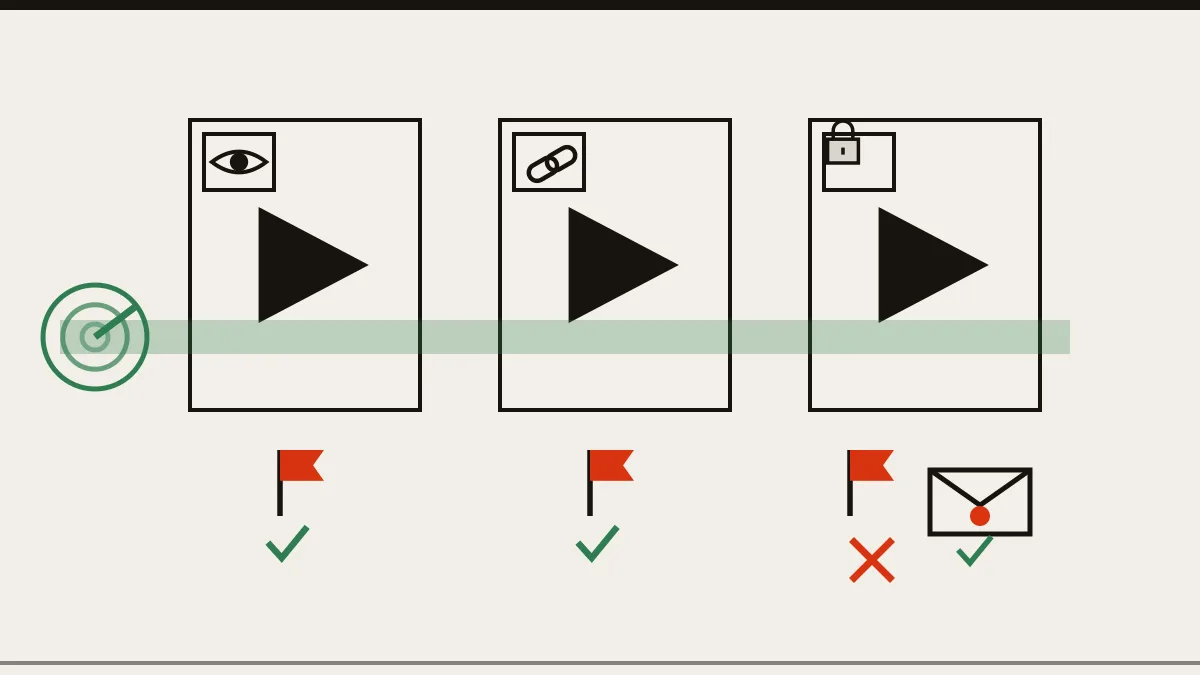
Yes. YouTube's rules apply to every upload whatever its visibility, and the strike page says so in as many words: the guidelines cover everything "including unlisted and private content, comments, links, posts and thumbnails" (YouTube Help, Community Guidelines strike basics). So can youtube take down private videos? It can, and it can strike the channel for them. Can youtube take down unlisted videos? Same answer. What changes with visibility is not YouTube's power but your ability to point at the video.
An unlisted video is the easy case. Anyone holding the link can open it, and the report option sits in the same menu as on a public video. Can unlisted youtube videos be taken down by a report from someone who was simply sent the link? Yes, because the reporter does not need to be the intended audience. People ask "can a private youtube video be taken down" when someone has shared a private video with a small group, or when they know a private upload exists but cannot see it. If the uploader has shared it with you, you can see it, and you can report it. If you cannot see it, you cannot flag it.
That is where the other routes earn their keep. Content ID scans uploads automatically when they arrive, and YouTube's description of it does not carve out private ones (YouTube Help, how Content ID works). A copyright removal request is built around the video's URL, so the practical test for a private upload is whether you hold the URL and can show what was on it. Searchers phrase it as "can private videos on youtube be taken down" or "can private youtube videos be taken down"; the working answer to both is yes, through YouTube's own scanning or a rights-based request, and not through a viewer report.
How an Apple App Store takedown request actually works
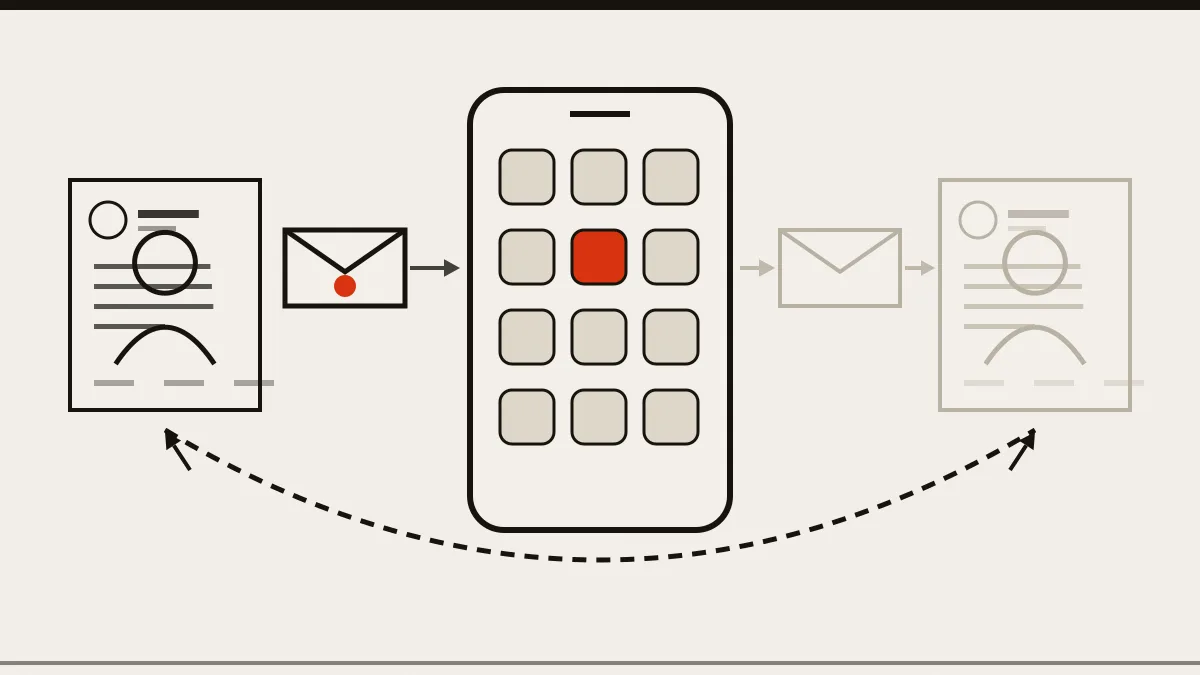
An Apple App Store takedown request is mostly an introduction. Apple runs two intellectual-property forms for the store, the App Store Content Dispute form and the App Name Dispute form, and its page says that when a complaint arrives Apple will "contact the provider of the disputed content" and "ask that they work with you directly" (Apple, App Store dispute forms). That sentence explains most of what follows. Apple is not a court and does not want to referee copyright or trademark arguments between two developers. It wants proof of a right, a named app, and a clear statement of what is copied, and then it wants the two parties talking.
The App Name Dispute form is the narrower door. Use it when an app's name or developer name copies your registered trademark, not when the app simply competes with yours. Branded search-advertising keywords are a separate matter: Apple does not investigate complaints about them through these forms. For an app that is a scam rather than a copy, the route is not an IP form at all. Apple's Report a Problem site has a scam-or-fraud option for apps you have downloaded, and Apple's own anti-fraud machinery is far larger than any single complaint. Its May 2026 figures for 2025 claim more than $2.2 billion in fraudulent transactions stopped, more than 2 million of 9.1 million app submissions rejected, nearly 59,000 apps removed for bait-and-switch changes, and 193,000 developer accounts terminated (Apple Newsroom, 20 May 2026).
When we file these, we write the first letter as if the developer's lawyer will read it, because under Apple's process they will. That means no threats Apple cannot enforce, no claims beyond the registered right, and a remedy the developer can actually perform: rename, remove the copied assets, or withdraw the app. A developer who can fix the problem in one update usually does. Where the developer refuses, Apple may still remove the app under its own agreement, which lets it pull apps "with or without cause"; when the developer of the Musi streaming app sued Apple after its removal, the case was dismissed in March 2026 (9to5Mac, 17 March 2026). Inside the EU and EEA, a separate notice for illegal content runs under the Digital Services Act, and Apple's DSA transparency pages list the store's report route (Apple, EU DSA transparency for the App Store).
Not sure which form fits? Send us the link, the right you hold, and what was copied, and we will tell you in a confidential review which document fits, who will read it, and whether any route fits at all, before anything is charged.
Counterfeit removal on eBay, Etsy, Depop and Craigslist
Marketplaces split the problem in two. Counterfeit removal is a rights-owner process: only the brand or its representative can file, and the marketplace's IP team decides. A listing that breaks marketplace rules in other ways, such as a scam, a stolen photo of your home or a prohibited item, goes through the ordinary report button, and any user can press it. Most failed complaints we see used the wrong one of the two.
eBay VeRO takedown and eBay counterfeit removal
eBay's Verified Rights Owner Programme "is only for rights owners or their authorised representatives" (eBay UK, VeRO Programme). An eBay VeRO takedown starts with a Notice of Claimed Infringement, the NOCI, filed online; eBay reviews it, removes the listings it accepts, and tells the seller. "Counterfeit, fakes, or replicas" is one of the listed reasons, so eBay counterfeit removal runs through the same notice. The part people miss is the profile: eBay tells sellers to "contact rights owners directly if you have questions" using the owner's VeRO profile (eBay Seller Center, VeRO). Expect replies, and decide before you file who on your side will answer them.
Etsy takedown notice
Etsy takes notices through its Reporting Portal, with a separate Reporting Form for usernames, shop names and videos (Etsy, Intellectual Property Policy). An Etsy takedown notice can be met with a request for more: Etsy "may request additional information", such as a letter of authorisation or identity verification of the person reporting. Two details are specific to Etsy. It accepts DMCA counter notices for US-based copyright reports only, and after a counter notice the listing may come back 10 business days later unless you tell Etsy you have filed suit or a claim at the Copyright Claims Board. Sellers who collect repeat notices lose their selling privileges, along with accounts Etsy believes are linked.
Depop listing takedown
Depop changed hands this year. Etsy agreed the sale in February 2026 and completed it on 30 July 2026, selling Depop to eBay for a base price of $1.2 billion (Etsy Form 10-Q, Q2 2026). For now a Depop listing takedown still runs through Depop's own Intellectual Property Policy: an infringement notice by email to report@depop.com, or by post to Depop Limited in London, with your contact details, the right, and a link to the listing (Depop Help, Intellectual Property Policy). Depop bans counterfeit items, and it makes "a reasonable attempt" to contact the affected user about the report. Check that page again before filing, because a takeover is exactly when policies move.
Craigslist post takedown
Craigslist has no IP portal worth the name for ordinary disputes; it has flags. Each posting carries a flagging link, and postings "sufficiently flagged are subject to automated removal", with "millions of ads" removed by flagging every month (Craigslist, flagging FAQ). A craigslist post takedown is therefore the one place on this page where community volume genuinely matters, and even there the threshold is unpublished, and a wrongly removed ad "may be reposted, reworded as necessary".
Smaller platforms: what each one does with your notice
Smaller platforms rarely have appeal ladders or strike dashboards. They have an inbox, a policy page, and a habit of forwarding what you send. The ledger below is what we checked on each service's own pages on 7 October 2026.
| Platform | Where the request goes | What happens next | The catch |
|---|---|---|---|
| Bandcamp | Copyright email inbox | A copy of the notice goes to the uploader | Restored 10 business days after a counter notice |
| BitChute | Copyright email with a set subject line | Your contact details go to the uploader | No published strike count |
| Tumblr | DMCA web form or email | Forwarded to the poster; may be sent to Lumen | Needs the full Tumblr URL |
| Bluesky | Copyright web form or email | Repeat infringers may be suspended | Other AT Protocol apps are separate operators |
| Course Hero | Copyright form | Document reviewed against the notice | Only the rights holder can file |
| Fandom | Wiki admins, then Fandom staff | Pages deleted locally; staff handle copyright | Its policy pages would not load for us |
| FaceCheck.ID | Remove My Photos page | Photos hidden from new searches | The source images stay online |
| Cloudflare | Abuse web form | Forwarded to the host and site operator | Removes only what it hosts itself |
A Bandcamp takedown request is a classic DMCA notice sent to copyright@bandcamp.com, and Bandcamp says plainly that "a copy of your legal notice will be forwarded to the party responsible" (Bandcamp, copyright policy). A BitChute takedown notice goes to copyright@bitchute.com with a subject line beginning "Copyright Notice", and BitChute warns that your contact details "will also be provided to the alleged infringer" (BitChute, copyright policy). For students' and teachers' material, a Course Hero takedown request is the rights holder's job; university library guides, the University of Texas course-materials guide among them, send instructors to Course Hero's copyright-infringement form. Course Hero content takedown is narrow by design. It targets the uploaded document, and what happens to the uploader's account is a separate question for Course Hero's repeat-infringer rules.
A Cloudflare takedown notice is the one most often sent to the wrong place. Cloudflare's network passes traffic through for most sites rather than storing them, so for those sites it "shares copyright infringement complaints with the relevant hosting providers and website operators" (Cloudflare Trust Hub, reporting abuse). It removes content itself only where it is the host, on products such as Pages, Workers, Stream and Images. The useful thing a Cloudflare report gives you is the host's identity.
Bluesky account takedown, and why you cannot delete someone's Tumblr blog
A Bluesky account takedown removes the account from Bluesky's own app and servers. Bluesky runs on the AT Protocol, so a self-hosted server or another app on the same protocol is a separate operator with its own rules. Copyright goes to Bluesky's form or ip@blueskyweb.xyz, and the policy says Bluesky "may suspend or terminate the accounts of users who repeatedly infringe" (Bluesky, copyright policy). Everything else goes through in-app reports, and the volume is large: Bluesky's 2025 transparency report, published 29 January 2026, counted 9.97 million user reports, 2,446,334 items removed and 1,470 legal requests. Because Bluesky reads a lot like X, the X lessons carry over; our pages on how to get a Twitter account taken down and on what a Twitter account removal service can and cannot evidence apply almost line for line.
Nobody outside Tumblr can delete someone's Tumblr blog. What you can do is give Tumblr a reason. Its Community Guidelines say "repeat violations" may result in "permanent blog or account suspension", and Tumblr keeps the right to suspend accounts "without notice, for any reason" (Tumblr, Community Guidelines). For copied work, the DMCA form needs the full Tumblr URL and a statement made under penalty of perjury, and Tumblr says "this notice will be forwarded to the party that made the material available" (Tumblr, DMCA). So anyone hoping to delete someone's tumblr blog quietly should know the blogger will see the notice, and a copy may be published on Lumen.
Fandom wiki takedown and a FaceCheck.ID takedown request
A Fandom wiki takedown has two layers. Each wiki has local admins who can delete pages on that wiki, and they are the fastest route for a single page about you. Above them, Fandom staff take copyright notices and decide whether a whole wiki stays open; staff are reached through the Special:Contact page. When we tried to load Fandom's own policy pages on 7 October 2026 they would not open for us, so check the current copyright route on the wiki you are dealing with before you file.
A FaceCheck.ID takedown request is different from everything else on this page, because the photos are not FaceCheck's. It is a face search engine, and its removal page hides your photos so they "won't appear in new searches"; the original images stay on the sites where they were found (FaceCheck.ID, Remove My Photos). You verify with a selfie or an anonymised ID to show the photos are yours, the request is free, and final approval takes "1 to 5 business days". FaceCheck reserves the right to refuse removal for some convicted offenders.
Domain takedown process: what "automated" and "fast" really mean
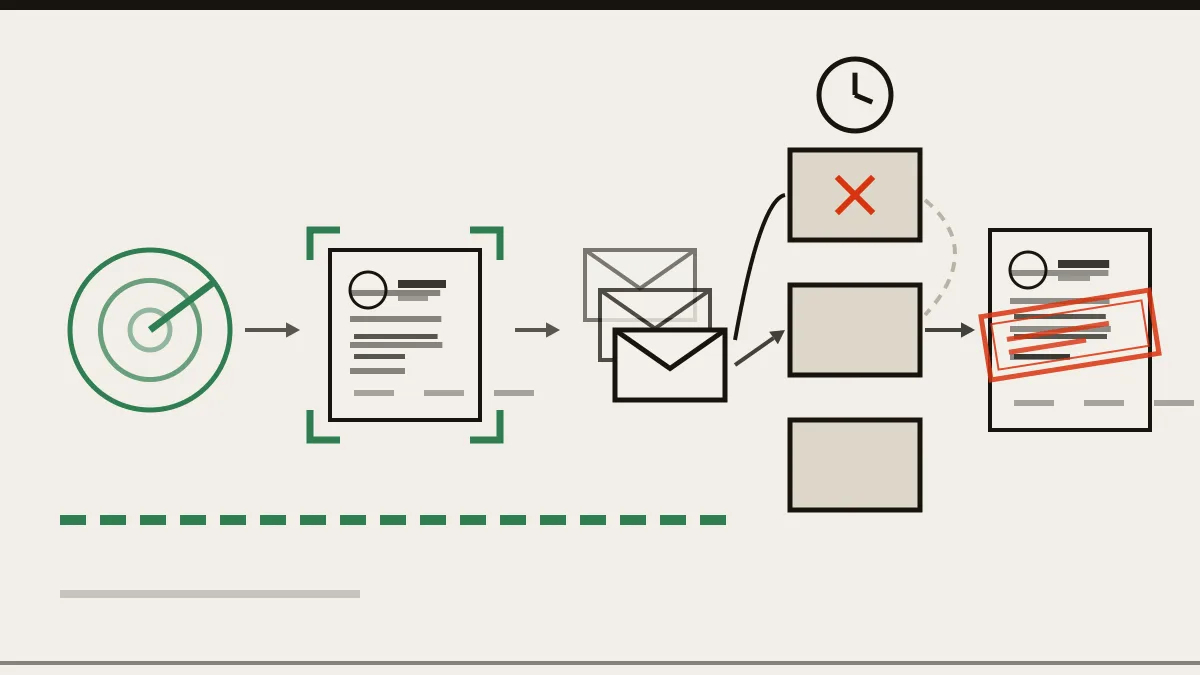
The domain takedown process has a fast half and a slow half, and the vendors selling automated domain takedown solutions automate the fast half. Detection, screenshotting, collecting WHOIS and hosting data, and sending the notice can all run without a person. The decision cannot. A registrar, a host or a CDN still reads the notice and decides, and what decides their answer is the category of harm, not the sender's software.
Phishing and malware are where "fast" is real. Since 5 April 2024, ICANN's DNS-abuse amendments oblige registrars that receive actionable evidence of malware, botnets, phishing or pharming to act "promptly", and brand-protection firms have built their speed around that duty. Netcraft, for one, says its median takedown time for phishing sites is 33 minutes, and describes the automated part plainly: it "collects and packages the technical proof required" and sends it through registrar, hosting and platform relationships (Netcraft, cybercrime takedown). The volume explains why automation exists: the APWG counted 971,181 phishing attacks in the first quarter of 2026, up from 853,244 in the last quarter of 2025 (APWG Q1 2026 report, via Newswire).
A fast domain takedown does not exist for content disputes. If a site defames you, copies your text or sells reviews, it is outside ICANN's abuse definition, and an automated website takedown tool will send notices that the registrar can lawfully ignore. Those cases go to the host under its terms or copyright policy, to a UDRP complaint where the domain itself copies your trademark, or to a court. A counterfeit website takedown sits in between: hosts and payment processors act on trademark complaints, and in the UK the police unit that handles it, PIPCU, has had its funding renewed from April 2026 to March 2029 after disrupting "more than 100,000 websites" since 2013 (GOV.UK, IPO funding for PIPCU, 9 March 2026). We covered the registrar layer and the UDRP fee table in our briefing on domain takedown service versus website takedown service, so we will not repeat it here.
Choosing a cyber takedown provider without buying a ban
"Cyber takedown" is a brand-protection term. A legitimate cyber takedown provider monitors for lookalike domains, fake apps and counterfeit listings, files notices under a client's own rights, and reports what each switch-holder did. It works for the rights owner and only against material that infringes or defrauds. Ask any provider three questions: whose name signs the notices, which right each notice relies on, and what the provider does when a host says no. A provider that answers "volume" to the third question is selling something else.
That something else is the ban trade, and it uses the same words. An Instagram ban service or a Twitter ban service will call itself a takedown provider, and a TikTok ban service quotes prices for outcomes it cannot control. The Facebook ban service sellers shift legal risk onto the buyer, the WhatsApp ban service listings cannot see inside encrypted chats, and the Telegram mass report bot panels reach a report button, nothing more. None of them holds a switch.
The same reader test on the big social apps
The social platforms work the same way as everything above. A report is read by a moderator against a rule, a rights notice is read by a legal team and often forwarded, and the account owner learns more than you might like. What differs is the menu.
On Instagram, the question of how to get someone banned on Instagram comes down to which policy the account breaks, and a full Instagram account takedown follows either repeat breaches or one of the identity forms. TikTok sorts things much the same way: how to get someone banned on TikTok depends on the reason code you pick, and how to get a TikTok account taken down when it copies you depends on the side-by-side proof you attach. On X, our explainer on how to get someone banned on Twitter separates what you control (block, mute, report) from what only X can do.
Snapchat is the platform where people expect the least and find the most hidden. Learning how to get someone banned on Snapchat starts with the fact that most of what happens there disappears, so evidence has to be captured before anything else; when the account itself is the problem, how to take down a Snapchat account walks through the in-app and web reports. Meta's two big apps each have a page of their own. For Facebook, how to get someone banned from Facebook explains what Meta actually acts on, and how to take down a Facebook account covers both your own account and someone else's. WhatsApp is narrower still: how to ban someone's WhatsApp number is mostly about block, report and the last messages a report carries.
LinkedIn is where professional identity is the asset at stake, and a LinkedIn account takedown usually turns on an impersonation form or a defamation notice rather than a rule report. The pattern holds on every one of these services: the document that names a breach or a right does the work, and everything that only adds numbers does not.
What we won't file, and what none of these routes can remove
Some things stay up whatever route you choose. Truthful reporting about you, genuine public records, and opinion that is fair comment cannot be removed through a platform form, a copyright notice or a registrar complaint, and trying usually backfires: the notice gets forwarded, sometimes published on Lumen, and the attempt becomes its own story. For those, the lawful tool is suppression, which means building and promoting accurate material until it outranks the damaging page, and we say which of the two applies before any work starts.
We do not forge or bluff notices. A DMCA notice is signed under penalty of perjury, and a knowingly false one exposes the sender to damages under US law; the same caution applies to trademark claims and App Store disputes, where the other side's lawyer reads your words. We never ask for anyone's password, and nobody legitimate will. The same goes for the tools sold as shortcuts. An Instagram spam report bot and a Facebook mass report tool both run on accounts that risk their own suspension, a WhatsApp mass report bot usually needs the buyer's own number, and a Snapchat mass report bot has no public endpoint to call at all.
Intimate images are the exception to every queue on this page. Those cases get free, same-day triage, and we route them through hash-matching services such as StopNCII rather than asking anyone to send the material. In the US, platforms covered by the TAKE IT DOWN Act have had to remove non-consensual intimate images within 48 hours of a valid request since 19 May 2026. Our full list of limits is on the disclaimer page, the people who review cases are on our about page, and the rights-based notices themselves, platform by platform and host by host, are in our DMCA takedown notice briefing.