What does an Instagram report for harassment ask Meta to decide?
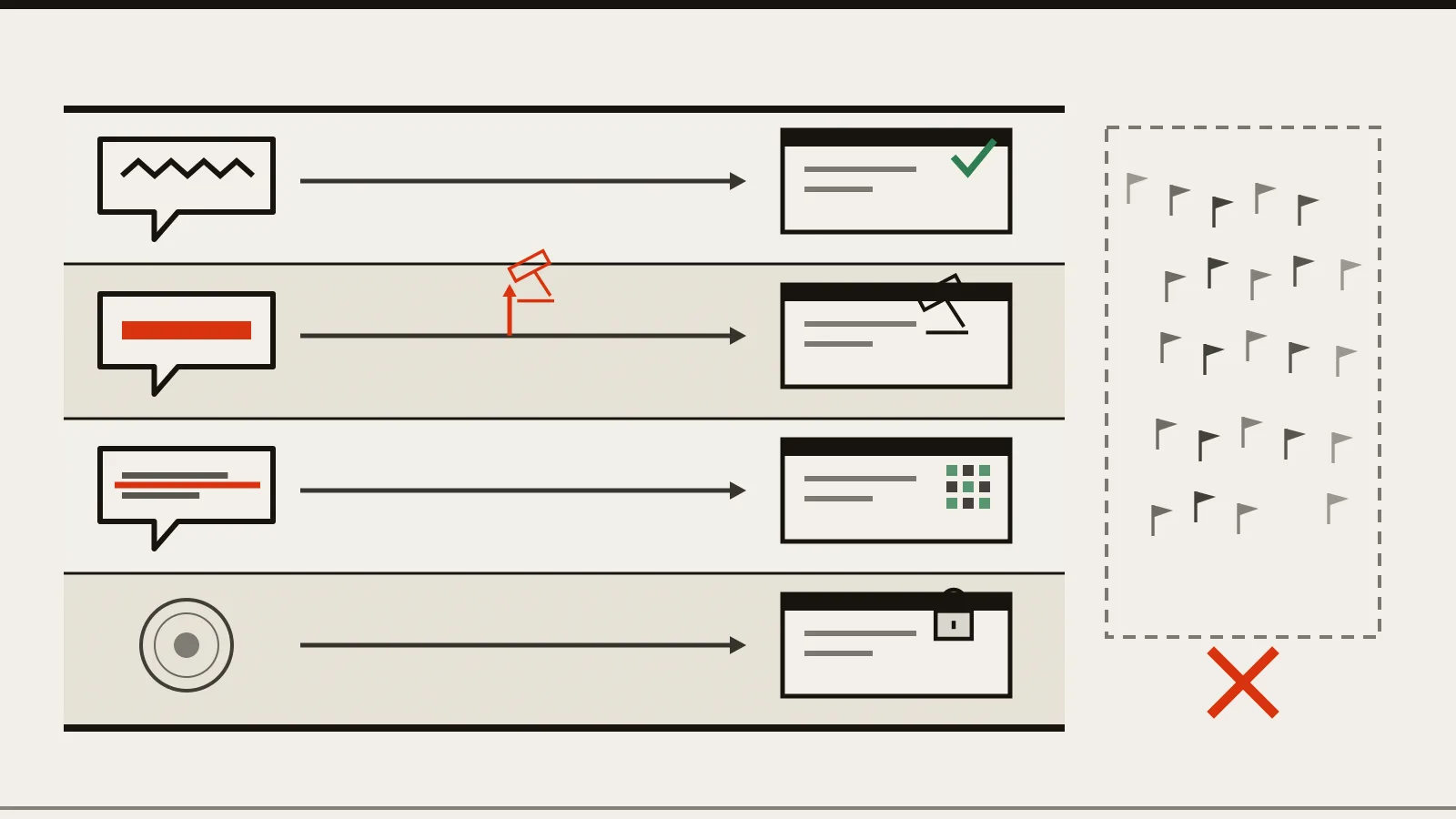
An Instagram report for harassment asks a reviewer, or first a classifier, a narrow question: does this one item break this one rule, and is the person filing entitled to raise it? It does not ask whether the account is cruel, how many people dislike it, or whether its owner deserves a ban. Meta sorts hostile behaviour into at least four rulebooks. Insults, pile-ons and contact after someone has said stop fall under Bullying and Harassment. Statements of intent to hurt someone fall under Violence and Incitement. Slurs aimed at a protected group and sexualised abuse have policies of their own. And the phrase people type into search, "instagram report abuse", sometimes means something else again: a business name lifted into a username, which only the trademark owner can report. Each rulebook sets its own threshold and its own answer to who may file. File under the wrong one and a genuine case comes back as "no violation".
That is the whole problem in one paragraph. Everything below is about getting the lane right.
| Lane and what it looks like | Rulebook Meta applies | Who can file so it counts | What to run alongside |
|---|---|---|---|
| Harassment and bullying: repeated insults, mockery of someone's looks, pile-ons, messages after "stop" | Bullying and Harassment | Often the target alone, for private adults; anyone, for minors and the gravest tiers | Restrict, Limits, Hidden Words, a dated log |
| Threats: "I know where you live", a threat with your address attached, a threat to leak images | Violence and Incitement | Anyone who sees it, except low-severity threats against a private adult | Police first; 999 if the danger is immediate |
| Hateful or sexual abuse: slurs about race, religion or sexuality; unwanted sexual messages; intimate images | Hateful Conduct, Adult Sexual Exploitation, privacy rules | Anyone; intimate images also through StopNCII hashing | Hash the images; report under the image's own reason |
| "Trademark abuse": a brand name or logo used in a username, bio or posts | Intellectual property (trademark form) | Only the registered owner or someone authorised by them | Not a harassment tool; misuse can cost the filer their account |
Most people who type "instagram report harassment" into a search bar expect a single button, and the menu does nothing to correct them. The Instagram report harassment flow is really four flows sharing one entrance.
None of the four lanes counts votes. A lawful answer to how to get someone banned on Instagram is the same answer: match one item to one rule, filed by the right person. An Instagram account takedown runs on that matching too, only at account scale. Because Meta applies one set of Community Standards across its apps, the Facebook version of the question, how you get someone banned from Facebook, gets the same reply.
Harassment, threat or abuse: which lane is your case in?
Sort by what the words do. Not by how much they hurt.
That sounds cold, and it is meant to. The reviewer reads the item without your history, often without the conversation around it, and checks it against a written policy. The question they can answer is whether this comment mocks a private person's appearance, whether this message threatens violence, whether this caption uses a slur. Your fear is real; it is just not a field in the form. So before you open the menu, write one line for yourself: what does the worst item actually say or do? That line picks the lane.
When an Instagram bullying report is the right lane
Bullying and Harassment is the policy for degrading, mocking, unwanted or pile-on behaviour aimed at a person. Meta writes it in tiers. Public figures, a category that covers state and national officials, candidates, people with over one million followers and people with substantial news coverage, get the least protection. Private adults get more. Minors get the most, and many attacks on a child are removable whoever reports them. The catch sits in the middle tier. For a range of attacks on private adults, Meta says in its Bullying and Harassment policy that it requires self-reporting, because a report from the target is how it knows the person feels targeted. A friend who files on your behalf may watch the same comment come back untouched. As of October 2026 the policy's last update, dated 24 September 2026, added a section on harassing pranks, so filmed "prank" humiliation now has a named home in the rules.
In the report menu, an Instagram bullying report goes under "Bullying or unwanted contact", the second of nine reasons offered when you report a post. The option you need to report bullying Instagram labels in exactly those words; choose it for mockery, pile-ons and repeated unwanted contact, and keep the other reasons for the lanes below.
While the report waits, cut the supply. Limits hides new comments and chats from accounts that don't follow you, from recent followers (those who started following in the last week) or from everyone except close friends, for up to four weeks at a time, and the people limited aren't told. Restrict is narrower: the restricted person's new comments are visible only to them unless you approve one, their chat moves to message requests, and they can't see when you're online or whether you've read their messages. Hidden Words filters offensive comments and message requests, plus any custom words you add, such as your own nickname misspelled the way the bully spells it. None of these removes anything. They buy quiet while the report runs.
How to report threats on Instagram
A threat is a different animal. Meta's Violence and Incitement policy removes credible threats to personal or public safety, and it weighs context such as how visible the threat is and whether there is a real risk to physical safety. Self-reporting matters only at the low end: private adults are protected from low-severity threats when they report them themselves. Anything more serious, anyone can report. The policy's change log shows 28 September 2024 as its last update.
Here is the part most guides leave out. When the message threatens violence, Instagram is the second call, not the first. Capture the message with the username and time visible, ring the police (999 in the UK if you are in danger right now, 101 or the online form otherwise), and then report it. Instagram's own Help Centre makes the same point in its parents' guidance: in an emergency, contact your local police department.
When the abuse is hateful or sexual
Slurs and dehumanising language aimed at someone's race, religion, sexuality, disability or similar characteristics sit under Hateful Conduct, which Meta renamed from Hate Speech in January 2025. Unwanted sexual messages sit partly under Bullying and Harassment, where Meta treats the recipient as the person who confirms the contact was unwanted, and partly under its sexual exploitation rules. If the abuse involves intimate images of you, the lane changes completely: use StopNCII.org to create a hash of the image on your own device so participating platforms, Instagram among them, can block matches without anyone seeing the picture. In the US, the TAKE IT DOWN Act has required covered platforms since 19 May 2026 to remove reported intimate images and known identical copies within 48 hours. Send us the details, never the images; leaked-image cases get urgent triage at no charge.
Report trademark abuse on Instagram? Only if you own the mark
People search how to report trademark abuse on Instagram when a harasser has dragged a business into it: a shop's name in a burner username, a logo in a mocking bio. The trademark report form is the only route that uses the word, and it is not a harassment tool. It asks for a registered trademark, one per report, with its registration number; it accepts reports only from the rights owner or someone authorised by them; and, as of October 2026, it warns that abuse of the form may end the filer's account. The only abuse that form threatens to punish is the reporter's. Our team also notes that Meta passes the rights owner's name and the filer's email to the person reported, which is the last thing a harassment target wants. If the account is pretending to be you rather than your brand, the right queue is impersonation, and someone impersonating me on Instagram has two queues for a reason. Where the fake is sitting on X instead, a fake Twitter account removal works through the same proof-of-identity logic.
How to report harassment on Instagram from each surface
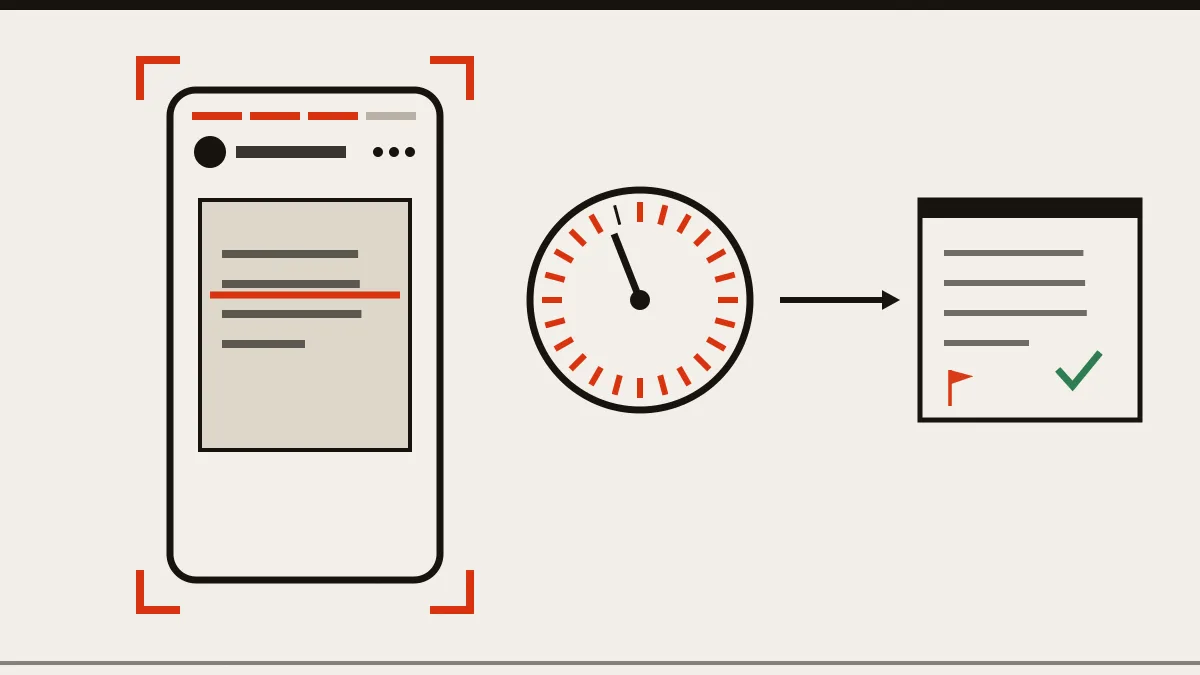
Every report starts on the item. The old standalone harassment form at help.instagram.com/contact/188391886430254 returned "Not Found" when we checked it on 5 October 2026, and nothing has replaced it for adults with an account. On Instagram reporting harassment means pressing Report on the comment, the post, the Story, the chat or the profile itself, then picking the reason that matches the words. The in-app reports are anonymous: the account you report does not see who reported it. Intellectual-property reports are the one exception.
For comments and posts the taps are short:
- Comment: tap Comments below the post, press and hold the comment, tap Report. On a computer, hover over the comment and click Options.
- Post or Reel: tap the three dots above the post, tap Report, then follow the on-screen reasons.
- Pick the reason that fits the lane: "Bullying or unwanted contact" for harassment, the violence option for threats, and the hate or nudity options for abuse of those kinds.
- Report each item separately. A reviewer judges what is in front of them, and ten weak reports do not add up to one strong one.
For a fuller walk-through of the item menus, including photos you appear in but did not post, see our briefing on reporting a comment, post, photo or Story on Instagram.
Report Instagram story for bullying or harassment before it expires
A Story disappears after 24 hours unless its owner saves it to a Highlight, and you cannot report what you can no longer open. So the order is fixed: capture, then report. Screen-record the Story with the username and the time visible, because a cropped screenshot of a Story proves very little on its own. Then, to report abusive Instagram story content, open the Story, tap the three-dot menu at the top (or the report icon on a computer), choose Report and follow the reasons. You can report Instagram Story harassment the same way when the Story mocks you, publishes your details or tells followers to pile on. Keep the recording either way. If the case later reaches the police or a solicitor, a dated video of the Story is worth far more than a report reference you cannot show anyone.
Report abusive messages in Direct: the chat, not the profile
Direct messages need their own route. Instagram's Help Centre says plainly that you should report the chat and not the account, because the team that reviews profiles does not have access to direct messages. A profile report about a message campaign sends the reviewer to a page that may look perfectly ordinary. The quickest way to report abusive messages Instagram users send in Direct is from inside the conversation: press and hold the worst message and tap Report, or open the chat details and report the conversation. Message requests from strangers can be reported without accepting them.
Report Instagram account for harassment when it is a pattern
Searches like "report harasser on Instagram" assume the person is the unit of review. Usually it is not; the item is. The exception is an account that exists to harass: a burner named after you, a page that posts nothing but your photos, a profile set up the day after you blocked the original. That is when you report Instagram account for harassment from the profile itself: open the profile, tap the three dots, tap Report and choose the reason that describes the account rather than one post. Report the worst individual items as well. The account report tells the reviewer what the account is for; the item reports give them something concrete to remove.
Who has to file: the target, a parent, or anyone?
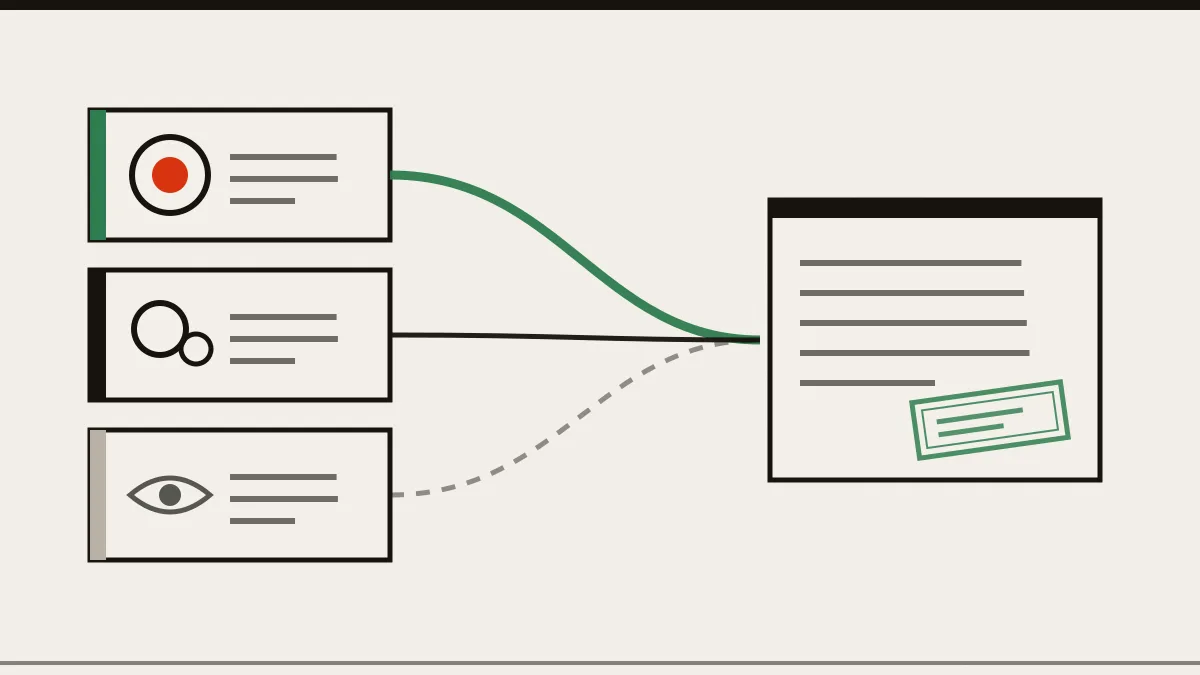
Who files matters as much as what they file. You can report Instagram harassment about anyone, but the report that counts may have to come from a particular person. This is the part of Meta's rules that turns a strong case into "no violation" most often, and it is written into the policy rather than hidden in practice.
| Situation | Who should file | Why |
|---|---|---|
| Private adult insulted, mocked or contacted after "stop" | The target, from their own account | Many attacks on private adults count only when self-reported |
| Someone under 18 being bullied | The child, a parent or anyone who sees it | Minors sit in the most protected tier |
| A threat of serious violence | Anyone who sees it | Self-reporting applies only to low-severity threats |
| Slurs, hateful imagery, intimate images | Anyone; images also via StopNCII | The rule is about the content, not the target's view |
| Target has no Instagram account | A friend with an account, or Meta's no-account form | The in-app menu needs a logged-in user |
| A brand name used to harass | The trademark owner or their agent | The IP form refuses anyone else |
When we work these cases, the report that comes back actioned is nearly always the one filed by the target, from the target's own account, against the single worst item, under the reason that matches its words. Reports from friends, from a partner's phone or from a parent about an adult child stall far more often, and Meta's own statements explain why. In an Oversight Board case decided on 30 April 2026, about abusive comments aimed at a wheelchair user, Meta described on-behalf reporting as technically difficult; the Board's recommendation to let connected accounts report for someone was still marked in progress. So if you can file yourself, file yourself, even if a friend found the comment first. A friend's report is not wasted, but on its own it may not be the one that counts.
How to report cyberbullying on Instagram when the target is under 18
Children are the easy case in Meta's rules and the hard case in real life. Anyone can report bullying aimed at a minor, and the child does not have to self-report, so a parent who wants to report bullying on Instagram should report every item they can see, from their own account, under "Bullying or unwanted contact". That, in one line, is how to report bullying on Instagram for a child: every item, your own account, the matching reason. Then work on the child's account with them: Restrict the bully, switch on Limits, and add the names and nicknames being used to Hidden Words.
Two jurisdictions add teeth. California's cyberbullying statute, as amended by SB 1504 (signed 28 September 2024), requires covered platforms to let anyone report cyberbullying of a minor, to confirm receipt within 36 hours, to send updates every 14 days and to give a written decision within 30 days. In Australia an Instagram cyberbullying report that gets no answer within 48 hours can go to eSafety, which can order removal within 24 hours; eSafety received 3,406 cyberbullying complaints in 2024–25, up 26% (eSafety annual report, 2025). The UK has no equivalent individual complaint route: Ofcom regulates the systems under the Online Safety Act but says it cannot investigate individual complaints.
What happens after an Instagram harassment report, and what the September numbers show
You get a notice in Support Requests under Settings, usually saying the item was removed or that it does not go against the Community Guidelines. There is no published deadline for in-app reports. The nearest official clock is the EU one: in Meta's DSA transparency report for January to June 2026, legal notices about Instagram content that Meta acted on took a median of 28.89 hours from notice to action (Meta DSA VLOP transparency report, 28 August 2026). In-app reports are a different, larger queue.
We wanted a sharper picture of what the harassment lane actually produces, so on 5 October 2026 we counted Instagram's September 2026 entries in the EU's public DSA Transparency Database, where platforms file a "statement of reasons" for every moderation decision affecting EU users. Of 11,221,242 Instagram statements for the month, 30,276 were filed under cyber violence, the EU category for bullying, harassment and stalking. Only 40 of those were account terminations. The broader violence category, which also covers terrorism and trafficking, had 49,587 statements and 7,070 terminations. Hateful and illegal speech had 24,682 statements and 19 terminations (our count of the DSA Transparency Database, 5 October 2026).
Read those numbers for what they are. Instagram harassment removal is overwhelmingly item removal: a comment comes down, a Story goes, a post disappears, and the account stays. The database records the category Meta chose, so it cannot show harassment decisions Meta filed under another heading, and it covers EU users only. Still, the shape is clear. An instagram harassment report removes things; a credible threat is far more likely to remove a person.
Volume does not change any of that. A report wave aimed at one account is the business model behind every mass report Instagram account panel on GitHub, and the Instagram spam report bot sold on Telegram makes the same promise with less code. The pattern holds on every platform we have tested: the TikTok mass report bot lands on a queue that weighs the item, a campaign to mass report a Twitter account runs into the same filter, and even the YouTube mass report bot market sells quota rather than outcomes. Our own measurement of how report counts relate to strikes is in how many reports it takes to get banned on Instagram.
When the answer is "no violation"
Ask for a review from the notice; you can usually do so straight away. If the reviewed decision stands and it involves content that is still up, Meta may offer an Oversight Board referral, and EU users can take the dispute to a certified out-of-court body such as Appeals Centre Europe, which charges users nothing. These routes work more often than people expect. In the first half of 2026, EU users lodged 5,179 complaints against Instagram decisions not to act on their notices, and 1,542 of them, roughly three in ten, were reversed (Meta DSA VLOP transparency report, 28 August 2026). Before you appeal, check the lane, and check who filed. A "no violation" on a third-party report about an adult is often a self-report problem rather than a judgement that the words themselves were acceptable.
When is an Instagram harassment police report the right first move?
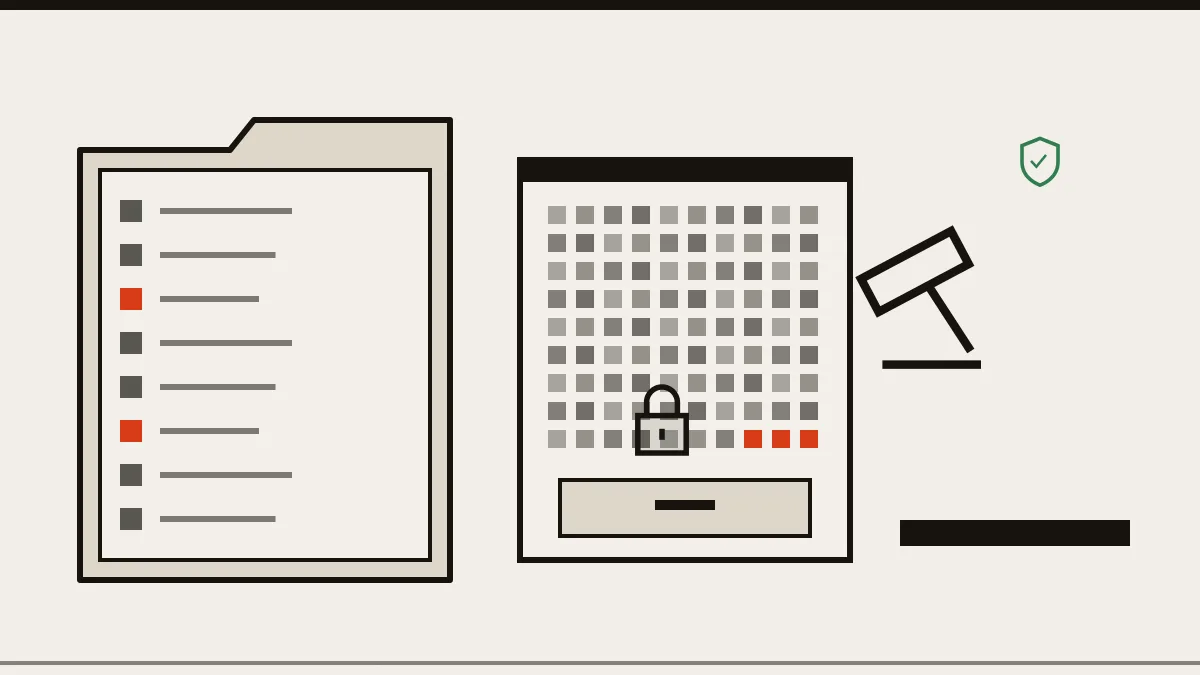
Go to the police first when the conduct is a crime in its own right, not merely a breach of Instagram's rules. Threats of violence, stalking that reaches your home or workplace, threats to share intimate images, demands for money and campaigns that spill into your offline life all qualify. So does any risk to a child. In England and Wales, harassment under the Protection from Harassment Act 1997 needs a course of conduct, which section 7 defines as conduct on at least two occasions, and putting someone in fear of violence carries up to ten years. Section 181 of the Online Safety Act 2023 makes sending a threatening communication an offence carrying up to five years in England, Wales and Northern Ireland. In the US, 47 U.S.C. § 223 covers threatening and harassing communications with up to two years, alongside state stalking laws. The FBI's Internet Crime Complaint Center logged 21,557 harassment and stalking complaints in 2025, against 11,672 in 2024 (FBI IC3 annual report, 2025).
The second reason to start with the police is evidence. Meta's law enforcement guidelines say it will preserve account records for 90 days in connection with an official criminal investigation, pending formal legal process. Only the police can ask for that, and a user's report does not trigger it. Instagram's Help Centre is equally clear that it does not hand non-public information to private individuals without a search warrant or subpoena, and that it does not mediate disputes. If the harasser deletes the account before an officer has asked Meta to preserve it, the records behind that account may simply be gone.
So bring the officer something they can act on. A one-page log works best: date, time, username (not display name), profile link, what was said, and a screenshot or recording reference for each entry. Add "About this account" details from the profile, such as the date joined and the count of former usernames. Bring the crime reference back to us or to your solicitor; it changes what a platform, a court or a lawyer's letter can do next.
What an Instagram harassment report service can and cannot do
An Instagram harassment report service worth paying for does the work around the report, not the reporting itself. That means sorting the case into the right lane, building the evidence log, preparing the target to file from their own account, drafting appeals to Meta and out-of-court bodies, instructing a solicitor where the words are defamatory, and handling copies that have spread to Google, forums or other apps. It does not mean logging into your account (we never ask for passwords), buying reports, or bluffing legal threats. The ban-for-hire trade sells the opposite. Our teardown of the Instagram ban service market shows what changes hands, and the same pattern repeats with every Twitter ban service, Facebook ban service, WhatsApp ban service, TikTok ban service and YouTube ban service we have looked at. The tooling underneath, whether a Facebook mass report tool or a Telegram mass report bot, files the reports you could file yourself, just more of them under the wrong names.
Some things do not come down at all. A truthful news report about you, a genuine court record and an honest negative opinion are not harassment, however painful, and no lawful route removes them; at most they can be pushed down in search results, which is suppression, not removal. Forging a copyright notice or a defamation threat against that kind of content tends to backfire, sometimes into a lawsuit and often into far more attention than the original post ever had. We say which route applies before anything is charged, and our disclaimer sets out the limits in full.
Not sure which lane your case is in? Send us the usernames and a short description, never the images, through our confidential case review. We tell you which route applies, what the target needs to file and what will not come down, before any fee is discussed.
The people doing that review are listed on our team page, with the media-law and platform-policy background each of them brings.
When the harassment follows you to other apps
Harassment rarely stays on one platform, and the lane logic travels with it. On TikTok, the lawful answer to how to get someone banned on TikTok is the same item-and-rule match, and when a video needs to go quickly, getting a TikTok taken down immediately depends on picking the reason that fits. On X, how to ban someone on Twitter is mostly about the controls you hold yourself, while how to get a Twitter account taken down covers the five instruments that reach an account. Facebook shares Instagram's rulebook, so our briefing on the Facebook harassment report route Meta acts on reads as a companion to this one, and how to take down a Facebook account covers the account-level end. The wording of the rules differs from app to app, but every one of them is written around the item, the rule it breaks and the person entitled to complain.
Snapchat is harder, because Snaps vanish and there is no public endpoint to flood; how to get someone banned on Snapchat and how to take down a Snapchat account explain what Snap acts on, and the Snapchat mass report bot teardown explains why the shortcut is fiction. WhatsApp is encrypted, so the evidence has to come from your own phone: see how to ban someone's WhatsApp number and the WhatsApp mass report bot breakdown. Doxxing channels on Telegram need the channel takedown route, a hostile upload needs the YouTube video takedown that keeps it down, and a fake professional profile needs the LinkedIn account takedown for impersonation and defamation.
Keep one case file for all of it. The same log, the same crime reference and the same lane decision serve every platform, and the person who files from their own account, under the reason that matches the words, is still the one most likely to see something come down.