Whose file is it? The one question that picks the route
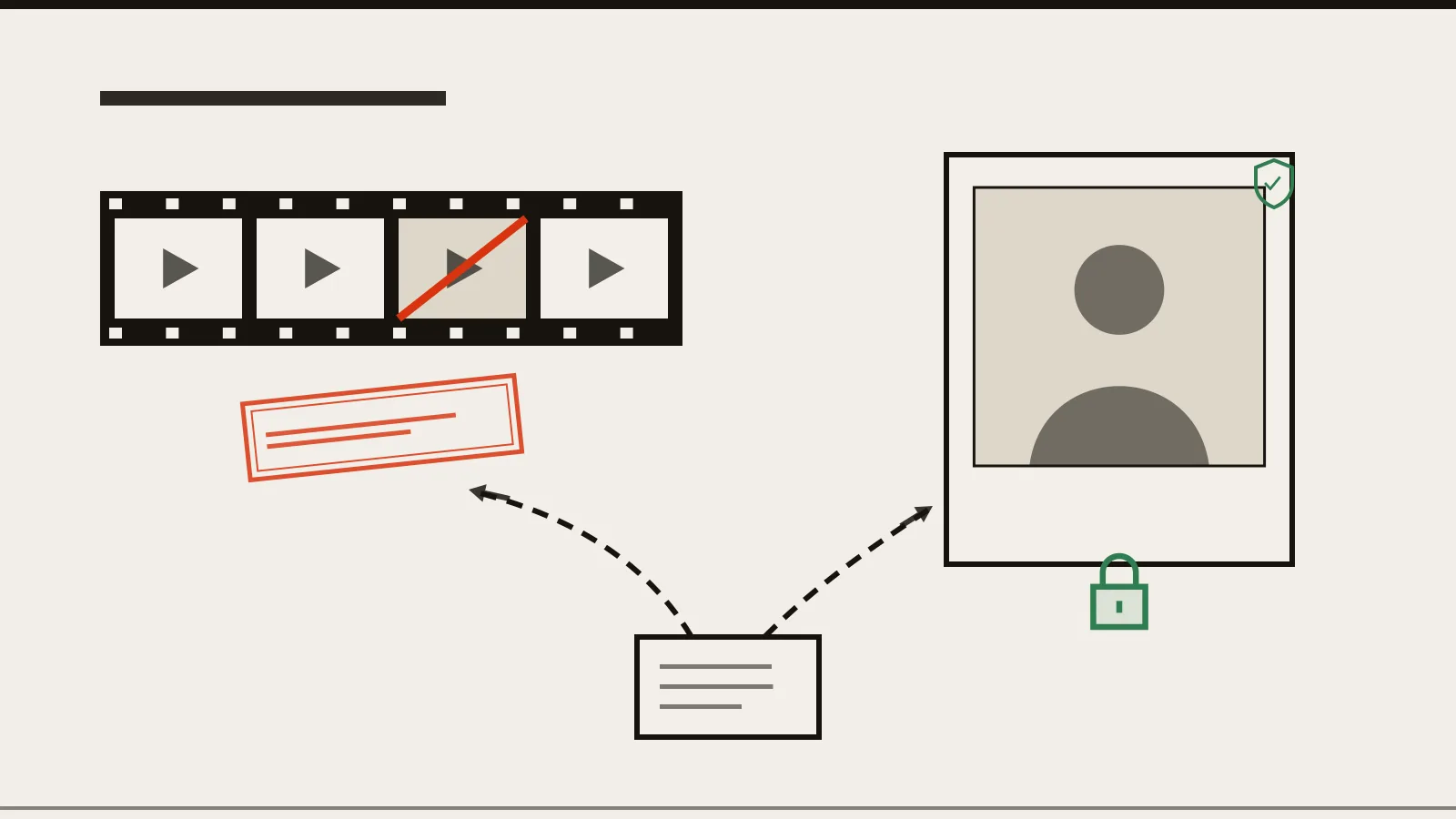
Every image and video removal case starts with the same sorting question, and most people skip it. Before you look for a form, ask what the file is to you. If you made it, you hold the copyright, and a signed notice under the US Digital Millennium Copyright Act (or the host's local equivalent) is the strongest tool you have. If it shows you, your face or your body, the right you hold is privacy, and for intimate images there are now dedicated hash-matching tools and a federal 48-hour removal duty in the United States. If it is being used against you, as a threat, a fake or a harassment clip, the route is the platform's conduct rules plus, very often, the police. The same video can sit in two trays at once: a clip you filmed of yourself that someone is now using for blackmail is both your work and your image. In that case you pick the faster tray, not the louder one.
| What the file is to you | The right you hold | Main route | Who acts | Usual clock |
|---|---|---|---|---|
| A video or photo you made | Copyright | DMCA or host copyright form | Host's copyright team | Days; 10–14 business days if counter-noticed |
| An intimate image of you | Privacy, NCII law | StopNCII or Take It Down hash, then host report | Trust and safety team | 48 hours under the US TAKE IT DOWN Act |
| A threat, fake or harassment clip | Platform conduct rules, criminal law | In-app report, police report | Safety team, police | Varies; police may ask the host to preserve first |
| A copy surfacing in search | Search engine policy | Google removal forms | Usually days, after the source is gone |
The table is the spine of everything below. A copyright notice on a blackmail image you did not take will be refused, because you are not the owner. A privacy report on a film someone ripped from your channel will stall, because the platform sees no privacy harm.
Copyright infringement video removal: what a notice can and cannot do
Copyright infringement video removal works because hosts in the US lose their safe-harbour protection if they ignore a valid notice. The law, 17 U.S.C. § 512(c)(3), lists what a notice must contain: your signature, identification of the work, the exact location of the copy, your contact details, a good-faith statement and a statement under penalty of perjury that you are the owner or authorised to act. Miss one and the host can lawfully ignore you. A video takedown notice therefore reads like a short legal form rather than a complaint, and the better ones name timestamps and the original upload date. That is the whole mechanism behind every video copyright takedown, whether you send it yourself or pay a video copyright takedown service to send it. The host removes or disables the copy; it does not punish the uploader unless its own repeat-infringer policy says so.
Three limits matter. First, a DMCA takedown video request reaches only the copy on that host; a mirror on another site needs its own notice. Second, the uploader can file a counter-notice, after which the host restores the video in 10 to 14 business days unless you show it you have filed a lawsuit. Third, a notice is a sworn statement. Sending one for a video you do not own, or to bury criticism, exposes you to damages under § 512(f), which is why we never send one on a client's behalf without seeing proof of ownership.
Infringing video takedown on the big three
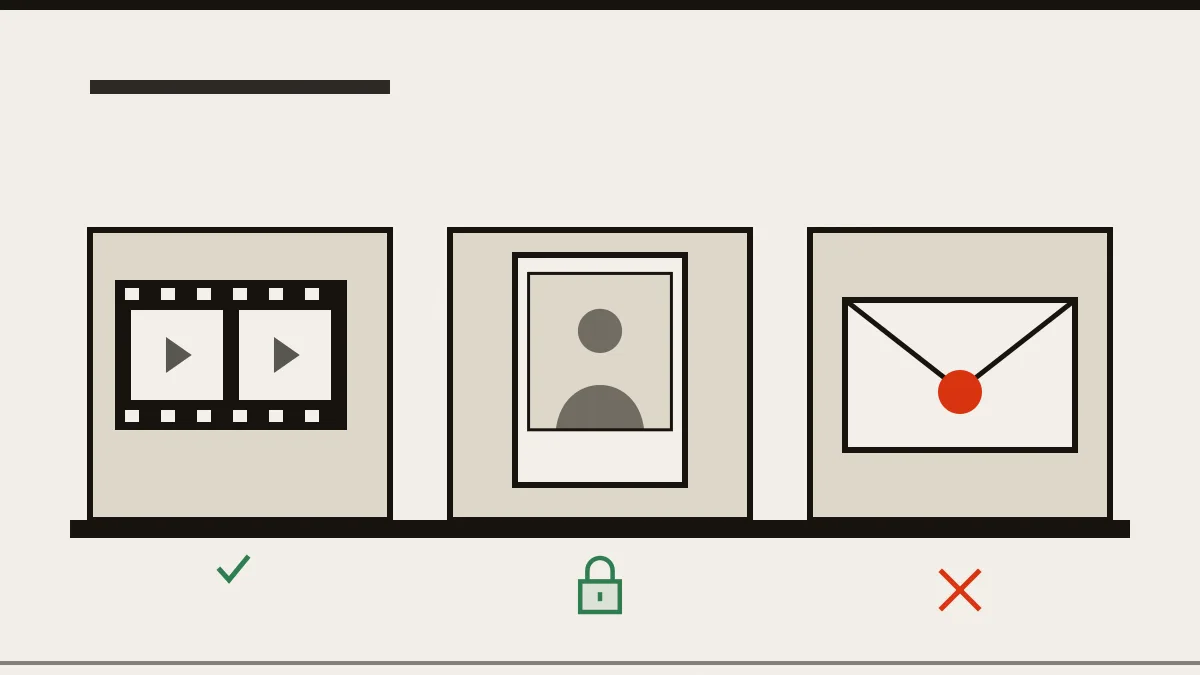
On YouTube, a video dmca takedown goes through the copyright webform inside YouTube Studio, not the generic flag, and each accepted removal can put a copyright strike on the uploader's channel. If you want the step-by-step on that form, our briefing on the DMCA takedown website vs YouTube journey walks it field by field, and the YouTube copyright strike clock explains what each strike does to the channel afterwards. Searches like "takedown video youtube" and "youtube video takedown" usually want that form. Vimeo runs its own strike count, covered in our note on who counts to three on Vimeo. For an infringing video takedown on Dailymotion, the host's Report a copyright infringement article takes one notice per video URL, refuses whole-channel requests and says valid notices are processed within 48 hours. If you want to see what is left on the page after it acts, read how to take down a video on Dailymotion in our piece on what a takedown leaves behind.
Host by host: where a stolen or harmful clip actually comes down
The fastest way to remove infringing video Dailymotion copies, Rumble re-uploads or Imgur reposts is to use each host's own door rather than a general contact address. The table sorts the doors we use most for copyrighted video removal and image removal across the web. Note the last column: several hosts treat an image of you very differently from a work you own.
| Host | Copyright door | If it shows you (not your work) | What to know |
|---|---|---|---|
| YouTube | Copyright webform in Studio | Privacy complaint process | Strikes follow accepted copyright removals |
| Vimeo | DMCA claim form | Privacy Complaint Form (you or your lawyer) | Own copyright-strike count |
| Dailymotion | Copyright report, one URL per notice | Privacy Violation and Impersonation Policy report | Fingerprinting runs through INA (video) and Audible Magic (audio) |
| Rumble | DMCA notice to the agent named in its Terms | Report the video in-app | No published strike count; repeat infringers terminated |
| Imgur | DMCA notice | Report the image as private or intimate | Hotlinked copies die with the original |
| Grindr | dmca@grindr.com | In-app Report, then Impersonation | Screenshot before you report |
| Google Search | Legal removal request | NCII and personal-info removal forms | Removes the result, not the page |
To remove stolen video from Rumble, send the notice to the copyright agent named in Rumble's Terms (last revised 1 September 2026) rather than flagging the video; a flag asks a moderator for an opinion, a notice triggers a legal duty. Rumble publishes no strike count, only a rule that repeat infringers are terminated "in appropriate circumstances". Our note on what a Rumble copyright strike means for the uploader sits beside the Twitch and YouTube channel routes. For anyone trying to remove stolen video Dailymotion re-uploaded from a channel, a dailymotion video takedown works the same way: one notice per address.
How to get image removed from Imgur, and the Grindr photo takedown
Imgur is the usual place a blackmailer parks an image before linking it everywhere. If you took the photo, an Imgur copyright takedown request is the clean route, and every forum post that hotlinks the Imgur file goes blank when the original dies. If you did not take it but it shows you, report it as a private or intimate image instead; a dmca image takedown filed by someone who is not the photographer is the most common refusal we see. The FTC treats image-sharing sites as covered platforms under the TAKE IT DOWN Act, so an intimate image now carries the 48-hour duty there too. A Grindr photo takedown follows a different logic. Grindr profiles are reported from inside the app: open the profile, tap Report, choose Impersonation, and screenshot it first, because the profile disappears from your view once reported. If the photos are ones you took, Grindr's Terms name dmca@grindr.com for copyright notices.
Remove blackmail images online: evidence, hash, report, in that order
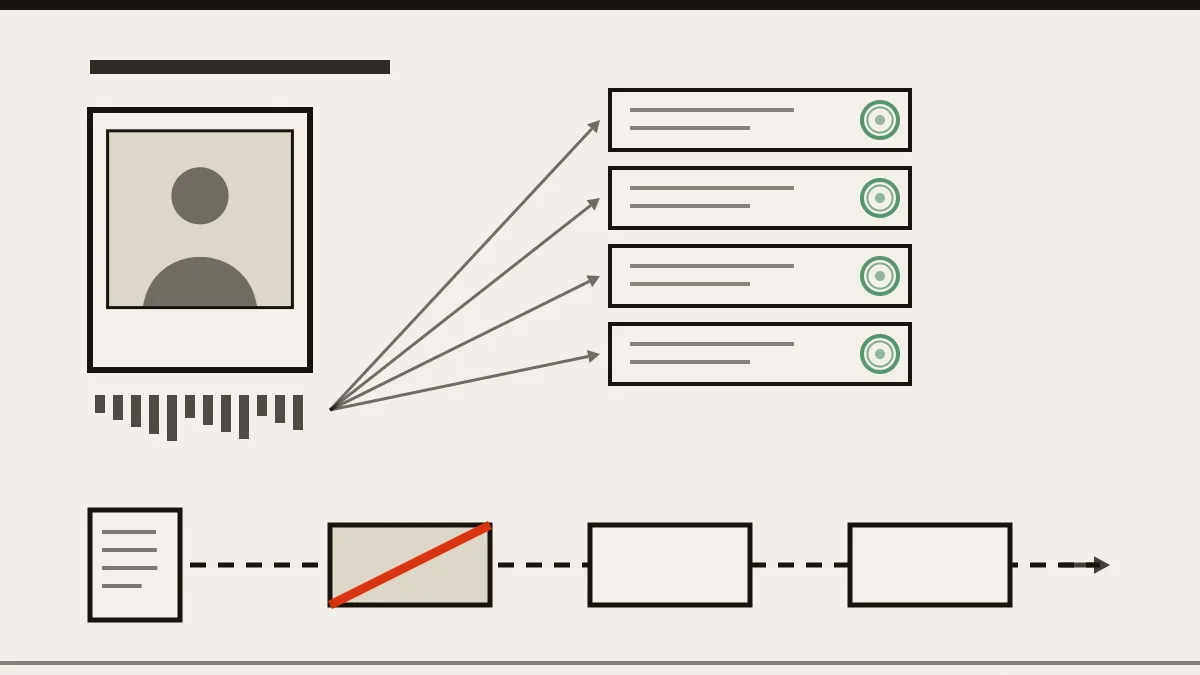
To remove blackmail images online without making things worse, the order matters more than the speed. Blackmail involving intimate images is called sextortion, and the FBI's sextortion guidance is consistent: do not pay, do not delete the messages or profiles, and report it at tips.fbi.gov. Payment rarely ends the demands. So the first step is preservation: screenshot the account, the messages, any payment address and the profile URL, because once you report, the account often vanishes and takes the evidence with it. The second step is the hash. StopNCII.org lets adults create a digital fingerprint of an intimate image on their own device; the image never leaves the phone, only the hash goes to partner platforms, which then block matching uploads. For anyone under 18, NCMEC's Take It Down does the same job. Only after the hash is in place do you report the specific posts, because a blocked upload is worth more than a removed one.
One gap is worth knowing. As of October 2026, StopNCII's partner list covers Facebook, Instagram, Threads, TikTok, Reddit, Snap, X, Bluesky, Bing, OnlyFans, Pornhub and Patreon, among others, and Google Search has used its hashes since 17 September 2025. YouTube, Vimeo, Dailymotion, Rumble and Imgur are not on that list. On those hosts the hash protects nothing, and each copy still needs its own report.
The legal ground also moved. In the US, the TAKE IT DOWN Act was signed on 19 May 2025; it makes publishing non-consensual intimate images, including AI-made ones, a federal crime, and since 19 May 2026 covered platforms must remove a reported image and its known identical copies within 48 hours of a valid request. The FTC began enforcing it that day, with civil penalties of $53,088 per violation. In the UK, sharing an intimate image without consent has been an offence under section 66B of the Sexual Offences Act 2003 since 31 January 2024, with no need to prove intent to cause distress. Both matter to anyone trying to remove blackmail photos online, because a host that once shrugged now has a statutory clock.
If the blackmail is a scam using someone else's photos, the trail usually runs through paste sites and throwaway domains; our malicious domain takedown briefing covers the registrar and hosting side, including how to take down a Pastebin paste that lists your details.
If this is happening to you now, talk to us confidentially. NCII and sextortion cases get free, same-day triage, and we will never ask you to send us the images.
How do you get a scam or harasser's video removed?
To get a scam or harasser's video removed, stop thinking about copyright and start thinking about conduct. A video that films you, mocks you or pretends to be you is rarely your copyright. A DMCA notice for it gets refused or, worse, hands the uploader your name, because many hosts forward notices in full. The stronger reports are the ones that match the platform's own rules: harassment, privacy, impersonation, or fraud. YouTube's privacy complaint process, for example, asks whether you are uniquely identifiable in the video and names recordings made without your knowledge in private settings. Vimeo's privacy form must come from you or your lawyer and say where you appear. A scam video that uses your face to sell a fake investment is an impersonation case first; our guide to someone is impersonating me online reports covers ads and scam videos on YouTube and X, and the Instagram impersonation report briefing explains when Meta wants the impersonation form and when it wants the copyright one.
The same logic holds on smaller hosts. A Telegram channel reposting a harassment clip is reached through Telegram's abuse address, not a court-style notice; our Telegram copyright content removal piece explains what Telegram will and will not touch. If the clip is evidence of a crime against you, report it to the police before the host removes it, and ask the officer whether they want the platform to preserve the data first.
Finding the copies: what a reverse image search removal service really does
A reverse image search removal service does two jobs, and only one of them is removal. The first job is discovery. Google Lens, Bing Visual Search and TinEye each index different parts of the web, so a thorough search runs the same image through all three, plus a crop of the face and a crop of any background detail, because re-uploads are often cropped or mirrored to dodge matching. Video is harder: you search keyframes as stills. The second job is the clean-up, and here the honest answer is that every copy needs its own route from the table above. A search engine can drop a result, but the page still exists until the host acts. For intimate images, Google's explicit-image removal help leads to a dedicated request, and its "Results about you" tool covers results that show your phone number, home address or email. Our guide on how to remove leaked photos from Google search sets out which Google form fits which kind of result.
Anyone selling a reverse image search removal service should show you the list of copies they found before charging for removal. A list is checkable. A promise to "scrub the internet" is not.
What a video removal service can do, and what to refuse
A legitimate video removal service sells three things: knowing which door each host uses, writing notices that do not get bounced for a missing element, and following up until the copy is gone or the host gives a final answer. That is what a youtube video removal service, a vimeo video removal service, a rumble video takedown service or a video dmca takedown service actually does. None of them can remove a video that breaks no rule and infringes no right. A blackmail image removal service adds one more job: it runs the hash and report sequence for you so you do not have to open the material again. Packages advertised as "youtube ban service & video removal" are the ones to read most carefully, because a ban is the platform's decision, and nobody outside YouTube can sell it. What they can sell is accurate reports; anything else is mass flagging, which breaks the platform's rules and tends to get the buyer's own accounts flagged.
Here is the honest limit. Truthful reporting, genuine public records and protected opinion cannot be removed by any notice, only pushed down in search, and a forged copyright claim against them invites a lawsuit and a spotlight. We never file a notice without proof of ownership, never ask for passwords and never take crypto-only payment up front; our disclaimer sets out exactly what we cannot promise.
A practitioner's note: what usually happens after we file
When we file copyright notices for clients, the large video hosts usually act within a few working days, and the copy that survives is almost never on the host we filed with. It is the re-upload, the mirror on a smaller site, or the thumbnail cached in image search. So our files on these cases are long lists, not single notices, and the second sweep a week later finds as much as the first. Blackmail cases run differently. The copyright route is often closed because the client did not take the image, so the work is preservation, the StopNCII hash and platform reports under intimate-image rules, which since 2026 come with a 48-hour duty in the US. Clients often ask whether to reply to the blackmailer one more time, just to buy a few days. Our answer is no.
For Instagram, where stolen clips and photos spread fastest, the how to report stolen content on Instagram briefing covers the copyright form, and our note on how to get a video taken down on YouTube shows who holds the switch once a clip is reported. If the same artwork or still also turns up on merchandise, the route to report copyright infringement on Vimeo and on print-on-demand shops sits in our Redbubble briefing, sorted by which right you hold.