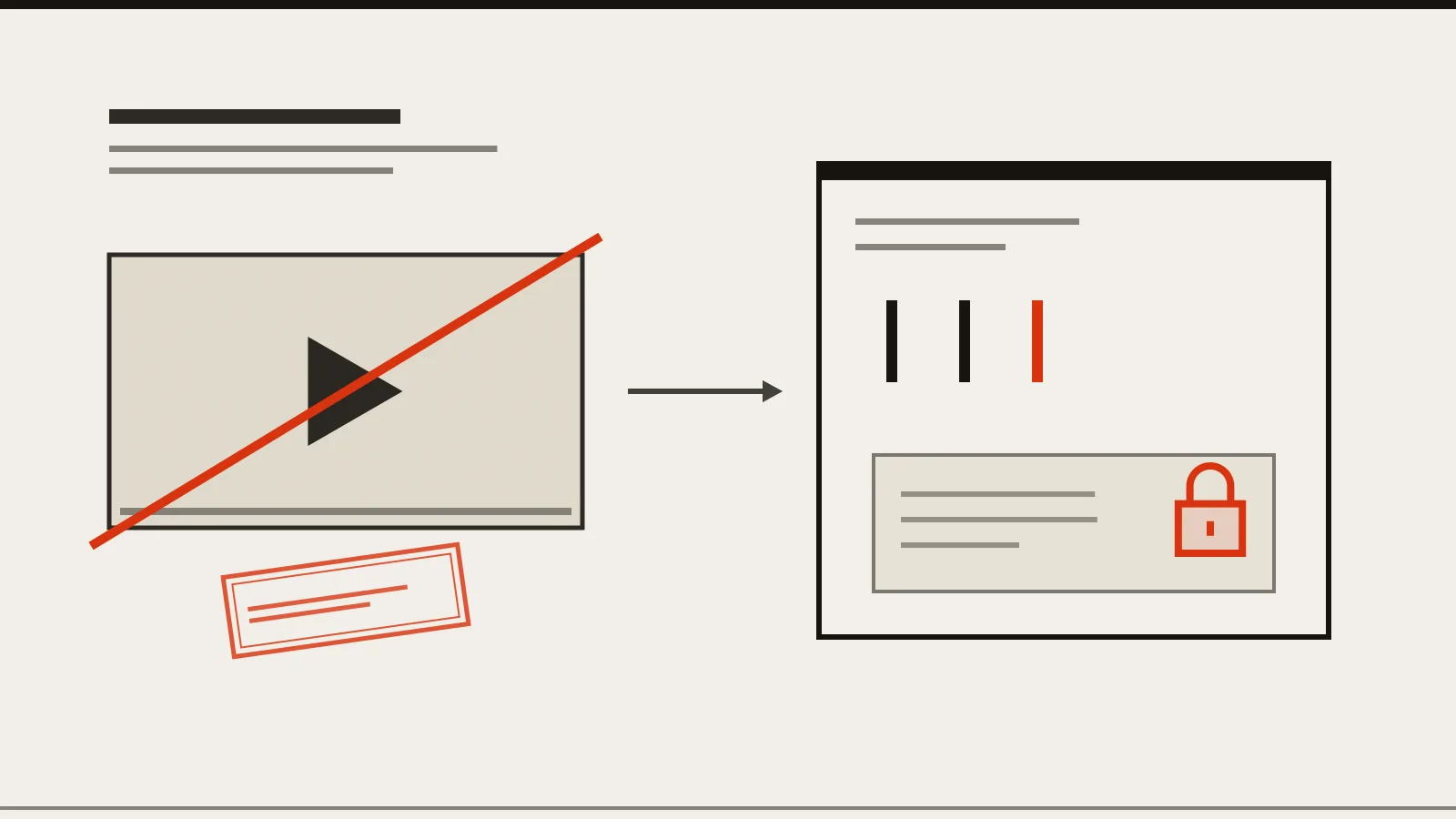
A Vimeo copyright strike is a count, not a takedown
Most people who search for a Vimeo copyright strike are asking about two different events as if they were one. The takedown happens to the video. The strike happens to the account that uploaded it. Vimeo's own DMCA policy records a strike each time it removes a video after a valid notice, and it says an account that collects three strikes is terminated, adding that it can act sooner. So a Vimeo copyright takedown answers the rights owner's problem today, while the strike is a note in someone else's file that only matters on the third entry. The person filing never sees that file. You learn that your copy came down; you are not told whether it was the uploader's first mark or the last one before the account closed. That gap is where most of the confusion, and most of the selling, around strikes comes from.
It also explains why "get them three strikes" is the wrong goal.
What is a DMCA takedown request, in one paragraph?
A DMCA takedown request is a written notice under section 512 of the US Copyright Act, sent to the company that hosts an infringing copy, asking it to remove or disable that copy. To count, it needs six things: your signature, the work you own, the exact address of each copy, your contact details, a statement of good faith that the use is unauthorised, and a statement under penalty of perjury that you own the right or act for the owner. The US Copyright Office's section 512 page sets out the safe-harbour bargain behind it: hosts that act on valid notices keep their immunity. Nothing in the statute mentions strikes. Strikes are each platform's own repeat-infringer policy, which section 512(i) requires a host to have but leaves the host to design. That is why the same notice can be a strike on Vimeo and a silent removal somewhere else.
Who counts to three? The strike ledger, platform by platform
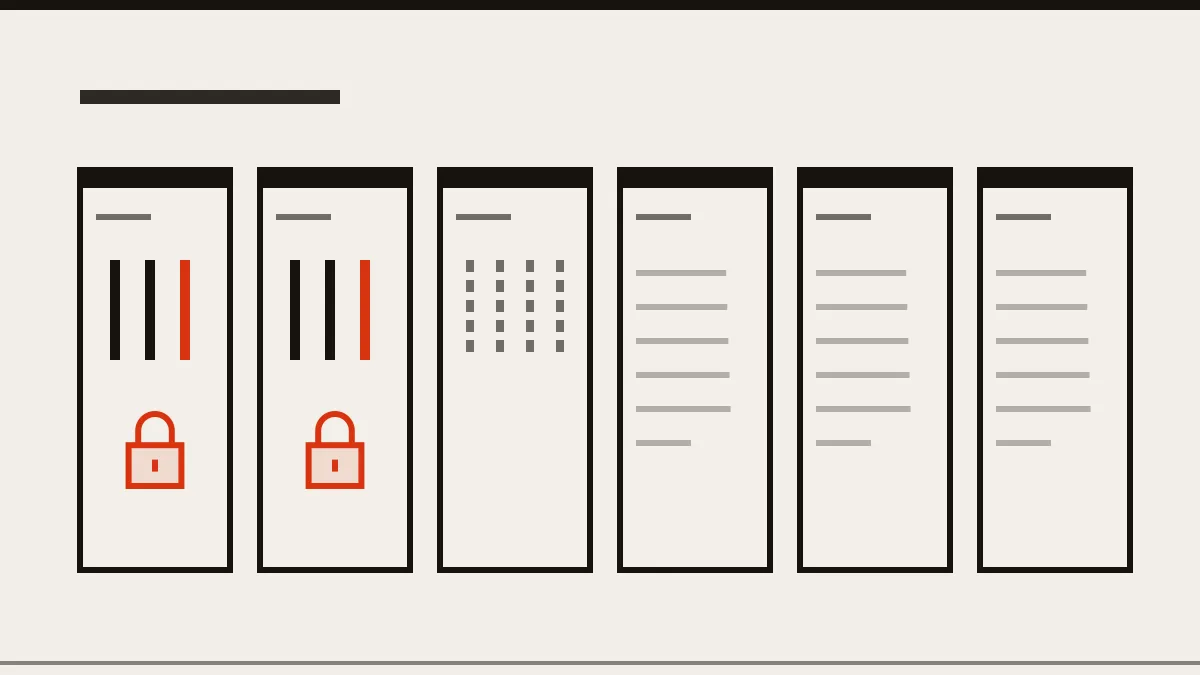
We checked each platform's published policy on 10 October 2026 and wrote down three things: what one valid notice adds to the uploader's record, when the record closes the account, and whether the uploader sees who filed.
| Platform | One valid notice adds | Account ends at | Uploader sees your details? |
|---|---|---|---|
| Vimeo | one DMCA strike (notices that arrive close together may count as one) | three strikes, or fewer | Vimeo "may disclose" notices to affected users |
| YouTube | one copyright strike | three strikes in 90 days | your name, in the removal notice |
| X | a mark under its repeat-infringer policy | no published number | the full notice, address and phone included |
| Wattpad | a recorded infringement | "multiple" infringements | not shared, per its help centre |
| VK | a removal under Russian law | no published number | not stated |
| Wayback Machine | an excluded URL or period | no uploader account exists | no uploader to tell |
What happens if you get 3 copyright strikes?
On YouTube the answer is written down. Its copyright strike basics page says channels that receive three copyright strikes in 90 days are subject to termination, that associated channels can go with them, and that the owner cannot open new ones. Vimeo works on the same number with less detail: three strikes end the account, Vimeo keeps the right to end it earlier, and its policy states no expiry at all. Wattpad closes accounts with "multiple" infringements without saying how many. X gives no number at all; its repeat-infringer policy weighs retractions and counter-notices but publishes no threshold. In practice, then, "what happens if you get 3 copyright strikes" has a firm answer on two of the six desks above, a vague one on a third, and the rest decide case by case. If you are the one being struck, the clock matters more than the count; if you are filing, neither is yours to manage.
The same rule holds on social apps, where reports pile up but never become strikes by volume. Our piece on how many reports to get banned on IG covers why the count that matters is the platform's own, not the number of people pressing a button.
How do you file a Vimeo DMCA complaint?
A Vimeo DMCA complaint goes through the claim form at vimeo.com/dmca/claim or by email to dmca@vimeo.com. You need a Vimeo login for the form; email works without one. Here is the order we use.
- Copy the full video address for every upload, not the channel or showcase page. Private links count too: Vimeo can act on an unlisted URL if you can supply it.
- Identify your original. A link to where you first published it beats a description, and a date beats both.
- Write the six statutory elements in plain sentences. Keep it to one work per notice when the uploads are spread over several accounts, because each account gets its own record.
- Send it, keep the confirmation, and log the date. Removal is usually quick once the notice is complete; an incomplete one simply stalls.
Vimeo stolen content removal is usually less about the form than about the copies. Re-uploads to other accounts need their own notice, and a video that was downloaded and posted to Reddit, Telegram or a forum lives on those servers, not Vimeo's. For copies that sit on Reddit, a separate Reddit DMCA takedown is the only route that reaches them.
Vimeo DMCA counter notification: the uploader's ten business days
The uploader can answer with a Vimeo DMCA counter notification. It carries their name, address and phone, a statement under penalty of perjury that the video came down by mistake or misidentification, and consent to a US federal court. Vimeo then forwards it to you. Unless you tell Vimeo within ten business days that you have filed a court action, the video can go back up. That is the honest limit of every DMCA route, Vimeo's included: a notice opens a dispute, and only a lawsuit closes one that the other side contests. Most uploaders never counter. Even so, we warn every client before the first notice goes out that it can happen, and that a counter-notice will hand them the uploader's name and address in return, which is often the first time they learn who copied the work.
Not sure whether your clip is a Vimeo copyright takedown, a YouTube removal request, or neither? Send us the links for a confidential review. We tell you which desk holds each copy, what the strike consequence will be for the uploader, and whether a notice is the right tool at all before anything is filed.
A word on the phrase "Vimeo DMCA takedown service". What a service can do is find copies, draft notices that are complete the first time, track counter-notice deadlines, and file under its own name as your authorised agent so your home address stays off the paperwork. What it cannot do is add strikes, speed Vimeo's queue, or file for work you do not own.
YouTube: copyright complaint, removal request and strike policy
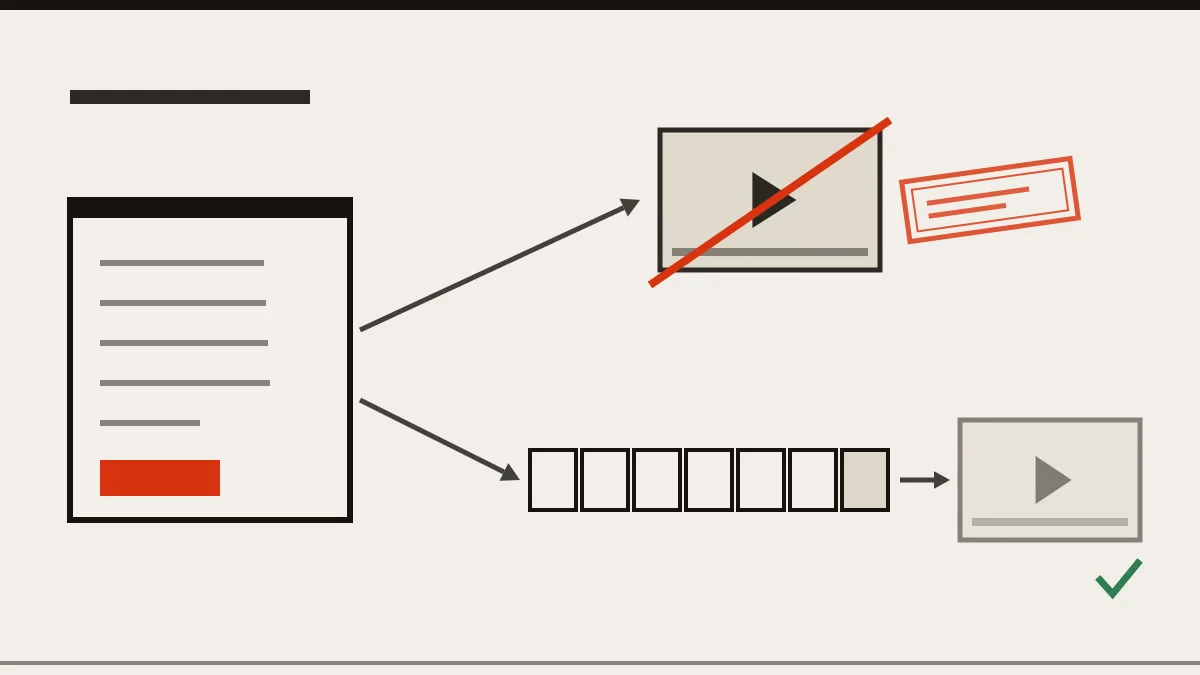
A YouTube copyright complaint is filed through YouTube's own webform, and the YouTube copyright removal request it produces is the same legal notice as a YouTube DMCA takedown notice; YouTube simply prefers you use the form, and our guide to the YouTube copyright takedown form walks through every field. Signed in, open the video, choose Report, then Infringes my rights, and follow it to the webform, or go straight to the copyright removal request page. People who search "YouTube submit DMCA takedown notice" are often looking for an email address. A notice by email or post to YouTube's designated agent is still valid, but the form is faster, it checks each field before it lets you send, and it records the request against your account so you can retract it later if the matter settles. Each YouTube DMCA takedown request covers specific video URLs. No request can cover a whole channel.
That last point matters for anyone hoping to take down a YouTube channel over stolen uploads. A channel ends only when its own strike count reaches three, so the route is three valid removals of your work, never one request against the channel.
Strike or no strike: the scheduled option
The webform offers a choice most filers skip past. A standard YouTube copyright infringement report removes the video and gives the uploader a strike straight away. A scheduled request gives the uploader seven days to delete the video themselves, and if they do, no strike lands. We pick the scheduled option when the uploader is a fan, a former client or anyone with whom the client wants the matter closed quietly; we pick the standard one when the account is a re-upload farm. Neither is a Content ID claim. A claim blocks or monetises a video without any strike at all, and our briefing on Content ID claim vs copyright strike sets the two side by side.
The YouTube copyright strike policy then runs as described above: three active strikes within the 90-day window end the channel. A YouTube copyright strike lasts those 90 days only if the uploader completes Copyright School, and a live stream removed for copyright also suspends live streaming for seven days.
Wattpad, VK and the Wayback Machine: desks with no public counter
Wattpad DMCA notice
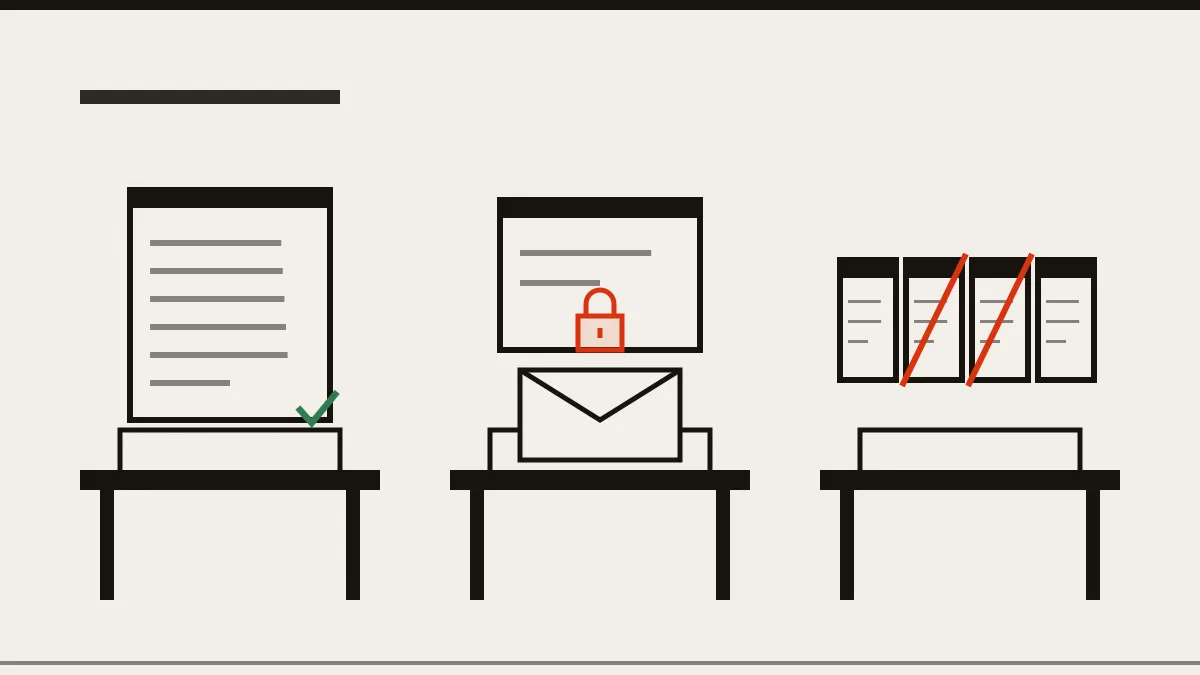
Wattpad copyright infringement is the commonest case we see from writers: a story copied chapter by chapter, often with the author's name swapped. A Wattpad DMCA notice goes to wattpad.com/help/DMCA or copyright@wattpad.com, and in the app you can start from the three dots on the story, or from "Report this story" on the web. A Wattpad copyright infringement report from inside the app is fine for flagging; the Wattpad copyright takedown notice itself is what triggers the legal process, so send the full six-element version to the copyright address. Wattpad says it does not share the filer's details with the reported user, which is unusual and useful. If the uploader counters and you do not report a lawsuit, the story can return after 14 business days. A Wattpad DMCA takedown also covers fan works that copy whole passages.
A Wattpad intellectual property infringement report about a title or a cover that imitates a brand is a trademark matter, and Wattpad's help centre lists no separate trademark form, so say plainly in the report which right you rely on. One more rule trips people up: Wattpad accepts reports from someone other than the owner only when the copied book carries an ISBN or ASIN, and repeat offenders lose their accounts.
VK copyright complaint
A VK copyright complaint starts at vk.com/dmca, which loads in English and asks you to sign in or register before it shows the form. VK's claims rules, linked from its terms as "Claims Related to Content Placement", say the filer must use their own account. If you will not open one, the same rules allow a notice by post to VK's legal address in Moscow or by email to abuse@vk.com. Expect to give more than a US-style notice asks for. Individuals are asked for passport data (series and number, issuing authority, date of issue) as well as name and contacts, and companies for their legal and actual addresses, because VK handles claims under Russian information law rather than the DMCA. A VK DMCA takedown is therefore a DMCA-shaped notice landing on a non-US desk: the six elements still help, but the statute behind them does not apply. VK publishes no strike count or counter-notice clock. If handing passport details to a Russian platform is a concern, an authorised agent can file instead under the agent's own details.
Wayback Machine DMCA removal
The Internet Archive has no uploader to strike. A Wayback Machine DMCA removal asks it to exclude specific archived URLs, so the request is about addresses and dates rather than accounts. Email info@archive.org with the exact snapshot URLs, the period you want excluded and, if it is your own old site, the dates you controlled the domain; the Archive's removal help page describes the same process. It promises nothing, and archived copies of a live infringing site will keep being captured until the site itself is dealt with. That is a job for a website takedown service working through the host and registrar. Telegram sits in the same "no counter" family: there is no copyright strike on Telegram, which is why our briefing on Telegram copyright infringement treats it as a removal route only, and why the faster fix for a person reposting your work there is often to report someone on Telegram for the conduct as well. Discord is similar; when stolen clips circulate in a server, knowing how to report a Discord server by its ID gets the copies and the uploader in front of Trust and Safety in one ticket.
X copyright takedown or X trademark report: where to report trademark infringement
An X copyright takedown and an X trademark report look alike from the outside and share an entry page, help.x.com/en/forms/ipi, but they protect different things and ask for different proof. X copyright infringement is about a work: a photo, a video, text, artwork. X's copyright form requires you to be signed in to an X account, and X sends the poster the complete notice, including your name, address, phone and email, so many owners file through an agent. An X DMCA takedown also covers posts that only link to infringing material. Deleting the rest of the post does not settle the complaint, and reposting removed material can lead to permanent suspension. Retractions come only from the person who filed. Our Twitter DMCA notice briefing covers which copies on X it can and cannot reach.
The trademark form is different. It needs no login, but it needs a registered mark: the registration number, the class and the office. X says pending applications are not enough. Outcomes run from a request to comply up to suspension. There is no username release.
So where to report trademark infringement depends on where the use sits. On a platform, use that platform's trademark form: X's form above, Meta's form, which you reach through the same steps as a Facebook DMCA takedown, or the Instagram copyright report form page, which also branches to trademark. Off platform, in the UK, counterfeit goods go to Trading Standards via Citizens Advice, and the government's IP guidance sets out the letter, mediation and court ladder. None of these routes creates a "strike" you can count, and none is helped by volume; a mass report Twitter account bot sends X a pile of spam reports, not a single valid notice.
What a strike can't do, and what we won't file
Every route above depends on one thing being true: you own the right in the material and the copy is not a lawful use. A notice against criticism, a quote used for review, a news report or an accurate public record is not a copyright case, and filing one anyway is a misrepresentation under section 512(f), with damages and legal fees on the table, as the statute text at Cornell's LII shows. It also tends to backfire: the uploader posts the notice, and the material gets more attention than it had before. So we do not forge notices, file for work the client does not own, or try to "stack" strikes on an account to get it closed. Where the content is truthful reporting or protected opinion, removal is off the table and the honest options are suppression and a right of reply; the limits are spelled out on our disclaimer page.
Two other traps. First, fake strike emails: copies of "copyright strike" notices pointing to a fake login page are a common phishing lure aimed at creators, and if one has already harvested a client's details, a phishing takedown service goes after the fake page itself. Second, wrong-form filings. If the real problem is a person harassing you with your own photos, a Facebook harassment report or the platform's privacy form will usually act faster than a copyright notice. Leaked intimate material belongs on a different track again, through StopNCII or Take It Down, and our OnlyFans DMCA takedown service briefing explains when copyright helps there and when it does not. Once a copy is gone from the host, search results catch up on their own clock; if the page still shows in Google weeks later, the Google search results removal forms are the next step.