What can you actually name when you report a Twitch stream for copyright?
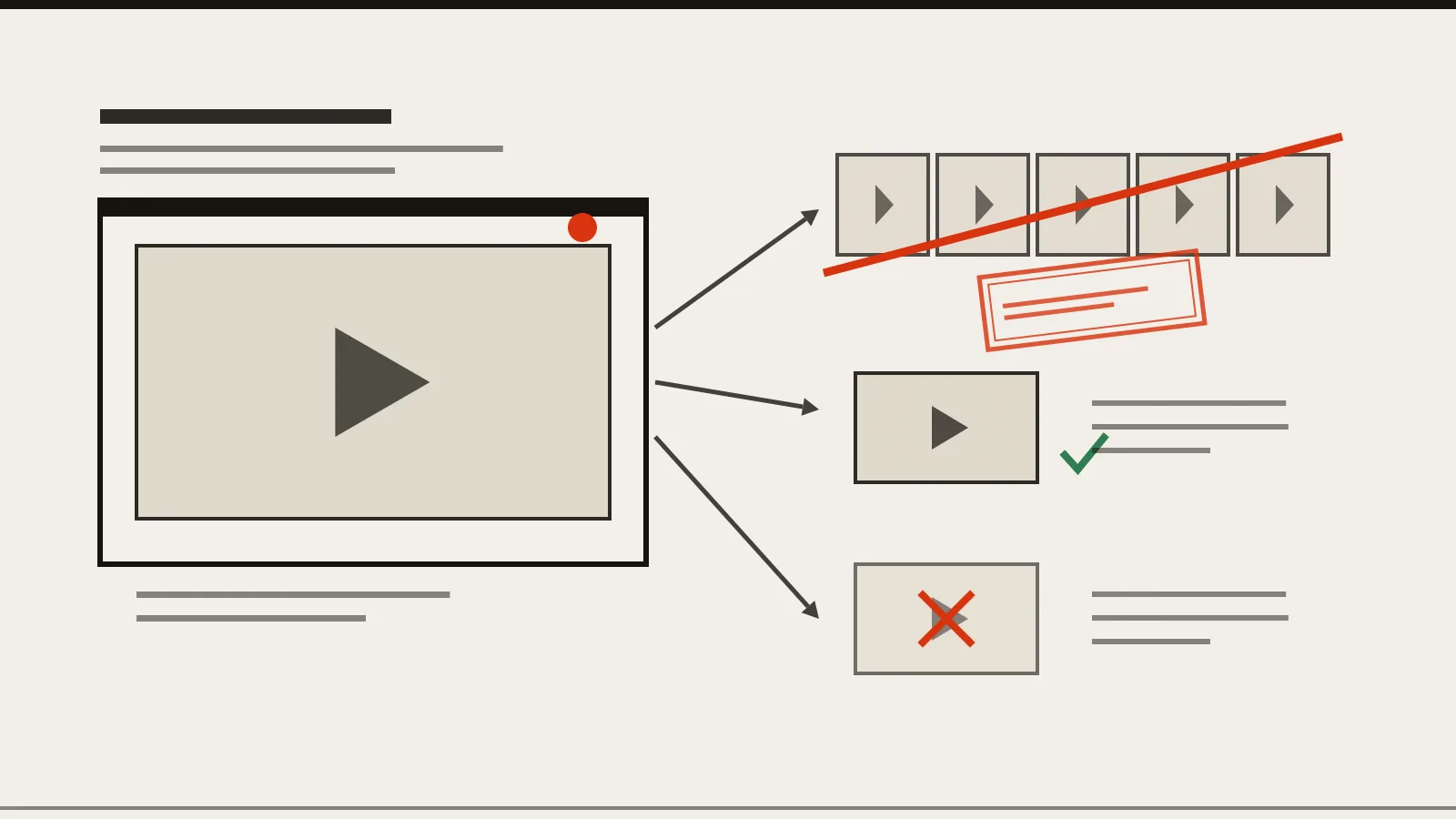
The search "report Twitch stream for copyright" makes it sound as if you are reporting a person or a channel. You are not. You are naming pieces of material, and Twitch's own DMCA Guidelines list the kinds it accepts: "Live Stream, VOD, Clip, Channel Artwork, etc." Each kind is identified differently. A live broadcast is identified by the channel URL plus a status: "Ongoing" if it is on air as you file, or "Past Livestream" with the time it ran, given in Pacific time. A VOD or a clip needs its own direct link. That split matters more than it sounds. One evening of restreamed footage can leave behind a VOD, a dozen clips cut by viewers and a highlight reel, and every one of those is a separate piece of material with a separate address. A notice that names only the broadcast leaves the rest standing. So before anything else, we list what exists, not who posted it.
That list is the whole job, really.
It is also where most first attempts go wrong on every platform in this briefing. The forms ask for addresses, and people supply names. YouTube, Tumblr, Scribd and Shopify all work on the same principle: the notice reaches the copies you point at and nothing else. Our earlier notes on copyright claim vs copyright strike cover what each outcome does to the uploader once the copies are named.
How do you report a Twitch stream for copyright while it is still live?
You report it through Twitch's web form at twitch.tv/copyright-claims, which Twitch calls "the fastest way" in. The steps, as the form ran when we checked it on 10 October 2026:
- Sign in, open the form and choose the material type "Live Stream".
- Paste the channel URL, not a VOD link, because a live broadcast has no VOD address yet.
- Mark the stream "Ongoing". If it has ended, choose "Past Livestream" and give the start time in Pacific time.
- Describe your work precisely: the film, the match broadcast, the album, the course video. Link to where you published it.
- Add every VOD, clip and highlight link you have found, one per field.
- Make the two sworn statements (good faith, and accuracy under penalty of perjury) and sign with your full legal name.
Email works too, at dmca-notifications@twitch.tv, as does post to Twitch's Copyright Agent at 350 Bush Street, San Francisco. On a live report, the guidelines say Twitch "may disable a livestream and/or suspend an account" where the conduct is continuing. Recorded material is handled more routinely; Twitch says it will "generally remove or disable access" to it. A single Twitch copyright takedown therefore has two possible results: a stream cut off mid-broadcast, or a cleaned-up archive the next day.
Twitch copyright strike report: what the streamer's account records
Every complete notice that is not answered by a counter notice or retracted adds a strike to the account. Twitch treats a user as a repeat infringer at "three copyright strikes", and it can terminate an account earlier in serious cases. Strikes "are not permanent", but the guidelines give no expiry date; the streamer can clear one by finishing Twitch's Copyright School, and only "once every 12 months". People search for a "twitch dmca strike report" expecting a page where they can see or file strikes against someone. There is no such page. The strike is a by-product of a valid notice, recorded on the streamer's side, and the filer never sees a tally. A disputed notice "generally will not qualify for a strike", so a contested claim can end with the material back up and no strike. The logic matches how many reports to get banned on IG: the count that matters is valid strikes, never the number of people who complained.
Can you report a YouTube channel for copyright, or only its videos?
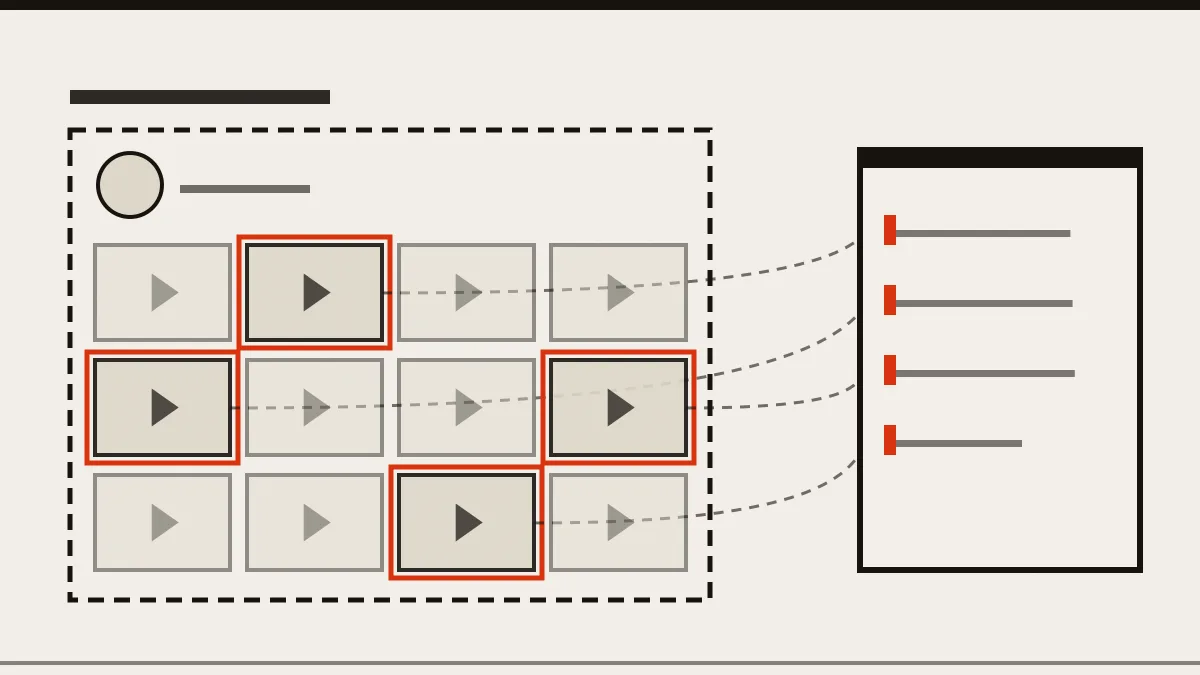
If you typed "report YouTube channel for copyright" into a search bar, the short answer is: only its videos. YouTube's help page on copyright removal requests says it plainly: "you can't submit a copyright removal request for an entire channel or playlist", and the request "must include direct links" to each video. So if you want to report a YouTube channel for copyright because it re-uploads your work wholesale, the practical version is a list. Open the channel's Videos tab, sort by oldest, and copy the address of every video that uses your material. Each link becomes its own line on the webform, and each video removed under a valid request can carry a strike.
That is how a channel actually comes down.
YouTube's copyright strike rules say that a channel with "three copyright strikes in 90 days" is subject to termination, together with associated channels, and that strikes "expire in 90 days" only if the owner completes Copyright School. A strike on an active live stream also restricts live streaming for seven days. The channel-level "Report" button is a different tool: it routes copyright matters back to the same webform rather than taking a claim itself. Our YouTube copyright takedown form briefing walks through the form field by field, and the companion piece on how to take down a YouTube channel covers the cases where the channel breaks other rules too. You can schedule a request to take effect "in seven days", giving the uploader time to delete the video and avoid the strike. And if you file many valid requests, YouTube may open its Copyright Match Tool to you, which scans new public uploads for copies of yours.
One notice, ten platforms: what each one lets you list
Every host in this briefing runs a version of the same US notice-and-takedown system under section 512 of the DMCA, which the US Copyright Office summarises. What differs is the unit they will act on, and who gets your details afterwards. We read each platform's policy page on 9 and 10 October 2026 and recorded the following.
| Platform | What you list | Who sees your name |
|---|---|---|
| Twitch | Channel URL (live), VOD, clip links | Forwarded to the streamer |
| YouTube | Each video URL; never a whole channel | Shared with the uploader |
| Rumble | Video URLs | "Published on the Rumble site" |
| BitChute | Video URLs | Given to the uploader |
| Tumblr | Post URLs | Forwarded to the poster |
| Scribd | Direct document URLs, not titles | Shared with the uploader |
| Substack | Post URLs | Writer gets a copy |
| Patreon | Post or page URLs | May be passed along |
| Spotify | Track, episode or artwork links | May be shared |
| Shopify | Product URLs; store is a last resort | May go to the merchant |
Read the right-hand column before you file. On every one of these platforms, a DMCA notice is not anonymous. That surprises people who arrive from messaging apps, where a report is silent; anyone who has asked if you report someone on Telegram, will they know learned that the answer there is no. A copyright notice works the other way round. If your name is the problem, an agent or a solicitor can sign as your authorised representative, which is lawful under the statute and is a large part of what we do for clients. In our files, the forwarded notice is the most common reason people come to us after filing alone: the uploader replies to the claimant's email directly, sometimes politely and sometimes not, and a few post the notice to their audience. None of that makes the notice invalid, but it is worth deciding before you file.
Video and audio hosts: Rumble, BitChute and Spotify
Rumble DMCA takedown and the published-claimant clause
A Rumble DMCA takedown goes to Rumble's designated agent at Rumble Canada Inc. in Toronto, using the notice elements set out on its DMCA page. The same page carries a line most filers miss: "Claimant information will be published on the Rumble site at anytime." Nothing on the page explains where or for how long. Rumble's terms, updated 1 September 2026, promise termination of repeat infringers "in appropriate circumstances" and describe a "zero tolerance" stance on copyright infringement, but they do not describe a numbered strike system. So a "rumble copyright strike" exists in effect, not by name. Our working rule for any Rumble copyright removal is to file through a representative whenever the client does not want their name searchable next to the uploader's. Rumble also asks bulk filers to use the subject "ONGOING DMCA", which helps when a channel re-uploads the same work weekly.
How to send copyright notice to BitChute
To send copyright notice to BitChute, email copyright@bitchute.com with a subject line that starts "Copyright Notice", following its copyright policy. The service belongs to Deep State Protocol, LLC. BitChute states that your "contact details will also be provided to the alleged infringer", and counter notices come back to the same inbox under "Copyright Counter Notice". It gives no counter-notice deadline. Its repeat-infringer rule is to "suspend and/or terminate" accounts, and terminated users may not register again.
Spotify copyright takedown: track, episode or artwork
A Spotify copyright takedown goes through the report-content form at support.spotify.com/report-content, or by email to infringement-claim@spotify.com, as Spotify's copyright policy sets out. A Spotify DMCA takedown has to name the exact track, episode or cover image, because an artist profile page is not itself the infringing copy. If the music came through a distributor, your label or distributor can often act faster on the release than Spotify can on a notice, since they control the delivery. Spotify does not use the phrase "counter notice"; it tells the uploader they "may have an opportunity to submit an appeal".
Text and post platforms: Tumblr, Scribd, Substack and Patreon
Send a DMCA takedown to Tumblr, and what happens to reblogs
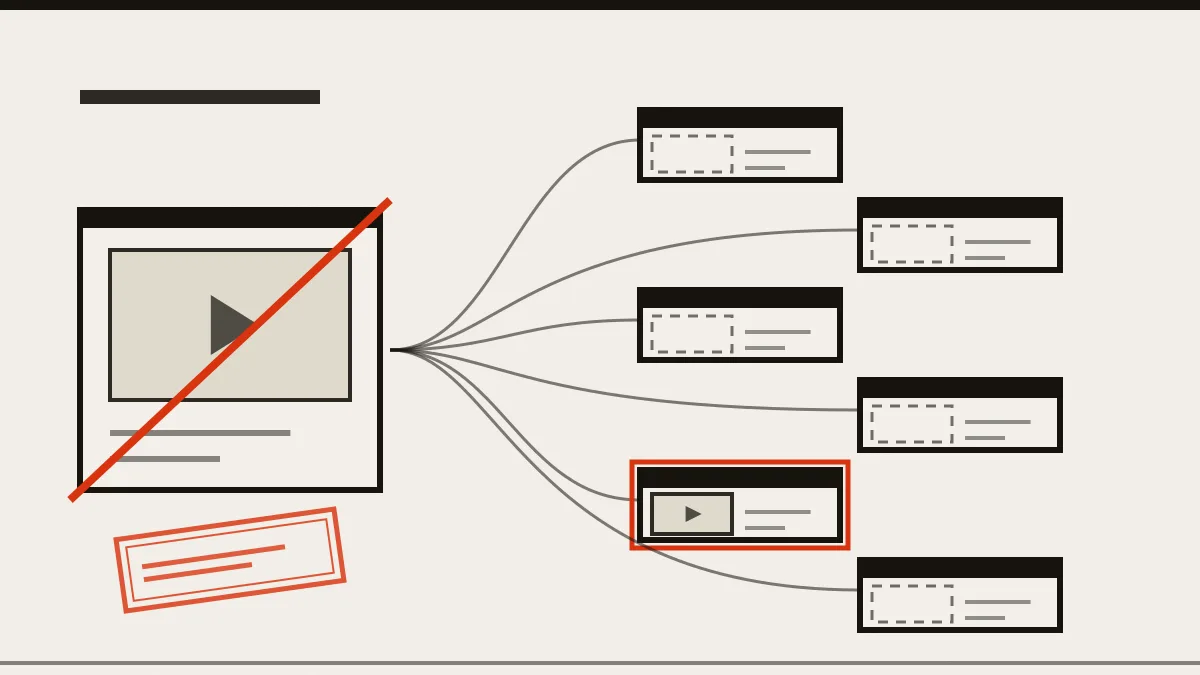
You send a DMCA takedown to Tumblr through its form at tumblr.com/dmca or to dmca@tumblr.com (Tumblr, Inc., part of Automattic). The form warns that "your notice will be forwarded to the party that made the material available", including your name and email. A Tumblr DMCA copyright notification should list the original post and every reblog you want gone, because Tumblr's terms concede that removed material "may not be entirely removed (due to the nature of reblogging, for example)". So a Tumblr DMCA takedown that names only the original is half a filing. In our experience, a reblog that simply reshares the original tends to empty when the original is removed, while a copy someone downloaded and posted fresh survives and needs its own URL. Tumblr copyright infringement removal can be reversed by a counter notice: the claimant then has "ten (10) days", calendar days in Tumblr's wording, to tell Tumblr they have started legal action. Repeat infringers lose their accounts "under appropriate circumstances", with no published count.
Scribd DMCA takedown and the ten-business-day restore
A Scribd DMCA takedown runs through a chat assistant, a web form or copyright@scribd.com, all listed in the Scribd copyright article (updated 9 October 2026), which also covers Slideshare. A Scribd copyright infringement report must give direct document URLs: Scribd says it cannot act on "keywords, search queries, title, name". It accepts only formal DMCA notices, "even if your country follows different legal standards", so a UK owner should use the US format here. Sending duplicates "will not expedite processing". If the uploader counter-notifies and you do not respond within ten business days, Scribd restores the document. Older guides quote a 14-day window; the current template says ten. That is the timing that decides any Scribd copyright takedown you file today.
Substack DMCA and the Substack DMCA counter notice
Substack's agent address is copyright@substackinc.com (not substack.com), and its dispute policy says the writer will "generally" receive a copy of your notice. For a Substack copyright takedown, list each post URL and, if the copied text is behind a paywall, say so and attach your own published version for comparison. Substack copyright infringement claims are "tracked" under its repeat-infringer policy. A Substack DMCA counter notice gives the rights holder "10 business days" to start legal action and notify Substack; after that the post can return.
Submit a DMCA notification to Patreon
To submit a DMCA notification to Patreon, use the form linked from its copyright policy or email copyright@patreon.com. Patreon "may pass along" your complaint, "including your name and contact information", and applies its repeat-infringer termination policy to creators and patrons alike. Its page says nothing about counter-notice timing.
Shopify DMCA takedown, and when it is a trademark report instead
A Shopify DMCA takedown is filed at Shopify's own form (shopify.com/legal/tools/report-an-issue/dmca), and Shopify says it will "generally remove the reported content" rather than the store. Its acceptable use policy confirms it will "default to enforcement at the product level", with account-level action "as a last resort". Your contact details "may be provided" to the merchant. If the merchant counter-notifies, the item can return "in 10 to 14 business days" unless you sue. When the shop runs on its own domain and Shopify is only one of its doors, a domain takedown service explains the registrar and host routes that sit behind it.
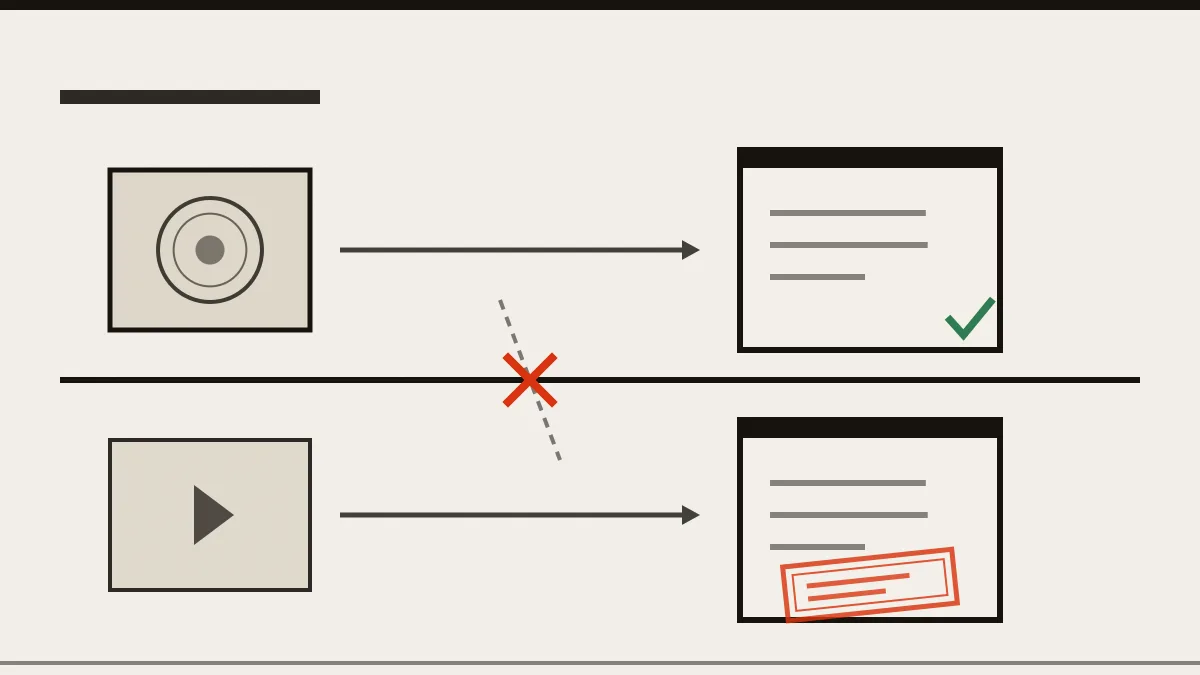
Now the distinction that saves most wasted filings. Copyright protects the work: the photo, the design, the text, the recording. Trademark protects the name or logo that tells buyers who made the goods. A trademark report is the right tool when a shop sells goods under your brand name, uses your logo on a product page, or presents itself as your official store. A copyright notice is right when it copies your product photos or your artwork. Many fake shops do both, and each needs its own filing. Shopify keeps a separate trademark form (report-an-issue/trademark-infringement) and notifies the merchant in their admin; on Spotify the same report-content form handles both. On Twitch, the published trademark page only covers misuse of Twitch's own brand, so a streamer using your brand name is usually better handled as a policy report or a legal letter. The pattern is familiar from Facebook, where people ask whether they can report a Facebook username for trademark infringement.
Trademark report help: what a trademark takedown notice needs
A trademark takedown notice, unlike a DMCA notice, usually needs your registration number and the jurisdiction it covers, the goods or services it is registered for, and an explanation of why buyers would be confused. A trademark infringement takedown notice without a registration rarely succeeds on a platform form; unregistered rights exist in UK law (passing off), but platforms seldom adjudicate them. For trademark report help in the UK, the government's guidance on defending your intellectual property sets out the order: ask the infringer to stop, try mediation, then legal action. When a fake shop is also taking payments, the phishing domain takedown route adds registrar and payment-processor pressure that a platform form cannot.
Solicitud DMCA and solicitação DMCA: can you file in Spanish or Portuguese?
Yes, in principle. A solicitud DMCA (Spanish) or a solicitação DMCA (Portuguese) is simply a DMCA notice, and section 512(c)(3) lists the required elements without naming a language. In practice, file in English. The platforms in this briefing run their legal desks in English and their forms are written in English, and some sites state outright that a notice "must be written in English" or may be disregarded. Our approach for Spanish- and Portuguese-speaking clients is to keep their original as the record and file an English version that keeps every element: the work, the URLs, the two sworn statements and a signature. Add a line naming the original language. Where the infringing copy is aimed at a Spanish- or Portuguese-language audience, say so; it helps the reviewer understand why the copy is not a coincidence.
Local law still matters for anything beyond the platform. Brazil's and Spain's copyright statutes give owners court routes that do not depend on the DMCA at all, and Google's search removals, which our guide on how to get an article removed from Google covers, accept requests from anywhere. One caution: a translated notice must match the original's facts exactly. If the English version claims more than the original did, the sworn statement is the part that is now inaccurate.
What a copyright report can't take down, and when a service is worth it
Every route above has limits, and we would rather say them now. A DMCA notice removes copies of your work; it cannot remove criticism of you, commentary that quotes you briefly, a parody, or a review that uses a still from your stream to make a point. Those may be fair use in the US, or fair dealing for criticism, review or quotation in the UK, and a notice against them invites a counter notice, a public correction and sometimes a lawsuit for misrepresentation under section 512(f). Truthful reporting and genuine public records are not copyright problems at all; at most they can be suppressed in search, not removed. We never send a notice for a work the client does not own or represent, never bluff a lawsuit, and never ask for anyone's password. Our disclaimer sets out these limits in full.
Here is the practitioner view on cost. Most single copies do not need a paid service: the forms are free, and this page gives you the fields. A Twitch DMCA takedown service, or any trademark infringement removal service, earns its fee in three situations. First, volume, such as a restreamer cutting your broadcasts into daily clips across Twitch, Rumble and BitChute. Second, identity, when you cannot let your name travel to the uploader. Third, mixed cases, where copyright, trademark and impersonation overlap and each needs its own route; our Instagram copyright report form briefing shows how that split works on Meta.
Want a second pair of eyes before you file? Send us the links and what you own. We will tell you, confidentially and before any charge, which form fits each copy and whether your name needs to stay off it. Start a confidential review.
Warning signs in a "takedown service"
Real services file in your name or as your authorised agent, show you the notice before it goes, and tell you what will be forwarded. Watch for the opposite: sellers on chat apps offering to "strike" any channel for a fee, which in practice means mass false reports or forged notices. If you were approached that way on Telegram, our guide on how to report scammers on Telegram covers the reporting side, and how to report a Telegram account covers a channel advertising the service. Copies of your work circulating in Telegram groups are a separate problem, and our notes on how to report copyright on Telegram show that the routes there are narrower than most people expect. If the seller kept messaging you after payment, how to report a user on Telegram explains how to save the chat first.
A last note on aftermath. Because every notice here forwards your details, some filers get angry messages from the uploader or their audience. Keep those messages; they are evidence. On Meta's platforms, a Facebook harassment report is the route for retaliation that follows a takedown. On Reddit, where clips of streams often reappear, a Reddit copyright takedown goes to Reddit's own desk rather than to the moderators. If you are filing against copies on X as well, the steps to file a DMCA takedown on Twitter follow the same list-the-copies logic. And where the stolen material is a likeness rather than a recording, such as an AI-generated version of you, a deepfake DMCA takedown uses different evidence and, often, different law.