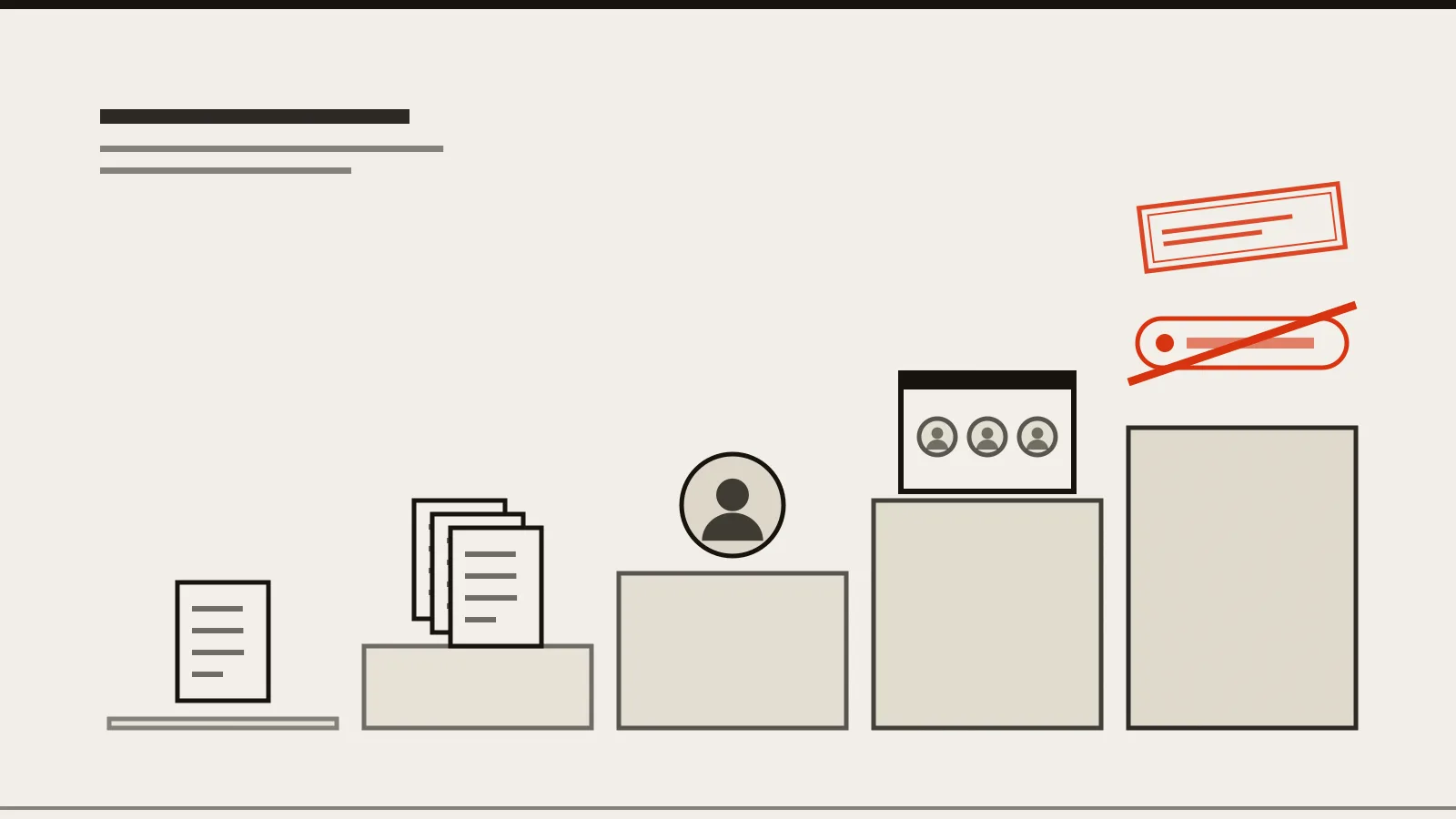
How big is a malicious domain takedown next to every other takedown?
On 2 June 2026 ICANN's compliance team published a two-year review of its DNS-abuse rules. It counted nearly 530 investigations opened since 5 April 2024, and it said that work had directly contributed to mitigating more than 25,000 abusive domains (ICANN, 2026). Every one of those was a whole name. When a registrar or a registry acts on a domain, each page, image and mailbox under it stops resolving in the same moment. A malicious domain takedown is therefore the largest ordinary unit in this trade, which is why the handful of companies able to order one ask for technical evidence and move with care.
Most of the thirty-two searches behind this briefing concern something far smaller. A paste. A listing. One fork of a code repository. A board of pins.
The phrase "online takedown" covers all of them, yet the request that removes a paste would mean nothing to a registrar, and the evidence that suspends a name is useless to a marketplace. So before any form is opened, our team sorts a case by size.
| Size | The unit | Who decides | What stays behind |
|---|---|---|---|
| Name | A whole domain | Registrar, registry or host | The registration, and any other name |
| Community | A Discord server, a Mastodon server | Platform staff, or that server's admins | Members' accounts elsewhere |
| Account | A Patreon creator, a DeviantArt or OfferUp profile | Trust and safety teams | Copies other people posted |
| Collection | A board, a fork, a publication, a company page | Legal or support desk | Parent and sibling collections |
| Item | One paste, article, listing, video or design | Moderators or a copyright agent | The account that posted it |
The working rule is proportionality. Ask for the smallest unit that ends the harm once it is gone, and climb a size only when your evidence covers the whole of the larger unit. A stolen drawing on one product page is an item, and the notice that names it will usually succeed within days. A shop that holds nothing except stolen drawings is an account, but the platform reaches that conclusion by counting item notices against its repeat-infringer policy, not because a complainant demanded it on day one. Requests pitched a size too large fail in a predictable way: the reviewer finds lawful material inside the unit and refuses the lot. Requests pitched too small succeed and change nothing, because the paste comes back under a new address an hour later. Matching the size to the proof is most of the craft, and the sections below take the five sizes in turn.
Malicious domain takedown or malware domain takedown: is the name itself the problem?
The two phrases are used as synonyms, and they should not be. A malicious domain is a name registered in order to do harm: a look-alike of a bank, a throwaway used for a week of scam emails, an address that tells infected machines what to do next. A malware domain, in most abuse reports we read, is simply any domain seen serving malicious files, and a large share of those are ordinary websites that were broken into. The difference decides who should act. ICANN's contracts define DNS abuse as malware, botnets, phishing, pharming and the spam that delivers them, and since April 2024 a registrar holding actionable evidence must "promptly take the appropriate mitigation action(s)" (ICANN advisory, 2024). The word "appropriate" carries the weight. ICANN's 2026 review says about 66 per cent of resolved investigations ended with the contracted party acting to stop the abuse, and that roughly 8 per cent involved steps to disrupt it, a measure the review calls typical for compromised domains.
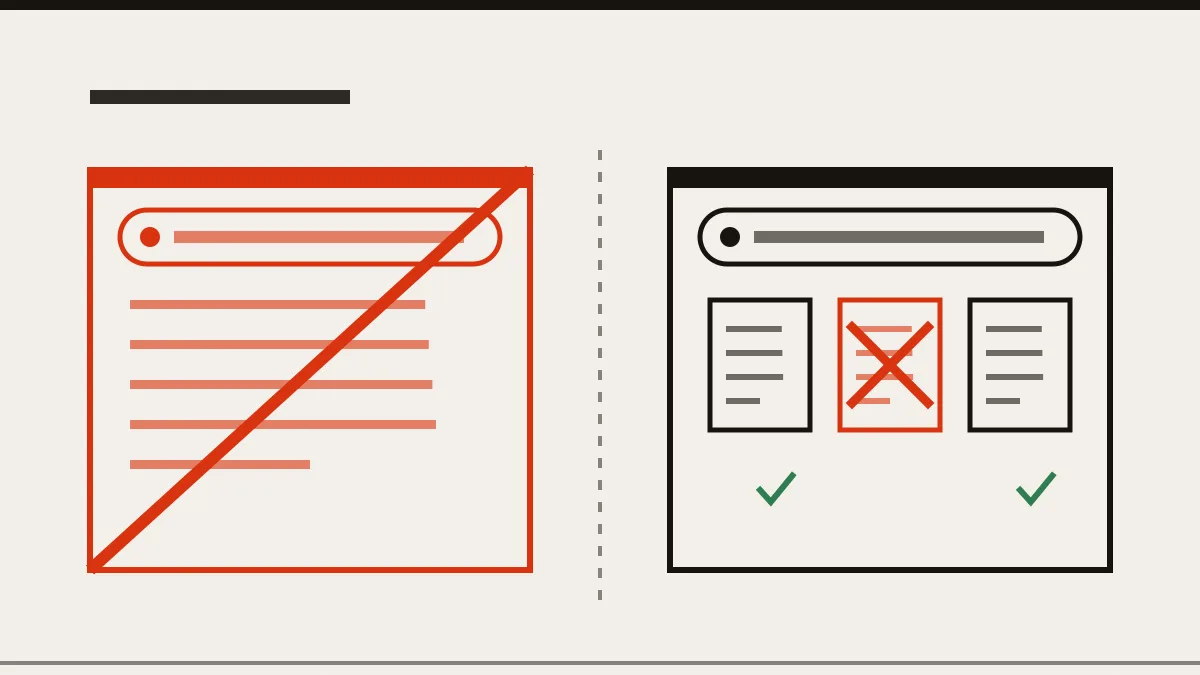
What a hold does to a name registered for abuse
A registrar does not delete an abusive name. It sets a status. ICANN's list of EPP status codes explains that clientHold tells the registry not to activate the domain in the DNS, and that serverHold is the same instruction set by the registry operator itself. The name stops resolving. Nothing else moves.
The files still sit on the hosting account, where they can be reached by IP address or pointed at from a fresh name bought the same afternoon. That is why a registrar report and a host report are filed together, and our guide to choosing a domain takedown service sets out who holds each of those switches. ICANN's page does not say what happens to a held name at renewal, so we look the name up again on ICANN's lookup tool when the registration period ends. A hold is a status on a registration, and statuses can change.
Malware takedown on a hacked site: clean the page, keep the name
Suppose the malware sits on a bakery's website, in one folder the owner has never seen. Suspending the name would take the order page and the shop's email down with the infected file, and the owner is a victim, not the attacker. Here the proportionate malware takedown is item-sized: the host removes or quarantines the files, and the owner patches whatever let the intruder in. Report it to the host's abuse desk with the exact URL, the date and time you saw the download, and the file's hash if you have one.
Several public desks take the same report from anyone:
- Google Safe Browsing has a malware report form that feeds browser warnings.
- Microsoft's Report an unsafe site page opens after you sign in or continue as a guest.
- URLhaus, run by abuse.ch, accepts submissions through an account, and its API notes limit it to sites directly used to distribute malware, so phishing pages are out of scope.
- In the UK, the NCSC's Report a scam website form takes any number of suspicious URLs. The NCSC says it may work with hosting companies to remove malicious links, and it does not report the outcome back to you.
None of these removes anything by itself. A blocklist entry warns visitors while the host decides. We tried to read URLhaus's statistics page on 14 October 2026 for a current takedown time and found a notice that the statistics were unavailable, so this briefing quotes none.
After the clean-up, the warning has its own clock
A cleaned site can stay flagged. Google's Search Console help tells owners to request a security review in the Security Issues report, and for malware it says a review can take from a few days to a few weeks (Google Search Central). A malware domain takedown therefore has two finish lines: the file is gone, and the red warning screen is gone. Only the site's verified owner can ask for the second.
Fraud pages follow a similar chain with different evidence, and we cover the phishing domain takedown route separately. One limit applies to both. Anyone may report a name, but only its registrar, its registry and its host can act on it. A firm that says it will "take down" a domain is selling reports, evidence packs and persistence, and an honest one says so.
How do you take down one item: a paste, an article, a listing or a video?
Item-sized requests are the most common and the most likely to succeed, because the reviewer has one address to open and one question to answer. Every platform in this section asks for the same four things in its own words. First, the exact URL of the item, not of the profile that posted it. Second, the ground: either a right you own, such as copyright in a drawing, or a rule the item breaks, such as a ban on posting personal data. Third, proof that fits the ground, which for copyright means your original with a date and for a policy complaint means a screenshot showing the breach in context. Fourth, your name, because a notice signed by nobody is a tip and gets treated as one. Take a dated screenshot before you file. Once the item is removed, the evidence that it existed disappears with it, and you may need that record for the next copy.
Take down Pastebin paste: the Pastebin takedown request
Pastebin's FAQ describes one route. Above every paste sits a "REPORT ABUSE" button, and the person reporting picks a reason for removal. The FAQ says removal requests are handled within 24 hours where possible. A Pastebin takedown request is therefore made paste by paste, and a dump split across six pastes needs six reports.
For a Pastebin sensitive data takedown the grounds are already written down: the FAQ's do-not-post list names email lists, password lists, personal information and banking or card details. Quote the category and point to the lines that hold your data.
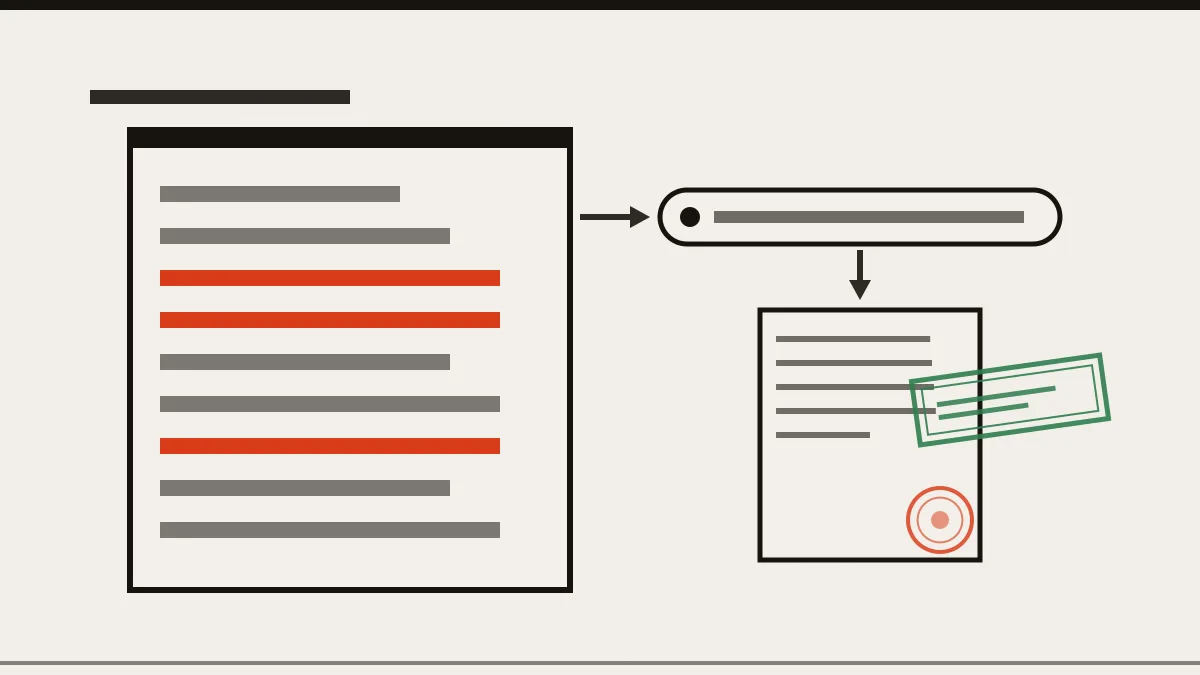
Three details shape what you can expect. Guest pastes have no quick delete, so even the person who posted one cannot pull it without asking. Unlisted pastes are invisible unless somebody shares the link, which means your paste may have been seen by far fewer people than you fear. And pastes set never to expire are not deleted by time. The FAQ does not say whether a reporter needs an account. Change the exposed passwords before you file, because removal does not un-leak them. Our longer note on how to remove leaked data from Pastebin covers dumps that also appear on leak forums.
Medium content takedown and Quora content takedown
A Medium content takedown for copied writing goes through Medium's form or to its copyright address, under a copyright policy last updated on 22 May 2025. The policy treats a typed name as a signature, warns that duplicate notices slow things down, sends the writer a copy of your notice and forwards it to the Lumen database. The unit is the story's URL.
Quora works differently, and its help centre refused our request on 14 October 2026, so what follows comes from its help index and not a full reading. A "Report" option sits in the three-dot menu on questions and answers. Quora treats questions as community property, and an asker's own delete option disappears once the question has drawn enough activity. In practice a Quora content takedown is aimed at one answer, since the question tends to outlive everyone who touched it.
Take down Fandom article pages
People who search "take down Fandom article" usually expect a company to press a button. Fandom's help pages also declined to load for us on 14 October, so again this is the help index speaking. Only a wiki's administrators and content moderators can delete a page, and Fandom asks you to contact those local admins first. Staff are reached through Special:Contact afterwards. Copyright complaints go to a separate DMCA form or to its copyright address. Because a wiki page can be rewritten by anyone, the quickest fix for one false sentence is often an edit with a source, not a deletion request.
Take down a YouTube video without asking for the channel
To take down a YouTube video for copyright, the owner or an authorised representative files a removal request that names the video's URL (YouTube Help). The request can be scheduled to take effect in seven days, which gives the uploader a week to delete the video and avoid a strike. No single request can cover a whole channel. The fields themselves are walked through in our briefing on the YouTube copyright takedown form, and the difference between a claim that leaves a video up and a strike that removes it is set out under Content ID claim vs copyright strike.
A channel is a different size. It falls when strikes accumulate or when the channel's whole purpose breaks the rules, and we explain how to take down a YouTube channel on its own page.
Take down Amazon listing or take down Depop listing copies
The searches "take down Amazon listing" and "take down Depop listing" look alike and land on different desks. Amazon's Report Infringement form needs a sign-in, is meant for rights owners and their agents, and takes copyright and trade mark complaints. Say whether the whole product page copies your work or whether one seller's offer on a genuine page does, since several sellers can share a page.
Depop has two doors. Its help index describes a "Report item" option behind the three dots on a listing, with no reply sent to the reporter. Its Intellectual Property Policy gives rights owners an email address and a London postal address, and says Depop makes a reasonable attempt to contact the seller.
Take down Craigslist ad posted about me
The search "take down Craigslist ad posted about me" describes harassment more often than commerce: a stranger's ad carrying your name, number or photograph. Craigslist's flagging FAQ says free ads that are sufficiently flagged are removed automatically, and that millions of ads are removed this way every month. It also says a wrongly removed ad may be reposted. Flag the ad as prohibited, save the posting ID and a screenshot first, and treat a repeat as a police matter.
How to submit a takedown notice Course Hero will accept
Course Hero's copyright page names its operator, Learneo, Inc., and offers a form, an email address and a San Francisco postal address. Each uploaded document has its own URL and needs its own line in the notice. If the uploader answers with a valid counter-notice, your complaint is forwarded to them, and the document can return after 10 to 14 business days unless you go to court.
Stolen digital art removal: the Redbubble takedown notice
Stolen digital art removal on a print-on-demand site is item-sized, even when it feels like a whole shop is living off you. Redbubble's IP and Publicity Rights Policy accepts a Redbubble takedown notice through its form or by email, and only from the owner of the right or an authorised agent. Artists who search "send takedown notice Redbubble" for a friend's work need the friend to sign.
A Redbubble takedown request lists the address of each infringing design. The same artwork is sold across many product types, so check that you are naming the design and not one T-shirt. According to Redbubble's counter-notice FAQ, the seller may respond at any time, the response is forwarded to you with the seller's contact details, and you then have 14 days. Repeat sellers face up to permanent disablement, which is how a Redbubble takedown grows into an account closure. A Redbubble stolen art takedown often has a second half elsewhere, because thieves advertise the products on social media: we explain how to report stolen content on TikTok and when a Facebook DMCA takedown fits.
A "stolen game itch.io takedown" follows the same logic with one difference. Notices go to itch.io's support address under its terms, and itch.io publishes them on its takedowns pages with the filer's name and company visible. File through a company or an agent if you would rather your own name stayed off that page.
When is the unit a collection: a board, a fork, a publication or a company page?
A collection is a container that somebody curated: pins gathered on a board, code copied into a fork, essays under one publication, facts assembled on a company profile. Containers are awkward for copyright law, which protects works and not the shelves they sit on. The pattern across the four platforms below is consistent. A policy complaint can target the container, because the rule being broken (harassment, impersonation, spam) is a property of the whole. A copyright complaint targets the works inside it, one address at a time, and the container survives if anything lawful is left. So the first question with a collection is which kind of complaint you hold. If every pin on a board is your photography, the copyright route will empty it. If the board exists to mock a named person using pictures from many sources, only the policy route reaches it.
The same split applies to Meta, and our briefing on how to take down a page on Facebook follows it through Pages, posts and profile pictures.
Take down Pinterest board, or the image wherever it is pinned?
Pinterest lets you report a board. Its help page on reporting something on Pinterest says to open the board, select the ellipsis, choose "Report" and pick a reason. That is the policy route, and it is how to take down Pinterest board collections built to harass or impersonate.
Copyright runs the other way. Pinterest's copyright policy describes a form that works Pin by Pin, with an option to remove all Pins that contain the image, limited to identical copies. For a photographer that option is larger than any board: it follows one picture across every board on the site. Removals under a copyright notice bring strikes for the pinner, and Pinterest may pass on your full legal name.
Take down GitHub fork copies
A fork is a full copy of a repository under another account, and it does not fall when the parent does. GitHub's DMCA Takedown Policy says forks are not disabled automatically. To take down GitHub fork copies you name each fork you have checked. Where a network holds more than one hundred repositories, GitHub will disable the lot only if the notice includes a sworn statement that you reviewed a representative number of forks and believe they all infringe.
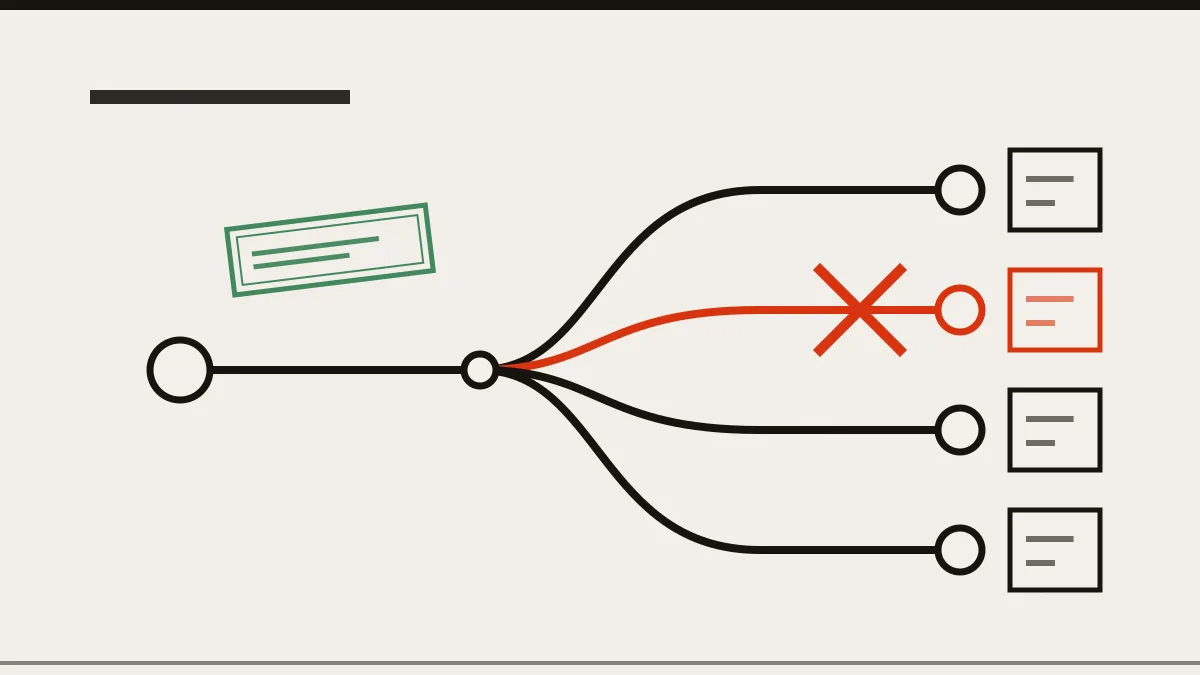
Two more details matter. When only part of a repository is claimed, the owner gets about one business day to remove it before the repository is disabled. And GitHub publishes notices, with personal details redacted, in a public repository. Leaked passwords and tokens are handled under a separate private-information policy, not under copyright.
Take down a Substack: the post or the publication?
People ask how to take down a Substack and mean the whole newsletter. The copyright route on Substack's dispute page, updated on 19 February 2025, works on posts. Notices go to a copyright address at substackinc.com, the writer receives a copy, and after a counter-notice you have 10 business days. A publication closes only when Substack applies its repeat-infringer terms or finds a breach of its content rules.
Take down Crunchbase company page records
Crunchbase's support site refused our request on 14 October 2026. Its help index lists an article on removing a person profile: edit first, then use a removal form or a privacy request form. The same index warns that a removed profile may be re-added by contributors, public sources or data partners. We found nothing first-hand on how to take down Crunchbase company page entries, and a staff reply in its community says founders are generally marked "Past" and not removed. Expect correction, not deletion. Data-protection law helps people more than firms: the UK right to erasure covers personal data, as the ICO explains, and a company's funding history is not personal data.
Can you ask for a whole account or a whole community?
You can ask. What decides the answer is whether your evidence describes a pattern or a single incident, and the platforms that publish their rule say so in numbers. DeviantArt's copyright policy treats three strikes as the sign of a repeat infringer. Redbubble speaks of permanent disablement for repeat sellers, Pinterest counts strikes, and Patreon and Substack keep repeat-infringer terms without publishing a count. In each case the account falls because item-sized notices added up. The complainant never files an "account notice", since no such form exists for copyright. Policy grounds are the exception. Impersonation, fraud and sustained harassment are properties of the account itself, so a single well-evidenced report can close a profile that has only ever posted one thing. We describe that split for Meta in our piece on an Instagram account removal service, and for TikTok under how to delete someone else's TikTok account.
Patreon account takedown
A Patreon takedown for copied work is filed through Patreon's form or its copyright address, under a copyright policy that warns Patreon may pass your name and contact details to the creator. A Patreon account takedown is Patreon's decision. Its repeat-infringer policy covers creators and patrons alike, with no number stated. Conduct that breaks the community guidelines is reported from the page itself.
Take down DeviantArt account profiles
To take down DeviantArt account profiles that trade on stolen work, file per artwork through the copyright form, which needs an account, or by email with a signed PDF. Three strikes mark a repeat infringer. One line in the policy shortens the road: passing off someone else's work as your own brings an immediate ban.
OfferUp seller takedown
An OfferUp seller takedown starts on the profile. OfferUp's Report a user article, which we could read only through its index on 14 October, points to the three-dot menu on the app and a flag icon under the profile picture on the web. You pick a reason, add an optional note, and the seller is not told who reported. Counterfeit goods go to a separate intellectual property form that carries a statement under penalty of perjury.
Mastodon account takedown: whose server?
Mastodon has no head office to write to. Its moderation documentation says moderation is always applied locally. A report goes to the moderators of your own server, and you may forward it to the moderators of the account's home server if their rules were broken. Your admins can limit or suspend the account, which hides it for everyone on your server and nobody else. Only the home server's admins can suspend it at the source. A Mastodon account takedown can therefore mean two different results, and our guide on how to get someone banned on Mastodon and similar platforms explains the house-ban idea in full.
Take down Discord server communities
Discord's safety page on reporting, updated on 22 January 2026, covers messages, user profiles and apps, and points EU users to a separate form. It does not describe a button for a whole server. To take down Discord server communities you report the messages and profiles that carry the breach, and Discord decides whether the server goes; its transparency reports list server removals among its actions. Our walk-through of how to report a Discord server covers the IDs to collect first. Reddit handles communities in a comparable way, as the section on a subreddit takedown shows.
Not sure what size your case is? Send us the link and tell us what you want gone: the item, the account or the name. Tomás's team reviews it in confidence and tells you which unit your evidence supports before any charge. Start a confidential review.
What does an online takedown leave behind?
Every size leaves the size above it standing. Remove an item and the account that posted it remains. Close the account and its owner can register another. Put a name on hold and the files wait on a server for a new address. Honest planning for any online takedown includes the question of what returns, and copies are the usual answer. A removed design reappears in a screenshot on X, where a Twitter DMCA notice reaches some copies and not others, or in a short clip, where knowing how to report a video on TikTok saves a week. Search engines keep a memory too. After a page is gone, Google's outdated content tool asks for the stale result to be refreshed. We keep a short watch list for each closed case and check it again after a fortnight, since most returns show up early.
Some things do not come down at any size. Accurate news reporting, genuine public records and honestly held opinion are lawful, and no notice changes that. For those, the only route is suppression: publishing better material so the unwanted result sinks. Our disclaimer lists what we decline.
We work inside those limits, as described on our about page. We never forge a notice, never dress an item complaint up as an account complaint, and never ask for your passwords. If the material is an intimate image, do not send it to anyone, us included: StopNCII.org creates a hash on your own device, and our triage for those cases is free.