Who can actually delete someone else's content?
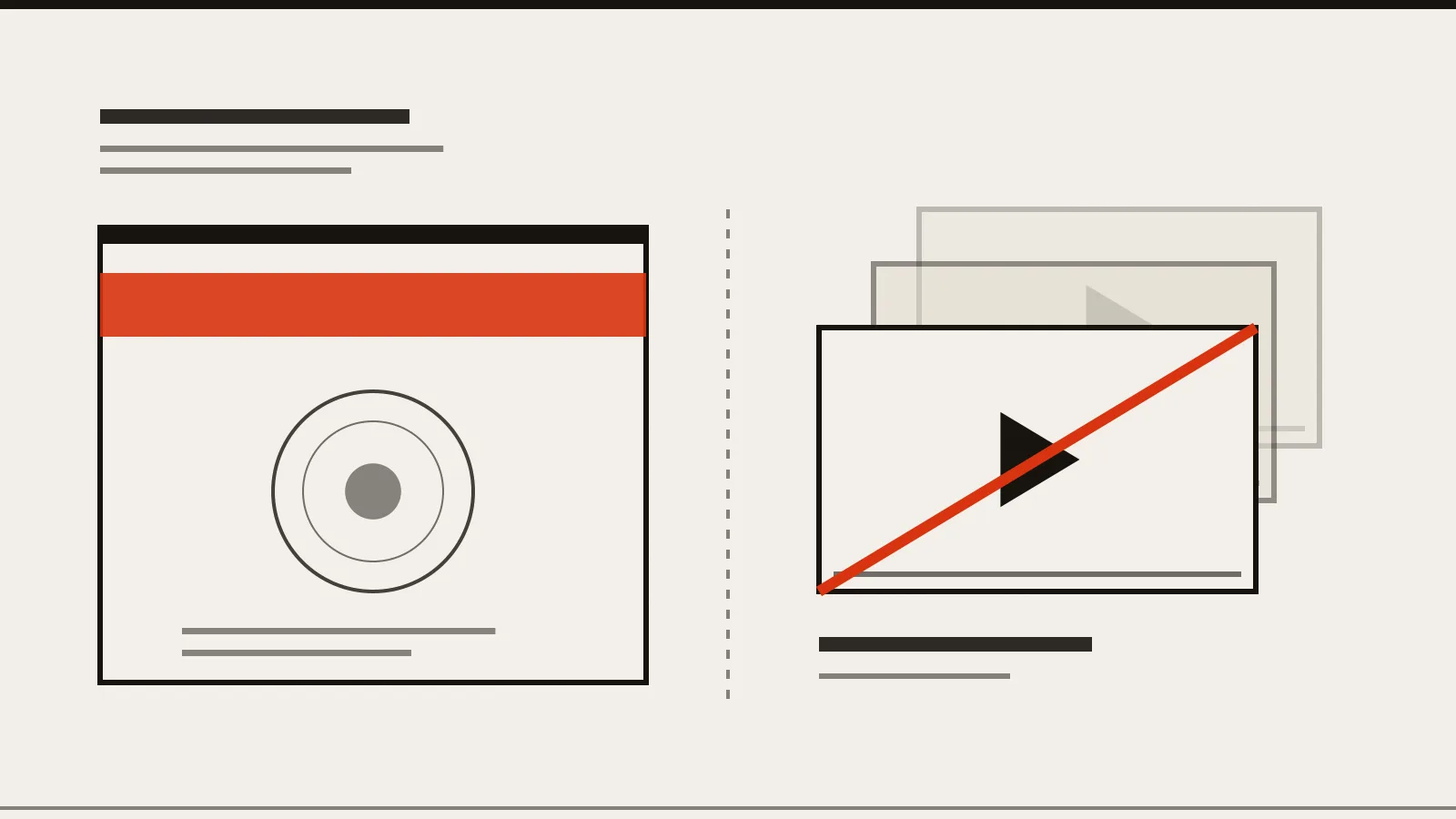
Every takedown on the internet is carried out by one of four hands. The first belongs to whoever posted the thing: the uploader, the seller, the server owner, the account holder. The second belongs to the service that hosts it, which can remove a video, close an account or suspend a domain under its own rules or on a legal notice. The third is the crowd, on the few sites where enough flags or a public vote decide the matter. The fourth belongs to a court, acting through police or prosecutors, and it is the only hand that takes anything by force. You, the person who wants the content gone, are none of the four. What you hold is a way to move one of them: a request, a report, a signed notice, a complaint to the authorities. The thirty-two searches behind this briefing, from an FBI website takedown to a Depop listing, come down to which hand you are trying to move.
| Hand | What moves it | Where it decides | Usual pace |
|---|---|---|---|
| The owner | A request, or their own choice | Your own video, listing, server or post | Seconds |
| The platform | A report or a signed notice | YouTube, GitHub, Fiverr, eBay, Depop, Discord | Hours to weeks |
| The crowd | Flags or a public discussion | Craigslist, Wikipedia | Minutes to a week or more |
| A court | A warrant or an order | Seized domains, court-ordered removals | Months |
Pick the wrong hand and nothing happens. A hundred reports sent to YouTube are still one request to the platform, because YouTube is not a crowd site. A furious email to a Wikipedia administrator skips the discussion that decides.
When a case reaches our team, the first thing we establish is which hand holds the delete control. A good many of the requests we see were sent, politely and repeatedly, to somebody who never had it.
What is an FBI website takedown, and can you ask for one?
An FBI website takedown is a domain seizure. A federal court issues a seizure warrant, the registry or registrar that controls the domain is served with it, and the address is pointed at a government notice page in place of the site. It is a law-enforcement act inside a criminal investigation, typically brought under federal forfeiture statutes such as 18 U.S.C. § 981 and, for piracy and counterfeiting, § 2323. Nobody can order one. The public route is a complaint to the FBI's Internet Crime Complaint Center, and the centre's own FAQ is blunt about what that buys: IC3 does not investigate complaints itself, its analysts may refer them to an agency, and complainants are told not to expect a reply. A complaint adds your loss to a file that prosecutors may build on later. It does not switch a website off, and no private firm can sell you a seizure.
Two announcements from this summer show the range. On 10 June 2026 the Justice Department said the FBI had seized 13 domains dressed up as consulting firms and aimed at Americans who hold security clearances (Department of Justice, 2026). Sixteen days later it announced that nearly 400 sites streaming World Cup matches illegally had been seized, on an affidavit filed in the Eastern District of Virginia (Department of Justice, 2026). That second operation was not the FBI at all. Homeland Security Investigations ran it.
Seized is not deleted. The warrant takes the address, while the files sit on a server that may be abroad, and operators often return under a new name within days. The owner can also contest the seizure in court.
For a UK reader the nearest equivalents are the City of London Police's intellectual property unit, PIPCU, for counterfeit and piracy sites, and the National Cyber Security Centre, which takes reports of scam websites from the public. Neither takes orders either.
How does domain takedown work without the police?
Far more domains go dark through contracts than through courts. So how does domain takedown work in the ordinary case? A website depends on a chain of companies, and each one has terms the site can breach. The registrar sold the name and can suspend it. The registry runs the whole ending, such as .com, and can do the same from above. The host stores the files and can remove a page or the entire account. Since 5 April 2024, ICANN's contracts have required registrars to act promptly on well-evidenced reports of DNS abuse, which ICANN defines as phishing, malware, botnets, pharming and the spam that delivers them. Defamation, piracy and fake reviews are content, and content sits outside that duty.
So the evidence decides the route. A cloned bank login goes to the registrar and the host as abuse, and our guide to a phishing site takedown covers the five switches in order. A name that copies your trade mark goes to a UDRP panel, where WIPO charges USD 1,500 for a single panelist on one to five names and the only remedies are transfer or cancellation. A site that libels you is a matter for its host, a court or a search engine. If you are weighing a paid domain takedown service, ask which of those companies it will write to, and with what evidence.
How do you get a YouTube video taken down?
Whether the search was "how do you take down a YouTube video", "how do I take down a YouTube video" or "how do you take down a video on YouTube", the first question is whose video it is. Your own is the owner's hand, and it is instant: in YouTube Studio, open Content, choose the video and delete it. YouTube's help page on deleting uploads says a deleted video is permanently deleted, so download a copy first. Someone else's video is the platform's hand, and you move it with one of four requests. YouTube's own reporting page sets expectations plainly: a reported video is not taken down automatically, reports are anonymous, and reviewers remove what breaks the Community Guidelines. A second report of the same video adds nothing to the first. People asking how to get a video taken down on YouTube usually need a different door, not more reports.
How to request a takedown on YouTube: four doors
Knowing how to request a takedown on YouTube mostly means choosing among these:
- A report. Under the video, open More, then Report, and pick the rule it breaks. Use it for harassment, threats, scams, nudity and dangerous content.
- A copyright removal request. In YouTube Studio, open Content detection and start a new removal request, or use the public webform. YouTube's removal request page limits filing to the copyright owner or an authorised representative, and lets you schedule the removal seven days ahead so the uploader can delete first.
- A privacy complaint. For a video that shows your face, voice, name or address without consent, YouTube runs a separate privacy complaint process. The person identified files it.
- A legal request. In the report menu, choose Legal issue for defamation, trade mark, counterfeit goods or a court order. The same help page warns that misusing legal forms can cost you your Google Account.
That list is the whole answer to how to get YouTube video taken down requests accepted: match the door to the harm. If you are working out how to have a YouTube video taken down because it copies your footage, door two is the only one with legal force, and our walkthrough of the YouTube copyright takedown form goes field by field. Asking how to get videos taken down from YouTube in bulk? List every URL in one request. No request covers a channel.
How to get a YouTube account taken down
No form removes a channel on request. If you want to know how to get a YouTube account taken down, the honest mechanism is accumulation: three Community Guidelines strikes inside 90 days, or three copyright strikes, put the account and its linked channels up for termination (YouTube Help, 2026). A single case of severe abuse can end a channel without warning, and a channel that impersonates another can be removed as a channel.
You get a YouTube channel taken down, in other words, by getting specific videos removed for sound reasons until the strikes add up. People who search "how to get someone's YouTube channel taken down" often hope for a shortcut, and our briefing on how to take down a YouTube channel explains why none exists. TikTok works on the same logic with different numbers, as the guide on how to get someone's TikTok banned shows.
How to delete someone else's comment on YouTube
You cannot, unless the comment sits under your own video. Two parties have a delete control: the person who wrote the comment and the channel hosting it. On your own channel, open the menu beside the comment and remove it, or choose "Hide user from channel", which according to YouTube's help index hides that person's other comments on your videos as well.
Everywhere else, the answer to how to delete someone else's comment on YouTube is a report. Open More beside the comment, choose Report and pick a reason. It joins the same review queue as a reported video. Instagram splits the controls the same way, and the steps for how to report an Instagram comment are close to identical.
How to not get your video taken down on YouTube
Creators ask the mirror question. Working out how to not get your video taken down on YouTube starts at upload, where the Checks step screens a video for copyright matches before it goes public and, for monetised channels, for ad suitability. A clean check is not a promise. A rights owner can still file a manual claim or a removal request afterwards.
Learn the difference between the two outcomes. A Content ID claim can block, monetise or track a video and usually leaves the channel alone; a removal request, if valid, brings a strike (YouTube Help, 2026). We set the two side by side in Content ID claim vs copyright strike. Crediting the owner is not permission, and "fair use" is a defence you argue after the fact, not a setting.
How to find taken down YouTube videos
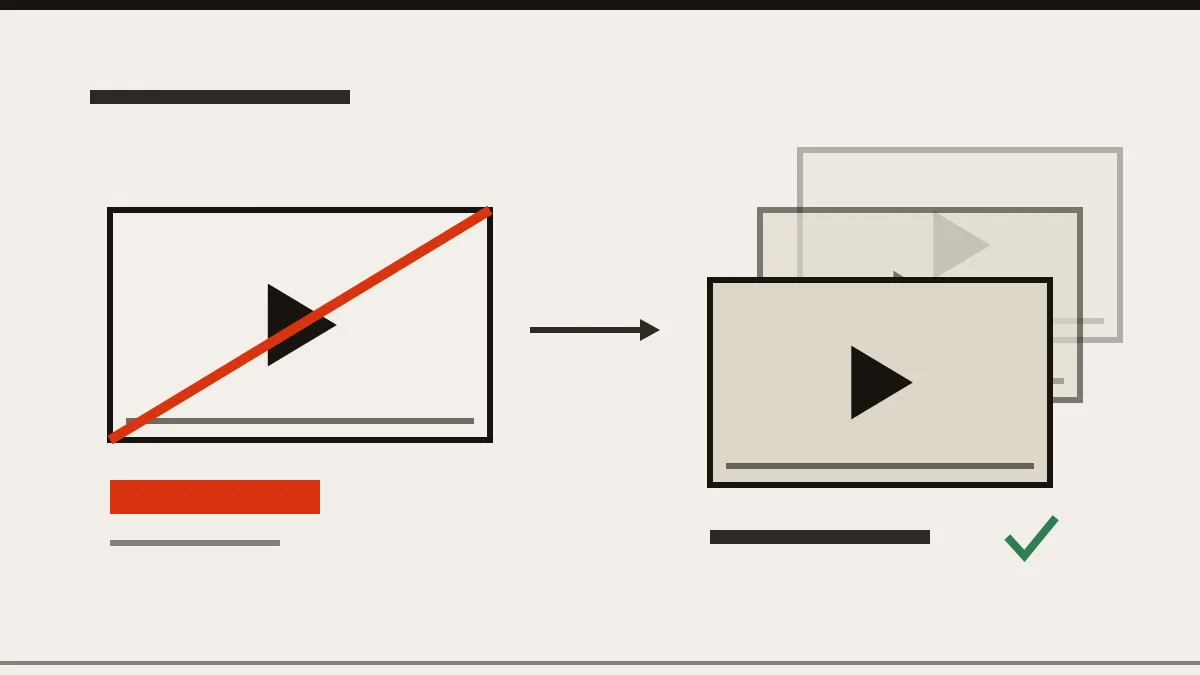
Start by asking which hand removed it, because that decides whether a copy exists anywhere. The dead link itself usually tells you. YouTube shows a different notice for a video the uploader deleted, a video set to private, a video removed on a named rights owner's copyright request, a video removed for breaking the rules, and a video whose whole account was terminated. An uploader who deleted their own work still has the file. A rights owner who removed a bootleg normally hosts the original on an official channel. A video removed for a rules breach is the hardest to find, and often it should stay that way. To find taken down YouTube videos you need one thing before any tool: the video ID, the eleven characters after "v=" in the old link. Titles change and channels vanish. The ID never does.
| What the dead link says | Whose hand | Where a copy may be |
|---|---|---|
| Removed by the uploader | Owner | The uploader's own files |
| Private video | Owner | Still on YouTube; ask for access |
| Copyright request, owner named | Platform | The rights owner's channel |
| Rules breach, or account terminated | Platform | Archives at best |
| Not available in your country | Platform, on a legal request | Live elsewhere |
Then work through four steps.
- Recover the ID. Check browser history, old messages, playlists and your YouTube watch history, where removed entries leave a placeholder.
- Search the ID in quotation marks. Google and Bing return forum threads, embeds and news pages that carried the video, usually with its title.
- Search the title. Reuploads and the owner's official copy surface this way.
- Paste the full watch link into the Wayback Machine at web.archive.org. The page is captured far more often than the video file, but a capture gives you the title, description, upload date and channel name.
That is how to find a YouTube video that was taken down when all you kept was a link. One old trick is gone: Google retired its cached pages in February 2024.
Two limits apply. If the missing video was yours, the question of how to find YouTube videos that were taken down has a short answer, because YouTube says deletion is permanent and it offers no restore, so your own backup is the only copy. And if a video came down because it exposed or harassed someone, we will not help anybody find it again. The same four steps serve the opposite purpose. Run them on a video you had removed and you get a list of the copies still to deal with.
Beyond YouTube: who holds the delete control on each platform?
Each service below hands the control to a different one of the four.
GitHub takedown policy and a GitHub repo takedown request
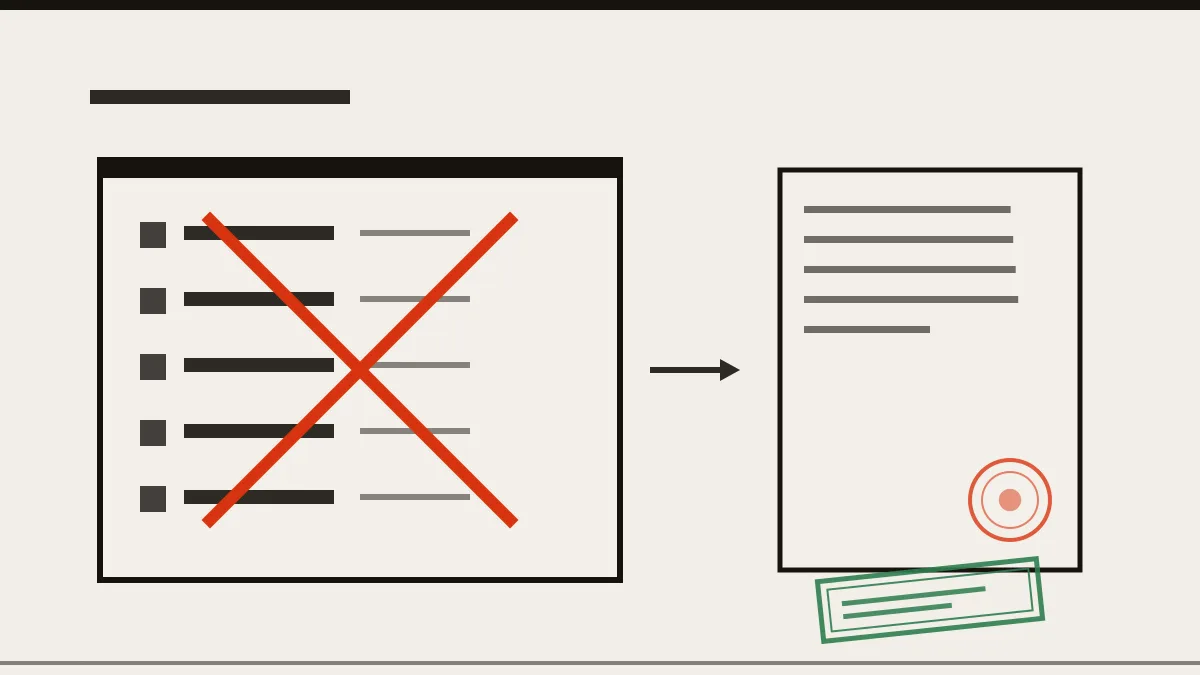
The GitHub takedown policy is the most open one we work with, and that openness cuts both ways. A GitHub repo takedown request is a DMCA notice sent through the form at github.com/contact/dmca, and GitHub's DMCA Takedown Policy requires it to identify the specific files, or even line numbers, that infringe. The repository owner then gets roughly one business day to change the content before the repository is disabled. A network of more than 100 forks comes down whole only if the notice says the filer reviewed a representative number of them. Then comes the part people miss. GitHub publishes each notice, with personal details redacted, in its public github/dmca repository. When we looked on 14 October 2026, the October folder already held 107 files and September's held 233, counting notices, counter notices and retractions together (our count from the public repository).
A GitHub takedown request is therefore wrong for anything you want kept quiet. Leaked passwords, tokens and keys go through GitHub's private information removal process instead, and we explain how to remove leaked code from GitHub without advertising the leak.
How to get a Wikipedia page taken down
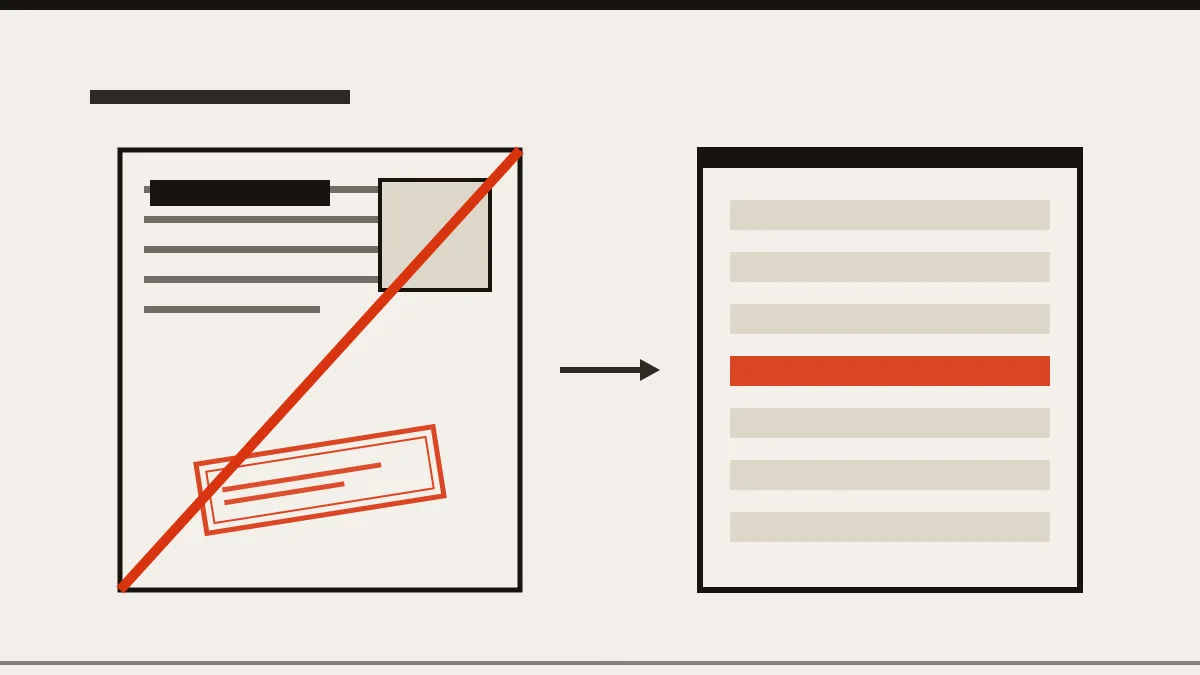
Wikipedia is the crowd's hand in its purest form, and the Wikimedia Foundation almost never overrides it. Its transparency report for January to June 2026 records 953 requests to alter or take down content and two granted, both on Wikimedia Commons; English Wikipedia drew 592 of those requests and granted none, and all 21 right-to-erasure requests were refused (Wikimedia Foundation, 2026). A solicitor's letter to the Foundation is the slowest way to learn how to get a Wikipedia page taken down.
The working routes are the editors' own. Under the deletion policy, only administrators can delete, through three processes: speedy deletion for obvious cases such as attack pages and copied text, proposed deletion if nobody objects within seven days, and an Articles for deletion discussion that runs at least seven full days. Biographies get one concession. Where the subject is a relatively unknown, non-public figure who has asked for deletion, a discussion with "no clear consensus to keep" may be closed as delete. Subjects can write to the volunteer team at info-en-q@wikimedia.org, and the oversight team can strip private details such as a home address from the page history. Deletion discussions stay on record afterwards.
How to delete someone's Discord server
Only one person can. According to Discord's support pages, the server owner alone can delete a server, whatever permissions anyone else holds, and the deletion cannot be undone. If your question is how to delete someone's Discord server, the remaining hand is Discord's Trust and Safety team, which removes servers that break the Community Guidelines.
That takes evidence from inside the server: reported messages, not a description of the server's reputation. Our guide on how to report a Discord server covers the IDs to collect. Keep the two kinds of ban apart as well. A moderator's ban only closes one community's door, the same split that applies when you ban someone from a Roblox server and they carry on playing elsewhere.
Fiverr account takedown
A Fiverr account takedown is something Fiverr decides after gig-level removals, not something a report triggers in one step. A seller's gig that sells your copyrighted work or trades on your brand is reported under Fiverr's Intellectual Property Claims Policy by the rights holder or an authorised representative. That policy page returned an error to us on 14 October 2026, so we describe it from Fiverr's help centre as indexed: a complete report leads Fiverr to remove or disable the gig, repeated removals bring account warnings, and Fiverr reserves the right to suspend infringing accounts permanently.
Fraud and abuse by a seller go through the report option on the gig or profile. Customers with an order should also open a dispute, because a report does not refund anything.
How long does eBay VeRO takedown take?
eBay does not say. Neither its VeRO policy page nor the Seller Center page for the programme gives a timeframe for acting on a rights owner's notice, so anyone quoting a fixed answer to "how long does eBay VeRO takedown take" is guessing or selling. What the pages do establish is who may file: VeRO is for rights owners and their authorised representatives, and everybody else uses the ordinary report link on the listing.
The delays we can control are on our side of the form. A notice that names each item number, states the right relied on and comes from a registered VeRO participant has nothing to bounce back for. An incomplete one restarts the wait.
How do I take down a Depop listing or a Craigslist post?
"How do I take down a Depop listing" has two answers. Your own listing is the owner's hand: open the item and delete it. Someone else's is reported from the item page, through the three-dot menu and "Report item", after which Depop's support team reviews it and, by Depop's own account, sends the reporter no reply. Counterfeits and copied photos carry more weight as a written infringement notice from the brand or photographer.
Craigslist belongs to the crowd. Its flagging FAQ says free ads that are "sufficiently flagged" are removed automatically, and it publishes no number. So the only way to get Craigslist post flagged for removal is for enough separate users to flag it, or for staff to act. One person flagging repeatedly counts once in practice. An ad that names or pictures you is better raised with Craigslist directly, and with the police where it amounts to harassment.
How to get reposted art taken down
Reposts are the clearest copyright case there is, since the artist owns the work from the moment it exists. How to get reposted art taken down depends only on where the copy sits, because every large platform runs its own notice form and wants the same four things: your original, the copy's exact link, your contact details and a signed statement.
On X the route is a Twitter DMCA notice, which reaches the image and not the quote-posts around it. Meta's form handles a Facebook DMCA takedown and Instagram together. Telegram answers email, and our briefing on a Telegram DMCA shows which chats it reaches. On Reddit, a Reddit takedown request for copyright goes to the company and not the moderators. Expect the reposter to be told who filed.
Group/page takedown help: the right desk for each network
Most requests for group/page takedown help concern a community, not a single post, and communities have two layers of control. An admin can delete the group or page outright. The platform can remove it for breaking the rules, which needs reports against specific content inside it.
The route differs by network. Meta treats pages and groups separately, so how to take down a page on Facebook is not the same job as how to report a Facebook group with an absent admin. Telegram wants links to messages, as the steps for how to report a Telegram group explain. Snapchat lets you report a Snapchat group chat from inside it. For single accounts, see how to get someone's Twitter account deleted and how to delete someone else's TikTok account.
What will no hand delete for you?
Some content stays up whichever hand you approach, and it is better to hear that before paying anyone. Truthful reporting, genuine public records such as court judgments, and honestly held opinion are protected almost everywhere we file. No platform policy removes them, a copyright notice aimed at them is a false statement with legal consequences for the signer, and a court will not order them down. What remains is suppression: publishing accurate, better-ranking material so the unwelcome result moves off page one, or a right-to-be-forgotten request where the information is old and no longer relevant. We say which of the two applies before any work starts. Our team never forges notices, never bluffs a lawsuit, and never asks for anybody's password. Nobody can promise a result that depends on another party's decision. The limits are set out in full in our disclaimer, and the people who do the filing are named on the about page.
Paid shortcuts fail on the same logic. A seller offering a thousand reports is renting you a crowd on platforms where the crowd decides nothing. We tested the claims behind the Telegram report bot trade and the TikTok report bot trade, and the pattern repeats: the volume is real and the effect is not.
Intimate images are the exception that moves fastest. If the content is a private sexual image of you, do not send it to anyone, including us. StopNCII.org creates a fingerprint of the file on your own device so that partner platforms can block it, and we triage these cases urgently and without charge.
Not sure which hand holds the delete control in your case? Send us the link and a line on what is wrong with it. We will tell you, in confidence and before any fee, whether it can be removed, by whom, and what evidence that takes. Request a confidential review.