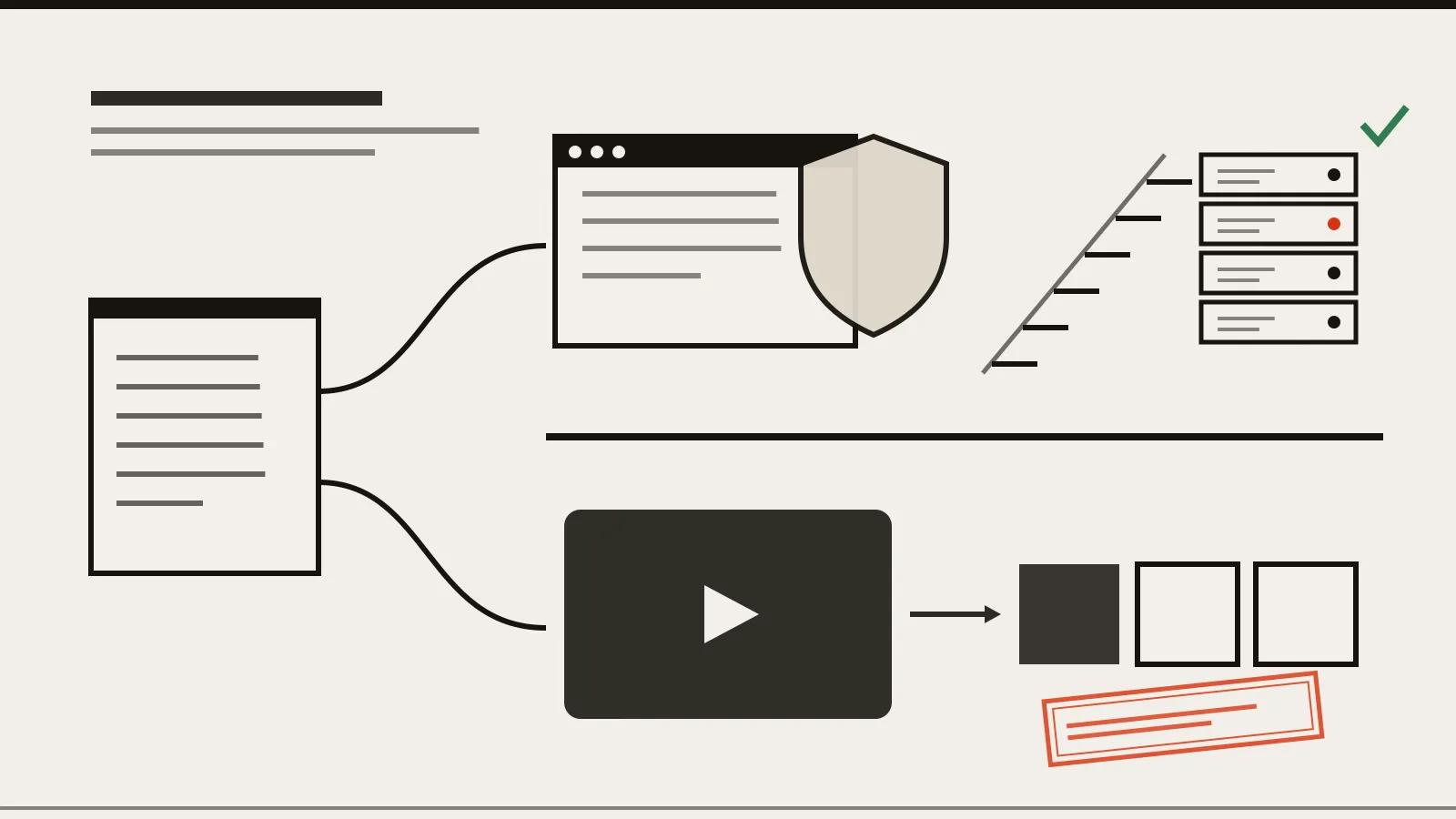
One notice, two journeys: where does a DMCA takedown actually go?
A DMCA takedown is a written notice, sent under section 512 of the US Copyright Act, asking a service that stores or displays a copy of your work to remove it or disable access to it. The statute lists six things the notice must contain: a signature, identification of the work, the location of the copy, your contact details, a good-faith statement that the use is unauthorised, and a statement under penalty of perjury that you own the right or may act for the owner (17 U.S.C. § 512(c)(3)). Sending one costs nothing. What varies is the journey. A dmca takedown website request has to find whoever holds the delete key, and that is rarely the business named on the page. A dmca takedown youtube request has one destination, because YouTube is the host, the judge of the notice and the keeper of the penalty record at the same time.
That single difference shapes everything after it.
Take two common problems. Product photos lifted onto a copycat shop that sits behind Cloudflare. A video re-uploaded in full to a stranger's channel. Both are copyright problems, both are fixed by the same six-part notice, and they could hardly behave less alike. The first can pass through five or six hands before anyone with access to the server reads it. The second reaches the right desk first time and can end with a strike on the uploader's channel. Most people who set out to file a dmca takedown request already know which of the two they are holding. The route is the part they are missing, so this briefing walks both routes as of October 2026, then the marketplace, creator and code platforms that searchers ask about most.
How does a DMCA takedown website request work, step by step?
A dmca website takedown is an escalation ladder. Each rung is a party with more control over the copy and less interest in the site, and you stop climbing the moment the copy is gone.
- Write to the operator. Look for a copyright page, a contact form or an abuse address in the footer. Send the full notice rather than a polite note, so there is a dated legal notice on file.
- Look up the domain. An RDAP lookup through ICANN's lookup tool shows the registrar and the name servers. Name servers on cloudflare.com mean the host is hidden behind a proxy.
- Find the host's agent. A US host that wants safe-harbour protection must keep a designated agent on the US Copyright Office DMCA directory, a filing that costs $6 and lasts three years.
- Notify the host. Hosts enforce their own terms as well as the statute, so a site whose owner ignores you can still be suspended.
- Ask Google to delist the URL. Google's legal troubleshooter leads to the copyright form for Search, and the dropped result is replaced by a link to the notice as published on Lumen (Google Legal Help).
- Check the archives. Saved copies in the Wayback Machine need their own request to the Internet Archive.
The weak point of a website takedown is that nobody owns the whole outcome. The operator may ignore you. The host may forward your notice to the operator and wait to see what happens. The registrar will usually say that content is not its business, and since ICANN's 2024 abuse amendments cover phishing, malware, botnets and pharming but not copyright, that answer is correct. Google can remove the URL from its results, but it cannot touch the server. A realistic plan therefore aims for two results at once: the host disables the page, and Google drops the URL in case a mirror appears next month. When people ask whether they need a website takedown service for this, our answer is that each filing is simple and the labour sits elsewhere, in chasing every hop, logging dates and re-filing when the copy moves to a fresh domain.
One warning before you start. If the page is a news article about you rather than a copy of your own work, copyright is the wrong tool, and the routes to get an article removed from Google are defamation, privacy and outdated-content forms instead.
How do you find the real host behind Cloudflare for a DMCA notice?
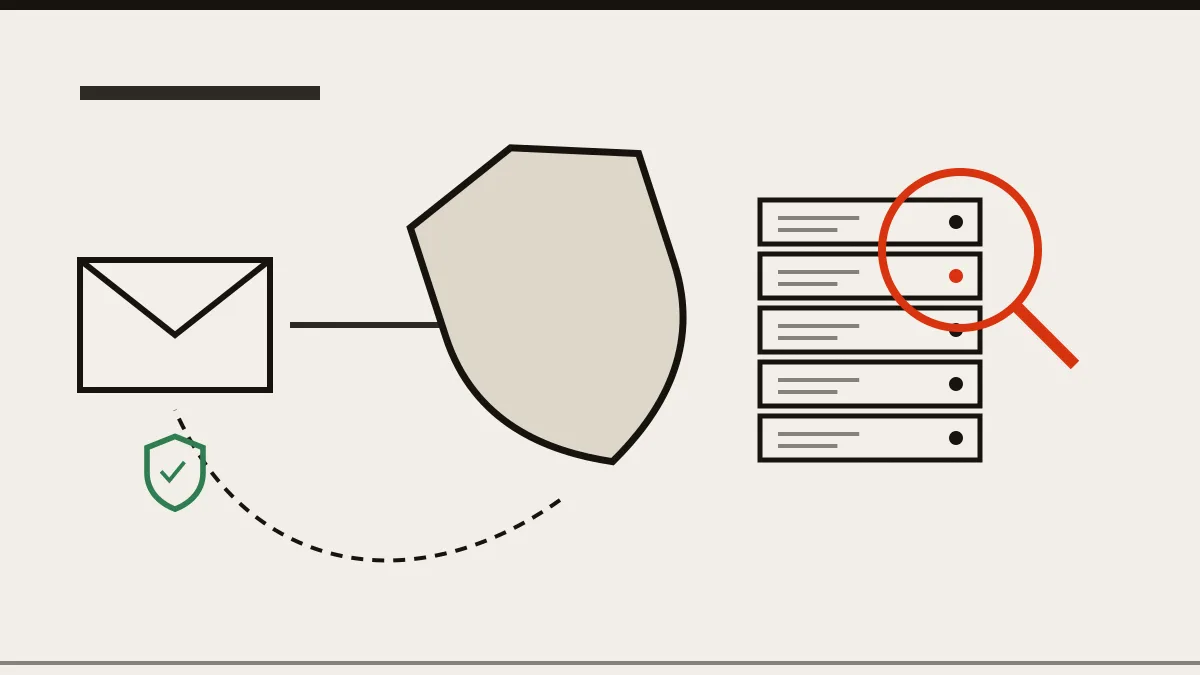
Cloudflare is a reverse proxy. The IP address you see for a proxied site belongs to Cloudflare, not to the server holding the files, and Cloudflare says plainly that it cannot remove content it does not host. For copyright reports it does two other things. It forwards the complaint to the website operator and to the hosting provider, and for a substantially complete report it generally replies with the hosting provider's contact details, so you can write to the real host yourself (Cloudflare, assisting copyright holders). That makes Cloudflare's abuse form the fastest legitimate answer to the question people type as "find real host behind Cloudflare DMCA". We prefer it to the tricks some guides push, such as trawling historical DNS records or probing for an origin IP, which return stale answers more often than useful ones. The exception is a site Cloudflare hosts itself through Pages, Workers, Stream or Images. Those files get ordinary notice-and-takedown from Cloudflare directly.
If the copycat site is also taking payments in your name, it has stopped being only a copyright case, and the quicker levers are the abuse routes covered in our phishing site takedown service briefing.
What does a DMCA takedown YouTube request set in motion?
On YouTube the notice is a copyright removal request, filed through the webform in YouTube Studio or the public version of the same form. Each video needs its URL. Only the owner or "an authorised representative, such as a lawyer" may file, and one request can list several videos but never a whole channel or playlist. Before you submit, you can schedule the request to take effect in seven days, which, in YouTube's words, "gives the uploader seven days to take action and avoid a copyright strike" (YouTube Help, copyright removal requests). If the uploader deletes the video in that window, no strike is recorded. If they don't, the video comes down and the strike lands. We recommend the scheduled option when the uploader looks like an over-keen fan rather than a thief, because it clears the copy without starting a penalty fight that ends in a counter notification. Filing immediately is right for full re-uploads, paywalled material and anything monetised by someone else.
The webform is not the only tool. Channels in the YouTube Partner Programme get the Copyright Match Tool, which scans uploads made after yours and offers removal, archiving or a pre-written message to the channel. Large catalogues use Content ID, where a match produces a claim rather than a strike. The difference matters enough that we gave it its own briefing on the Content ID claim vs copyright strike split, and the forms themselves are mapped in our guide to the YouTube copyright takedown form.
Volume tells you how YouTube treats the webform. Its copyright transparency data for 2025 records 2,969,817 actions from the public webform, of which 85.81% ended in removal, while 6.44% were judged abusive and 6.65% invalid (YouTube Copyright Transparency Report, 2025). Read the last two numbers carefully. Roughly one notice in eight did nothing except leave a record with the sender's name on it.
Do copyright strikes expire?
Yes. A YouTube copyright strike expires 90 days from the day it was applied, on two conditions: the channel owner completes Copyright School, and the channel has fewer than three strikes. Three strikes active at once make the account "subject to termination", the owner cannot create new channels, and uploaded content becomes inaccessible (YouTube Help, copyright strike basics). A strike can also go earlier. The claimant can retract the removal request, which YouTube says will "clear the copyright strike from the uploader's channel" unless other videos sit under the same strike, or the uploader can send a counter notification that the claimant does not answer in court. Expiry clears the count. It does not bring back the removed video, which stays down unless a retraction or an unanswered counter notification restores it. So when someone asks whether copyright strikes expire, the complete answer has three parts: the strike times out after 90 days, the video stays gone, and the termination risk only resets if no new strike arrives in the meantime.
What can you do about a false copyright strike on YouTube?
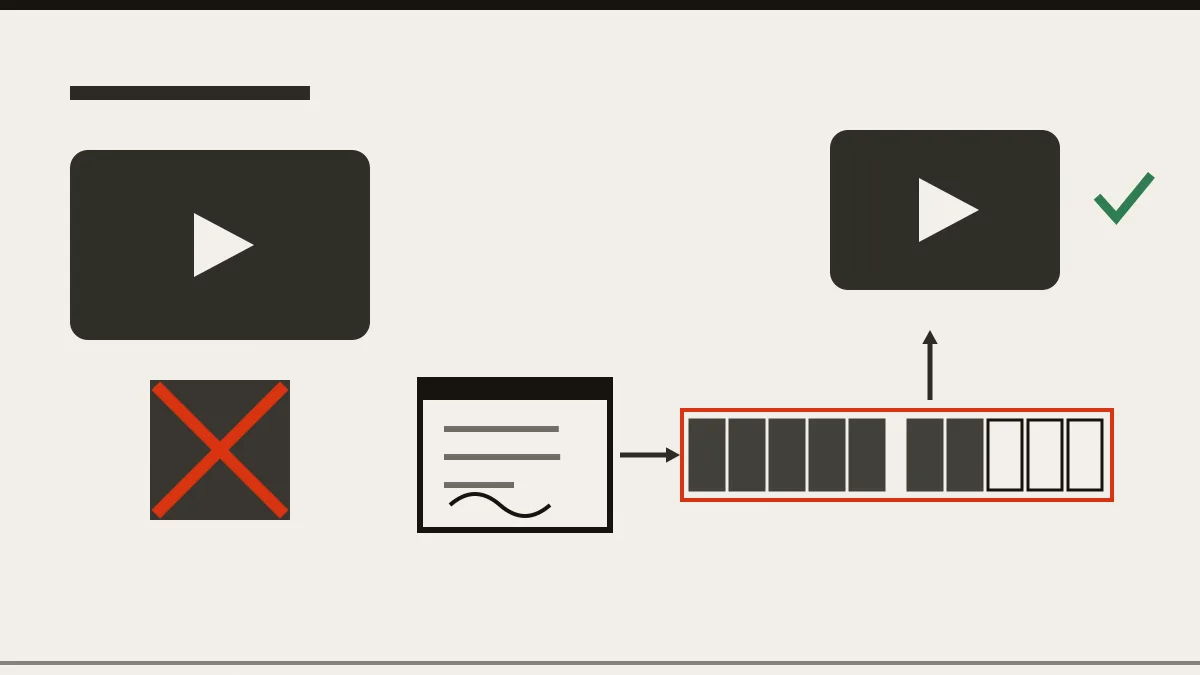
Treat a false copyright strike YouTube has placed on your channel as a legal dispute, not a support ticket. There are three ways to answer it, and the order matters. First, ask the claimant to retract. A polite email that sets out your licence or your ownership costs nothing and clears the strike if it works. Second, if you own the material, hold a licence or have a solid fair-use case, file a counter notification. YouTube passes it to the claimant together with your name and contact details, and the claimant then "has 10 US working days" to produce evidence of legal action; if no such evidence arrives, the content is reinstated (YouTube Help, counter notification). Third, where the notice was knowingly false, section 512(f) lets the target recover damages and legal costs from whoever misrepresented infringement. Courts set that bar high, because the sender has to have known, not merely been careless. Do not counter-notify out of anger. A counter notification is a sworn statement and an invitation to be sued in a US federal court.
Why don't the website case and the YouTube case end the same way?
| Question | Website | YouTube |
|---|---|---|
| Who removes the copy? | The operator or the host | YouTube |
| Is a penalty logged? | Only under the host's own rules | A strike, for 90 days |
| How many hops? | One to six | One |
| Does the uploader see your name? | Often, if the notice is forwarded | Yes, in place of the video |
| Can the copy come back? | On a new domain, at any time | After a counter notification |
A website has no strike. Section 512(i) requires a host to adopt and reasonably carry out a policy for terminating repeat infringers, but the host writes that policy, sets the count and decides whether a given site has crossed it. Your notice is one entry in a ledger you never see. YouTube publishes its count and applies it per channel, which is why the uploader's consequence on YouTube is predictable and the consequence on a web host is not. The same gap explains a common confusion with reporting tools. In-app reports are signals, a notice is a legal document, and penalties come from strikes rather than from piles of flags, a point we make in detail when people ask how many reports to get banned on IG. Meta works the same way at account level, removing a whole Page for repeated IP violations through the routes explained in our guide to ban a Facebook page.
How do you file a DMCA takedown notice on eBay, Etsy or Redbubble?
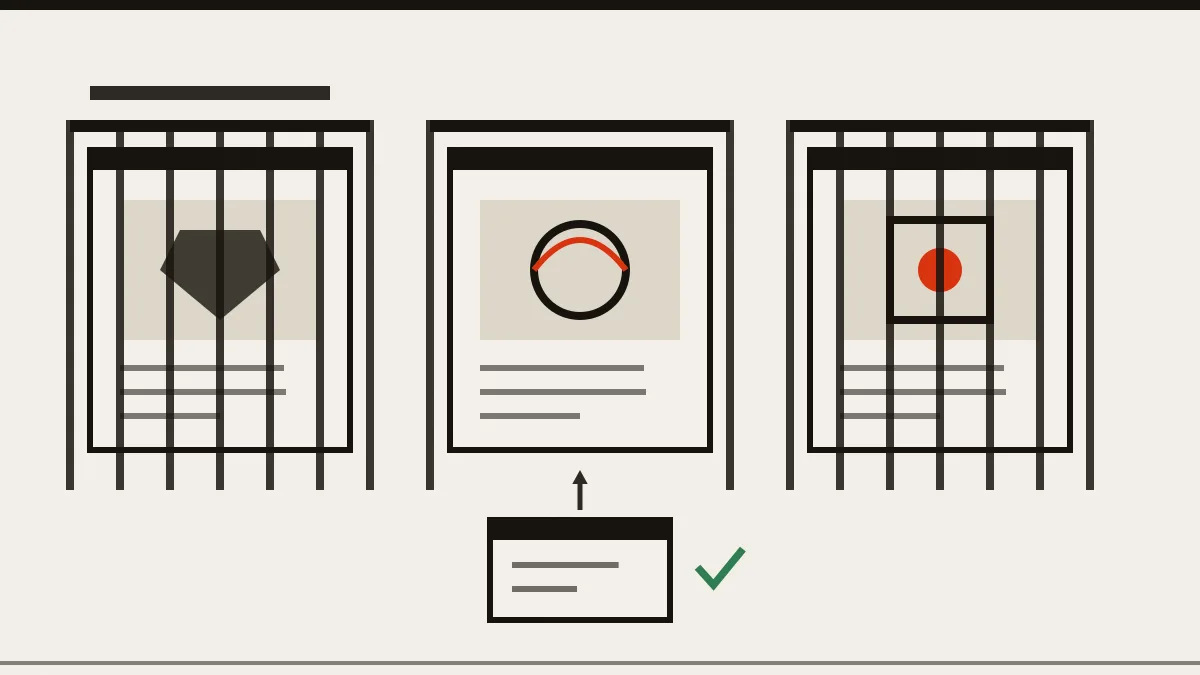
Marketplaces do not want your notice in their general inbox. They want it through a rights-owner programme, and each one checks who you are before it acts.
On eBay that programme is VeRO, the Verified Rights Owner programme, and an eBay VeRO copyright infringement report is the only notice eBay treats as legal. An ebay dmca takedown is filed with the Notice of Claimed Infringement, the NOCI online form, or through the VeRO Portal, and it covers copyright, trademark and counterfeits in one place (eBay VeRO). When you file DMCA takedown notice eBay paperwork through the NOCI, you choose a reason code per listing, so ebay copyright infringement removal (a copied photo or description) and ebay trademark infringement removal (your brand on a fake) are separate ticks on the same form. eBay checks that "all the necessary information is complete and accurate", removes the listing, and "the seller will be notified with an explanation". Its seller pages then tell the seller how to contact the rights owner directly. Expect that contact. A clear VeRO profile page saves you a stream of emails asking why.
Can you file an eBay seller infringement report if you don't own the rights?
Not through VeRO, which is open only to rights owners and their authorised agents. A buyer or a bystander who spots a fake uses "Report this item", which sends the listing into eBay's counterfeit and policy queue instead of the legal one. That ebay seller infringement report can still get a listing removed, but nobody's rights are being asserted, so the seller faces policy enforcement only. If you know the brand, tell it. One VeRO filing from the owner does more than a dozen reports from strangers, which is also true on social marketplaces when you report a scam seller on Facebook Marketplace or need to know how to report a TikTok Shop seller for counterfeit stock.
Etsy copyright infringement goes through Etsy's Reporting Portal, with a separate Reporting Form for usernames, shop names and videos. Etsy may ask for a letter of authorisation or proof of identity before acting, and repeat infringers lose their selling privileges. One detail catches non-US sellers out: DMCA counter notices are available only for US-based copyright reports, and Etsy restores counter-noticed listings after 10 business days unless the filer brings a court case or a Copyright Claims Board claim (Etsy IP policy). Etsy's sale of Depop to eBay, completed on 30 July 2026, did not merge the reporting systems. Depop still takes notices at its own report inbox.
To file a DMCA takedown Redbubble can act on, use its online Notice and Takedown Form or the dmca@redbubble.com inbox, and attach long URL lists as a spreadsheet or PDF. Redbubble's owner was renamed Articore Group in 2023, and the same group runs TeePublic, so a design stolen for both storefronts needs two filings, one per site. Redbubble says the personal data in a counter notice goes only to the parties directly involved, and accounts with repeated valid notices are restricted.
Where do notices go on Patreon, Substack, Bandcamp, itch.io and GitHub?
Creator platforms are hosts in the plain section 512 sense, and most of them forward your notice, name included, to the person you are complaining about. The searches for this group read like instructions (file DMCA notice Substack, file DMCA takedown Bandcamp, file DMCA complaint itch.io), and the answers are short.
| Platform | Route | Watch for |
|---|---|---|
| Patreon | Web form or the copyright inbox | Name and contact details may be passed on |
| Substack | Support form or the copyright inbox | Poster gets a copy; 10 business days after a counter notice |
| Bandcamp | Copyright inbox | Notice forwarded; more than two notices makes a repeat infringer |
| itch.io | Support inbox | Notice published on a public takedown page |
| GitHub | DMCA web form | Notice published, redacted, in a public repository |
To file a DMCA takedown Patreon will process, use the form on its copyright policy page or email its designated agent at copyright@patreon.com. Patreon says it "may pass along information contained in your copyright complaint" to the creator and applies a repeat-infringer termination policy to creators and patrons alike (Patreon copyright policy). For Substack the address is copyright@substackinc.com, not a substack.com one, and the agent is listed as Substack DMCA Processing in San Francisco; the poster generally receives a copy, and after a counter notice you have 10 business days to start legal action (Substack dispute policy). Bandcamp takes notices at copyright@bandcamp.com; a copy of your legal notice will be forwarded to the uploader, and anyone with more than two notices counts as a repeat infringer. On itch.io the route is support@itch.io, and the notice then appears on a public itch.io takedowns page with your name and company shown, email and phone redacted.
How does a GitHub DMCA takedown work?
A GitHub DMCA takedown starts at the form at github.com/contact/dmca, and the first thing to know is that GitHub publishes redacted copies of every notice in its public github/dmca repository, removing personal information "except for usernames in URLs" (GitHub DMCA Takedown Policy). The second is the change window. When a notice says only part of a repository infringes, GitHub gives the owner "approximately 1 business day" to delete or modify the named files before it disables the whole repository; a notice claiming the entire repository infringes skips that step. The third is forks. GitHub "will not automatically disable forks" when it disables a parent, so each fork must be listed, unless the network is larger than one hundred repositories and your notice includes a sworn statement that you have reviewed a representative sample and believe all or most of the forks infringe. That last rule is where a github copyright takedown service earns its fee, if anywhere: counting forks, sampling them and listing them correctly is tedious work, not secret work.
BitChute, 4chan, Chrome extensions, Kick and Discord: how do the smaller doors work?
To file a DMCA takedown notice BitChute will act on, email copyright@bitchute.com with a subject line that begins "Copyright Notice". The operator is Deep State Protocol, LLC, and BitChute says your contact details will be provided to the alleged infringer. UK readers should know that BitChute withdrew its video service for UK users in April 2025, so a UK rights owner may not be able to see the copy they are reporting.
To file a DMCA takedown on 4chan, write to dmca@4chan.org. The notice covers 4chan.org and 4cdn.org only, so third-party archives that mirror threads need their own notices, and 4chan may forward a complete copy of your notice, name included. Restoration after a counter notice takes "10 to 14 business days or more". Intimate images are a separate matter with a separate inbox: 4chan's TAKE IT DOWN Act address promises removal within 48 hours under the US law that took effect on 19 May 2026.
To file DMCA Chrome extension notices properly, go through Google's legal troubleshooter, choose Chrome Web Store, then Copyright. The "Report abuse" link on the listing is the wrong door for a legal claim. Use it to flag Chrome extension copyright infringement and the report lands in a policy queue that asserts no rights. Watch the other direction too. In June 2026 PCrisk documented a phishing campaign that sent extension developers fake copyright notices "via Google Legal Investigations Support" with a 48-hour countdown and a counterfeit Google sign-in page. Google does not ask developers to sign in through a link in a notice.
The search "get Kick streamer banned for copyright" asks for something no notice can deliver on demand. Kick's policy takes notices at dmca@kick.com and says it will "suspend or terminate accounts" of users it determines to be repeat infringers (Kick DMCA policy). Your notice can remove a specific VOD or clip and add to that count; the ban is Kick's decision, made on its own count, and the page publishes no strike number. The same logic answers can you get someone banned on TikTok: the platform bans, the complainant only supplies valid grounds.
If you came here to file a trademark report Discord username clashes need, choose "Trademark Complaint" in the drop-down of Discord's intellectual property form and include the user or server ID and the element you object to, whether that is the name, avatar, server icon or banner. Discord's help centre says a username matching a mark "does not mean the username is an automatic infringement", so the report has to show conduct, such as selling under your brand or posing as your official server. That is a narrower test than people expect when they look up how to get someone banned on Discord. Trademark and copyright complaints are also not anonymous in the way in-app reports are. Compare the silence of a report on Telegram, covered in if you report someone on Telegram, will they know, with a legal notice, where the target usually learns exactly who filed.
Copied work on a website and on YouTube at once? Send the URLs and one proof of ownership through our confidential review. We tell you which door each copy sits behind, whether copyright is the right tool, and what we would file, before you pay anything.
What does a dmca-antrag or a dmca अनुरोध ask for outside the US?
The DMCA is a US statute. A German searcher typing dmca-antrag, or an Indian one typing dmca अनुरोध, is asking for the same result, but the law that protects the platform in their country is different, and so are the clocks. Many search for the hyphenated dmca-takedown, the spelling German compounds invite. Large platforms smooth this over with one global form: the same webform handles a notice whether it comes from Hamburg or Hyderabad, and the same is true of a Facebook DMCA takedown, an Instagram copyright report or a Reddit DMCA takedown. Small and local hosts are where national law takes over. In Germany the Urheberrechts-Diensteanbieter-Gesetz, in force since 1 August 2021, obliges upload platforms to block a work once the rightsholder gives a "hinreichend begründeten Hinweis", a sufficiently reasoned notice, and to decide an uploader's complaint "spätestens innerhalb einer Woche", within a week at most (UrhDaG § 14).
India runs a stricter clock with a built-in expiry. Under the proviso to section 52(1)(c) of the Copyright Act 1957, read with Rule 75 of the Copyright Rules 2013, an intermediary that accepts a written complaint must stop facilitating access within 36 hours, and the block lasts 21 days or until a court order arrives (India Code, Copyright Act 1957). No order within 21 days, and the intermediary may put the material back. In practice a dmca अनुरोध to an Indian host is a request for three weeks of breathing room in which to get to court. In the UK there is no DMCA at all: the hosting defence in regulation 19 of the Electronic Commerce Regulations 2002 falls away once a host has actual knowledge and fails to act expeditiously, which is why most UK platforms accept a notice in DMCA form anyway.
Is a free DMCA takedown service enough, or do you need to pay?
Every form named on this page is free. Nobody needs a free dmca takedown service to file one copyright notice, because the notice is a page of text and the platform's own form is the service. What a paid service sells is the labour around the notice: monitoring for new copies, hunting the host behind a proxy, re-filing when a site hops domains, counting GitHub forks, deciding when a counter notification is worth a fight, and writing in the right language for a German or Indian host. An etsy dmca takedown service, for example, is mostly a monitoring subscription with a filing step attached. Judge any provider on four things. Does it file in your name or its own as authorised agent? Does it tell you that forwarded notices reveal your identity? Will it show you each notice before it goes? And does it refuse work where copyright is the wrong tool? Price matters less than those answers, and a service that dodges them is selling noise.
Our honest limits apply here as well. Copyright reaches copies of your own work. It does not reach truthful reporting about you, genuine public records or protected opinion, and a DMCA notice aimed at those is misuse that invites a section 512(f) claim and a Streisand-effect spotlight; those can be pushed down in search, not removed. We never forge notices, never file as a rights owner we do not represent, never ask for passwords and never take crypto-only payment up front. The full list of what we will and won't do is in our disclaimer. When the real problem is a deepfake or a leaked image, the work belongs to someone else's body, not their portfolio, and the routes in our deepfake DMCA takedown briefing apply instead. When the copied photos are being used to harass someone, a Facebook harassment report or a decision to report abuse on Twitter may move faster than any copyright claim.
A practitioner note from our own filing log. When we send website notices, the host's first reply is usually an automated ticket, and the real answer, removal or a forward to the customer, tends to follow within a few business days. YouTube webform filings come back faster and more predictably. The cases that drag are the ones in the middle: a site that changes host after the first notice, or a marketplace seller who relists under a new account. Those are logging problems more than legal ones, and a dated spreadsheet of every URL, notice and reply is the cheapest tool in the kit.