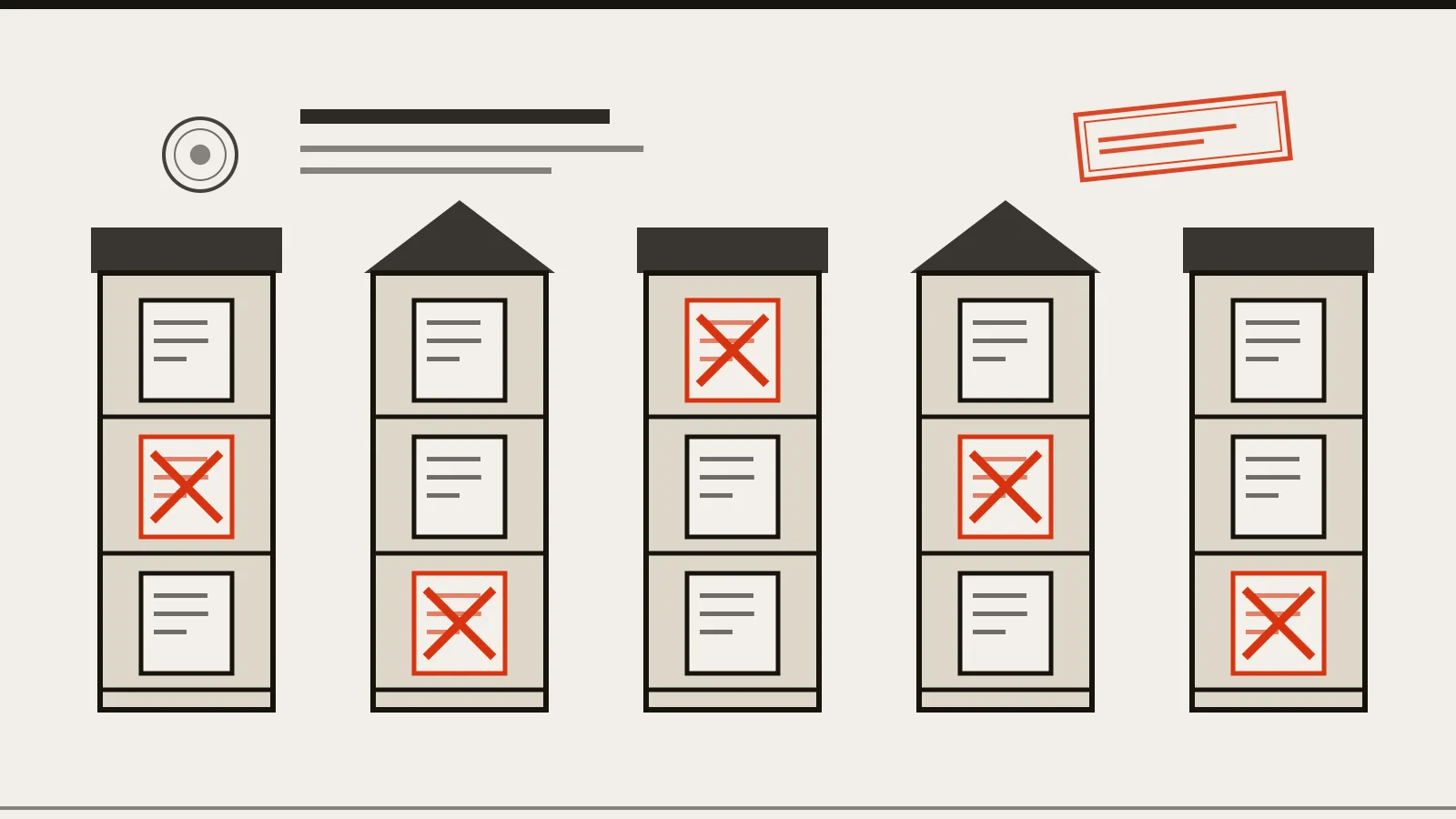
Whose shelf is the thing you want gone sitting on?
A designer we spoke to this autumn found one of her prints on a counterfeit tote. The tote was listed on Poshmark. A near-identical one was on Temu. A third copy was sold through a small Shopify shop on its own web address, a YouTube "haul" video showed it off, and the Wayback Machine had quietly saved the shop's product page twice. Same harm. Five different owners of the shelf it sat on.
That is the question underneath all thirty-two searches behind this briefing. A takedown request is not addressed to the person who posted something. It is addressed to whoever lets them keep it there, and each of those landlords runs on a different rulebook. A marketplace enforces its seller terms. A store host enforces an acceptable use policy and copyright law. A video or blogging platform enforces community rules and a strike system. A data broker answers to privacy law, and mostly to the person the record describes. An archive answers to its own exclusion policy. Send the right evidence to the wrong landlord and the answer is a polite form letter. Send it to the right one and the answer is often a removal within days. The evidence has to fit the landlord, whatever the poster did.
| Landlord | Searches it covers | Whose rules decide | What a win removes | What stays |
|---|---|---|---|---|
| Marketplace | Poshmark, Temu | Seller terms and the IP portal | The listing, then the seller after repeats | Copies on other markets |
| Store host | Shopify | Acceptable use policy, copyright law | The shop on that host | A domain the merchant owns |
| Publishing platform | YouTube, Rumble, Vimeo, Tumblr, Truth Social, VK, Bandcamp, Wattpad, DeviantArt | Community rules, copyright notices, strikes | The post, then the account after strikes | Re-uploads elsewhere |
| Data broker | ZoomInfo | Privacy law, the data subject's request | The profile, at the subject's request | Fresh data from new sources |
| Archive | Wayback Machine | The archive's exclusion policy | Public access to the captures | Copies saved by anyone else |
The landlord also decides who may ask. A shopper can flag a listing on almost any marketplace, but a copyright or trademark notice belongs to the rights owner or an agent acting for them, a split we set out in detail when we looked at who may report an Airbnb listing and other standing problems. Our team starts every case by naming the landlord and the filer before choosing a form.
How do you take down a Poshmark listing or a Temu listing?
The quickest way to take down Poshmark listing copies of your work depends on whether you are a shopper or the owner of the right being copied. Shoppers use the three-dot menu on the listing, where the report option sits. Poshmark publishes neither the list of report reasons nor a response time, and in our experience a shopper's flag works for banned items and blatant fakes but not for disputes about who owns a design. Rights owners have a stronger route. Section 8 of Poshmark's terms (version 4.6, effective 3 June 2025) points them to an IP reporting form, or by email to copyright@poshmark.com for copyright and ip@poshmark.com for every other right, trademark included (Poshmark Terms, 2025). The filer must own or control the right, a copyright notice must meet the US DMCA, and anyone who files a false claim "may be liable" to Poshmark for costs and damages. The same terms ban counterfeit goods outright.
That last clause is why we never send a notice for a client who merely suspects a fake. Poshmark promises to terminate repeat infringers "in appropriate circumstances", so a closet full of copies comes down one listing at a time, each with its own URL and its own ground. A listing that uses your photographs is a copyright case. A listing that uses your brand name on goods you never made is a trademark case. The two go to different inboxes.
Temu listing takedown and Temu seller takedown
Temu's rights-owner channel is called the IP Portal. Temu's own policy pages load only in a browser running scripts, and we could not read them directly on 15 October 2026, so the details here come from trade press and brand-protection firms that use the portal; treat them as second-hand. Filers register as a rights owner with a legal or company name, a business email, a country and a phone number, then submit the listing URLs, the registration number of the trademark or copyright, and proof of ownership. A Temu listing takedown is decided listing by listing. A Temu seller takedown, meaning the store itself closes, follows repeated violations: Managing IP reported that Temu's 2026 IP Protection Report, covering June 2025 to May 2026, counted more than 16,000 stores closed for repeated IP violations (Managing IP, 2026). Reported speeds conflict. Temu has claimed an average under 24 hours; one enforcement vendor quotes five to seven business days.
A buyer who received a fake has no standing in the IP Portal at all. Their route is the order's own help channel and their card issuer, and the brand owner is the one who can end the listing.
Can you take down a Shopify store, or only what it sells?
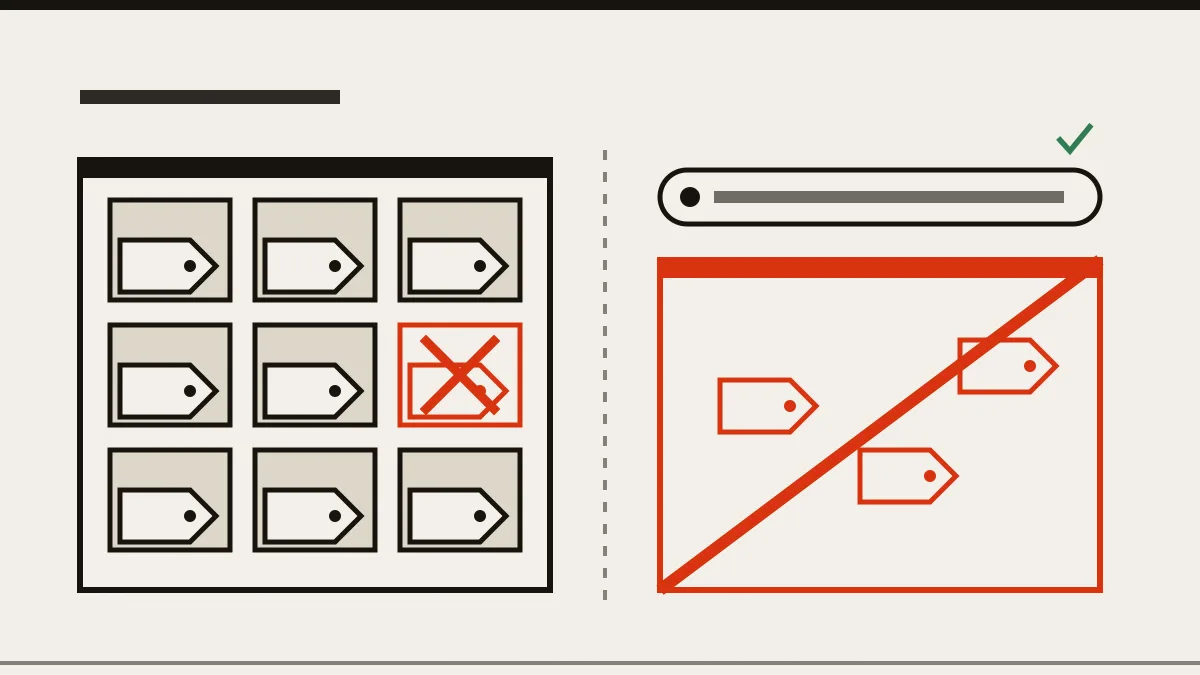
You can take down a Shopify store only in the sense that Shopify can stop hosting it. You cannot make the business vanish. Shopify is the shop's software and hosting provider rather than a marketplace, so every complaint is about what one merchant does on Shopify's systems. Its acceptable use policy sends reports to a report-an-issue page, where "Report a merchant" covers fraud, prohibited goods and other policy breaches (Shopify Acceptable Use Policy). Intellectual property has separate forms: one for copyright under the DMCA, one for trademarks. The trademark form must come from the owner or someone "authorized to act on behalf of the owner", sworn under penalty of perjury, and every infringing page must be listed because "a general shop link will not be accepted" (Shopify trademark policy). Shopify's stated approach is product first. It notifies the merchant, acts on the single item by default, and moves against the whole account only as a last resort.
Two details catch complainants out. Shopify's copyright policy warns that a notice, "including any contact information provided, may be provided to the person that posted the content" (Shopify copyright policy). The merchant may learn exactly who filed. A counter notice then lets the merchant repost in 10 to 14 business days unless you report legal action in that window.
The store-level outcome is real but conditional. Shopify keeps a policy of terminating stores for repeat infringement, can close every shop the same person runs, and reserves the right to disable a store after one wilful or egregious infringement.
What Shopify cannot do is reach past its own systems. Its IP pages describe removing products and terminating stores and say nothing about the merchant's domain name, and a domain registered with another company stays with whoever registered it. A closed shop on its own address can reappear on a different host within a day. That is why a take down Shopify store request is often the first of two filings, not the last.
Takedown website requests when the shop leaves Shopify
A takedown website request is the general version of the same problem: a page on an address nobody in your chain of contacts controls. The ladder runs from the site operator, to the hosting company, to the registrar, and finally to search engines and browsers, and our DMCA takedown website walk-through shows that ladder rung by rung for copyright cases. If the shop pretends to be you or your company rather than copying your work, the evidence changes from ownership to identity, and the impersonation website takedown routes are the better fit. Either way, each rung is a separate landlord with its own form, and the host is usually where a removal actually happens.
What "takedown tesla website" usually means
Two different searches share that phrase. Most people typing it want Tesla Takedown, the protest movement whose website, TeslaTakedown.com, appeared in February 2025 after a social media post by the researcher Joan Donovan, and which organised pickets outside Tesla showrooms, including a "global day of action" on 29 March 2025 (Tesla Takedown, Wikipedia summary of press reports). That site is political speech. No platform policy or copyright route removes a lawful protest site because a company or its admirers dislike it, and invented complaints filed to force it down are precisely the misuse that rebounds on the filer.
The other meaning is a scam site wearing Tesla's name, usually a fake cryptocurrency giveaway. Those belong to the brand owner as trademark and fraud cases, while victims report them to their national fraud service. California's financial regulator lists one such scheme and notes that Tesla does not run crypto giveaways (DFPI Crypto Scam Tracker). When police are involved the end point can be a seizure, and our note on what an FBI website takedown really is explains why that is a court order and not a complaint form.
How do you take down a YouTube video or a YouTube channel that isn't yours?
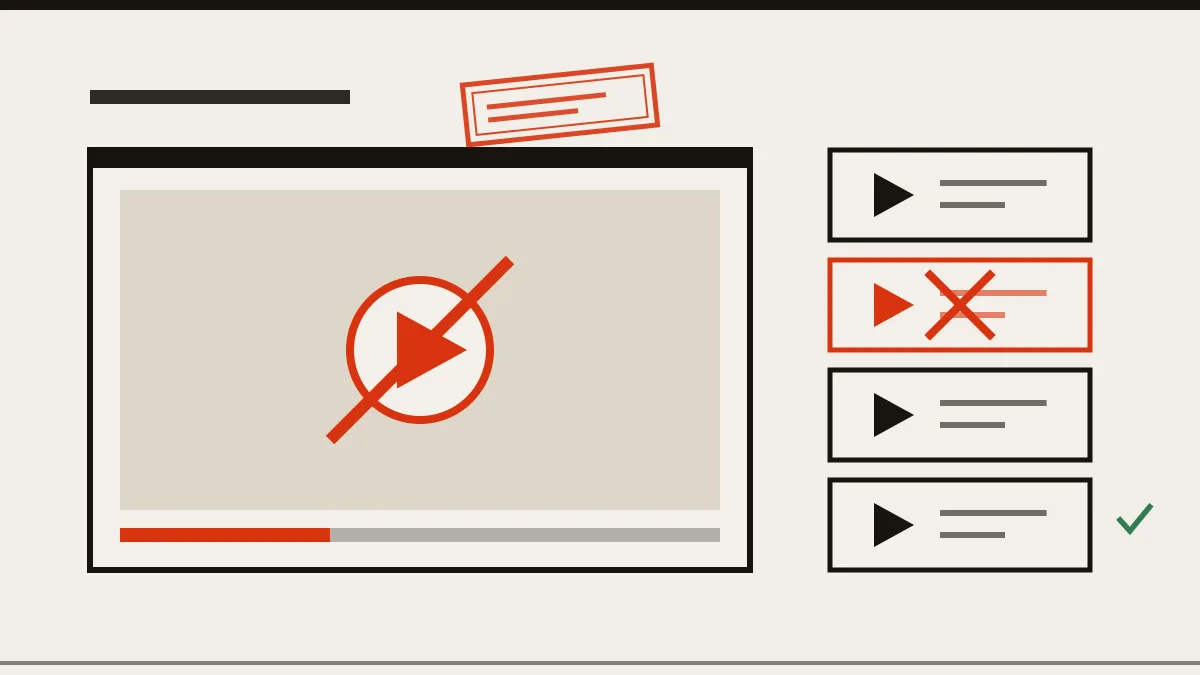
To take down YouTube video uploads that are not yours, you choose one of four doors, and the door depends on what is wrong with it. A community guidelines report (the flag under the video) is open to anyone and asks YouTube to check the video against its rules. A copyright removal request is for the owner of the work, or someone authorised to act for them, and it needs the URL of each video. A privacy complaint is for a person who can be identified in the video. A legal complaint covers defamation, trademark and court orders. Only one of these, the copyright request, can lead to a strike that counts towards termination of the uploader's channel. As of October 2026 YouTube's help pages say a channel with three copyright strikes is terminated along with any associated channels, and that the uploader can clear a strike after 90 days by completing Copyright School (YouTube Help, 2026).
That last rule matters to anyone counting on a strike to end a channel, and our note on how long a YouTube copyright strike lasts explains why the clock rarely runs to three.
Take down YouTube channel requests are the ones we most often have to redirect. No form takes down a whole channel in one step. YouTube's removal request page says each request must name specific content, and a channel goes only when its owner has been struck repeatedly, has broken a rule severe enough for termination on the first occasion, or is impersonating someone. If the channel uses your name or face, the impersonation report is the strongest single route. If it re-uploads your work, the practical path is to report a YouTube channel for copyright video by video, so that the strikes accrue against it.
The thing you want gone may not be a video at all. Ads run through Google's advertiser policies, not the community guidelines, and the steps for how to report a YouTube ad on PC are different from the flag under an upload.
Take down video from YouTube: the copyright request, step by step
- Open YouTube Studio, or the public copyright webform, while signed in to the account that owns the work.
- Choose "Copyright infringement" and identify the original: a link to your upload, or a description if it lives elsewhere.
- Paste the URL of each infringing video. A channel URL is not accepted on its own.
- Choose between immediate removal and a request scheduled to take effect in seven days, which lets the uploader delete the video first and avoid a strike.
- Sign the statements under penalty of perjury. Your name can be shared with the uploader.
The YouTube help page for this form says the request can come from the owner or "an authorised representative, such as a lawyer" (YouTube Help, 2026). That is the only way a third party should file one.
Take down video on Rumble or a Vimeo video
Rumble is a smaller landlord with a blunter rule. Its copyright page names an agent at Rumble Canada Inc. in Toronto, and warns that claimant information "will be published on the Rumble site at anytime" (Rumble DMCA policy). Before you take down video on Rumble, assume the uploader and the public may see your name. Vimeo works by strikes, like YouTube: each copyright removal is a DMCA strike, three can end the account, and a counter-notified video can return after ten business days. Our briefing on the Vimeo copyright strike sets out who counts those strikes. To take down Vimeo video copies of your work, file at vimeo.com/dmca with one URL per video.
Not sure which landlord holds it? Send us the links: the listing, the shop, the video, the archive capture. Eleanor's team tells you, in confidence, which of them will act on your evidence and which will not, before any charge. Start a confidential review.
Taken down YouTube videos: can anyone still watch them?
Usually not on YouTube itself. When YouTube removes a video, the page at that address stops playing and shows an unavailable notice to viewers; creators see a label in YouTube Studio such as "Video removed: Terms of Use violation", or a copyright label saying a copyright owner "sent us a complete legal request" (YouTube Help, troubleshoot video takedowns). Anyone who wants to watch taken down YouTube videos is really hunting for a copy somewhere else, and whether one exists depends on who removed the original and why. A video the uploader deleted may survive as somebody's re-upload. Videos taken down from YouTube for copyright often disappear from the other large platforms as well, because the same rights owner files there too. The Wayback Machine sometimes holds the watch page with its title and description, but rarely a playable file. Our guide on how to see taken down YouTube videos works through each of those traces.
The searches to watch YouTube videos that were taken down, or to watch YouTube videos that have been taken down years ago, also run into a legal line. Watching a re-upload is rarely the viewer's legal problem. Re-uploading someone's removed video is the uploader's, and it is the reason so many of those copies vanish within weeks.
If the video taken down YouTube was your own, the row for it in YouTube Studio is the one place an explanation is guaranteed: the reason, and the appeal or counter-notice route. Viewers who simply want to view taken down YouTube videos from a channel they followed have fewer options than they hope.
Tumblr, Truth Social, VK, Bandcamp, Wattpad and DeviantArt: who sees your name?
The smaller publishing platforms all accept copyright notices, but they treat the person filing very differently. Some forward the whole notice to the uploader, some publish it, and one keeps the filer out of view altogether. Read this column before you file, not after.
| Platform | Door for someone else's content | Who sees your details | Repeat rule |
|---|---|---|---|
| Tumblr | DMCA form, full post URL | Forwarded to the poster, may go to Lumen | Repeat violations, permanent suspension |
| Truth Social | Copyright notice to legal@tmediatech.com | Not stated in the terms | None found in the terms |
| VK | Form at vk.ru/dmca, signed in | May be forwarded; individuals give passport data | Not published |
| Bandcamp | copyright@bandcamp.com, URLs in the body | Not stated | More than two notices |
| Wattpad | wattpad.com/help/DMCA or "Report this story" | Filer details not shared | Not published |
| DeviantArt | Report flag, or a signed copyright notice | Depends on the route | Account action after repeats |
Tumblr takedown and Tumblr blog takedown
A Tumblr takedown for copyright starts at the DMCA form, which wants the full URL of each post. Tumblr says the notice "will be forwarded to the party that made the material available", and a copy may be sent to the Lumen database, where researchers can read it. A Tumblr blog takedown is the same arithmetic as a YouTube channel: there is no form for the blog, but the community guidelines warn that repeat violations lead to permanent blog or account suspension. Abuse that is not about copyright (harassment, impersonation, private information) goes through the report option on the post or blog instead.
Truth Social account takedown
A Truth Social account takedown has the thinnest published route of any platform in this briefing. Truth Social's terms of service, hosted on its help site, carry the copyright policy inside them and name a copyright agent at legal@tmediatech.com, the same address used for counter notices (Truth Social Terms of Service). The terms also forbid "false reports of abuse or misconduct", which cuts against anyone tempted to mass-report. When we read them on 15 October 2026 we found no repeat-infringer clause and no help article showing how a post or an account is reported in the app. We tell clients that plainly: the account-level outcome is at Truth Social's discretion. For copyright, file post by post. For impersonation or threats, use the report option on the post or profile and keep your own dated screenshots, since there is no public timeline to hold the platform to.
Take down VK profile or a VK group takedown
VK is the strictest about the filer. Its copyright terms require you to be signed in to your own VK account, accept no anonymous complaints, and ask individuals for passport details; the complaint may be passed to the user. To take down VK profile pages that impersonate you, the report option on the profile is the faster route, because a copyright form cannot judge identity. A VK group takedown follows the community's report menu, and VK's copyright route can strip infringing posts from a group without removing the group itself. Russian law (Federal Law 149-FZ, article 15.7) gives rights owners a pre-trial notice route as well, which matters when VK will not act.
Takedown Bandcamp, Wattpad stolen story removal, and stolen artwork on DeviantArt
A takedown Bandcamp request is the plainest form in this list: an email to copyright@bandcamp.com with the URLs in the body. Bandcamp counts more than two notices against an artist as repeat infringement, and a counter-noticed release can come back after ten business days. Wattpad stolen story removal has a gentler privacy profile. Wattpad accepts notices at wattpad.com/help/DMCA, accepts originals that were first published somewhere else, and says the filer's details are not shared with the uploader, which is unusual. The original author should file; readers who spot a copied story should tell the author rather than file for them.
To take down stolen artwork DeviantArt hosts, decide first between the flag and the signed notice. The flag asks moderators to apply the site's rules; the notice invokes copyright law and binds you to a statement of ownership. Our guide on how to report stolen art on DeviantArt explains which one wins in which case. When the same artwork turns up printed on merchandise, the right you rely on matters as much as the platform, and the Redbubble copyright infringement briefing sorts copyright, trademark and publicity claims. Images re-hosted on a picture site fall under the same logic as an Imgur copyright takedown request: the notice kills the file at one address and nothing more.
Can you take down someone else's ZoomInfo profile?
Not on your own say-so. ZoomInfo's removal route is built for the person a profile describes. Its privacy page tells individuals to "use the Request Removal link", which leads to a verification page at privacyrequest.zoominfo.com, and treats a removal as an opt-out from sale and sharing; residents covered by certain US state laws get a separate address, stateremoval@zoominfo.com (ZoomInfo, manage your profile). The page says nothing about one person removing another's profile, and data-protection law points the same way. Under Article 17 of the UK and EU GDPR the right to erasure belongs to the data subject, and the UK regulator's guidance frames it as an individual's own right (ICO, right to erasure). So a request to take down ZoomInfo profile entries for a former colleague, a rival or a relative has to come from that person, or from someone they have formally authorised. What you can challenge yourself is a profile that misuses your own data, such as your mobile number printed under somebody else's name.
A broker profile is also the least permanent kind of removal in this list. Brokers rebuild records from fresh sources, so we diarise a check three months after any successful request.
Wayback Machine takedown requests: hiding a page from the archive
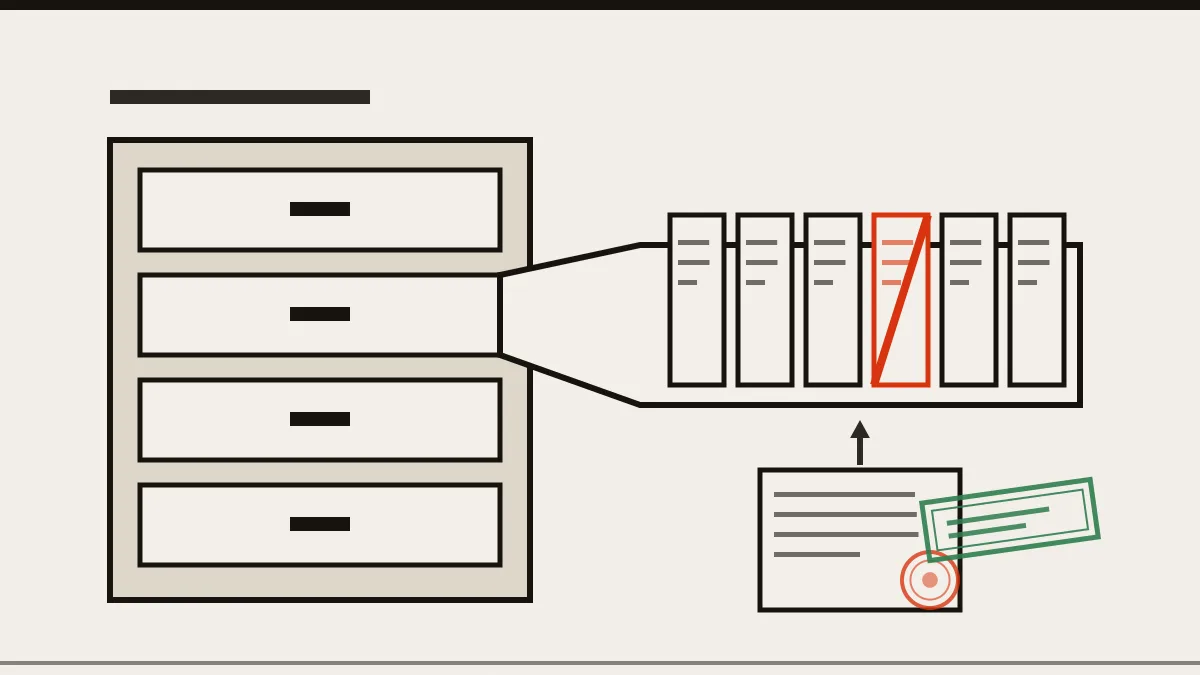
A Wayback Machine takedown is, in the archive's own words, an exclusion. The Internet Archive's help article on removing material tells site and account owners to email info@archive.org with "the URL or URLs of the material", "the time period that you wish to have excluded", and "the time period during which you had control of the site or relevant user account" (Internet Archive Help). The page speaks of exclusion from web.archive.org, never of deletion, and says each request is reviewed with no guaranteed outcome. Rights holders are sent to the separate copyright policy, whose agent sits at the Archive's San Francisco address and uses the same email. People whose intimate images were published without consent have a dedicated removal page, and for those cases we also file with StopNCII.org, whose hash-matching blocks the images on partner platforms without anyone having to send the pictures themselves. That combination covers most archive cases we see.
Wayback Machine takedown requests from someone who never controlled the site are the hard case. A web archive takedown request about a page that names you, on a site you did not run, needs a ground the archive recognises: copyright you hold, private information, intimate images, or a court order. Disliking an old article is not one of them.
In our files the requests that succeed are short. They give exact capture URLs with their timestamps and state the ground in one line. Other archives keep their own copies, too, and an exclusion at one does nothing at archive.today or a national library's web archive.
What will none of these landlords take down?
Every route above removes content because it breaks a rule or a right. Nothing in this briefing removes content that is lawful. Accurate reporting, genuine public records, honest reviews, and opinion (including a protest movement's website) stay up however many reports are filed against them. Volume of reports is not evidence, and no policy we have read treats it as such. Filing false copyright or trademark notices to force them down exposes the filer to liability under the DMCA's misrepresentation clause and, in England and Wales, to a claim for groundless threats in trademark cases. The search for a way to delete a rival's account is common; the same logic governs how to delete someone else's TikTok account or how to take down a page on Facebook, and the answer is always that the platform decides, on the evidence, about its own rules.
When we file these for clients, the outcome usually turns on one detail: whether the evidence matches the landlord. A trademark registration number sent to a store host, a signed ownership statement sent to a video platform, a dated screenshot sent to an archive. When content cannot be removed, the honest route is suppression, publishing stronger material so that the unwanted page sinks in search results. We never forge notices, never ask for anyone's password, and never promise a removal we cannot see a lawful route to. Our disclaimer sets out those limits in full, and the team page lists who reviews each case.