What can a removal service actually file on your behalf?
A removal service is a stranger asking a platform to act. Whether the platform listens depends far less on the service than on the kind of request, because each kind has its own rule about who is allowed to sign it. Copyright law lets an owner appoint an agent. Defamation complaints can be written by a representative, but the facts in them have to be yours. Harassment reports inside an app can only come from the account that received the abuse. And a ban, with no rule broken, has no signature line at all.
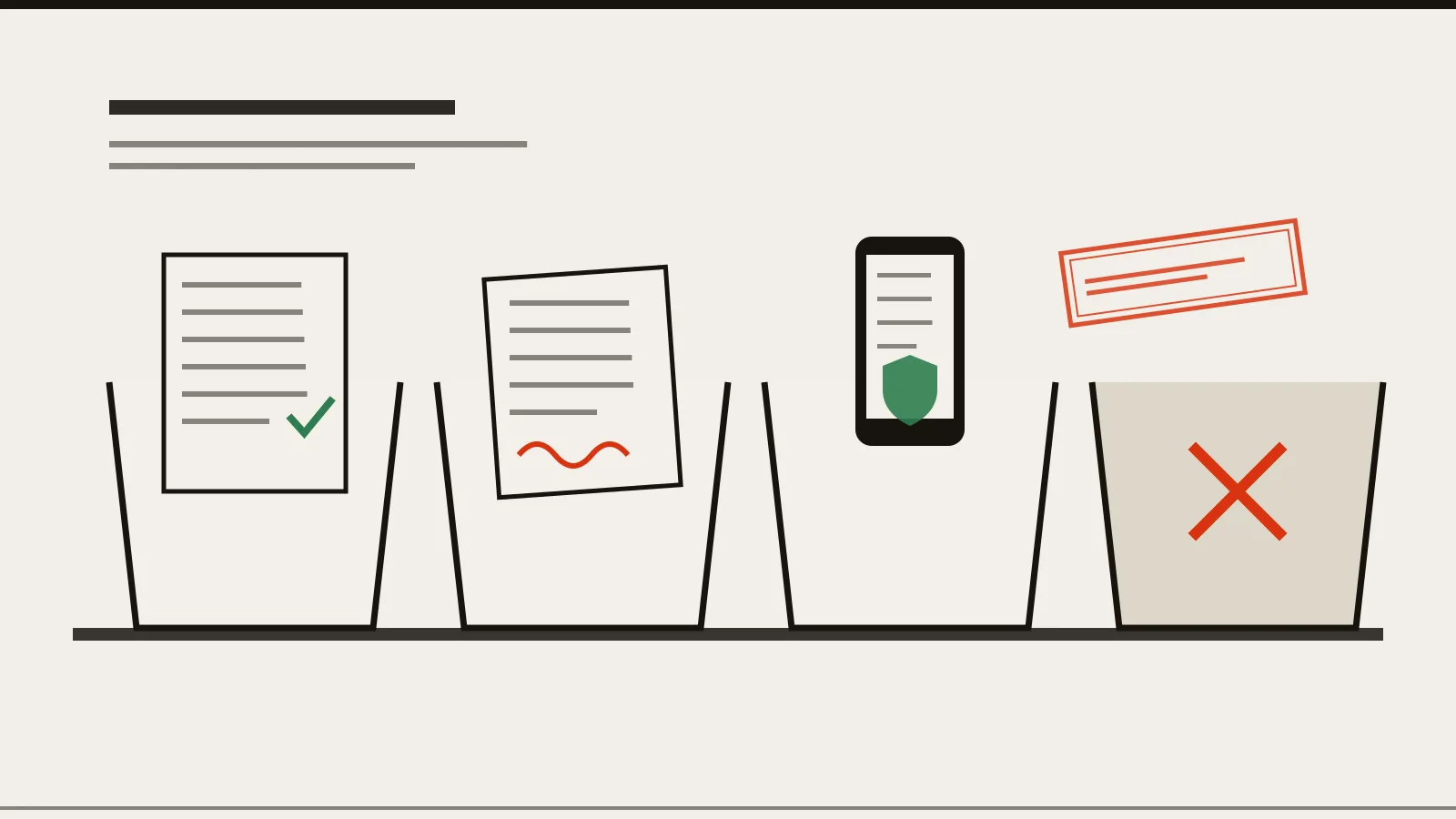
That gives four trays. We use them on every enquiry, and they are the honest answer to almost every search in this briefing, from a vimeo content removal service to a youtube spam report bot.
- File for you. Copyright notices on Vimeo, Wattpad, YouTube and ordinary websites. An authorised agent signs.
- Draft for you. Defamation complaints to Substack, Tumblr, X, Tripadvisor, Thumbtack and the like. We write; you approve and, where the form asks, you sign.
- Coach you. Harassment and threats on Kik, Signal, Mastodon and WeChat. Only your account can press Report. We prepare the evidence and the police route.
- Turn down. Mass reports, report bots and "ban services". Nobody can sign these honestly, so we don't sell them.
The rest of this page walks each tray platform by platform, as of October 2026.
How does a Vimeo content removal service file a copyright notice?
Copyright is the one area where a service can stand in your shoes completely. Section 512(c)(3)(A)(i) of the US Copyright Act asks for the signature of "a person authorized to act on behalf of the owner", which is why every serious host, Vimeo included, accepts notices from agents. A vimeo content removal service therefore does the filing itself: it identifies the original work, lists each infringing video URL, states good-faith belief and accuracy under penalty of perjury, and submits through the claim form on Vimeo's DMCA page or by email to its copyright desk. Vimeo removes the video and records a DMCA strike against the uploader. Three strikes normally end the account, and Vimeo reserves the right to act sooner. If the uploader files a counter-notification, Vimeo can restore the video after ten business days unless you show it a court filing. That ten-day window is the part people forget. A service that files and disappears leaves you exposed exactly when the uploader pushes back.
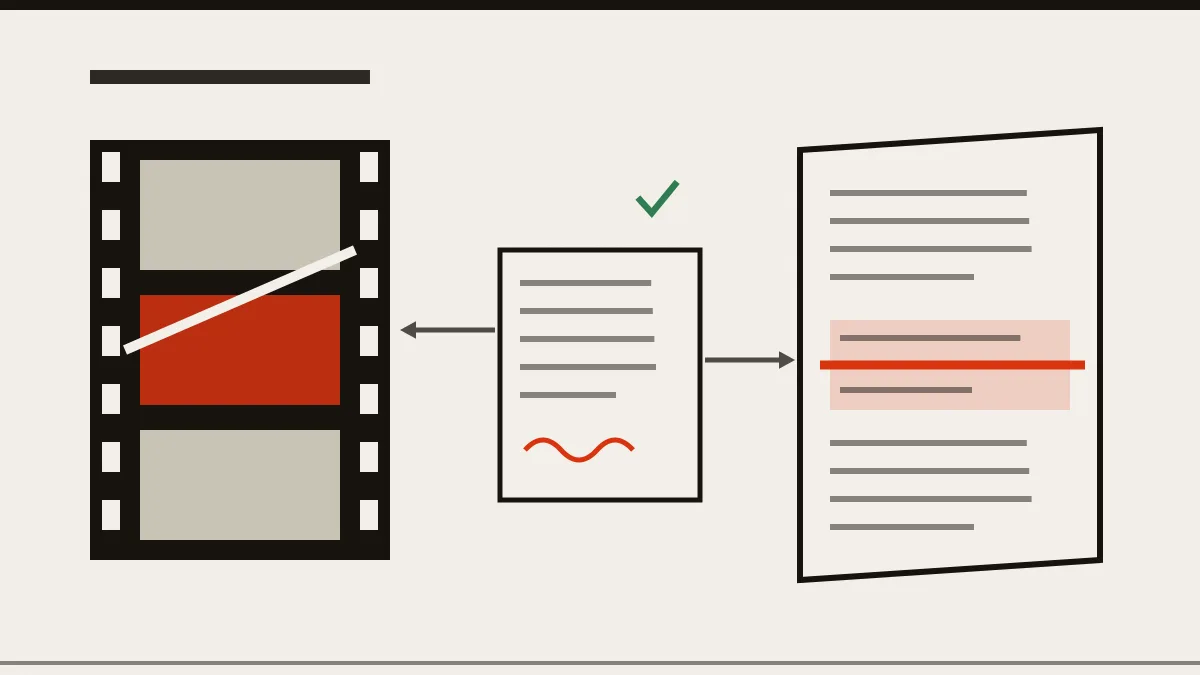
Two limits apply. Vimeo's copyright route removes copies of a work you own; it does nothing for a video that is merely about you. For that, the flag on the video or Vimeo's contact page is the door, as its help article on reporting abuse and violations explains, and a harassment or privacy report there is weighed against the Acceptable Use Policy by Vimeo's trust and safety team, not by a copyright reviewer. Intimate images shared without consent have a separate reporting tool of their own. And the strike count belongs to the uploader, so filing ten notices against one channel does not make the channel vanish any faster. Our briefing on how a Vimeo copyright strike is counted to three follows that ledger desk by desk.
Can a Wattpad story takedown service file for the author?
Yes, and Wattpad's process is friendlier to the original author than most. A wattpad story takedown service submits through the copyright form in Wattpad's Help Center or emails Wattpad's copyright address, naming the original work, where it was first published, and the URL of every copied chapter. Wattpad accepts originals that were published somewhere else, so a novel first posted on your own site or on Archive of Our Own still counts. The filer's personal details are not passed to the person who uploaded the copy. A counter-notice can bring the story back after 14 business days unless a court action is under way.
The step-by-step version, including what to quote from your own manuscript, is in our guide to how to file a DMCA takedown on Wattpad, which sets it alongside GitHub and YouTube.
Three things decide whether the request works:
- Proof of priority. A dated draft, a publication URL with a timestamp, or an archived copy beats an assertion.
- Chapter-level URLs. Wattpad removes what you name. A story URL with 40 chapters behind it should be listed chapter by chapter if only some were copied.
- The right owner. If a publisher holds the rights, the publisher or its agent files, not the author.
Readers who just dislike a story have a different door: the three-dot menu in the app, or "Report this story" on the web, which goes to Wattpad's content guidelines team.
Which YouTube removals can a service file, and which can't it?
YouTube splits the same way. A youtube content removal service can file copyright removal requests as your agent through YouTube Studio's webform, and YouTube treats an authorised representative exactly as it treats the owner. It can also prepare a privacy complaint, although YouTube asks the person shown in the video to file it themselves in most cases. What no service can do is report a channel off the platform by volume.
YouTube channel removal service or takedown: what the words promise
A youtube channel removal service usually means one of two things. Either the channel is yours and you want it gone, which you do yourself from YouTube Studio in about two minutes (see how to take down your YouTube channel and what copies it leaves behind), or the channel belongs to someone else and you want YouTube to terminate it. The second only happens through YouTube's rules. Three copyright strikes inside 90 days terminate the channel and any linked channels. A serious Community Guidelines breach can terminate it in one step. A youtube channel takedown service can collect the evidence for either, file the copyright requests where you own the work, and write the report for the policy breach. It cannot add weight by headcount.
The mechanics of how to report a YouTube channel for copyright, including what YouTube shows the uploader about you, are covered with Twitch in a separate briefing. For the wider choice between a website host and YouTube, our walkthrough of the DMCA takedown website route against the YouTube webform compares both journeys.
Youtube mass report service, youtube mass reporter, youtube spam report bot
These three phrases describe the fourth tray. A youtube mass report service or a youtube mass reporter sells many accounts pressing Report on one target; a youtube spam report bot does the same with scripts. YouTube's help page on reported content says plainly that reported videos are not removed automatically and that the number of reports does not change the outcome (YouTube Help, answer 2802027). A reviewer reads the video against the policy. If it breaks a rule, one accurate report is enough. If it does not, a thousand reports are a thousand rejections, and the accounts that sent them are at risk under YouTube's own spam rules. We cover what the reviewer actually sees in a mass report against a YouTube ad or app, alongside the button-and-box ledger for other targets.
What happens with an X post removal service or an X report bot?
X behaves like YouTube, with one extra detail worth knowing. An x post removal service can legitimately do three things: file copyright and trademark notices as your agent, write a privacy or impersonation report, and prepare an x defamation removal request for X's legal team when a post states something false about you as fact. X does not usually act on defamation without a court order, so that last step is often a letter that sets up the next one.
An x mass report service or an x report bot promises something else. When we checked X's public developer documentation in October 2026, none of its endpoints filed a report; reporting exists only inside the logged-in app and website. So any "bot" is either many real accounts operated by hand, or a script driving fake ones. Both are coordinated inauthentic activity under X's platform manipulation and spam rules, and neither changes how a reviewer reads the post. Our analysis of the mass report Twitter account bot and what X receives traces the four things those products actually deliver. If the account is pretending to be you, skip the volume altogether: report X impersonation through the dedicated form, which asks for ID once and is read by a person.
What does a service to remove defamatory content actually do?
This is the second tray, and it is where most money is wasted. A service to remove defamatory content cannot sign a defamation complaint as though it were the injured party. It can write one, find the right door, attach the evidence, and chase the host. The statement still has to be false, about you, presented as fact, and damaging, and in England and Wales a claimant has to show serious harm under section 1 of the Defamation Act 2013. Opinion, true criticism and fair reporting pass that test and stay up.
The words people search for map onto different jobs:
- A service to remove defamatory statements or a service to remove defamation of character is usually asked to deal with a post, a comment or a forum thread. The first door is the host's legal or complaint form.
- A service to remove defamatory articles is dealing with a publisher. Editors respond to a correction request with evidence far more often than to a threat, and a published correction can be enough for a search engine to drop the old version.
- A service to remove defamatory reviews is dealing with a review platform, whose own guidelines usually move faster than defamation law.
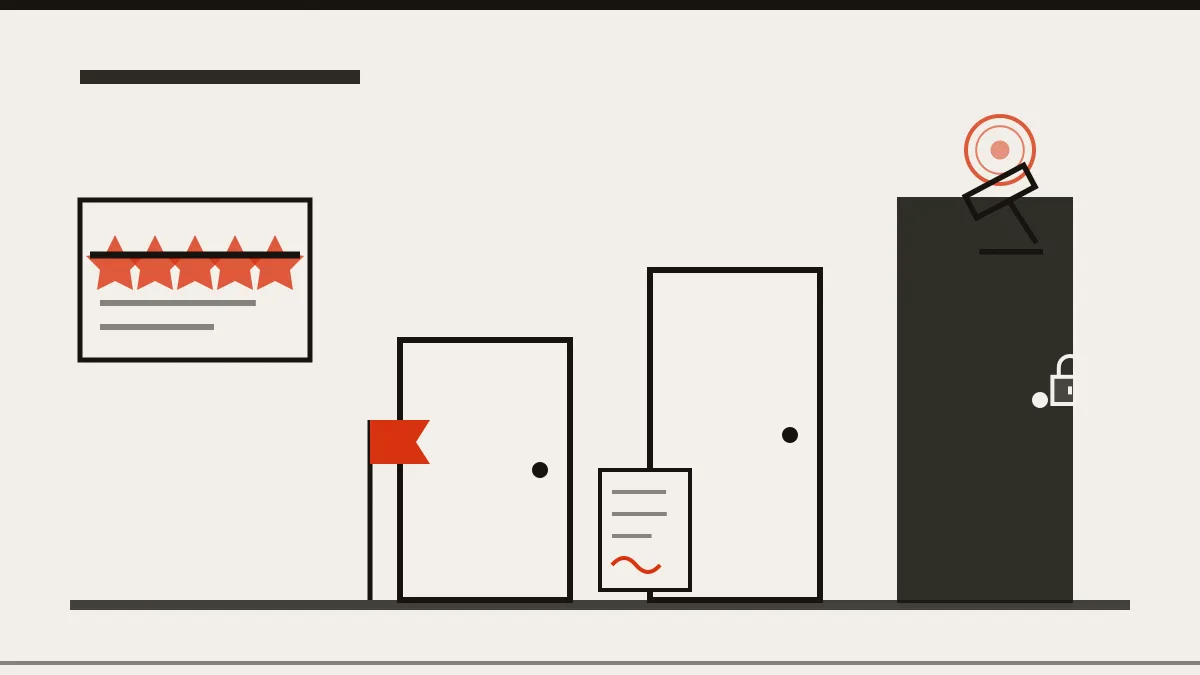
For hosts with a UK presence, section 5 of the Defamation Act 2013 gives a website operator a defence only if it handles a proper notice of complaint, and the 2013 operator regulations then give it 48 hours to pass the complaint to the poster. A notice written to that template gets read. A vague email does not. Hosts based only in the US are shielded by Section 230 and have no such duty, which is why a court order matters more there.
Substack, Tumblr, Tripadvisor, Thumbtack, TheDirty and X compared
| Host | Best first door | Honest limit |
|---|---|---|
| Substack | Report the post, then a written legal complaint to Substack's support team | Writers own their posts; opinion and commentary stay |
| Tumblr | Report the post, or Tumblr's legal and abuse forms | Removes what breaks its rules or a court order covers |
| Tripadvisor | "Concerned about a review?" in the Management Center | Judges against its review guidelines, not defamation law |
| Thumbtack | Report it, then write to Thumbtack support | Removes reviews that break its guidelines; disputes are weighed, not automatic |
| TheDirty | Polite request to the site, then a court order | US Section 230 protection was upheld in 2014 |
| X | Legal request form for defamation | Usually needs a court order |
Substack defamation removal starts with the post's report option and a written complaint that quotes the exact sentence and the document that contradicts it. Substack hosts writers rather than editing them, and it runs a legal-support programme that helps its writers defend lawsuits, so it tends to wait for a court order unless the post also breaks its content guidelines.
Tumblr defamation removal follows the same shape. The report button handles harassment and targeted abuse; a false factual claim needs Tumblr's legal route, and a reblog chain means listing every copy you want gone.
Tripadvisor defamation review removal is mostly a guidelines question. A business owner reports the review from the Management Center and picks the reason that is actually true: not a first-hand experience, a conflict of interest, threats, or personal information. Our experience is that "this review is defamatory" on its own gets a polite refusal, while "this reviewer never stayed here, and here is the booking record" gets a second look.
Thumbtack defamation removal works similarly for service pros. Thumbtack can remove a review that breaks its guidelines, such as one from someone who never hired you, and it lets pros respond publicly. Responding calmly is often the fastest repair.
TheDirty defamation removal is the hardest of the set. In Jones v. Dirty World Entertainment Recordings (2014), the US Sixth Circuit held that the site was protected by Section 230 for posts written by its users, and set aside a $338,000 jury award even though the site had refused to take the posts down. In practice that leaves a polite request, a court order against the poster, and de-indexing from search once you have the order.
What if the page is on Wikipedia?
A wikipedia page removal service cannot delete an article. Wikipedia volunteers do, through Articles for deletion, a community discussion that normally runs for at least seven days, or a proposed deletion, where the tag has to survive seven days without any editor removing it. If the article is about you, the biographies of living persons policy requires every contested claim to be sourced, and you or your representative can email the volunteer response team at info-en-q@wikimedia.org with a link to the article, as the biographies of living persons policy sets out, and ask for unsourced claims to be removed. Editing the article yourself, or paying someone to, breaks Wikipedia's paid-editing rules and usually ends with the article longer than before.
How do you report Kik, Signal, Mastodon or WeChat for harassment?
The third tray. On messaging apps, the platform only accepts a report from inside the conversation, from the account that received it. A service can't log in for you, and it should never ask for your password. What it can do is make your report and your police report count.
Report Kik user for harassment or threats
To report Kik user for harassment, open the chat, tap the user's name, and choose Report User. The same route is how you report Kik user for threats; pick the threat reason and include the chat. If you want to report Kik profile for harassment without a chat, for example a profile set up to mock you, open the profile from a group or search and report it from there. Threats of violence belong with the police as well. Kik's guidance is that police should contact Kik directly, which is why the step-by-step on how to report someone on Kik ends with an officer, not a form.
Report Signal user for harassment or account abuse
Signal is end-to-end encrypted, so Signal cannot read your messages and does not review chats the way other platforms do. When a stranger sends a message request, the block dialog offers "Report Spam and Block", which sends Signal the sender's number and a message ID, not the message itself. That is the only in-app way to report Signal account abuse. To report Signal user for harassment beyond that, keep screenshots with the phone number and timestamps visible, block the account, and take the record to the police, who can request the little data Signal holds. The same evidence habit helps with how to report a scam on Signal, which we cover with the dating-app scams.
Report Mastodon for harassment
Mastodon has no central company. To report Mastodon for harassment, use Report on the post or profile. The report goes to the moderators of your own server, and you can tick a box to forward an anonymised copy to the server where the harasser's account lives. If that remote server ignores it, your admin can silence or block the whole server. The Mastodon documentation on moderation explains both levels.
WeChat ban service versus a WeChat report
A wechat ban service sells the same promise as a youtube mass report service, on a platform that ties accounts to phone numbers. WeChat lets a user open the offender's profile, tap the "..." menu, choose Report and pick a reason; WeChat reviews the account against its rules and updates the reporter through the WeChat Team official account. There is nothing a third party can file there.
The four-lane version of this for Instagram, where comments, DMs, stories and accounts each have their own button, is in our guide to how Instagram report harassment lanes differ, and the item-by-item buttons are in how to report an Instagram comment, post, story or DM.
Do website takedown services work the same way?
Mostly, yes. A website removal service files with whoever controls the switch: the host for a page, the registrar for a domain, a search engine for the result. Copyright and trademark notices can be filed by an agent. Defamation complaints to a host are drafted for you. Fraud and phishing reports can come from anyone. What website takedown services cannot do is make a lawful website disappear because you dislike it.
Three points from our files are worth knowing:
- A host in the same country as the content owner moves fastest; offshore hosts often need a registrar or search-engine route instead.
- A court order binds the publisher, but search engines will usually de-index the page once you send them the order.
- A fake site that copies your brand is an impersonation case, and the impersonation website takedown route is different from defamation.
You sometimes see a seized site with an official banner and assume a service can arrange that. It can't. An FBI website takedown is a court-ordered seizure in a criminal case, and private firms have no access to it.
What will we not do?
Every tray has edges, and the edges are where clients get hurt. We will not file a copyright notice for a work you do not own, because a false DMCA notice exposes the signer to damages under section 512(f) and invites a counter-notice that puts the content back. We will not forge a solicitor's letter or bluff a lawsuit. We will not run or resell mass reports, report bots or ban services. We will not ask for your password. And we will not promise to remove truthful journalism, genuine public records or honest opinion; those can only be pushed down in search results with better, accurate pages, which is suppression, not removal. Our disclaimer sets out those limits in full.
Not sure which tray your problem sits in? Send us the URLs through our confidential contact form. We will tell you which tray it is, who has to sign, and whether removal or suppression is the realistic outcome, before anything is charged.
A practitioner's note to finish. When we file copyright notices for clients on Vimeo or Wattpad, the request that succeeds on the first attempt is almost always the one with a dated original and a precise list of copied URLs. Defamation complaints are slower and less predictable; the ones that work quote the false sentence beside a document that disproves it. And we decline more enquiries from the fourth tray than from the other three combined. That is the honest shape of this work, and the team behind it is introduced on our about page.