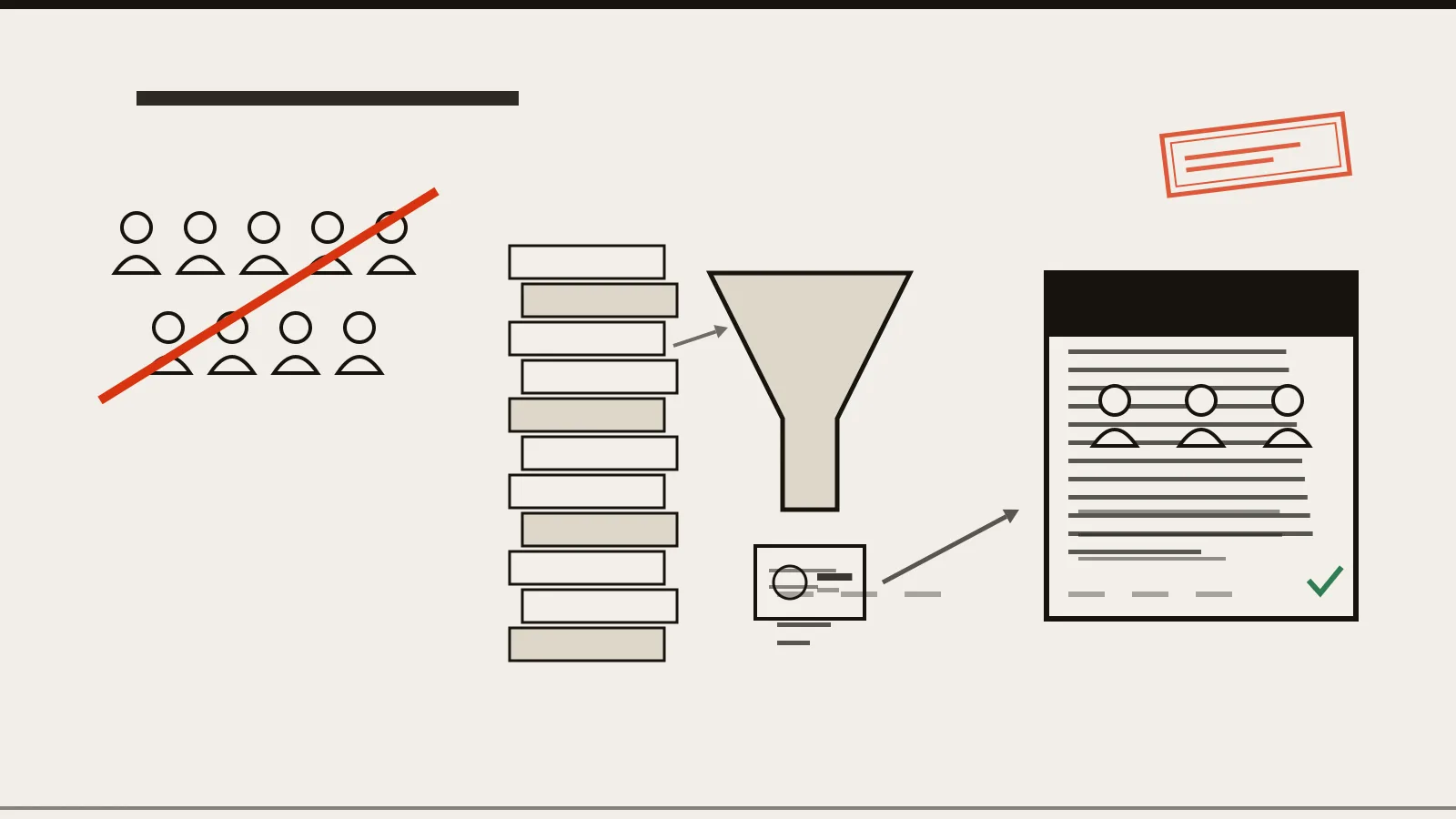
Are there mass reportings of groups on Facebook? Yes, and Meta has named them
Short answer: yes. Facebook mass reporting of groups is not a rumour, and groups sit on both ends of it.
The best public record comes from Meta itself. In its Adversarial Threat Report of 1 December 2021, Meta described a network in Vietnam whose operators used real and duplicate accounts to file hundreds, and sometimes thousands, of complaints against government critics through Facebook's ordinary report flows. Some operators also ran fake accounts posing as their targets, then reported the real accounts as the fakes. A few advertised account takedowns as a paid service in their own profile bios. Meta removed the network and treated the reporting itself as the abuse (Meta, Adversarial Threat Report, December 2021). Earlier the same year Facebook had already removed a Vietnamese group that existed to rally its members into reporting posts they disliked. So the honest answer to "are there mass reportings of groups on Facebook" has two halves: groups are used as launchpads for campaigns, and groups are targeted by them.
That record matters because it shows what Meta looks for. A campaign is visible as a campaign. Many accounts, one target, one script of complaint, filed in a burst: that pattern is what an integrity team is built to recognise, and once it is recognised the reports stop being evidence against the target and start being evidence against the senders.
The pattern repeats on every platform with groups. Telegram, where people ask how to report a Telegram account, group or channel, barely acts on individual reports at all, and Snapchat's group chats have their own path, set out in how to report someone on Snapchat. The rest of this briefing stays on Facebook. It follows one order: what the record shows, what a pile of reports really does, what one good report does instead, how to test a bot or panel before it costs you, and what to do when your own group is the target.
Does mass reporting work on Facebook? What a pile does inside Meta
Meta answers this in its own Help Centre. Its line is that "the number of times something is reported doesn't determine whether or not it's removed" (Facebook Help Centre). A report is a pointer. It asks a classifier or a reviewer to look at one item against one Community Standard, and the item either breaks that standard or it does not. Ten thousand pointers at a post that breaks no rule produce ten thousand closed reports and nothing else.
The numbers say the same thing from the other side. In the EU Digital Services Act Transparency Database, Facebook logged 20,963,023 moderation decisions between 1 and 23 October 2026. Only 14,550 of them began with a formal Article 16 notice, and 700 came from trusted flaggers; the other 20,947,773 were Meta acting on its own detection (EU DSA Transparency Database, Facebook, counted 24 October 2026). That is roughly one formal notice for every 1,440 decisions. Meta finds most of what it removes before anybody complains, and a report adds value only when it shows a reviewer something the systems missed. A thousand copies of the same complaint show nothing new, because the reviewer judges the item, and the item is the same each time. Duplicates are folded together long before a person reads them, which is why the size of a pile never shows up in an outcome.
| What a pile of reports can do | What it cannot do |
|---|---|
| Trigger a short automated limit on a borderline post until review | Remove a post that breaks no Community Standard |
| Bring a group or Page to an integrity team's attention | Count as votes toward a ban |
| Expose the reporting accounts as coordinated | Bypass Meta's strike ladder |
| Waste the target's week with appeals | Survive a request for another review |
The left column is the part sellers lean on. A burst of reports can sometimes cause a brief automated restriction, a post hidden or a feature paused while a review runs, and screenshots of that pause are what end up on sales pages as "proof". It rarely lasts. The target opens the Support Inbox, chooses Request another review, and Meta says that second look usually lands within 24 hours. Activists in Vietnam described exactly this cycle to reporters for years: accounts knocked offline for a few days, restored, hit again. Mass reporting there worked as harassment, wearing people down, and it did not work as enforcement.
So does mass reporting work on Facebook? As a way to get a rule-abiding group or account banned, no. As a way to annoy, delay and frighten, sometimes, which is precisely why Meta treats it as abuse. If you want the reporter's side of the same question on Meta's other app, we answered it in what reporting someone on Instagram does.
How to mass report on Facebook, and what one accurate report does instead
People search how to mass report on Facebook because they have a real problem and assume volume is the fix. The fix is accuracy. Every target on Facebook, whether an account, a Page or a group, has its own report path and its own reasons, and the report that works is the one that names the right reason with the right evidence.
| Target | Where the report sits | Reason that carries weight | What can follow |
|---|---|---|---|
| Personal account | Profile, then the three dots, then Report profile | Pretending to be someone, fake account, harassment, scam | Content removed, strikes, account disabled |
| Page | Options below the cover photo, then Report Page | Scam or fraud, impersonation, hate, intellectual property | Page restricted, unpublished or removed |
| Group | Group menu, then Report group | The group's purpose breaks a Community Standard | Group disabled; admins held to account |
| Single post, comment or photo | The three dots on the item | The specific breach in that item | That item removed |
How to mass report a Facebook account: the honest version
If you are asking how to mass report a Facebook account, read the question again as "how do I get this account in front of a reviewer with proof". Report the profile once, from the profile, under the reason that matches what it does. Then report the worst individual posts, each under its own reason, because a report attaches to one item and a reviewer judging the profile does not automatically see the posts. Keep a dated list of links and screenshots. If the account is a copy of you, the impersonation route is far stronger than any general report, and it works much the way we laid out for Meta's sister app in an Instagram fake account report: you prove the copy, you do not argue about how bad it is. Friends filing the same report add nothing; that is the whole answer to how to mass report Facebook account holders, and it is why we tell clients to mass report Facebook account problems zero times and report them properly once.
Our practitioner note: when we file these for clients, the reports that come back actioned are short and specific. They name the Standard, give two or three links, and state a date range. Reports that say "this person is toxic, please ban" come back as "doesn't go against our Community Standards", because a mood is not a breach. The same account, reported again a week later with three dated threats attached, is a different case.
How to mass report a Facebook page, or report it once with proof
The same logic answers how to mass report a Facebook page. Open the Page, choose Options below the cover photo, then Report Page, and pick the reason that matches the harm. For scam Pages the strongest evidence is the payment trail; for impersonation it is your own Page or ID beside theirs; for copied photos or logos it is a rights-holder form, which only the owner can file. Page Transparency, under the Page name, shows the creation date, previous names and where the managers are based, and a renamed Page with managers far from the business it claims to be is worth saying so in the report. To mass report Facebook page content that breaks no rule is to file a stack of reports that will all close the same way.
Mass report Facebook group: report the group, the admin or the posts
A mass report Facebook group campaign usually fails because it reports the wrong layer. Facebook judges a group by its purpose and by how its admins and moderators run it. A group whose members post one abusive comment is not, on that alone, a violating group. A group set up to harass a named person, sell fake goods or share stolen images is. Report the group from its menu when the purpose itself is the breach. Report the posts when individual members break the rules. Report the admin's own profile when they are the ones posting or approving it. Facebook's Group Quality page says groups can be disabled after multiple admin and moderator violations, and gives a 30-day window to appeal (Facebook Help Centre, Group Quality). That is the real lever on a group: what its leaders allow, not how many strangers complain.
Free bots, scripts and panels: a five-question scam test
Every seller of a facebook mass report bot free trial, a facebook mass report script on a file-sharing site or a facebook spam report bot in a Telegram channel is selling the same claim: that volume decides. Since it does not, the product is either harmless and useless, or useless and harmful. The test below sorts which before you pay or log in.
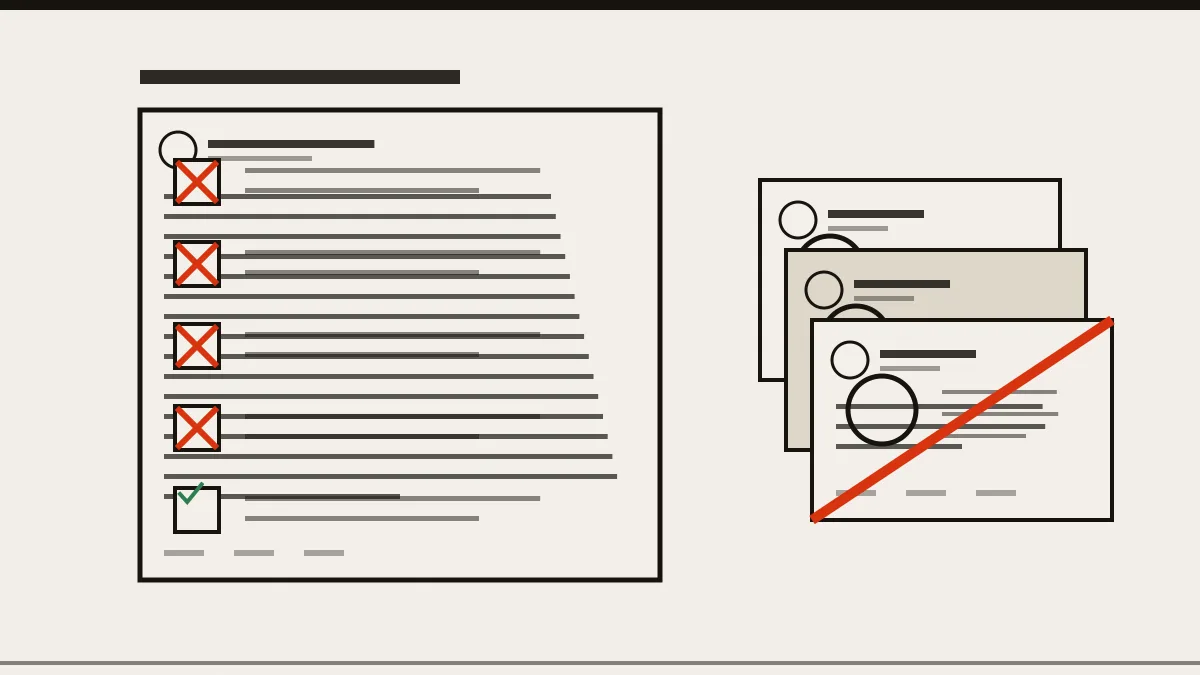
- Does it ask for your Facebook login, a session cookie or a one-time code? Then it is collecting your account, not reporting anyone. A code handed to a stranger is an account transfer.
- Does it promise a removal time, such as 24 or 72 hours? Nobody outside Meta controls review time, so the promise is invented.
- Does it show a counter of reports sent? A climbing number proves only that a number climbs. Meta publishes no reporting endpoint for outside software to call.
- Does it take payment only in crypto or gift cards, with "no refunds on delivered reports"? That is the shape of a sale designed to leave you nothing to dispute.
- Does it name the Community Standard the target breaks, and the evidence? If yes, you do not need the bot. If no, the bot cannot help.
Free versions deserve the most suspicion. A tool offered to mass report Facebook account free of charge has to pay for itself somehow, and the cheapest inventory a reporting operation can get is the logins of the people who download it. Today's free user is tomorrow's reporting account. The open-source side is thin: a GitHub search on 27 October 2026 returned 4 repositories for "facebook mass report", 2 of them created in 2026 and the most-starred holding 7 stars, plus 3 for "facebook report bot" (GitHub search API, 27 October 2026). Those are browser-automation scripts that drive the normal report form one logged-in session at a time, which is the exact behaviour Meta's December 2021 report described catching. Low stars and recent creation dates are what a short-lived project looks like, and when one stops working the seller simply posts another.
We ran the same test on X in what a mass report Twitter account bot actually sends, with the same result. And the adverts that sell these tools are reportable too; if one reaches you as a sponsored post elsewhere, how to report a YouTube ad on PC or an app on the App Store covers the ad and the app-store listing.
What a facebook page removal service can lawfully file
There is a legitimate trade behind the phrase facebook page removal service, and it looks nothing like a bot. A lawful service files a document, under a named route, that you are entitled to file. Ask any provider which form it will use. If it cannot name one, it is selling volume.
The routes that do move Meta are specific. A copyright or trademark report, filed by the rights owner or their agent, against a Page using your photos, logo or work; the logic is the same as when you report stolen art on DeviantArt or Redbubble, and it works because a valid notice has to be acted on. A privacy report for images of you, your child under 13, or someone you are the legal guardian for. An impersonation report backed by ID. For users in the EEA, an illegal-content notice under the Digital Services Act, which obliges Meta to give a reasoned decision. And, where a Page publishes defamatory claims, a solicitor's letter or a court order, which is the one route that does not depend on Meta agreeing with you. We walked through the Page-specific mechanics, including how to prove a Page really came down, in how to take down a page on Facebook.
The test for a removal service is the same on every platform. A good one will tell you, before you pay, which form it files and what the realistic outcome is; we applied that rule to review sites in which form a Google review removal service files. It will also tell you when the answer is "no route exists", because the content is lawful opinion or accurate reporting. Scam Pages that take money are a second job on top of the report: the platform, the payment provider and the police are three different desks, and the order matters, as we set out for an Airbnb scam or a Bluesky impersonator. Where a Page runs paid adverts to push counterfeit goods, reporting X impersonation and YouTube scam ads follows the same evidence-first pattern.
The buyer's risk: your account is the one on the record
The person most exposed in a paid campaign is usually the buyer. Facebook's Terms forbid using its products to do anything misleading or to interfere with how they work, and they forbid accessing them by automated means without permission. A campaign you commission, or join from your own profile, is coordinated misuse of the reporting tools, and the Vietnam case shows Meta removing the accounts doing it. The account at risk is yours, not the target's.
Then there is what you hand over. A panel that needs your login keeps it. A script that needs your session cookie walks past two-factor authentication with it. If you used your real profile, that profile may be sold on as "reporter stock", used to scam your friends, or locked out of reach for good. Recovering a hijacked profile that has also been flagged for platform abuse is slower and harder than recovering an ordinary hacked one, because the account's own history now looks like the abuse Meta is trying to stop. Your friends are exposed as well: a stolen profile that messages them asking for money or a code is far more convincing than a stranger. A copied or hijacked profile then needs the clean-up we describe in the Twitter impersonation report and the repair after it, and the steps carry over to Facebook almost unchanged.
The money is usually gone too. If you paid a ban seller and nothing happened, the chance of getting it back depends on how you paid: a card chargeback has a window, a bank transfer has the bank's fraud desk, and crypto has almost nothing. Our briefing on what a report returns after a payment outside Vinted or a Roblox scammer sorts which desk can return what. In the UK, scams go to Report Fraud, which has replaced Action Fraud.
There is also the law. In the UK, organising a sustained campaign of reports against one person can form part of a course of conduct under the Protection from Harassment Act 1997, and a paid target file, the screenshot of who you asked them to hit, is the kind of record that turns up in a dispute. Two years from now that order still sits on someone else's server, under your name.
If your Facebook group is the one being mass reported
If a campaign is aimed at your group, the defence is to make the group obviously compliant and to keep the paper trail.
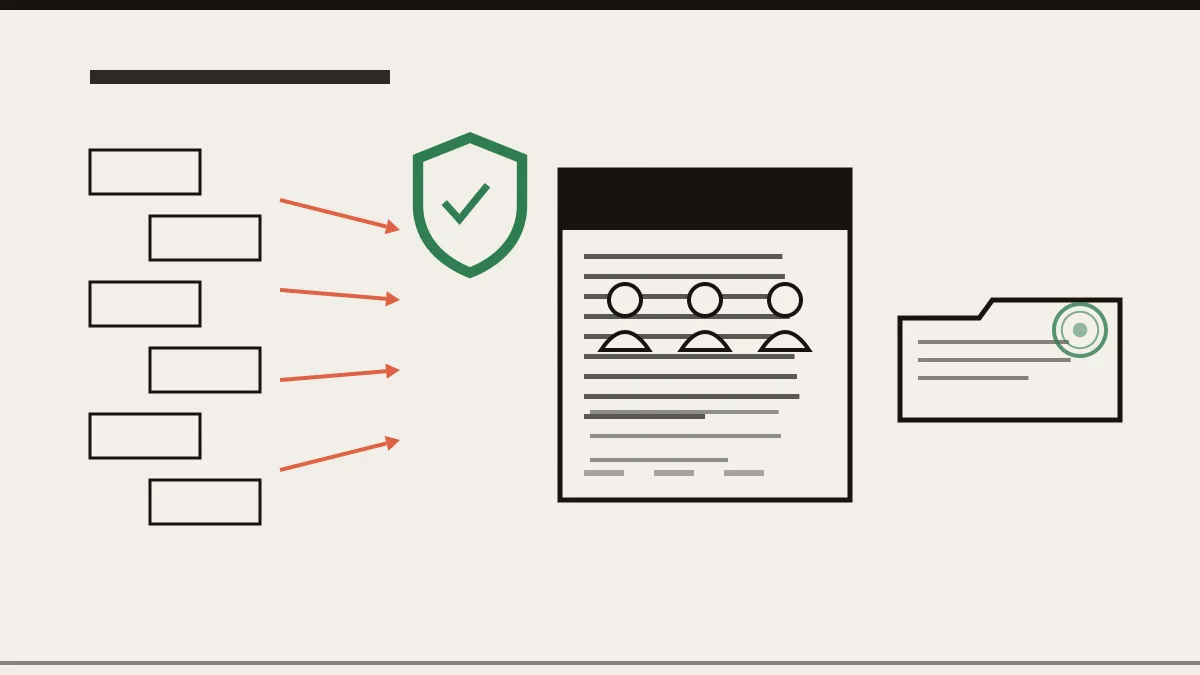
Start with the tools only admins hold. Turn on membership questions and post approval for a while, so new accounts joining to plant breaking content cannot post. Use Ban from group on infiltrators, with the option to delete their activity from the last seven days, and Suspend for members worth keeping. Check Group Quality weekly; it lists any content Meta removed and whether the group is at risk. Name extra moderators, because a group with an absent admin is the easiest kind for a pile of reports to knock over. If a removal lands, appeal it from Group Quality inside the 30 days, with a short note that the group was hit by a coordinated campaign and a list of the reporting accounts if members can identify them. Meta's integrity teams look for exactly that pattern, and naming it helps. If individual members are being harassed by the campaign, the Instagram report harassment lanes map closely onto Facebook's own.
Some content stays up whatever anyone files. Truthful reporting, genuine public records and honest opinion are lawful, and no report, solicitor or service can make Facebook remove them; the lawful option there is suppression, getting better results to outrank them, not removal. We never file false reports, forge copyright or legal notices, run or resell report bots, or ask for anyone's password, and we will not take a case whose only aim is to get a critic's group closed. Our disclaimer sets out these limits in full.
If a Facebook group, Page or account is targeting you, or your group is under a reporting campaign, send us the links for a confidential review. We tell you which report or legal route has a real chance before you pay anything, and when the answer is "file it yourself", we say so.