One scam, three desks: who can do what with your report
A flat in Lisbon that never existed. A Bluesky account wearing your name and your headshot. A Grindr profile built from photos you posted two summers ago. These look like three unrelated problems, and the apps involved share nothing, yet the same mistake ruins the response to all of them: the report goes to one desk and the person waits for that desk to fix everything.
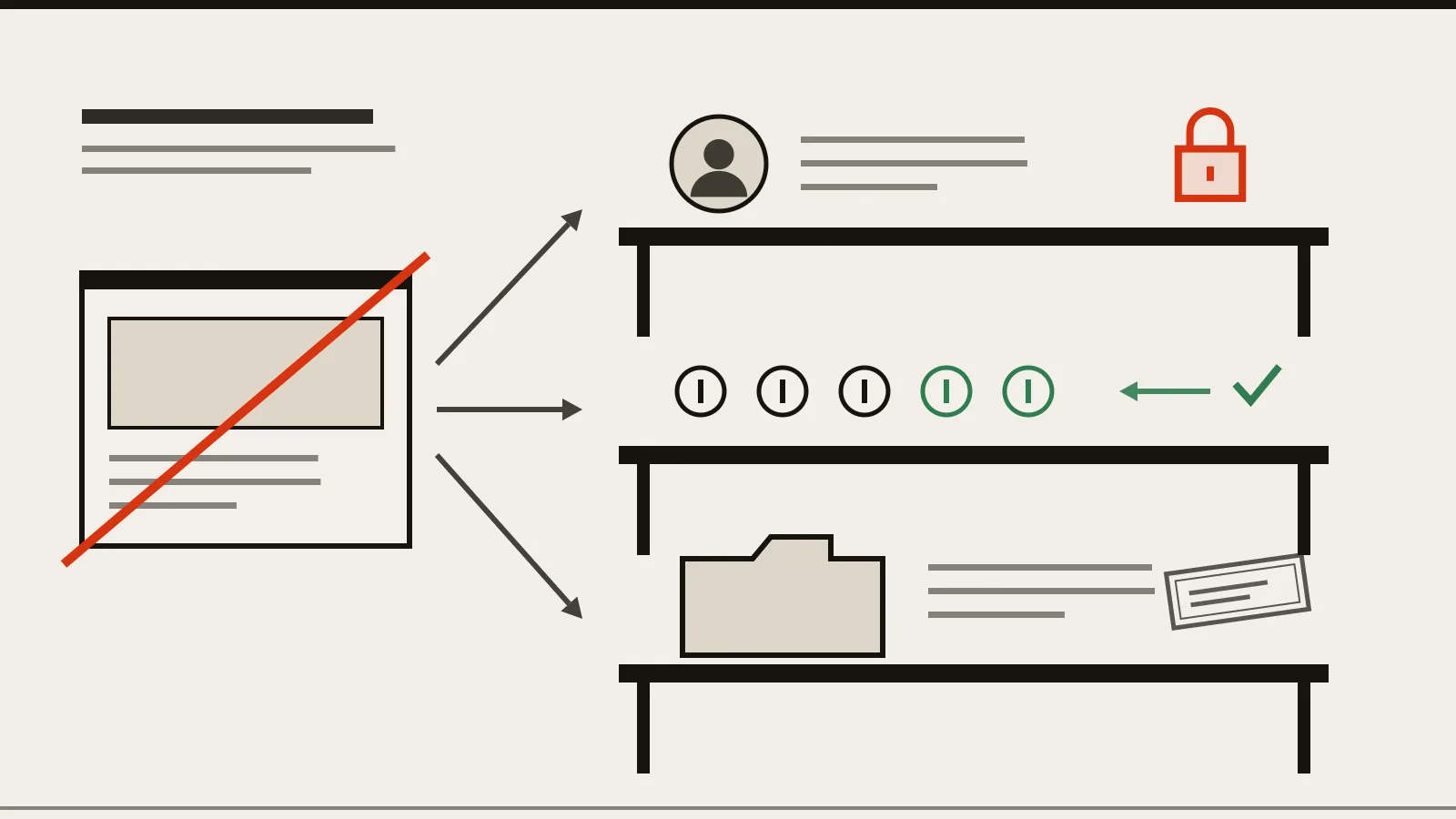
A scam or impersonation report can land on three desks, and each desk has exactly one power. The platform desk (Airbnb, Bluesky, Grindr, Discord) can remove a listing, a profile or a server, and nothing more. The payment desk (your bank, your card issuer, Cash App, PayPal) is the only one able to reverse, recall or refund money, and it runs to its own deadlines. The public desk (the police, Report Fraud in the UK, the FBI's Internet Crime Complaint Center in the US, a regulator such as the FCA) records the offence and hands you a reference number that the other two take seriously. No single report does all three jobs. People lose weeks because they file a careful report with the app, watch the profile vanish, and assume the money question went with it. It didn't. Our order is simple: payment desk first whenever money has moved, platform desk second, public desk the same day.
Impersonation without a payment is simpler. Only the platform desk matters, and the work is proving which profile is the original.
Thirty searches, one sorting rule
We sorted the phrases people type by the desk that should hear first. The wording is theirs; the routing is ours, checked against each platform's published help pages on 11 October 2026.
| What people search | First desk | Then |
|---|---|---|
| report airbnb scam, report craigslist scam | card issuer or bank, if you paid | the platform, then the police |
| report depop scammer, report offerup scammer | the app's own report button | PayPal or card issuer |
| report cash app scammer, report cash app scammer to ic3 | Cash App, inside the payment | IC3, the same day |
| report crypto scammer, report crypto scam to fbi, report crypto scam uk | the exchange you sent from | IC3 in the US, Report Fraud in the UK |
| report crypto scam website | the site's host and registrar | Google Safe Browsing |
| report dating scammer, report love scammer, report online dating scams, report crypto romance scam | your bank | the dating app, then the police |
| report impersonator on dating app, report grindr catfish, report impersonation on hinge | the app's impersonation route | nobody else, unless money moved |
| report bluesky impersonator, report linkedin impersonation, report impersonation on threads | the platform's account report | a trade mark route, for brands |
| report discord server for scam, report discord server for scamming, report kik scam account | the platform, with IDs and message links | the police, if you paid |
If the app in your case is one of the large social networks, the same split applies and we have covered each in depth, starting with how to report an Instagram account by its type.
Report Airbnb scam listings and messages: the route inside Airbnb
Most Airbnb fraud has one shape. A host, or someone posing as one, asks you to pay by bank transfer, by a link, or through another site "to avoid fees". Airbnb's help page on paying outside the platform tells guests to report that request straight away, and it is blunt about the consequence: money sent off-platform sits outside AirCover, so Airbnb has nothing to refund. To report Airbnb scam messages on desktop, open Messages, open the conversation, click the three dots, choose "Report this message", pick a reason and submit. Those labels come from Airbnb's own reporting article. A second clock runs alongside. If you booked properly and the place turned out to be fake or unusable, Airbnb's rebooking and refund policy expects you to raise the issue within 72 hours of discovering it. Miss that window and a valid claim becomes an argument.
So the order for a guest who paid outside Airbnb is card issuer or bank first, Airbnb second, police third. For a guest who paid inside Airbnb, it is Airbnb first and the 72 hours are the deadline that matters. We see people reverse this constantly, writing long messages to the host while the bank's recall window closes.
Craigslist, Depop and OfferUp: three buttons, three small prints
| Search | Where the report lives | The detail that changes the outcome |
|---|---|---|
| Report Craigslist scam | flag the posting and any scam email; send details through craigslist.org/contact | Craigslist cannot refund anything; its scam reporting page sends victims to the FTC, IC3, the state attorney general and local police |
| Report Depop scammer | profile, three dots, "Report"; or Inbox, the message, three dots, "Report" | reporting is app-only, and money sent privately by PayPal or bank transfer is not covered by Depop Protection |
| Report OfferUp scammer | a listing, the profile picture, three-dot menu, "Report", a reason, "Submit Report" | OfferUp's help centre says reported users are not told, so they will not know it was you |
Depop's rule is the one that catches British sellers and buyers most often, because "pay me as friends and family" sounds like a favour. It is the moment the protection ends. The same pattern runs through Meta's marketplace, where a Facebook Marketplace scam report removes the seller but does not move a penny.
Report Cash App scammer to IC3, or to Cash App first?
Cash App first, and inside the hour if you can. Cash App's help pages would not load for us on 11 October 2026, so what follows comes from the text Cash App publishes to search engines: open the Activity tab, select the payment, and choose "Report an issue"; to report the account, open the profile and scroll to "Report" or "Block". The same text warns that payments between Cash App users are instant and usually cannot be cancelled. That is the honest position. A report asks Cash App to look; it does not undo the transfer.
Then file with IC3. The FBI's IC3 FAQ lists what a complaint needs: your contact details, the dates and amounts, the recipient's account identifiers, anything you know about the subject, and a plain description. It also says three things people rarely expect. You will not hear back from IC3 as a matter of course. The form takes no attachments, so keep the originals. And a filed complaint cannot be edited, only followed by a new one. Anyone who wants to report Cash App scammer accounts should therefore copy the $cashtag exactly before blocking it.
Report Bluesky account for impersonation: what moderators need to see
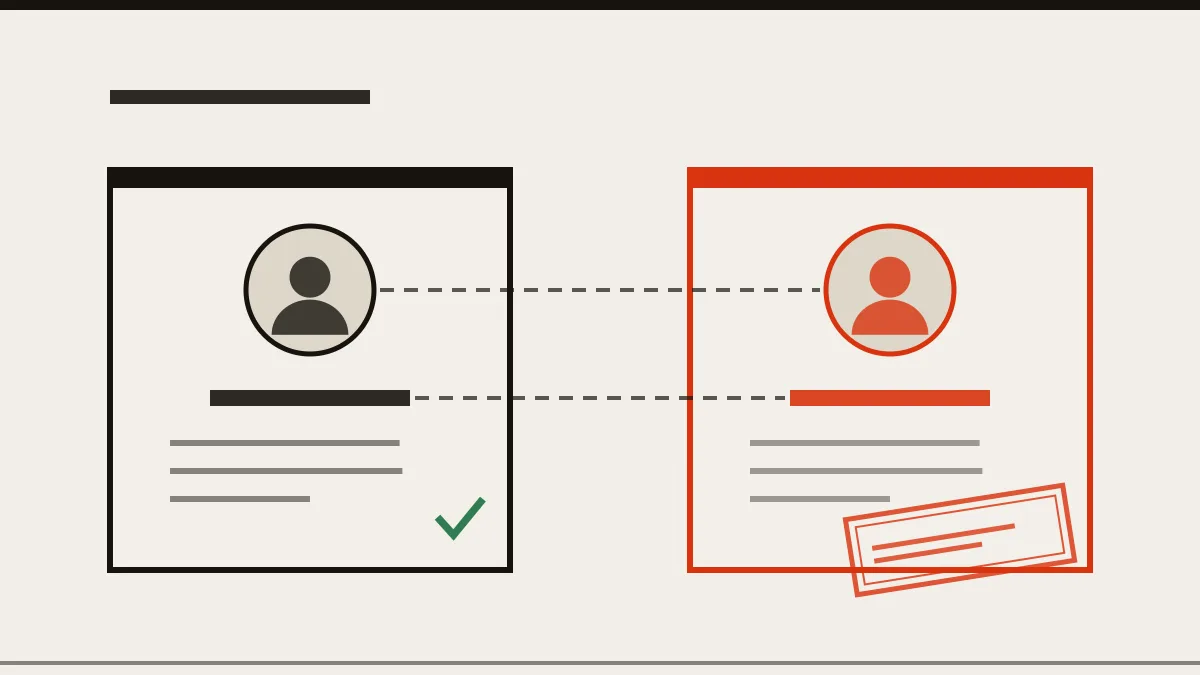
Bluesky's community guidelines bar impersonating people or official groups in ways that could mislead users. The same page carves out parody, satire and fan accounts, on one condition: they must be clearly labelled, and the label has to appear in both the display name and the bio. That condition is the whole test. A copy of your name and photo with "parody" buried in the fourth line of the bio fails it; an account called "Not Jane Smith (fan)" passes, however much you dislike it.
The report itself is made from the profile: open the three-dot menu, choose the option to report the account, and pick the impersonation category. The guidelines also list support@bsky.app as a contact. To report Bluesky impersonator accounts well, give the moderator a comparison they can check in thirty seconds: your handle, the copy's handle, the date your account was created, and which elements were lifted. One more thing helps on this network in particular. Bluesky lets you use a domain you control as your handle, which is a form of self-verification no clone can copy. If your real account is @yourname.co.uk and the fake is a .bsky.social handle, say so in the first line.
When we file these for clients, the weak reports are always the angry ones. "This is fake, remove it" gives a reviewer nothing to compare.
Brands have a second door. Where the copy uses a registered mark to sell or to phish, a trade mark complaint is stronger than an impersonation report, and we set out those forms in our directory covering app store impersonation removal and sixteen other platforms. The equivalent on X is a Twitter impersonation report, which asks for more identity proof than Bluesky does.
LinkedIn, Threads, Tumblr and Lemon8: where each report goes
| Search | Route | What the published rule says |
|---|---|---|
| Report impersonation on LinkedIn | profile, "More", "Report / Block", report the member or entire account, then "This person is impersonating someone" | LinkedIn's help article offers a second reason, "This account is not a real person", for invented profiles |
| Report impersonation on Threads | three dots on the profile, then Report | a Threads profile hangs off an Instagram account, so Instagram's impersonation route covers the account beneath it |
| Report impersonation on Tumblr | tumblr.com/abuse, "Report impersonation or non-genuine behavior" | you may parody or ridicule a person; you may not pretend to be them |
| Report impersonation account on Lemon8 | in-app report on the account | the community guidelines ban impersonation in a single line and publish no web form or email |
Two notes on that table. Meta's help pages would not render for us on the day we checked, so the Threads row describes the app rather than a help article. And Lemon8 is the thinnest of the four: with no off-app route published, someone without an account has no documented way in. Executives are the usual target when people need to report LinkedIn impersonation, because a cloned director profile is the opening move in invoice fraud. Choose the impersonation reason, not the fake-person one, when a real colleague is being copied; they are reviewed against different evidence. The same distinction decides an Instagram fake account report, where "fake" is not a button at all, and it shapes how you report a fake Facebook account that reuses your photos. Short-video and chat apps follow suit: our guides on how to report a fake TikTok account and how to report someone on Snapchat both start from proof of the original.
How do you report an impersonator on a dating app?
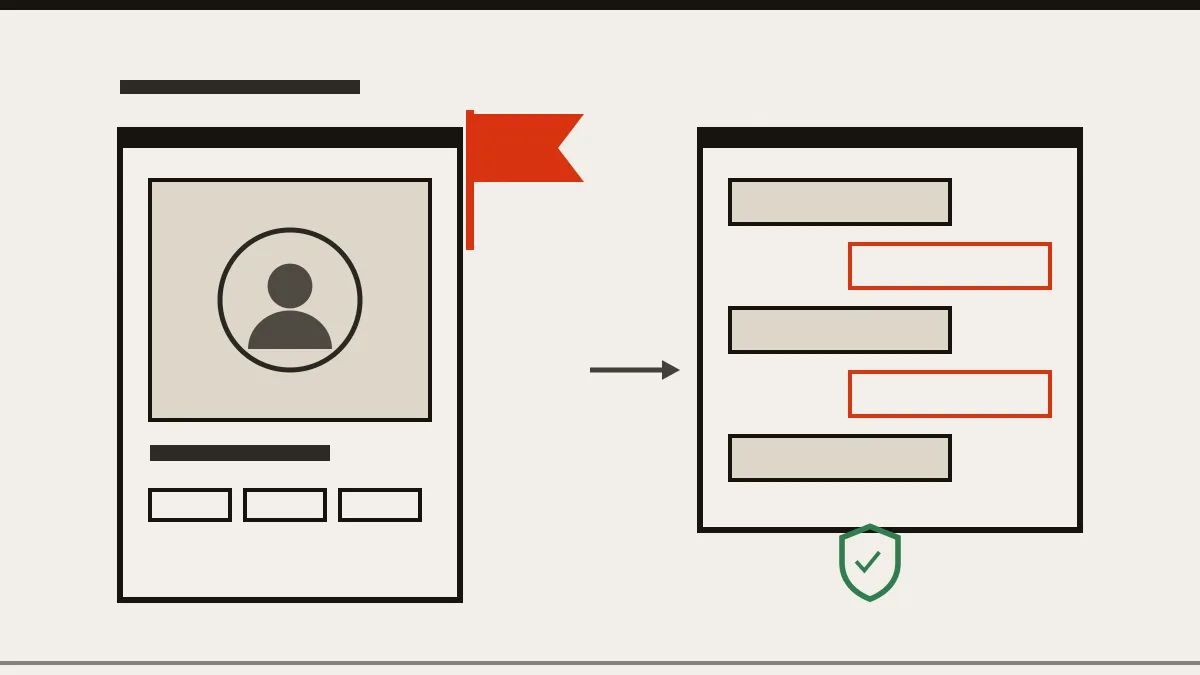
Dating apps create a problem the social networks do not: the person whose photos were stolen often has no account, and so cannot see the profile, let alone tap its report button. Whether you can report impersonator on dating app profiles from outside therefore depends on whether the company publishes an off-app route. Two of the big ones do. Hinge's help centre has an article headed I need to report an impersonation or fake profile. Members report from the profile through the three dots and "Report". Everyone else uses the "Submit a Request" form, picks "Safety and Reporting", and supplies the fake profile's name, age, bio and screenshots. Hinge prefers that the impersonated person files, though a parent or legal representative may act for them. If a friend spotted the profile, ask them for screenshots before anyone blocks anything, because that is the only way to report impersonation on Hinge with the details the form wants.
Grindr is more specific still. Its blocking and reporting article lists "Impersonation" as its own category, defined as someone pretending to be you or a person you know, alongside "Spam". The form asks where the problem sits (profile photo, profile information, chat message or album) and offers to attach the last 30 chats. People who are not on Grindr can use its web request form or write to help@grindr.com. One detail is worth knowing before you report Grindr impersonation: the reported account can be made to verify itself with a selfie, which a thief of photographs cannot pass.
The labels matter here. To report Grindr catfish profiles using your pictures, choose Impersonation. To report Grindr scammer accounts that ask for money, gift cards or a move to another chat app, choose Spam and describe the request. Filing a money scam as impersonation, or the reverse, sends it to a reviewer looking for the wrong evidence, and it is the commonest reason a first attempt to report impersonation on Grindr comes back with no action.
Report dating scammer, love scammer or crypto romance scam: the money side
Romance fraud is the case where the platform desk matters least. UK Finance's 2026 fraud report put romance fraud losses for 2025 at £39.2 million, up 23 per cent on the year before, with cases up 22 per cent. In the US, the FTC's April 2026 data spotlight counted $298 million lost to romance scams that began on social media in 2025, and $1.1 billion to investment scams that began there. The two categories overlap in the crypto romance scam, where the affection is real enough and the trading platform is not.
So when you report dating scammer profiles, do it in this order. Ring your bank on the number on your card and say "authorised push payment fraud"; in the UK the reimbursement rules give you a claim the app never could. Then report love scammer accounts inside the app, so the profile stops working on the next person. Then file with Report Fraud or IC3. To report crypto romance scam losses, add the exchange you bought the coins on, because it can sometimes freeze what has not yet left. Our pieces on how to report a scammer on TikTok and how to report a scam on Telegram follow the same sequence, since most of these conversations migrate there within days.
If intimate images were shared and are now being used as leverage, stop paying and do not send the images to anyone, us included. StopNCII.org creates a hash on your own device so that participating platforms can block the files without ever seeing them.
It is fine to report online dating scams months late. It is never fine to pay a "recovery agent" who found you afterwards.
Report crypto scammer wallets, sites and accounts: which desk first?
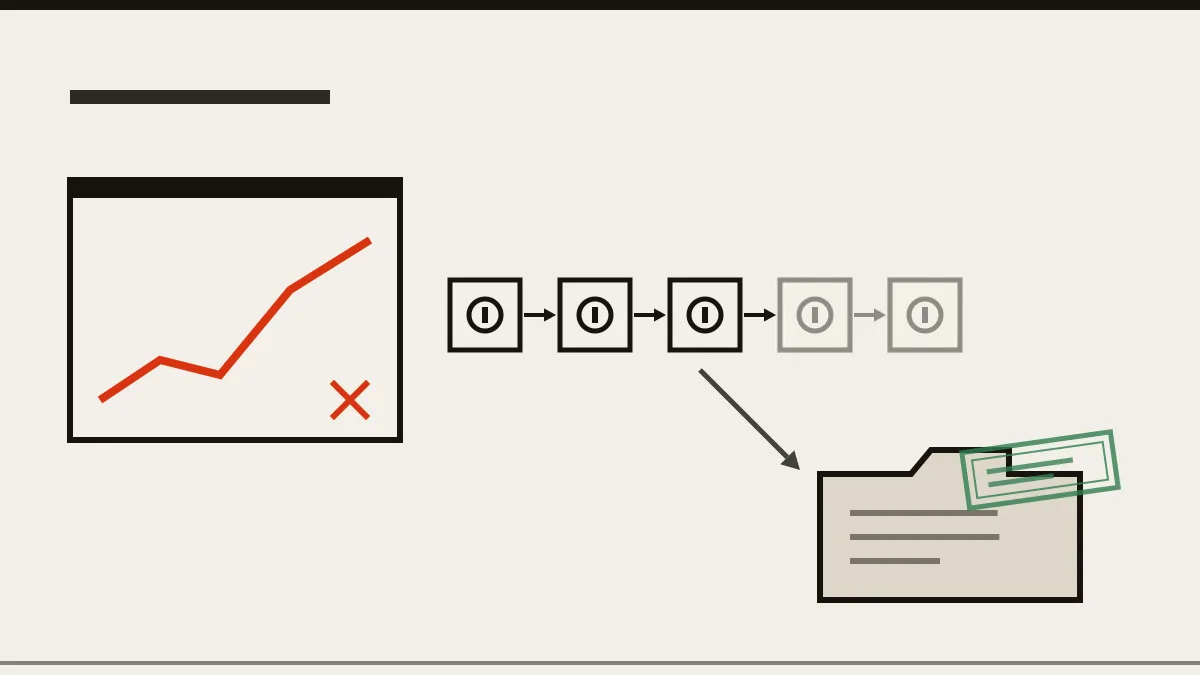
A crypto loss leaves better evidence than most frauds and worse odds. Every transfer is public and permanent, so the wallet address and the transaction hash are worth more than any screenshot of a chat. Start with the exchange you sent from, because it is the only party that knows who you are and may know who received the funds. Then choose the public desk by country. To report crypto scam to FBI channels, use IC3. There is no separate crypto form; the complaint asks for the same things as any other, and the wallet addresses, hashes, amounts and dates go in the description. US victims of investment-style schemes can add the CFTC, whose complaint page separates an ordinary complaint form from the whistleblower Form TCR, or the SEC's tips form. None of these recovers money on request. They build cases.
Report crypto scam UK route: Report Fraud, then the FCA
The FCA's report a scam page sets the order for Britain. Report first to Report Fraud, the service that replaced Action Fraud, on 0300 123 2040 or at reportfraud.police.uk; in Scotland, call Police Scotland on 101. Then tell the FCA through its contact page, which feeds the Warning List other investors check. The FCA says plainly that it cannot help you get money back, and on the same page it warns about recovery rooms: firms that contact victims afterwards and promise to retrieve the loss for a fee. We would add only that the second fraud is often run by the first fraudster.
To report crypto scam website addresses, think about who keeps the site alive. The host can suspend it, the registrar can pull the domain, and Google's Safe Browsing report page can put a red warning in front of visitors while those two decide. That work is slower and more technical than a platform report, and we describe it fully in our guides to a phishing takedown service and to choosing a domain takedown service. A scam site that copies your brand is your problem to remove even if you lost nothing, because every victim will search your name next.
Discord servers, Kik accounts and Chrome extensions
These three sit together for a reason: in each, the thing you need removed is not a profile, and the ordinary "report user" button misses it. Discord. People who report Discord server for scam activity usually describe the server and attach a screenshot. Discord's Trust and Safety form wants neither. It asks for an abuse type and a message link, which you get by right-clicking or holding a message and choosing "Copy Message Link"; for server-level elements its guidance asks for the server ID as well. A report without links cannot be matched to anything. If you want to report Discord server for scamming members through fake giveaways or wallet-drainer links, collect three or four message links from different channels before you leave, since leaving removes your access to them. Message links stay valid even if the scammer edits the message later.
Kik. Kik's help centre could not be reached when we checked on 11 October 2026, so we can only describe the app: the report option sits in the chat with the user. Kik accounts are built on a username with no phone number attached, which makes the exact username the single identifier that counts. Copy it before you report Kik scammer chats, because blocking can hide the thread. When you report Kik scam account activity to the police as well, give that username and the dates; there is nothing else to trace.
Report Chrome extension impersonation with Flag Issue
A fake extension borrows a brand's name and icon to read browsing data or swap wallet addresses. Google's Chrome Web Store help gives the route: sign in, open the extension's listing, click "Flag Issue" at the bottom left, complete the form and submit. That is the abuse route, open to anyone. If the extension uses your registered name or logo, the stronger filing is Google's separate legal removal troubleshooter, which handles trade mark and copyright claims and is read by a different team. Use both when you can; they are not duplicates.
Why a paid "report bot" adds nothing to any of this
Every route above is free and takes one valid report. Sellers who promise hundreds of reports against a scammer are selling volume to systems that do not count volume, and several are scams aimed at people who have just been scammed. We tested the genre three times: the Telegram report bot storefronts, the TikTok report bot products, and nine Instagram report apps on one bench. None filed anything a person could not file better.
What a report cannot do, and what we will not do
A report removes what breaks a rule. It does not remove what merely hurts. A genuine one-star review of your holiday let, a clearly labelled parody of your brand on Bluesky, an ex's truthful account of a bad date: none of these is impersonation or fraud, and no platform will treat them as such. Where content is true, or is protected opinion, removal is usually off the table and the lawful option is suppression, meaning better material ranked above it. We say which of the two applies before any fee is discussed, and our disclaimer sets out the limits in full. We never forge a notice, bluff a legal threat or ask for your password, and we will not file a trade mark complaint for a mark you do not hold. Those shortcuts get the reporter's own account closed.
After the account comes down, the repair starts. Cloned profiles leave cached search results, tagged posts and frightened customers behind them, and the clean-up differs by network: you may need to report a Facebook account that reshared the clone, or report a Twitter account that keeps reposting it.
Being impersonated, or chasing a scam account that will not come down? Send us the profile link and what you have already filed. Eleanor's team reviews it in confidence and tells you which desk the case belongs to before any charge. Start a confidential review.