A copy is judged against a record, not against your word
Every report about a fake ends the same way. A reviewer you will never meet puts the copy on one side of the desk and asks what sits on the other side.
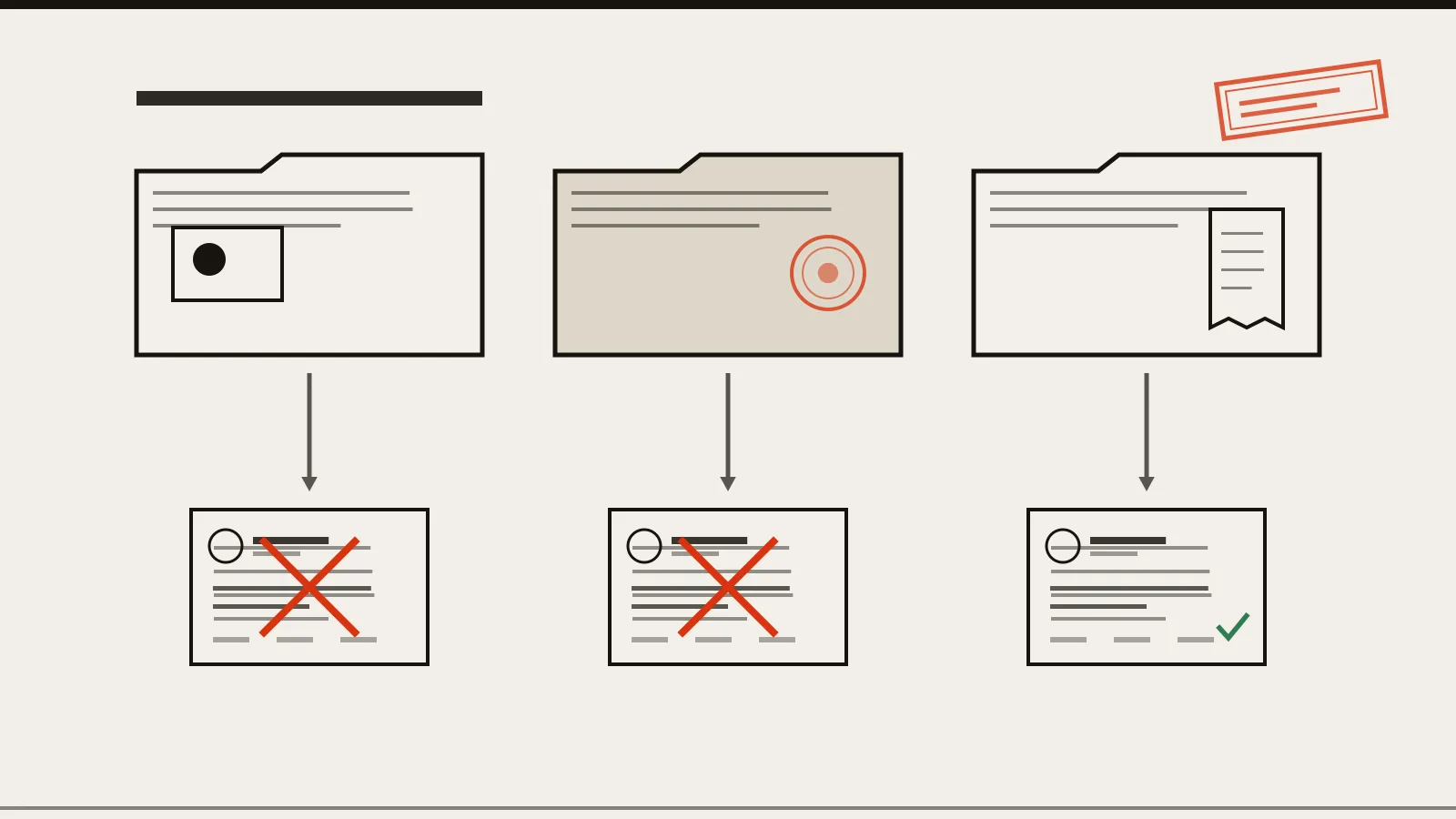
If nothing sits there, the report closes. That is the single most common reason a sound complaint about a fake comes back as "no violation". The reviewer was not unkind and the copy was not clever. The reviewer simply had no original to hold it against, so the only evidence in the file was the copy itself, and a copy on its own looks like any other account, game, listing or shop. What decides the outcome on Apple's App Store, on Grindr, on LinkedIn, on Vinted or on a domain registrar's abuse desk is the record you attach: the thing that proves which one came first and who it belongs to. Platforms ask for different records because they are protecting different things. A dating app protects a face, so it wants an identity record. An app store protects a product, so it wants a rights record. A marketplace protects a sale, so it wants a transaction record.
So before you choose a button, choose the record.
| The copy | The record the reviewer compares | Who can file |
|---|---|---|
| A fake dating or social profile | Identity record: your face, name, ID or verified profile | You, or someone acting for you |
| A cloned game, app, store or website | Rights record: copyright, trade mark, developer or domain registration | The rights owner or an authorised agent |
| A fake listing or fake job | Transaction record: messages, payment trail, listing ID | The buyer, seller or applicant who dealt with it |
The rest of this briefing walks the three records in turn, then deals with whole fake websites and the services that sell takedowns of them, then sets out what none of this can do.
How to report fake game to Apple, and a game clone on itch.io
A cloned game is a rights problem first and a scam problem second. Both have a door at Apple, and they lead to different desks.
The two Apple doors
The consumer door is Apple's Report a Problem page, which you also reach from an app's listing in the App Store by scrolling to Report a Problem. You sign in with the Apple Account that downloaded the app, pick the app, and choose the scam or fraud option. That is the right way to report fake game to Apple when the clone took your money, pushed fake subscriptions or pretended to be a famous title. It only works for apps your account has actually downloaded or bought, which is the transaction record doing its job. The second door is for creators. Apple's App Store content dispute forms cover a copied work and a copied app name, and Apple says it will contact the provider and ask them to work with you directly. It is slower, but it is the only door that weighs your copyright or trade mark against the clone, so it is the one that removes a copy rather than warning a buyer.
Scale matters here. Apple said in May 2026 that it stopped about $2.2bn in potentially fraudulent transactions in 2025 and terminated about 193,000 developer accounts (Apple Newsroom, 2026). Most of that came from Apple's own review, not from reports. A rights notice is how a copy that slipped past review gets a second look.
If you are not sure which of the two doors fits, our walk-through of how to report an app on the App Store shows the button, the reason list and what each one returns.
Report game clone itch.io pages
Small indie storefronts work the same way, with less machinery. To report game clone itch.io pages, open the copy, use the report link at the foot of the project page, and say plainly that the uploader is not authorised to distribute your game. Creators on itch.io's own community boards report that this reason points them to email support, and that a formal copyright notice is what actually moved stalled cases. That notice is a DMCA takedown website filing in miniature: your work, the copy's URL, a statement of good faith and your signature. Keep the dated build of your game, your store page URL and any devlog posts. Those are your rights record.
Report fake Grindr account copies and fake dating profiles
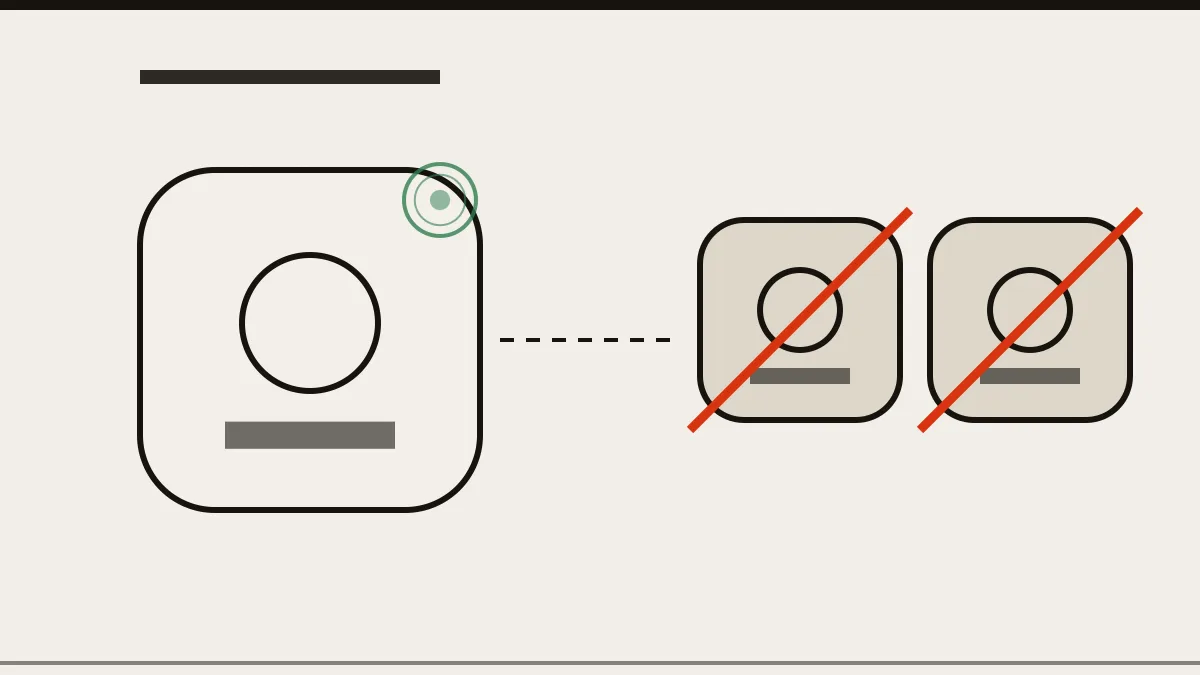
Dating apps run on faces. That makes the identity record the strongest thing you can bring, and the hardest thing for a catfish to fake.
Grindr
When you report fake Grindr account copies from inside the app, you are choosing from Grindr's report categories, and none of them is called "fake" or "catfish". Our Grindr catfish report briefing maps each label to the situation it fits. The short version: if the profile uses your photos, choose the impersonation-style reason and say so in the free text. Grindr can then ask the reported profile to verify with a selfie, and a stolen face cannot pass that check. The same logic applies when you report fake Grindr profile pages that use a friend's or a model's pictures, except that the person in the photos is the one with the strongest standing. If you do not use Grindr, there is an email route for non-users, and you will need to show your face against theirs.
Tinder
To report fake Tinder account copies, open the profile or the match, tap the menu and report. If the fake has already unmatched you, Tinder's online help form takes reports from people who no longer see the profile. Photo verification works in your favour here. Your own blue tick is an identity record already sitting on Tinder's side of the desk, so when you report fake Tinder profile clones using your pictures, say that your own account is verified and give its name. Without a tick, attach a clear photo of you holding something dated.
Dating copies rarely stay on one app. The same set of pictures tends to turn up on social media, and our Instagram fake account report guide covers the version with a Meta logo on it.
Social profiles: LinkedIn, Threads, Tumblr, Pinterest and Truth Social
Social networks differ from dating apps in one useful way: your real profile is usually public, so the identity record already exists on the platform. Your job is to point at it.
To report fake LinkedIn profile copies, open the copy, choose More, then Report or Block, and pick the option for a fake profile or one pretending to be you. LinkedIn says it stopped 99.7% of the fake accounts it removed between July and December 2025 before anyone reported them (LinkedIn Community Report, 2026). The ones that reach a human reviewer are the survivors, so link your own profile in the report. In our October 2026 tests the signed-out form for non-members redirected to the sign-in page, so a member has to file.
For Threads, Meta's impersonation form is titled for "Instagram or Threads". Threads fake account removal therefore runs through the same desk that handles Instagram clones, and Meta says it deletes the ID you upload within 30 days. When you report fake Threads account copies from inside the app, use the profile's menu, choose Report, then the option that the account is pretending to be someone.
Pinterest asks for less. When we last checked, it did not ask for a government ID to report fake Pinterest account copies; a link to your own profile and the copy is usually enough. Tumblr leans on its community guidelines, which say repeat violations can mean permanent blog or account suspension. To report fake Tumblr account copies, use the report option on the blog and pick impersonation. If the copy reposts your own artwork or writing, that is a rights record, and Tumblr says copyright notices are forwarded to the person who posted the material. That matters on a fan-heavy site: the copier sees your name and contact details, so decide before you file whether an impersonation report alone will do the job. On both sites, a copy that has already been reported and removed tends to come back under a new handle, and the record you built the first time is what lets you file the second report in minutes.
Truth Social is the thinnest of the five. Its terms ban "false reports of abuse or misconduct", but in October 2026 we found no help article that sets out report steps. To report fake Truth Social account copies, use the in-app report option on the profile and keep a dated screenshot. If the copy uses your photographs, the platform's terms name a copyright agent, which gives you a rights door alongside the identity one.
The same pattern runs through X. Our Twitter impersonation report guide shows the clone report and the repair work after it, and the how to report a fake TikTok account guide shows what a side-by-side proof looks like when the reviewer asks for one.
Fake listings and fake jobs: Vinted, Poshmark, OfferUp, Upwork
On a marketplace the copy is usually a listing, and the reviewer wants the transaction record: what was offered, what was said and where the money went.
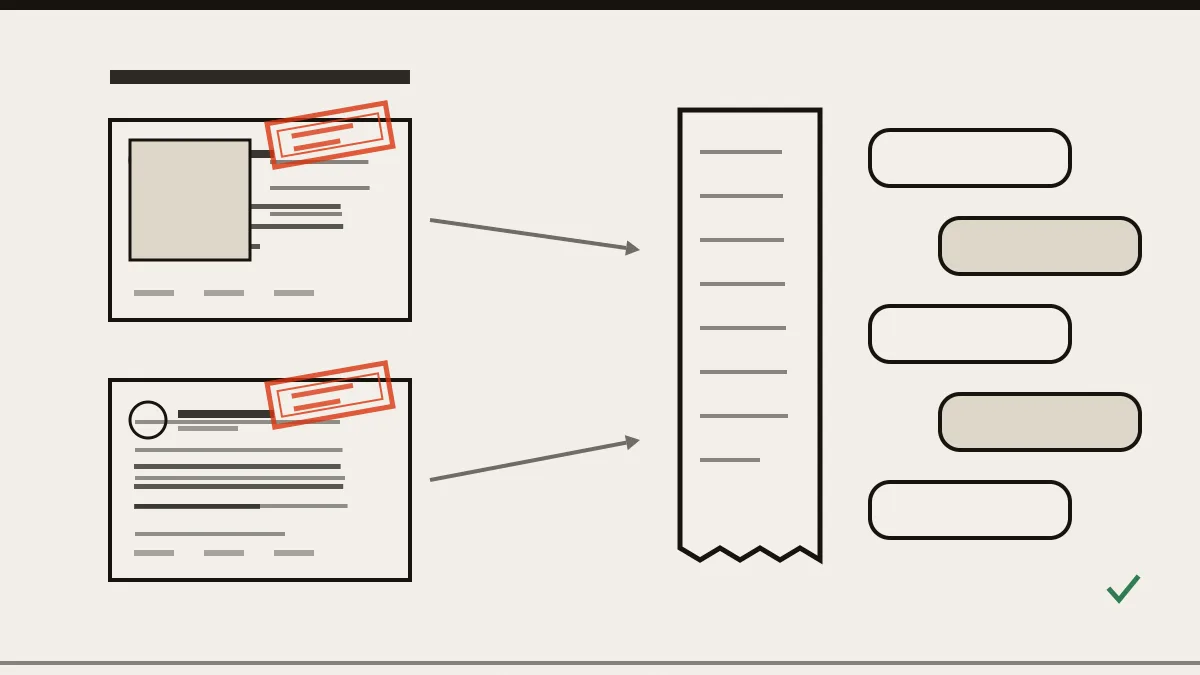
When you report fake Vinted listing pages, report the item from its own page while you are logged in, and say whether the photos are stolen, the item is counterfeit or the seller asked to be paid outside the app. That last one matters most. Vinted's buyer protection only follows money that went through Vinted, which is why our report payment outside Vinted scam briefing starts with the payment trail, not the listing.
To report fake Poshmark listing pages, use the listing's report option for counterfeits, which Poshmark's terms ban. If the listing uses your own product photos or your brand, Poshmark's terms point rights owners to separate copyright and trade mark addresses, and the person filing must own or control the right. Poshmark also gives buyers a 3-day window after delivery to open a case, so a buyer who received a fake should not wait for the listing report to finish.
OfferUp splits the problem in two. To report fake OfferUp profile copies or a scam listing, use the report option on the profile or item. If money or goods were taken, OfferUp's report-a-crime route asks for a police case number, which is the transaction record in its most formal shape.
Upwork has two kinds of fake. A client may post a job that is really a phishing lure or an advance-fee scam; a freelancer may run a profile with stolen credentials or someone else's portfolio. To report fake job on Upwork, flag the post from the job page and keep every message inside Upwork's own chat, because off-platform chats are the first thing scammers ask for and the last thing Upwork can see. To report fake Upwork profile copies built on your name or work, flag the profile and attach links to your own portfolio and profile. Either way, the record is what happened inside the platform, with dates, amounts and usernames intact, which is also why our guide on who may report an Amazon seller or listing pays so much attention to standing.
How to report fake website copies and fake Shopify stores
A fake website has no report button, because it is not sitting on anyone's platform in the way a profile is. It sits on a chain: a registrar holds the name, a host holds the files, a payment processor takes the money and a browser warns visitors. Each link answers to a different record.
To report fake website clones of your business, start with what the site took. If it copies your brand or content, your rights record goes to the host and the registrar as a trade mark or copyright complaint. If it is a phishing page that collects logins or card details, report it to Google Safe Browsing and the host's abuse address, because browsers can start warning visitors long before a host acts. Netcraft, which runs takedowns commercially, publishes a median of 33 minutes for phishing site takedowns (Netcraft, 2026). That figure is a vendor's own number and describes phishing, not every copycat shop. In the UK, the City of London Police's PIPCU has disrupted more than 100,000 websites since 2013 and is funded to March 2029 (GOV.UK, March 2026). Our FBI website takedown briefing explains what a seizure banner means and why private complaints never produce one.
To report fake Shopify store copies, use Shopify's report an issue page and choose to report a merchant, or use the copyright and trade mark forms if the store copies your work. Shopify says a general shop link will not be accepted: it wants the exact product or page URLs. It also says your contact details in a copyright notice may be given to the person who posted the content, which is worth knowing before you sign.
Our impersonation website takedown briefing covers where a fake lives, and how to see what is left after a page comes down is in our guide to how to see taken down YouTube videos, which applies the same address test to any host.
Services to remove fake websites, and the RiskIQ question
People who search for a riskiq fake website takedown service are usually remembering a brand that no longer sells under that name. Microsoft bought RiskIQ in 2021, folded its tools into Microsoft's Defender threat-intelligence products, and riskiq.com now points to a Microsoft product page. As of October 2026 we could not find a standalone RiskIQ takedown desk that a small business could hire. The other services to remove fake websites fall into two groups. Brand-protection vendors watch for new lookalike domains and file abuse notices in bulk under their client's rights record; that is useful at enterprise scale and priced for it. Smaller firms, including ours, file the same lawful notices case by case. Neither group holds a switch the registrar does not hold, and anyone who promises a fixed removal date is promising someone else's decision. The same rule applies to a GitHub DMCA takedown service or any notice-filing vendor: what you are buying is a correct notice to the right desk, not a result.
Not sure which record your case needs? Send us the copy and what you hold. We tell you which desk reads it, what it can remove and what it cannot, before any fee is mentioned. Start with a confidential case review.
What a fake report cannot do
Some things that look like fakes are not fakes in any platform's rulebook, and no record will move them.
A parody account that says it is a parody, a fan page that does not claim to be you, a review written by a real customer you dislike, or a news story that describes you accurately all sit outside the impersonation and counterfeit rules. They are opinion, commentary or reporting, and the honest route there is suppression, not removal: building accurate results that outrank them, which our Google review removal service briefing explains for the review case. The same limit applies to a Facebook page that criticises a business without pretending to be it; the right routes for that case are in how to take down a page on Facebook. We do not file reports that claim impersonation where there is none, we never forge a copyright or trade mark notice, and we never ask for your passwords. False notices are a legal risk to the person who signs them, and they tend to draw more attention to the very thing you want gone.
Timing is the other limit. A platform decides when it decides. When we file these, identity reports with a clean face-to-face comparison tend to move fastest, and rights disputes over cloned apps and stores move slowest, because the other side is allowed to answer and often does. Our disclaimer sets out what we can and cannot promise.