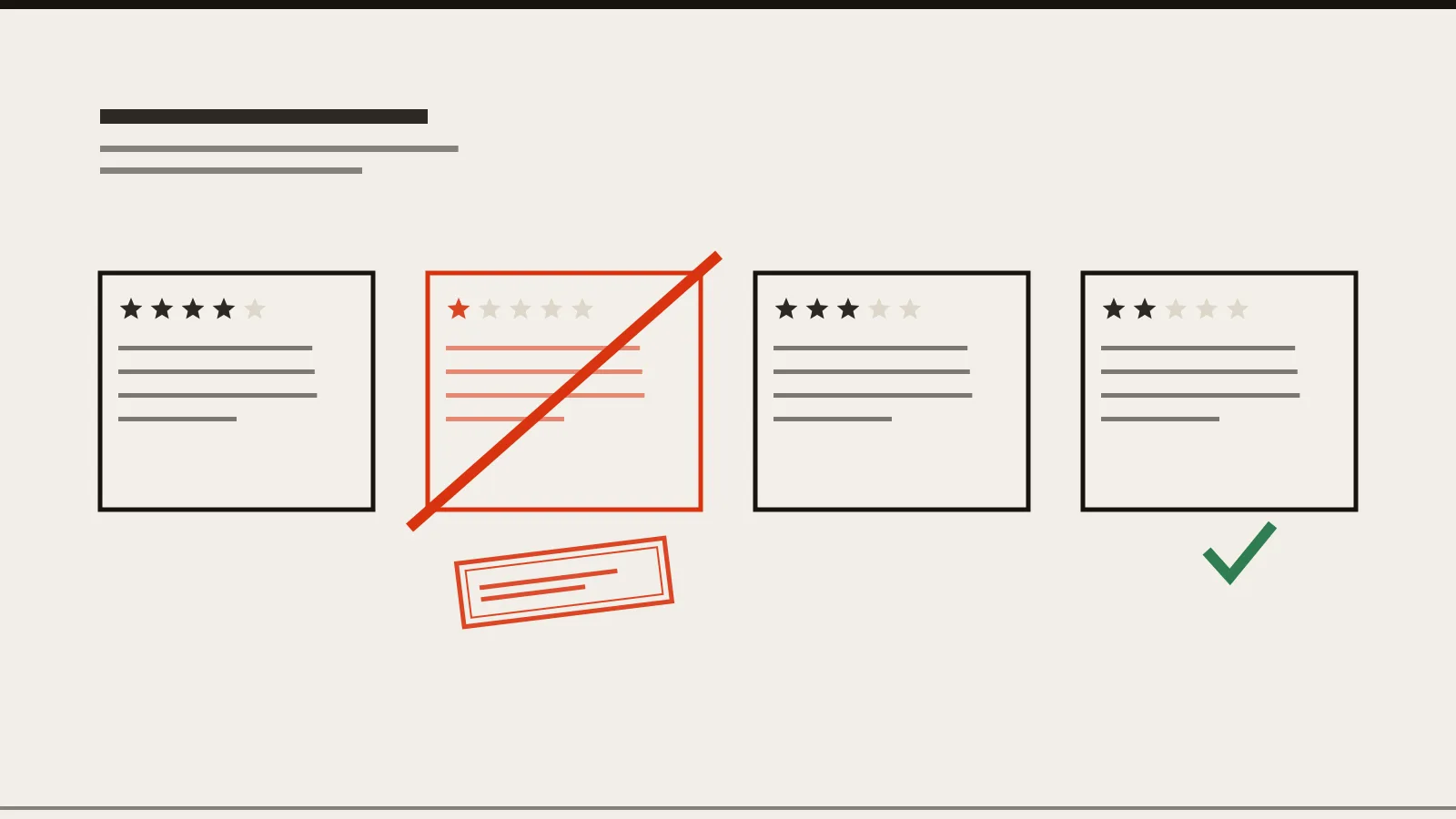
What does a review site actually remove?
A review site removes a review when the person who wrote it should not have been allowed to write it. That is the whole test, and it is the same on G2, Glassdoor, Amazon, Tripadvisor, Angi, BBB and a letting site where a resident rates a landlord. The writer was never a customer, never an employee, never a tenant or patient. Or the writer is a rival, a former partner with a grudge, or someone paid to post. Each platform words this differently, but each one keeps an honest bad experience up, however much it hurts the business. GreatSchools puts it most plainly: it "does not remove reviews just because they are negative or because a school asks." So when you set out to remove fake business reviews, the question is never "is this unfair?" It is "can I show this person had no experience to review?" That one shift decides which button you press, what you attach, and whether paying anyone makes sense.
The words in the review matter second. A false fact about you can make an honest customer's review defamatory, and that has its own route, covered further down. Rude or crude language breaks most guidelines too. But the cases we see succeed most often are the boring ones: a reviewer with no order, no booking, no tenancy, no appointment on record.
Short version. Prove the writer, not the wrong.
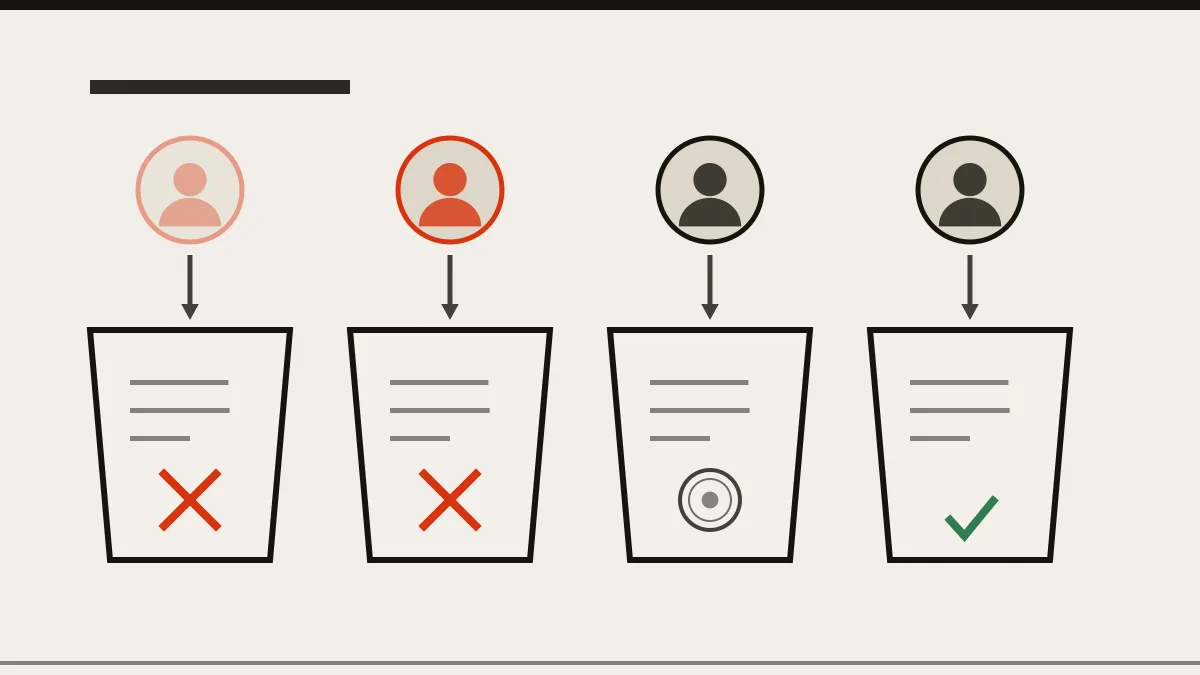
Which of the four trays is your review in?
Sort the review before you file anything. Every review that worries a business lands in one of four trays, and each tray has its own route.
| Tray | Who wrote it | What you can prove | Route | Realistic outcome |
|---|---|---|---|---|
| 1. Never there | Someone with no order, stay, tenancy, job or appointment | Your records show no match | The site's own flag or report button | Removal is common when the records are clean |
| 2. Rival or insider | A competitor, a current or former employee, a relative | Names, IP or timing clues, admission | Flag under "conflict of interest" or "competitor" | Removal if the site can see the link too |
| 3. Real but false | A genuine customer who states a false fact | The fact is checkably untrue | Flag, then a legal letter, then a court order | Slow; sometimes only the false line goes |
| 4. Real and fair | A genuine customer who had a bad time | Nothing to disprove | Public reply, fix the problem, ask happy customers to review | Stays up on every site we know of |
Tray 4 is where most owners would like their review to be removable. It is not. A business that tries to drag a tray 4 review into tray 1 with an invented story risks more than a rejection. The US Federal Trade Commission's rule on consumer reviews and testimonials (16 CFR Part 465, in force since 21 October 2024) bars getting a review removed with unfounded legal threats, intimidation or knowingly false accusations, in §465.7. In the UK, the Digital Markets, Competition and Consumers Act 2024 made commissioning or publishing fake reviews a banned practice from 6 April 2025. Both rules cut both ways. They are why the fake attacking you is unlawful, and why an invented complaint against an honest one is too. The safe ground is the truth, filed through the site's own form.
How do you flag a fake tenant review on a letting or apartment site?
To flag fake tenant review posts, a landlord or manager uses the "Report" control under the review, picks the matching reason (usually something like "contains false information" or "not a resident"), and adds the tenancy evidence that proves it. On Apartments.com and ApartmentRatings, managers report from the property listing and a flag shows the status afterwards. Neither site's own rulebook was readable to us as of 16 October 2026, so we rely on what managers report about the flow rather than quoting a policy. The proof that works is the same everywhere: a rent ledger, a tenancy schedule or a move-in list showing that no resident matches the dates, unit or story in the review. A review that names a flat you do not have, a period when the building was empty, or a deposit dispute that never happened is a tray 1 case. One from a real former tenant who is simply angry is tray 4, and no flag will move it.
There is a second kind of fake tenant review: a landlord posing as a tenant to praise their own building, or to rubbish a rival block down the road. That is tray 2, and it breaks every listing site's rules on conflict of interest. If you are the tenant who spotted it, flag it the same way, and say what you saw.
A note from our files. When we prepare these for managers, the step owners skip is matching the review's date window to occupancy. A fake almost always gets one checkable detail wrong. Find it, quote it, and attach the record.
G2 review removal service or G2's own Report a Concern button?
A G2 review removal service cannot file anything that G2 does not already give you for free. G2's community guidelines set out one route for everyone, vendors included: the "Report a Concern" button on the published review. G2 removes reviews that describe a fake or inauthentic experience, reviews written by an employee of the product's company or by a direct competitor, reviews written on someone else's behalf, plagiarised text and AI-fabricated experiences, and experiences older than two years. It does not edit or remove reviews at a seller's request, says it does not act as a fact-finder, and says it never suppresses negative reviews. Reviewers verify through LinkedIn, a business email or a personal email G2 can validate, and every review is moderated by hand before it goes live. G2 will not tell you who wrote an anonymous review, and the guidelines forbid trying to unmask or pressure the reviewer. To remove fake G2 review posts, file Report a Concern with evidence and share your login with nobody.
What does evidence look like on a software site? A customer list or CRM export showing no account at the reviewer's company. A release log showing the feature they complain about never shipped. A plagiarism match. Those three cover most of the cases we see.
How to remove a fake Capterra review
Capterra sits inside Gartner Digital Markets, alongside GetApp and Software Advice. Vendors report a review by contacting the reviews team, and the guidelines are blunt about what will not work: Capterra will not remove content because you disagree with an opinion, a report does not guarantee removal, content may stay live during an investigation, and the site does not mediate between you and the reviewer. Reports filed "under false pretenses" are themselves prohibited. If you are working out how to remove a fake Capterra review, build the same tray 1 file you would for G2: no customer record, no trial, no support ticket.
The same applies when you want to remove fake Capterra reviews in a batch, for example after a rival's launch week. Report each one separately with its own evidence. Writing up how to report fake Capterra reviews as a group, with the shared pattern (same phrasing, same week, same job title), helps the moderator see the campaign. Searches for "remove fake competitor reviews software" usually come from vendors in exactly this spot, and a patterned, evidenced report is the answer that stays inside Capterra's rules.
Glassdoor and Indeed: who may rate an employer?
Employer review sites protect anonymity harder than any other category. That cuts against you when a review is fake, because you will never be told who wrote it.
On Glassdoor, employers use the flag on the review (the same flag any reader sees) or the Employer Center, and choose a reason such as "contains false information" or "written by management or HR". Glassdoor's help pages say a flag does not guarantee removal and that a decision is emailed within 72 business hours. Your flag explanation is read only by Trust and Safety. Glassdoor says it believes in anonymity, and it forbids employers from asking staff whether they posted a review or naming a reviewer in a reply. That is the part a Glassdoor review removal service cannot get round. No vendor can make Glassdoor reveal the writer, and any vendor that offers to "identify the poster" is selling the one thing the platform bans.
Indeed company reviews come off through the three-dot menu and "Report review". Indeed's company reviews guidelines say it removes reviews that are fraudulent, defamatory or abusive, reviews from people who never worked there, and reviews where someone was paid or pressured to write them. Employers cannot edit or moderate reviews, and Indeed may take a breaching review down in one to two business days without telling you the outcome. An Indeed review removal service, then, is filing the same report you can file. An Indeed review takedown service that promises more than the report button is promising something Indeed does not offer. The useful evidence is an HR record showing that no one held the role, location or dates the review describes. Attach it to the report, not to a public reply, where naming a former employee could break Indeed's rules.
Amazon, Google Play and the App Store: can a seller or developer delete a review?
No. On Amazon, Google Play and Apple's App Store, the business cannot delete a review, and only the platform can take one down for breaking its rules.
Amazon's rule is that only the reviewer can edit a review and only Amazon can remove one. Neither Amazon nor a seller may ask a customer to edit or remove a review, and offering a refund or anything else in return for a change is banned. Sellers use the "Report" link under the review, or Seller Central, and Amazon says it investigates every report without replying to each. That is how to remove fake reviews on Amazon: report each one with the order data that shows no purchase, or the pattern that shows a ring. Amazon has gone to court against brokers that sold fake reviews and, in one case, "negative review removal". A court ordered that broker's domains handed to Amazon. Anyone offering to remove fake Amazon reviews for a fee is selling the same service Amazon sues over.
Developers get fake app reviews removed through the store console. In Google Play Console, open Ratings and reviews, select the review, choose the flag, then Report. Google's ratings and reviews policy page says a specialist checks the report within a few business days and that a rejected report cannot be resubmitted for the same review, so write it properly the first time. New reviews are generally held for about 24 hours, and Google holds back new ratings while it investigates suspicious activity. A Play Store review removal service has no faster door. Apple works the same way through "Report a Concern" in App Store Connect, and its App Store Review Guidelines say developers who manipulate reviews, including through third-party services, can be removed from the Developer Program. If the problem is the app itself, not a review, the route is how to report an app on App Store, a different form.
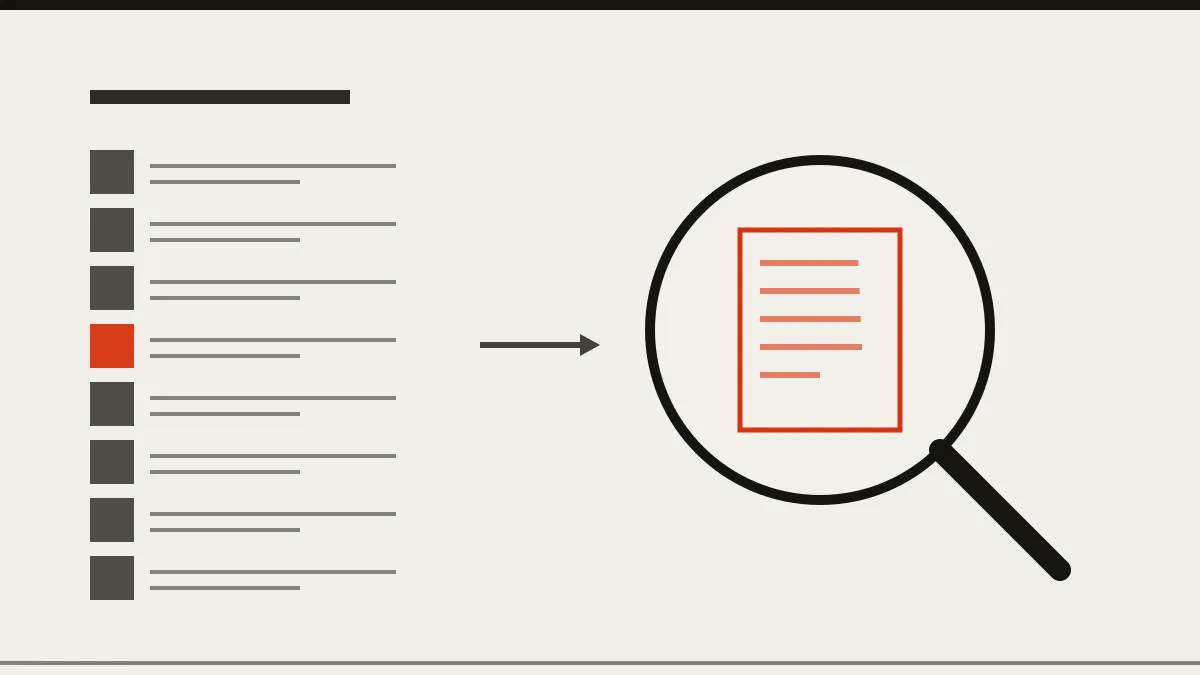
Angi, BBB, Tripadvisor and car dealers: local trades and travel
Local and travel sites see the most competitor fakes, because a rival's one-star review moves real bookings in a small market.
How to remove fake reviews from Angi
Angi (formerly Angie's List) lets service pros flag and dispute a review from their pro account. We could not read Angi's own review guidelines on 16 October 2026: its site blocked automated readers. So we will not quote a rule we have not seen. In practice, to remove fake Angi review posts you need the same tray 1 file: no job, no quote, no address match. To remove competitor fake Angi review posts, add what links the reviewer to the rival, such as a shared phone number, a name that matches the rival's staff page, or a review posted the day you won a contract they bid on. Put the link in the dispute. Do not put it in a public reply.
Remove fake BBB reviews
BBB separates complaints from customer reviews, and the business side has its own form. In the business account, open My Complaints and Customer Reviews, then Manage BBB Customer Reviews, and indicate that the person was not a customer. BBB then asks the reviewer to prove the interaction. Its help pages say only the customer can retract a review, so the business cannot delete one. A BBB spokesperson has said that genuine interactions stay up and proven fakes come down. That makes BBB one of the better sites to remove fake BBB reviews on, because the burden moves to the reviewer once you say "not my customer". Keep your own records ready anyway, since BBB may ask you for them if the reviewer answers with a receipt.
How to get fake reviews removed from Tripadvisor
Tripadvisor puts a "Report problem with review" flag at the foot of each review, and its owner help pages promise research within about 48 hours. Its rules bar reviews from owners, employees, affiliates and competitors, incentivised reviews, and plagiarised or AI-generated text. Press coverage of Tripadvisor's 2025 transparency report put fake reviews rejected or removed at 2.7 million in 2024, up from 2.0 million, with 28% of 244,000 owner-disputed reviews taken down (as reported by trade press, 2025; we did not read the report itself). Read that 28% as the honest ceiling on disputes.
Remove fake car dealer reviews
On DealerRater (owned by Cars.com), the dealer panel has a "report" button on each review. The dropdown includes duplicate review and wrong dealer, and for fraud the help centre asks you to explain exactly how you identified it. To remove fake car dealer reviews, match the reviewer against your deal jackets and service records. If you want to know how to report a dealership from the customer side, that runs through different desks.
Doctors, lawyers, schools and books: the regulated and the reading crowd
Professional review sites carry extra weight, because a fake review of a surgeon or a solicitor reads as a safety warning. They also come with stricter rules about what the professional may say back.
To get reviews removed from Healthgrades, a provider flags the comment and writes to Healthgrades' review team. We could not open Healthgrades' patient review guidelines on 16 October 2026: from outside the US the page returned "not available in your area". So treat any detailed Healthgrades rule you see quoted second-hand with care. For a doctor in the US, answering publicly also runs into patient confidentiality rules. A reply that confirms the reviewer was a patient can itself be a breach. Flag. Do not reply with details.
RealSelf's guidelines require reviewers to be genuine patients with no personal or professional bias, which rules out staff, colleagues and family. RealSelf does not remove a review because it is negative or because a provider advertises. Providers dispute through a written dispute form. For realself fake review removal, the useful proof is a patient-record search showing no treatment on the dates or procedure described. Name no patient in the dispute.
Lawyers ask how to report Avvo review entries, and the honest answer is that Avvo's guidelines page blocked our readers too. Avvo has said publicly that reviews not based on a real client experience are removed. File through Avvo's support contact, keep privileged detail out, and remember that solicitors and attorneys answering reviews are bound by their own conduct rules on client confidentiality.
GreatSchools runs the clearest school rulebook we read. Its review guidelines say the blue "report" link under a review sends it to moderators, who aim to look within 48 hours. It removes personal attacks, allegations of illegal activity, personal data and reviews from people without recent direct experience of the school. It does not remove a review because it is negative or because the school asks. That is how to report a GreatSchools review, and it is all a GreatSchools review removal service can do too. Schools that claim their profile get notified of new reviews and can reply, which is usually the faster fix for a fair complaint from a parent.
Goodreads is different again, because it is readers rating books, not customers rating a service. Its review guidelines bar rating a book you have not read, rating on things unrelated to the book's contents, and ratings meant to inflate or deflate the average. Goodreads may limit ratings and reviews on a book while it looks into unusual activity. The guidelines never use the phrase "review bombing", but that is the rule a review bomb breaks. To remove fake Goodreads review posts, report each one with the pattern: accounts created that week, one-star ratings posted before the book was out, the same complaint word for word. A Goodreads review bomb removal service files nothing beyond that report.
Site by site: the control, the test and who sees your name
| Site | Where the business files | What gets a review removed | Will they tell you who wrote it? | Published clock |
|---|---|---|---|---|
| G2 | Report a Concern on the review | Fake experience, employee, competitor, plagiarism, AI text, over two years old | No | None published |
| Capterra | Reviews team contact | Guideline breach, not disagreement | No | None; may stay live meanwhile |
| Glassdoor | Flag on the review or Employer Center | Guideline breach, e.g. written by management | No, anonymity is policy | 72 business hours |
| Indeed | Three-dot menu, Report review | Non-employee, fraud, defamation, paid | No | 1 to 2 business days, no outcome notice |
| Amazon | Report under the review, Seller Central | Guideline breach; no paid edits | No | No reply to each report |
| Google Play | Play Console flag, Report | Comment Posting Policy breach | No | A few business days; one try |
| App Store | Report a Concern in App Store Connect | Offensive, spam, terms breach | No | None published |
| Goodreads | Report content | Unread ratings, off-topic, rating manipulation | No | None published |
| Tripadvisor | Report problem with review | Owner, affiliate, competitor, incentivised, AI | No | About 48 hours |
| BBB | Manage BBB Customer Reviews form | Not a customer, reviewer cannot prove it | Reviewer is asked for proof | None on the form page |
| GreatSchools | Report link | No direct experience, attacks, personal data | No | About 48 hours |
| DealerRater | Dealer panel, report | Fraud, duplicate, wrong dealer | No | None published |
| RealSelf | Dispute form | Not a genuine patient, bias | No | None published |
| PissedConsumer | Court order, notarised author letter, arbitration | Breach found by a neutral, or a court | No | 20-day reply window in one published arbitration |
Two things stand out in the right-hand columns. No site on this list will identify an anonymous reviewer to the business on request, and none promises a decision faster than about two days. Any service whose pitch rests on either one is selling something the site does not offer. The third column matters more than it looks. Every site on the list treats who wrote the review as the deciding fact, and only BBB moves the burden onto the reviewer. Everywhere else, the business has to bring the proof, and the proof has to be something the site can check without taking your word for it: an order number that does not exist, a tenancy that never started, a job title nobody held. The clocks are short where they are published at all, so a report that fails is usually a report that lacked a record, not one that needed more time.
What does a review removal service actually sell?
Most review removal services resell the flag button with a covering letter. That can be worth paying for if the letter is good. Matching occupancy, order or patient records to a review and presenting it in the platform's own terms takes skill, and a well-built first report matters on sites like Google Play that allow only one try. It is not worth paying for when the pitch is speed, a guarantee, or "contacts inside" the platform.
PissedConsumer shows the difference clearly. Its legal page says it removes content when it gets a valid court order, a notarised letter from the person who posted it, or a decision from a third-party neutral under its arbitration programme. A PissedConsumer review removal service can at most help you assemble one of those three. Nothing else works on that site, and anyone who says otherwise is guessing.
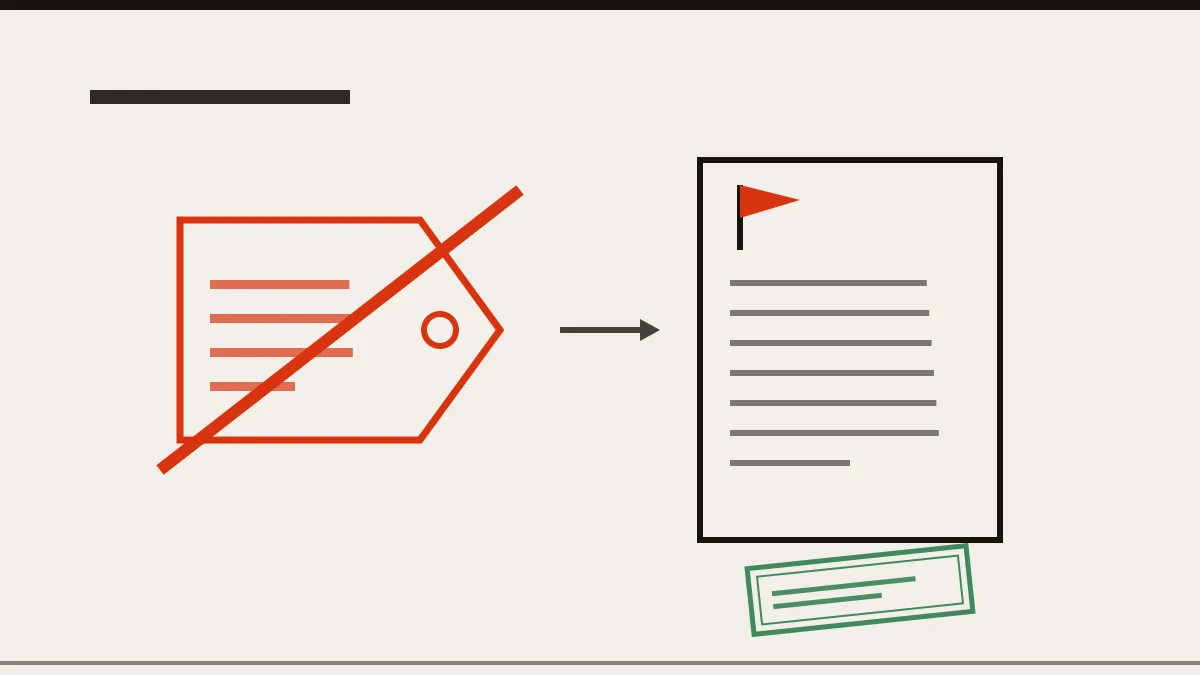
The same vendors often sell other things, and the menu tells you a lot. A firm that also sells an instagram report bot, or offers to post reviews for you, is working the fake side of the market it claims to clean up. Two searches deserve a word here because they are not removal requests at all. People who search "mugshot removal service reviews" want to vet a mugshot remover before paying. Read reviews of mugshot removal services the way you would read any review site: check for a real address, look for complaints filed with a state attorney general, and treat any upfront fee to "pull" a booking photo with caution, since several US states now restrict charging to remove them. People who type "junk removal service reviews websites" want to know where tradespeople like rubbish removers get rated. The answer is the same local sites above, Google, Angi, BBB and Yelp, and the same rules apply when a fake one lands on a junk removal firm.
We will be plain about our own limits. We cannot remove a truthful review, an honest opinion, or a public record. Those can only be outranked with better, newer content, and our disclaimer sets out what that means. We never forge a notice, invent a court order, or ask for your platform password. A forged takedown is a crime in many places, and it tends to put the review on the front page of a news site. If your case is tray 1 or tray 2, send it to us for a confidential review and we will tell you which button, which proof, and whether you need us at all.
When does a fake review become defamation, and is a letter worth it?
A review becomes defamation when it states a false fact about you, published to others, that harms your reputation. In England and Wales the Defamation Act 2013 adds that a business must show serious financial loss. "The worst plumber in town" is opinion. "He took my £400 deposit and never turned up" is a statement of fact, and if no deposit changed hands, it is checkable and false. That line, between opinion and checkable fact, decides whether a tray 3 review can come down. Most review sites act on a court order. PissedConsumer says so on its legal page, and Google, Amazon and the larger sites follow orders against specific content. A solicitor's letter to the reviewer can work when the writer is known. A letter to the platform rarely does on its own, because in the US Section 230 shields sites from liability for what users post. The honest sequence is flag first, then letter, then court, and most cases end at step one.
Fake reviews rarely travel alone. A competitor who posts a fake review often also runs a fake profile, copies your photos or sets up a lookalike page. Each of those has its own report. A bogus reviewer account on a dating or social app goes through how to report a fake profile rules. A burner account spreading the review on Instagram is an instagram fake account report. The TikTok version follows how to report a fake TikTok account. Screenshots of the review circulating on X are a case for report a tweet, one post ID at a time.
Copying gives you a stronger route. If the fake review lifts your own product photos or text, an instagram copyright report or a notice under how to file a DMCA takedown removes the copied part regardless of the opinion around it. A clone site republishing reviews to rank against your name is a DMCA takedown website case. If you are unsure what is a DMCA takedown request and whose name it carries, read that first. A fake listing that pretends to be your business is an impersonation website takedown. A domain built only to host extortion reviews may fall under malicious domain takedown rules if it also phishes. And if the fakes sit on Google Maps, the steps to remove fake Google reviews run through Google's own forms.
For the team behind these briefings, see who we are.